Litter Box Furniture: How to Choose an Enclosure Your Cat Uses
Choose litter box furniture by its inside size, not the outside: a few inches of room around your box, a doorway your cat walks through easily, airflow and a finish that shrugs off moisture.
In short
- Measure your litter box and your cat before you look at styles: the inside of the enclosure matters far more than the outside.
- Leave a few inches of room on every side of the box and above the rim so your cat can turn, dig and scoop comfortably.
- A side doorway that can sit on either the left or right gives you more choice about where the cabinet fits in a room.
- Vents, louvered doors or a carbon filter keep air moving; a closed cabinet still needs scooping every day.
- If your cat is wary of a cabinet, a top-entry or hooded box gives privacy with less to get used to.
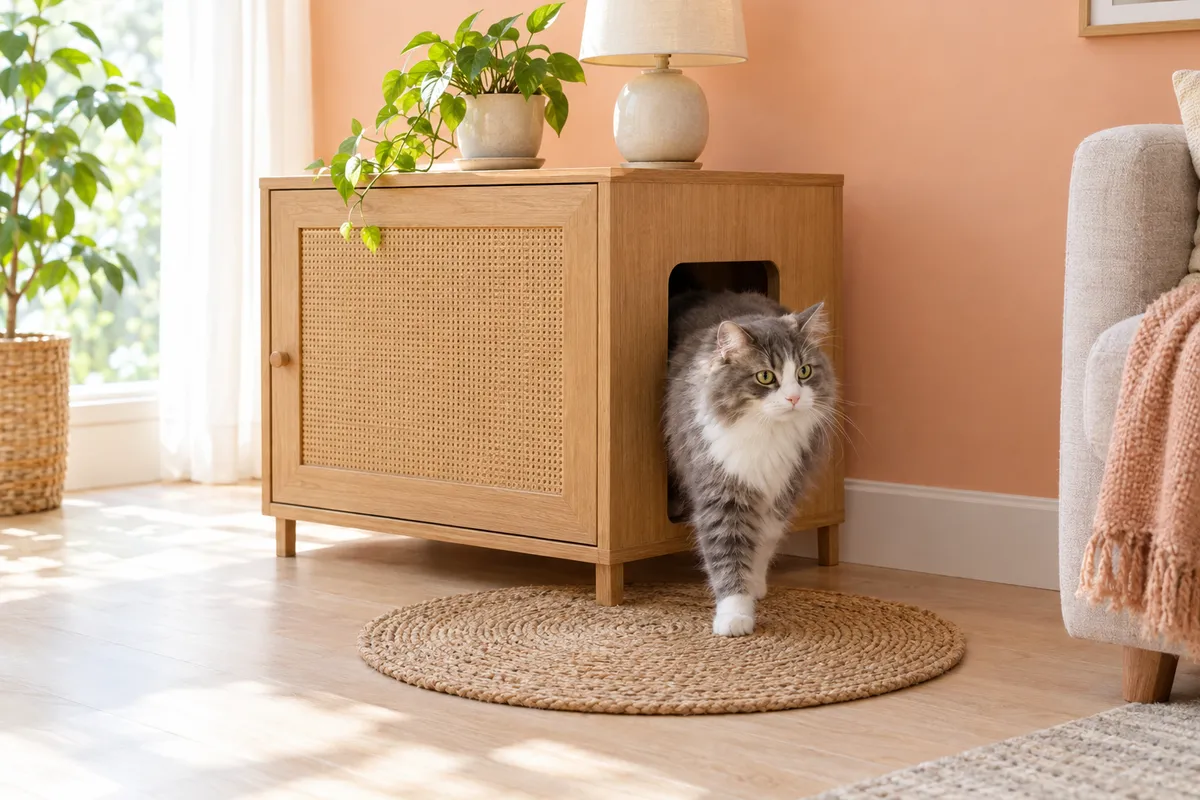
Litter box furniture is a cabinet, bench or side table with a hidden room inside that holds your cat's ordinary litter box. To choose one, measure your box first, then look for an inside space a few inches bigger on every side, a doorway your cat steps through easily, airflow, and a door wide enough for daily scooping.
Done well, the box disappears into the room and your cat gets a quiet, private corner. Done badly, you get a pretty table your cat refuses to use. Here is how to land on the first one, one decision at a time.
Is litter box furniture a good idea?
Yes, for many homes, as long as the cat finds it as easy to use as an open box. An enclosure hides the view, catches some of the scattered litter, keeps a curious dog's nose out and gives you a tabletop for a lamp or a plant.
It is not the right fit for every cat. A very large cat, a cat who likes to see the room while it goes, or an older cat who finds stepping over a doorway awkward may prefer something more open. If your cat suddenly stops using its box, new furniture or not, ask your vet before changing anything else.
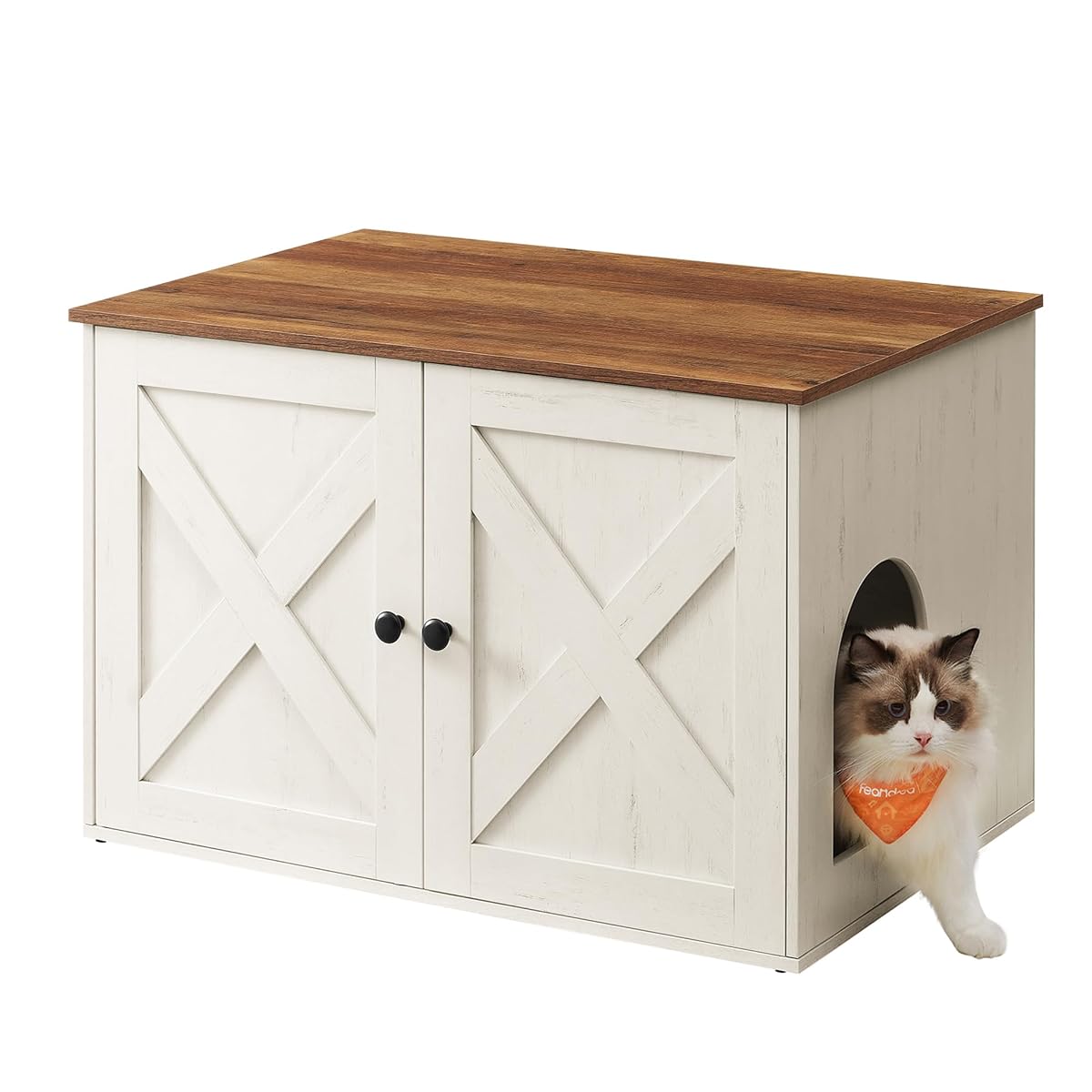
Cabinets that look like everyday furniture
Side tables and benches with a cat-sized doorway and a door for you.




What size litter box furniture do I need?
Pick by the inside measurements, and aim for roughly 2 to 3 inches of clear space around the box on all sides and above the rim. Outside sizes are what most listings shout about, but the panels, the doorway frame and any divider all eat into the room inside.
- Measure your litter box: length, width and height, including the rim and any hood you plan to keep.
- Measure your cat standing, nose to the base of the tail. The box itself should comfortably fit that length, so a big cat needs a big box and a bigger cabinet.
- Check the listing for interior length, width and height. Some print both; the extra-large benches here list an inside length close to their outside length because their walls are thin.
- Measure the floor spot, including room for the doors to swing open fully.
- If you use an automatic litter box, check its height with the lid open as well as closed, plus the cord route.
| Your setup | What to look for inside | Good shape |
|---|---|---|
| One average cat, standard box | A few inches clear around the box and above the rim | Side table or small cabinet |
| Large or long cat | Extra height so it can stand and turn without crouching | Extra-large bench or tall cabinet |
| Two cats | Two separate rooms, or one long bench with a divider | Double cabinet or long bench |
| Automatic box | Height with the lid open, plus a cord gap at the back | Open-back or extra-large cabinet |
| Small room or apartment | A footprint that fits beside a sofa or bed | Planter style or compact cube |
Roomy options for big cats and two-cat homes
Longer benches and double rooms for more space inside.


Which entry works best: side, front or reversible?
A side doorway that can be swapped to the left or right is the most flexible, because it lets you push the cabinet against either wall. A front entry suits a cabinet that sits in a hallway or under a window, where the side panels touch something.
- Opening size: your cat should walk in without squeezing or ducking. Big cats need a wide, tall doorway.
- Threshold height: the lower the step at the doorway, the easier it is for kittens and older cats.
- A clear path inside: look for a gap between the doorway and the box, so your cat steps in and turns rather than landing straight in the litter.
- Your door: wide doors that open fully, or a top that lifts, make scooping a quick, comfortable job.
Older cats who find any step tricky may do better with a low-entry box in the open. Our room-by-room guide for senior cats covers that setup.
Does litter box furniture help with smell?
It can hide the box from view and keep some smell inside, but only daily scooping truly keeps a room fresh. A closed cabinet holds air, so what you want is gentle airflow: vents, louvered doors, a mesh back or a slot for a carbon filter.
- Scoop at least once a day and top up litter so the depth stays even.
- Choose a litter that clumps firmly and suits your cat. Our types of cat litter compared guide walks through each one.
- Wipe the inside floor of the cabinet whenever you change the litter fully.
- Replace carbon filters on the schedule printed on their pack.

A hidden box that looks like a houseplant
A domed box shaped like a planter, topped with a faux plant, so the litter sits under greenery instead of in a cabinet. It suits small rooms where a side table would feel crowded.
- Round shape tucks into a corner
- Carbon filter for airflow under the plant
- A front doorway with a clear view out
MDF, solid wood, rattan or plastic: which material?
Pick a material by how it handles moisture, because litter boxes sometimes overflow or get missed. Most cabinets are engineered wood, which looks smart and costs less, but its raw edges swell if they stay wet.
| Material | Strengths | Watch for |
|---|---|---|
| Engineered wood (MDF, particleboard) | Furniture finishes, smooth panels, wide choice | Swells if water reaches cut edges; add a liner or tray |
| Solid wood | Sturdy and repairable | Heavier; seal the inside floor |
| Rattan over a metal frame | Woven sides let air through | Litter dust can settle in the weave; vacuum often |
| Plastic | Wipes clean, will not swell | Looks less like furniture |
Woven and wipe-clean enclosures
Rattan sides for airflow, or plastic you can rinse.


Will an enclosure stop litter tracking?
It catches a good share of it, because cats shake off and take a few steps inside before they reach your floor. The rest comes out on their paws, so a mat at the doorway does the final bit of work.
Some benches come with a mat or a built-in scratch pad at the doorway. If yours does not, a honeycomb mat in front of the opening traps grains you can tip back into the box. Our cat litter mat buying guide compares sizes and materials.
Little helpers for a tidier cabinet
A doorway mat, a sturdy scoop and spare filters.


Where should you put litter box furniture?
Put it somewhere quiet that your cat can reach at any hour, away from food and water bowls and away from loud machines. A cabinet lets you place the box in a nicer room than the laundry corner, which is half the appeal.
- Keep the doorway facing open space so your cat can see who is coming as it leaves.
- Avoid the spot right beside the washer, dryer or a noisy furnace.
- Leave room to open your door fully for scooping.
- Bedrooms are fine for many homes if you scoop daily and the cabinet has good airflow.
- When you swap from an open box, place the cabinet where the old box was, leave its door open for a few days and use the same litter.
With more than one cat, one cabinet rarely covers everyone. See litter boxes for multiple cats for how many boxes to plan, and the second cat room setup checklist if a new cat is joining the family.
Top-entry and hooded boxes: simpler alternatives
If a full cabinet is more than you need, a top-entry or hooded box gives privacy and tidiness in one piece of plastic. They cost less space, need no assembly and are easy to move.
| Style | How it works | Suits |
|---|---|---|
| Top-entry box | Cat hops in through a lid with grooves or holes that catch litter on the way out | Agile adult cats, homes with dogs, heavy diggers |
| Hooded box | A lid with a front doorway, often a flap and a filter | Cats who like privacy, smaller rooms |
| Corner hooded box | Angled shape that fits into a room corner | Tight spaces and bathrooms |
| Litter box furniture | An ordinary box hidden inside a cabinet | Living areas where looks matter |
Top-entry boxes ask a cat to jump in and out, so they suit young, nimble cats better than kittens or seniors. Hooded boxes with a lifting lid are the gentlest step from an open tray.
Top-entry and hooded boxes
Privacy and less scatter without a cabinet.


A quick checklist before you buy
- Inside size fits your box with a few inches to spare all round and above.
- Doorway is wide and low enough for your cat, on the side your room needs.
- Vents, louvers, mesh or a filter slot for airflow.
- Moisture-friendly finish, or room for a tray or mat underneath the box.
- A door or top that opens wide enough to scoop without crouching awkwardly.
- A spot that is quiet, easy to reach and away from food bowls.
Browse every litter box and accessory we carry, or search litter box furniture by style. Introduce the new cabinet gently, keep everything else the same at first, and your cat will soon treat it as its own little room.
Questions people ask
Is litter box furniture bad for cats?
Not for most cats, as long as the inside is roomy, the doorway is easy and the air moves. Problems usually come from a cabinet that is too small or a box that is not scooped often. If your cat stops using its box, ask your vet.
Do cats like litter box furniture?
Many cats take to it well because it feels private and sheltered. Others prefer an open view. Place it where the old box was, keep the same litter and leave the door open for the first few days so your cat can explore.
Does litter box furniture help with smell?
It hides the box and holds some smell inside, but daily scooping does most of the work. Look for vents, louvered doors or a carbon filter, and wipe the cabinet floor when you change the litter fully.
Is it OK to have a cat litter box in the bedroom?
Many people do, especially in small homes. Choose a well-ventilated cabinet or hooded box, scoop every day and keep it away from where you sleep if you can.
Can an automatic litter box fit inside litter box furniture?
Some can. Measure the automatic box with its lid or dome fully open, check the cabinet's inside height and look for a cord opening at the back. Extra-large benches and open-back cabinets fit them most often.
How do I keep a wooden enclosure from getting damaged?
Put a waterproof tray or mat under the litter box, wipe up any spill at once and avoid soaking the panels when you clean. Engineered wood swells if water reaches its cut edges, so keep the inside dry.
About the numbers
- Google Keyword Planner, United States, 12-month average, read 2026-11-01: about 18,100 searches a month for litter box enclosure (rising), about 12,100 for litter box furniture, about 12,100 for cat litter box furniture (rising), about 9,900 for cat litter box enclosure (rising), about 6,600 for litter box cabinet (rising) and about 2,900 for hidden litter box furniture
- Google autocomplete, United States, read 2026-11-01: people ask whether litter box furniture is a good idea, whether it helps with smell, whether cats like it and whether a litter box can go in a bedroom