Litter Boxes for Multiple Cats: How Many, Where and Which Type
Plan one litter box per cat plus one extra, spread them across different rooms with a clear way out, and choose big, easy-entry boxes with unscented clumping litter.
In short
- The ASPCA's guideline is one litter box for each cat in the home plus one extra, so two cats need three boxes and three cats need four.
- Spread the boxes across different rooms, and on each floor of a multi-level home, rather than lining them up side by side, so one cat can never guard them all.
- Pick boxes your biggest cat can step into easily and turn around in; open, high-sided and extra-large boxes suit most households.
- Scoop every box at least once a day and wash it out with unscented soap about once a week, as the ASPCA suggests.
- If a cat stops using the box, or goes more or less often than usual, ask your vet before changing anything else.
Hello, lovely multi-cat household. The short answer to the big question is one litter box per cat, plus one. Two cats get three boxes, three cats get four. The rest of a happy bathroom setup comes down to where those boxes sit, what shape they are, what goes inside them and how often you tidy up. Here is how to plan each part, room by room.
How many litter boxes do you need for 2, 3 or 4 cats?
Plan for the number of cats plus one. The ASPCA puts it plainly on its litter box problems page: have one box for each cat in your household, plus one extra. It is the most widely shared guideline for multi-cat homes, and it holds whether your cats are best friends or polite roommates.
| Cats at home | Boxes to plan | A simple layout |
|---|---|---|
| 1 | 2 | One in a quiet room, one on another floor or the opposite side of the home |
| 2 | 3 | Two on the main floor in different rooms, one upstairs or downstairs |
| 3 | 4 | At least one on every floor, the rest in separate rooms |
| 4 | 5 | Spread across every floor and wing; never two in the same spot |
Why the extra box? Cats are particular about a clean, available spot. A spare means there is always one ready, even right after a sibling has used another. It also gives a shy cat a choice that is not right next to a bolder one.
Where to put litter boxes in a multi-cat home
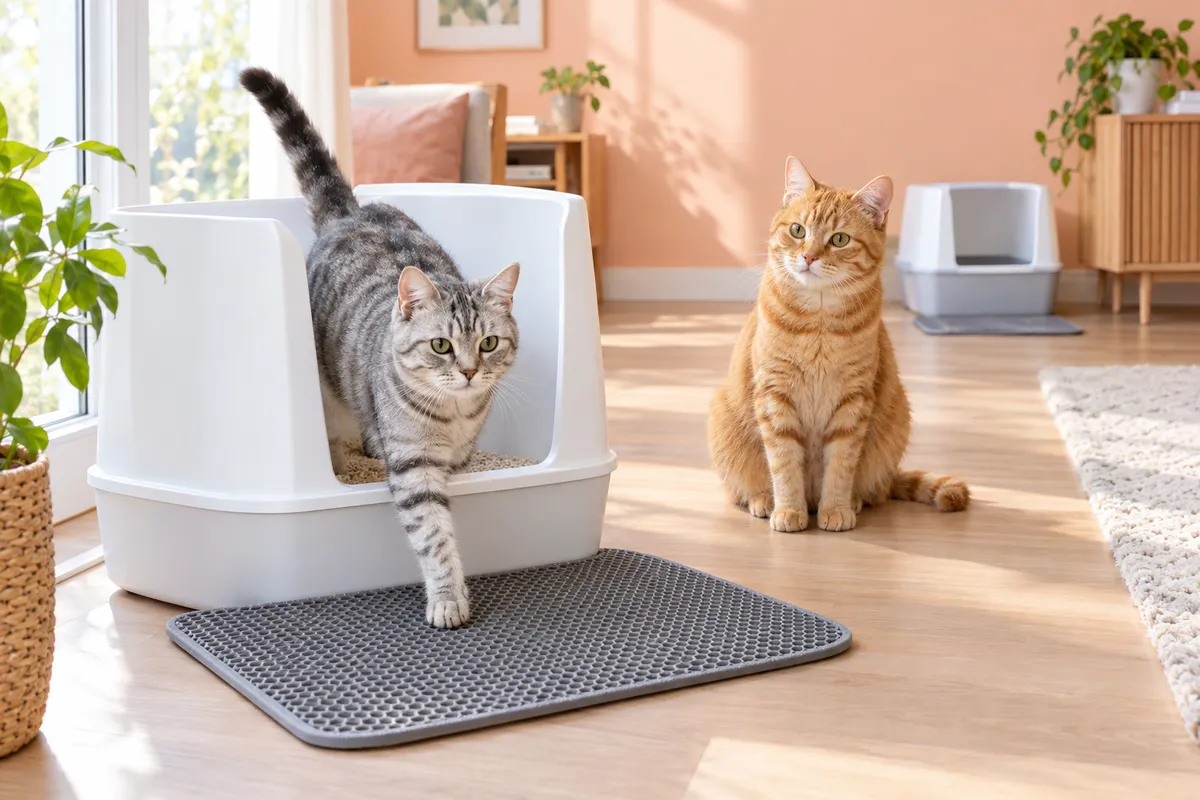
Put boxes in different rooms, and on every floor you share with your cats. Two boxes side by side count, in a cat's eyes, as one big bathroom: a cat that wants to block the way can stand in one doorway and guard both.
The ASPCA describes the ideal spot as quiet but not cornered: cats like to see who is coming and to have more than one way out. That gives a short checklist for each box:
- Escape routes. Leave open space on at least two sides of the box, and avoid tight closets or the far end of a narrow hall.
- Away from food and water. Keep bowls in a different area, ideally a different room.
- Away from noisy machines. A washer, dryer or furnace that starts up mid-visit can make a box feel unsafe.
- Easy to reach. For a kitten or an older cat, skip spots up a full flight of stairs and pick a box with a low step-in.
- Out of high traffic. A busy doorway or the spot where the dog naps is not a relaxing bathroom.
Each box needs its own clear landing zone too. A wide litter mat in front of the entrance catches the granules that cling to paws, so the path out stays clean and inviting.
Litter box types: open, covered, top-entry and more
Most multi-cat homes do well with large, open boxes, then add one or two other styles for specific needs. The ASPCA notes that most cats prefer large boxes they can enter easily, and that most cats do not like lids. Use a covered or top-entry box where it solves a real problem, such as a dog who visits the box, and keep at least one open option for everyone.
| Type | What it is | Worth knowing |
|---|---|---|
| Open | A plain tray with low or medium walls | Easy entry and an all-round view; litter can spill over the sides |
| High-sided | Open on top with tall walls and a lower entry cut-out | Holds in kicked litter and spray while keeping an open view |
| Extra-large | A long, deep tray made for big cats or several cats | More room to turn and dig; needs more floor space and more litter |
| Covered (hooded) | A box with a hood and front door, sometimes a carbon filter | Hides the view and holds in scatter; one way in and out |
| Top-entry | A tub with a hole in the lid that cats hop into | Keeps dogs and toddlers out; not ideal for kittens, seniors or stiff joints |
| Stainless steel | A metal tray, often high-sided | Smooth surface that does not scratch from scooping |
| Self-cleaning | A powered box that rakes or sifts clumps into a sealed drawer | Needs a power outlet and clumping litter; check the maker's guidance on cat count and weight |
Large and high-sided open boxes
Roomy trays with easy entry, good as the main boxes in a multi-cat home.


Extra room for a busy household
A 20 by 30 inch tray with a clear high-sided shield that leaves the front low, so a big cat can step in, turn around and dig without spilling over the top.
- Open top keeps the view clear
- Low front for easy entry
- Deep base holds a generous layer of litter
Covered, corner and top-entry boxes
Useful for a home with a dog or toddler, or as one of several boxes.


The last box in that row is a two-level sifting system: absorbent pellets sit on a grate, and a pad in the slide-out drawer below catches liquid. It does not clump, so you lift out solids and swap the pad on a schedule rather than scooping clumps.
Which cat litter types work in a multi-cat home
Start with unscented clumping litter, which the ASPCA says most cats prefer, and keep the same kind in every box so nobody has to choose between favorites. Cats can also prefer the litter they knew as kittens, so ask about it when you adopt. If you want to try another texture, change one box at a time and keep the familiar litter in the rest.
| Litter | Texture | How it works in the box |
|---|---|---|
| Clumping clay | Fine to medium sand-like grains | Forms firm clumps you scoop out daily; heavier to carry |
| Silica crystals | Small, light, glassy beads | Absorbs liquid into the crystals; most kinds do not clump, so you stir and replace in full |
| Pine | Pellets that break into sawdust when wet | Non-clumping; sift the sawdust through a wide-slat scoop |
| Paper | Soft, chunky recycled pellets | Non-clumping and light; change it more often |
| Tofu, corn, wheat, pea | Small plant-based granules or short pellets | Usually clumping and light; check the label for flushing guidance |
Clumping clay for several cats
Unscented and multi-cat formulas, so every box can stay the same.


Crystal, pine, paper and plant-based litters
Other textures to try one box at a time.


A scoop and change routine that keeps every box fresh
Scoop every box at least once a day, and twice is kinder when several cats share. The ASPCA suggests daily scooping and a full rinse about once a week with unscented soap or baking soda. With more cats, the boxes simply fill faster, so a set routine matters more than any gadget.
- Daily: scoop clumps and solids from every box, not just the busiest one, and top up to a steady depth.
- Weekly: empty one box at a time, wash it with warm water and unscented soap, dry it fully and refill with fresh litter.
- Non-clumping litters: stir or sift daily and replace the whole box more often, following the litter's label.
- Keep a scoop at each box in a holder, so tidying on the way past takes seconds.
- Rotate the wash day so there are always clean boxes in use.
Scoops and a place to keep them
Wide metal scoops for clumping litter, a slatted one for pellets and a tidy caddy.


Litter mats and odor basics
Odor control in a multi-cat home comes mostly from clean boxes and fresh air, not from fragrance. Scoop often, wash on a rhythm, place boxes where air moves, and take waste out of the room in a sealed bag or pail. Many cats avoid strong scents, so skip heavily perfumed litters and sprays near the box.
Litter mats
Large mats catch more; one jumbo size fits in front of two boxes in a utility room.


Waste pails and bags
Seal scooped litter until bin day.


Browse every box, mat and scoop in litter boxes and accessories, and compare formulas in clumping litter.
When a cat stops using the litter box
If a cat goes outside the box, strains, visits much more or less often, or seems uncomfortable, ask your vet first. Changes in bathroom habits can have causes that only a vet can check. Once your vet has seen your cat, go back over the basics in this guide: enough boxes, the right places, a clean routine and a litter everyone accepts.
A calmer home helps everyone settle too. Daily play gives each cat a positive outlet; our indoor cat play routine shows how to build one, and extra vertical space from a cat tree gives each cat a spot of their own.
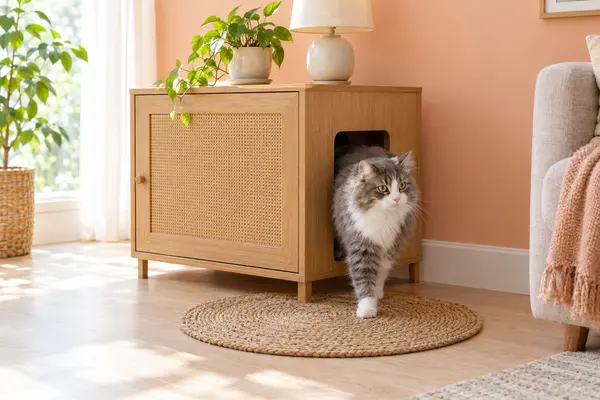
If a box has to live in a living room or bathroom, our litter box furniture guide explains how to size an enclosure, where the entry should go and how to keep it aired.
Questions people ask
Can multiple cats use one litter box?
Some cats will share, but one box for several cats fills quickly and leaves no backup if a cat finds it taken or untidy. The ASPCA's guideline is one box per cat plus one extra. Adding boxes in different rooms is usually the simplest improvement.
How many litter boxes do I need for 2 cats?
Three: one for each cat plus one extra, following the ASPCA's guideline. Place them in different rooms, and on different floors if you have them, rather than side by side.
Can I have 3 cats and 2 litter boxes?
It can work for some households, but it is below the one per cat plus one guideline, which suggests four boxes for three cats. If you notice crowding at the boxes or accidents, add boxes in new locations, and ask your vet about any change in a cat's habits.
What type of litter box do most cats prefer?
The ASPCA says most cats prefer large boxes they can enter easily and do not like lids. A large open or high-sided box with a low entry suits most cats. Covered or top-entry boxes are best added as extra options.
What litter box is best for 4 cats?
Plan five boxes, mostly large or extra-large open trays, spread across different rooms and floors. A self-cleaning box can be one of the five if its maker says it handles several cats, but it does not replace the extra boxes.
How do I control litter box odor with multiple cats?
Scoop every box at least daily, wash each one about weekly with unscented soap, keep boxes where air moves, and seal waste in a pail or bag. Unscented clumping litter keeps things simple, since many cats avoid strong fragrance.
About the numbers
- ASPCA, Litter Box Problems, read 2026-10-07: One box per cat plus one extra; quiet spots with escape routes; most cats prefer large boxes, no lids or liners, and unscented clumping litter; scoop daily and rinse weekly.
- Google search results and people also ask, United States, read 2026-10-07: Questions: Can multiple cats use one litter box? Can I have 3 cats and 2 litter boxes? What type of litter box do most cats prefer? What litter box is best for 4 cats?