Types of Cat Beds Compared: Caves, Donuts, Hammocks and Cots
The main types of cat beds are caves, donut beds, felt pods, window hammocks, warming beds, raised cots and beds built into cat trees. Match the bed to how your cat sleeps: curled, stretched, hidden or high up.
In short
- The main types of cat beds are cave and hooded beds, donut beds, felt pods, window and radiator hammocks, heated and self-warming beds, raised cot beds and beds built into cat trees.
- Watch how your cat already sleeps: curlers like round donut beds, sprawlers like flat cots and mats, hiders like caves, and climbers like hammocks and tree perches.
- Size a bed from your cat's stretched-out length, not its curled-up size, and choose one with room for a full sprawl if your cat ever lies flat.
- Seniors do best with a low, easy entry and a firm base; kittens do best with a small, washable bed they can find again easily.
- A cover that unzips and goes in the washing machine saves the most effort; felt and wool pods are usually spot cleaned or hand washed instead.
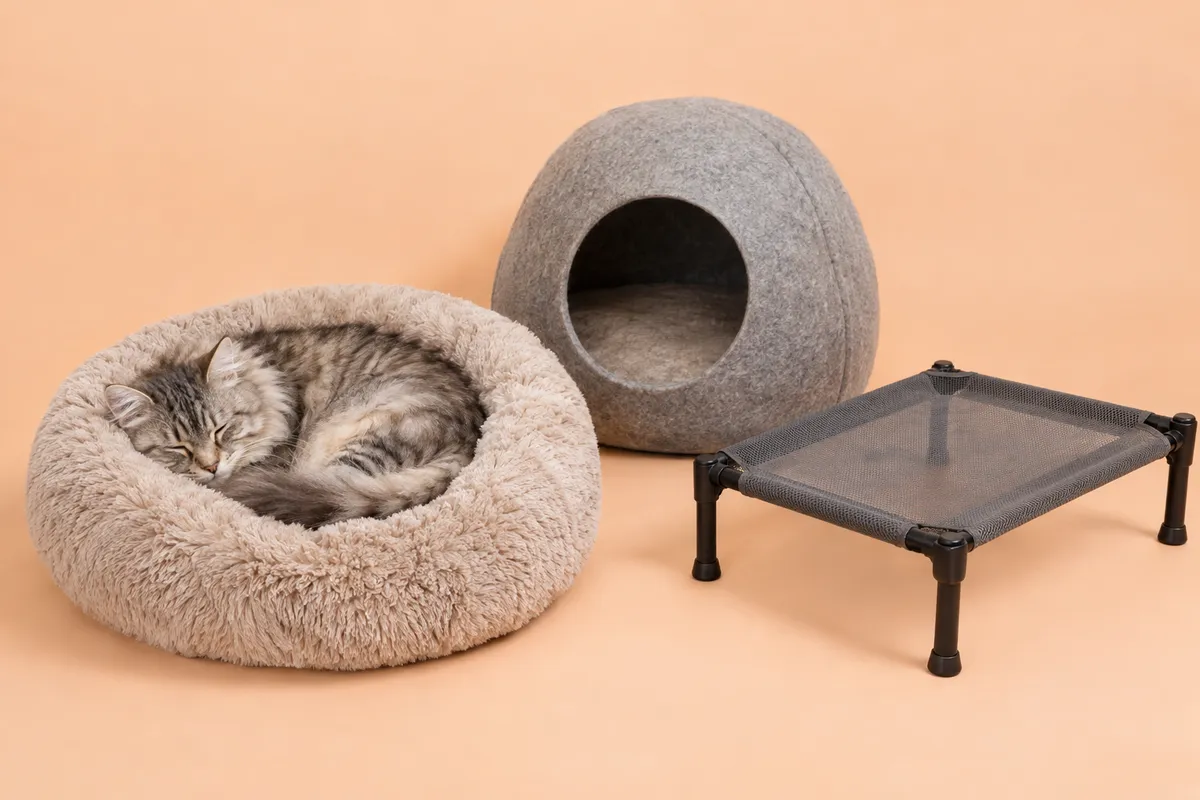
The types of cat beds are cave and hooded beds, donut beds with a raised rim, felt pods, window and radiator hammocks, heated and self-warming beds, raised cot beds, and beds built into cat trees. The right one depends on how your cat sleeps: curled tight, stretched out, tucked out of sight, or up high where it can watch the room.
Cats spend a lot of their day asleep: the Sleep Foundation reports that more than half of cats sleep between 12 and 18 hours a day. Below, each type is compared, then matched to five kinds of sleeper, with sizing and washing notes.
What are the main types of cat beds?
Seven main types differ in how enclosed they are, how high they sit and how easy they are to wash.
| Type | Shape | Best for | Washing | Watch for |
|---|---|---|---|---|
| Cave or hooded bed | Covered dome or cube with one doorway | Hiders, shy cats, cold homes | Most have a removable cushion; check if the shell is machine washable | Can feel warm in summer; doorway must suit your cat's size |
| Donut bed | Round cushion with a raised, plush rim | Curlers, kittens, small cats | Often fully machine washable | Long faux fur holds hair and needs a lint roller |
| Felt pod | Molded wool or polyester felt cave | Hiders who also like to play | Spot clean or hand wash; some unzip into two halves | Felt pills over time; keep away from heat sources |
| Window or radiator hammock | Fabric sling on a frame that mounts to glass, a sill or a radiator | Sunbathers, watchers, climbers | Covers usually zip off | Weight limits and secure mounting matter |
| Heated or self-warming bed | Pad or bed that holds body heat or plugs in | Cats who seek warm spots, older cats | Self-warming pads often wash; electric pads need care | Electric beds need a chew-safe cord and auto shut-off |
| Raised cot bed | Taut mesh or fabric on legs | Sprawlers, warm homes, porches | Wipe or remove the fabric | Little padding for a cat who likes to burrow |
| Bed in a cat tree | Condos, baskets and hammocks on a tower | Climbers, multi-cat homes | Cushions vary; condos are vacuumed | Needs room and a stable base against a wall |
Are cave and hooded cat beds good for shy cats?
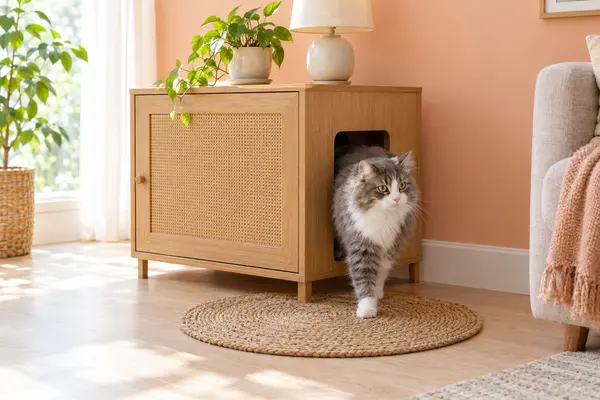
Yes, a cave or hooded bed is the classic choice for a cat who likes to sleep out of sight. The roof and walls block light and movement, and the single doorway lets your cat watch the room without being seen. Cube-style houses with a firm frame hold their shape, while softer pods with a plush lining fold down if your cat prefers to sit on top.
Check the doorway first: your cat should walk in without crouching and turn around inside. A lift-out cushion and a non-slip base make life easier.
Cave and hooded beds
Covered beds with a single doorway and a soft lining.


What is a donut cat bed?
A donut cat bed is a round, padded bed with a thick raised rim all the way around, shaped so a cat can curl into the middle and rest its chin on the edge. The rim is the whole idea: it gives your cat something to lean against on every side, the way it would press against a sofa arm or a pile of laundry.
Most are filled with polyester fiber under faux fur or short plush, and many are machine washable. For a big cat who also stretches out, size up.
Donut beds with a raised rim
Round beds for curlers, in small and roomier sizes.


Are felt cat caves worth it?
Felt caves are worth it for a cat who likes a snug hideout that also doubles as a play spot. Felt is a dense fabric made by pressing fibers together, so a felt cave keeps its rounded shape without a frame. Wool felt pods are usually molded by hand with soap, water and pressure, while polyester felt donut caves often zip apart into two halves, a bed and a dome.
Wool felt is spot cleaned or hand washed cool, then reshaped while damp. Zip-apart polyester felt is easier, since the inner cushion usually washes on its own. Expect a paw to pop out of the peekaboo holes now and then.

A hand-felted wool cave
A molded merino wool cave with a round opening and a soft, firm shell that holds its shape. It is a good fit for a cat who naps alone and likes a quiet, dim spot.
- Natural wool felt, shaped by hand
- Can be pressed flat into a cushion if your cat prefers lying on top
- Spot clean or hand wash cool
Felt pods and caves
Wool and polyester felt caves, including zip-apart tunnel styles for two cats.


Do cats like window and radiator hammocks?
Many cats do: a hammock gives warmth and a view. Window hammocks clip to glass with suction cups or rest on the sill; radiator hammocks hang from a radiator on hooks.
Clean the glass before fixing suction cups, press them firmly and test the hammock with your hand first. Sill-supported frames feel steadier for heavy cats. For radiator hammocks, use one made for radiators and check the radiator stays comfortable to touch. Our cat window perch guide covers setup in depth.

A window perch supported from below
A plush bed that rests on a metal frame braced from below, so the weight sits on the frame as well as the suction cups. A thoughtful pick for a bigger cat who loves the window.
- Raised plush rim to lean against
- Metal frame support
- Room for a cat to turn around
Window perches and hanging hammocks
Suction-cup, sill and hook-on hammocks for sun and bird watching.


Heated vs self-warming cat beds: which is which?
A self-warming bed has no plug: a reflective layer bounces your cat's own body heat back. A heated bed plugs in and adds gentle warmth from a low-wattage pad. On any electric bed, look for a chew-resistant cord, adjustable temperature and auto shut-off, and ask your vet first for a cat with a health condition.
We compare the two in detail in heated vs self-warming cat beds.
Warming pads and heated beds
Self-warming mats with no plug, and electric pads with temperature control.


What is an elevated cat bed for?
An elevated cat bed, or cot, is a taut sheet of mesh or fabric stretched over a frame on short legs, so your cat lies on a firm, even surface with air moving underneath. It is the bed for a sprawler: a cat who flops on its side with legs out, or lies flat on a cool floor on warm days.
Cots suit warm homes, sunrooms and screened porches. Hexagon and bowl-shaped frames add a gentle curve; add a thin blanket for a cat who likes to burrow.

A raised hexagon cot
A breathable mesh bed stretched over a sturdy hexagon frame, wide enough for a long cat to stretch flat. Easy to move between rooms or onto a porch.
- Breathable mesh surface
- Low frame that is easy to step onto
- Suits indoor and covered outdoor spots
Raised cots and free-standing hammocks
Flat and bowl-shaped raised beds for cats who like to stretch out.


Should I get a cat tree with a bed built in?
A cat tree with built-in beds is a good choice when your cat likes to sleep high up, or when you share your home with more than one cat. Towers often combine condos (enclosed cubes), baskets, hammocks and padded top perches, so one piece of furniture covers the hider, the climber and the watcher at once.
Choose a wide base, set it against a wall, and check each perch is deep enough for your cat to lie down. Browse more in cat trees and condos.
Cat trees with condos, baskets and hammocks
Towers that combine beds with climbing and scratching.


Which cat bed suits which kind of sleeper?
Notice where and how your cat naps for a few days, then match the bed to the habit.
- The curler sleeps in a tight ball with its tail over its nose. Choose a donut bed or a small round bed with a rim to lean on.
- The sprawler lies flat on its side or back. Choose a raised cot, a large flat mat or a wide window hammock.
- The hider naps under beds, in boxes or in closets. Choose a cave, a hooded bed or a felt pod, and place it somewhere quiet.
- The senior may climb less and like a firm, warm spot. Choose a low bed with a gentle rim or no rim to step over, plus a self-warming pad. See our senior cat home guide for ramps and steps.
- The kitten sleeps in many short naps and loves to play. Choose a small, machine washable donut or pod that is easy to find, and keep it near where the kitten plays.
Low, easy-entry beds for older cats
Soft bolster and round beds with a low front to step into.


What size cat bed do I need?
Measure your cat while it sleeps stretched out, from nose to the base of the tail, and choose a bed at least that long inside the rim. A bed sized only for a curled-up cat will feel cramped the first time your cat stretches. For caves and pods, also check the doorway width and the inside height so your cat can turn around.
- Measure your cat lying stretched out, nose to base of tail.
- Compare that with the inside measurement of the bed, not the outer size with the rim.
- For covered beds, check the opening and inside height.
- If two cats share, size up or choose a tunnel-style pod made for more than one cat.
How do I wash a cat bed?
Check the care label, then shake or vacuum out loose hair. Most covers and donut beds go in the machine on a gentle, cool cycle with mild, unscented detergent; air dry or tumble low so faux fur does not mat. Felt and wool pods are spot cleaned or hand washed cool and air dried. A lint roller between washes keeps plush beds fresh.
Questions people ask
What type of bed do cats like best?
There is no single favorite. Cats who curl up tend to choose round beds with a rim, cats who stretch out prefer flat cots or mats, and shy cats prefer covered caves. Watching where your cat naps today is the best guide.
Are donut beds good for cats?
Donut beds suit cats who sleep in a ball, because the raised rim gives them something to lean against on every side. Choose one with a washable cover and a size that leaves room for your cat to stretch.
Where should I put a cat bed?
Put it where your cat already likes to nap: a quiet corner, a sunny window or near you in the evening. Keep it away from the litter box and food bowls, and off busy walkways.
How often should I wash a cat bed?
Shake out or vacuum the bed every few days and wash the cover regularly, following its care label. Wash it sooner after any accident or if your cat has been unwell, and ask your vet for advice in that case.
Why won't my cat use its new bed?
New beds smell unfamiliar. Place it where your cat already sleeps, add a blanket that smells of home and give it a week. If your cat still prefers another spot, try a different type that matches how it sleeps there.
About the numbers
- Sleep Foundation, How Much Do Cats Sleep?, read 2026-11-01: More than half of cats sleep between 12 and 18 hours a day.