Cat Litter Mat Buying Guide: Mats, Boxes and Scoops That Stop Scatter
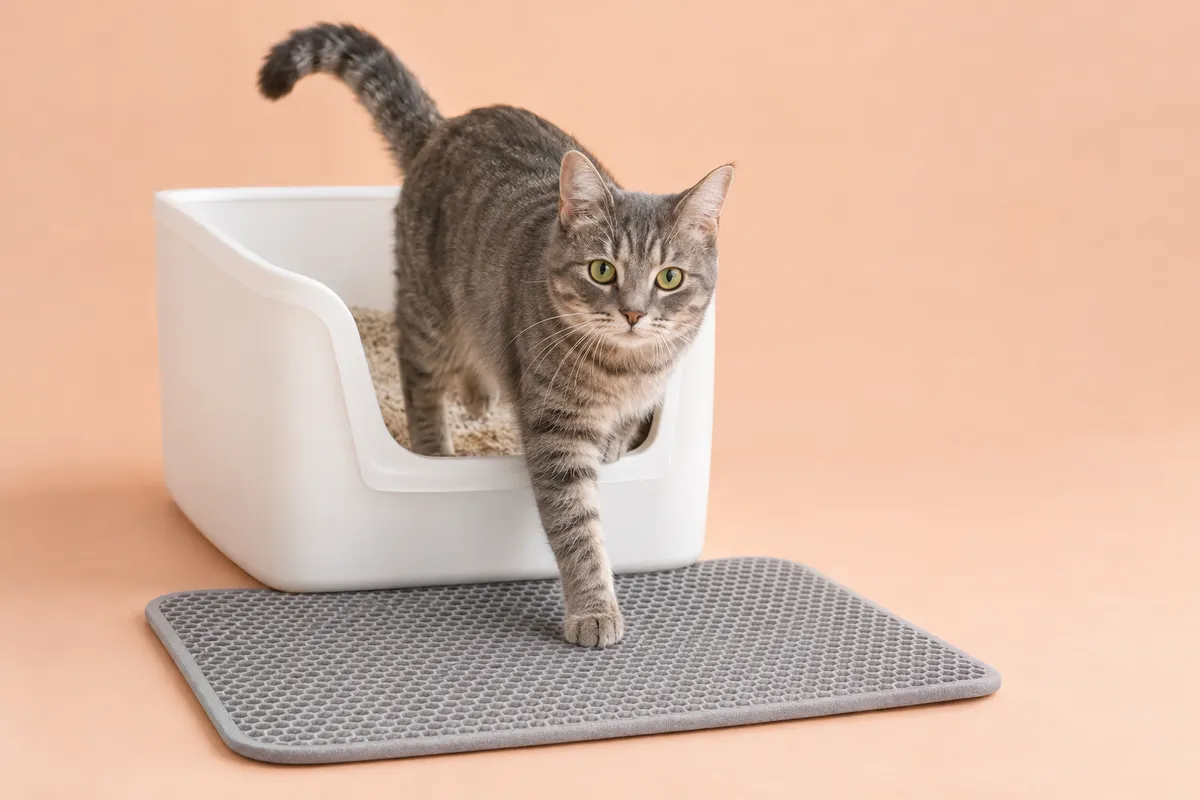
A cat litter mat works when it is big enough that every paw lands on it as your cat steps out. Pair it with a high-sided or top-entry box and a good scoop.
In short
- A cat litter mat traps the granules stuck between your cat's toes, so it must sit exactly where the paws land on the way out.
- Honeycomb double-layer mats catch the most litter and let you pour it back, while PVC and rubber scatter mats are easier to shake out and sweep.
- Size the mat to your cat's exit path: at least one full stride beyond the entrance, and wider than the box if your cat hops out over the side.
- High-sided and top-entry boxes stop litter before it leaves the box, so a smaller mat can then do the rest.
- If a cat suddenly starts avoiding the litter box, ask your vet before changing anything else.
Hello, lovely. If you keep finding little granules in the hallway, the fix is usually a cat litter mat placed so your cat's paws land on it right after they step out of the box. Litter does not fly far on its own. It rides out between toes and in fluffy paw fur, then drops off over the next few steps. Catch those steps and most of the mess stays in one place.
This guide walks through the main mat types, how to size and place one, the boxes that keep litter in from the start, and the scoops and catchers that finish the job. If you are still choosing a litter, start with our cat litter comparison, because granule size changes how much tracks.
Which type of cat litter mat should you choose?
Choose a honeycomb double-layer mat if you want to catch the most litter, and a PVC, rubber or silicone mat if you would rather shake or wipe it clean. Each one works differently under a paw, so it helps to know what is going on underneath.
| Mat type | How it traps litter | How you clean it | Good for |
|---|---|---|---|
| Honeycomb double layer | Granules fall through a top layer of holes and sit in a sealed bottom layer | Peel the layers apart and pour litter back into the box or the bin | Heavy trackers, fine clumping litter, homes that want less sweeping |
| PVC or vinyl coil (scatter mat) | A springy, loopy texture brushes paws as they walk over it | Shake outside, vacuum, or rinse and hang to dry | Big floor areas, two boxes side by side |
| Rubber or textured mat | Soft ridges or nubs flex under paws and hold granules in the grooves | Vacuum, shake or wipe down | Cats who dislike rough textures, rooms with slippery floors |
| Silicone mat | Raised patterns hold granules; waterproof all the way through | Wipe, rinse or tip into the sink | Easy wipe-downs and accidents near the box |
| Absorbent fabric mat | A soft top layer catches litter and moisture; a waterproof back protects the floor | Shake out and machine wash | Cats with sensitive paws, homes that prefer a washable rug feel |
Honeycomb double-layer mats
The two layers separate so you can tip the caught litter straight back into the box.


Scatter, rubber, silicone and washable mats
Easy to shake out or wipe, and kind to paws that step on them every day.


How big should a litter mat be, and where does it go?
A mat should be big enough that your cat cannot step out without landing on it. Watch your cat leave the box a few times. Most cats take one or two strides before the litter stops falling from their feet, so the mat needs to cover that whole path, not just the patch in front of the door.
- Find the exit. Front-entry boxes have one clear exit; open pans let a cat hop over any side; top-entry boxes send cats out through the lid.
- Measure one full stride beyond that exit. A small mat that ends right at the box edge often catches very little.
- For open pans, choose a mat wider than the box, or set the box on the mat so the edges stick out on every side.
- For two boxes side by side, a jumbo mat underneath both keeps everything in one zone. Our guide to litter boxes for multiple cats covers how many boxes to have and where.
- Check that the mat lies flat. A curling corner is a trip hazard and a hiding spot for litter.
Mats on this store run from compact sizes around 24 by 15 inches, which suit a small bathroom corner, up to jumbo mats around 4 by 3 feet that fit under two boxes. Sizes are listed on each mat's own page, so measure your floor space first and pick to fit.
Which litter boxes keep litter inside in the first place?
High-sided and top-entry boxes stop most scatter before it ever reaches the floor. A cat that digs hard flings litter sideways, and taller walls simply catch it. Top-entry boxes go further: the cat climbs out across a grooved lid that acts like a built-in mat.
- High-sided open boxes keep the easy, airy feel of an open pan with tall walls on three sides and a lower step-in. Good for big cats and enthusiastic diggers.
- Stainless steel boxes with tall sides do the same job in metal, which does not scratch and is easy to wipe out.
- Top-entry boxes suit young, agile cats and homes with a dog who likes to investigate the box. They are not a fit for senior cats or any cat who finds jumping hard.
- Low-entrance boxes are kinder for older cats; pair them with a generous mat since there is less wall to hold litter in.
High-sided and top-entry boxes
Tall walls or a lid exit catch flung litter before it leaves the box.


For a cat who digs like a terrier
A large top-entry box with a grooved lid gives your cat a place to wipe their paws on the way out, and the lid keeps curious dogs out too.
- Cat exits across a textured lid that holds granules
- Comes with a scoop
- Best for agile adult cats, not seniors
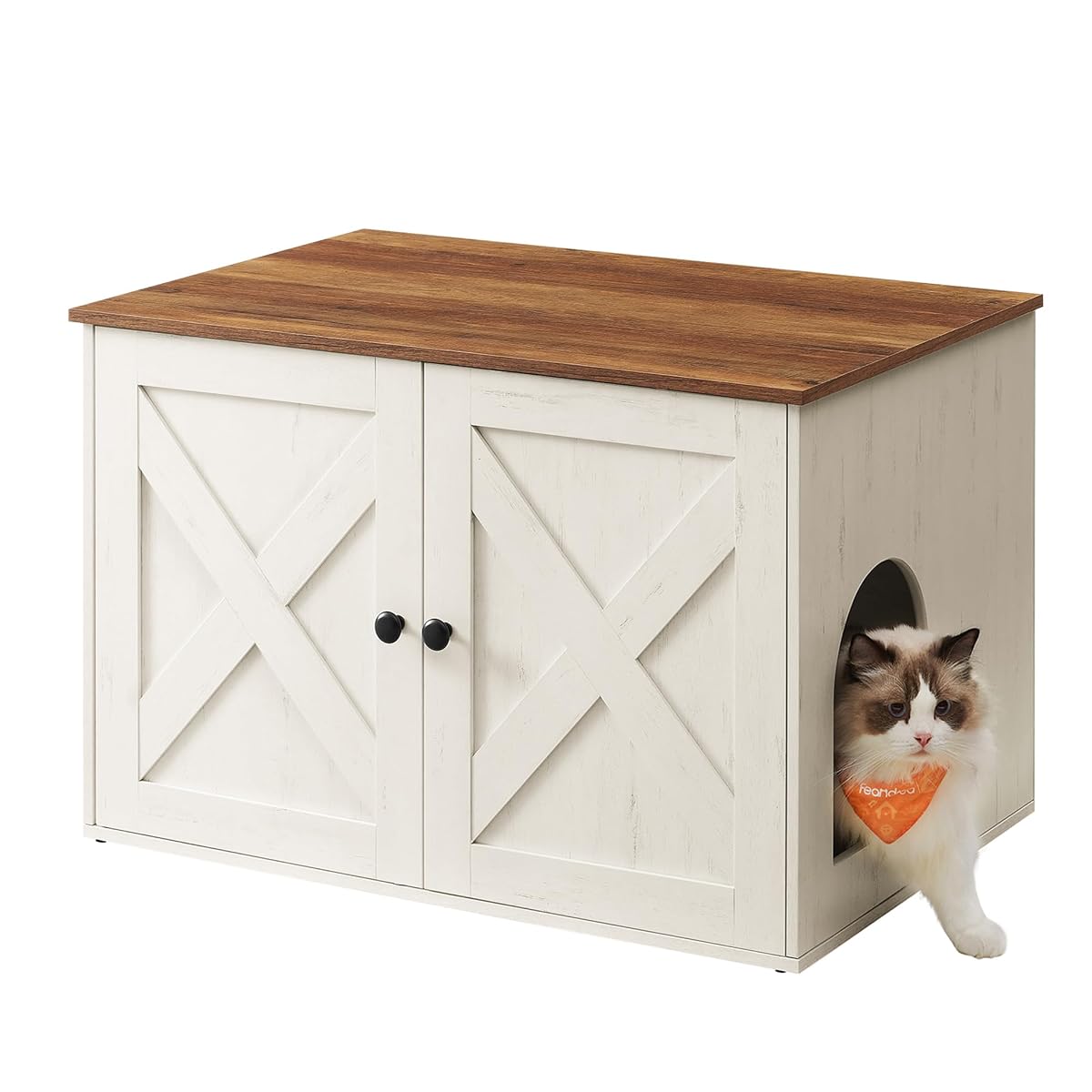
Litter box enclosures: furniture with a mat inside
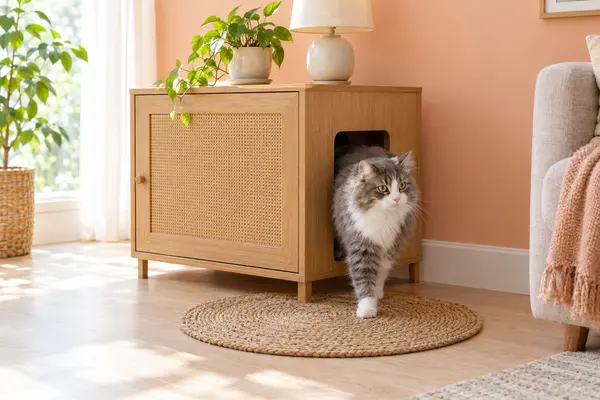
An enclosure hides the box inside a cabinet, bench or planter and gives litter one more place to drop before it reaches your floor. Many have a side entrance, so the cat walks a short way inside the cabinet before stepping out, and that inside floor is the perfect place for a mat.
- Measure your box first, then check the enclosure's inside dimensions, not just the outside.
- Look for a removable back or a wide door so you can reach in to scoop.
- Lay a mat on the cabinet floor in front of the box, and a second one outside the cat door if your cat is a heavy tracker.
- Leave room for air. A closed cabinet needs a vent or gap, and the box inside still needs daily scooping.
Enclosures and splash guards
Hide the box, contain the scatter, and keep a mat right where paws step out.



Sharing the house with a dog? Our dog and cat room-by-room guide shows where to put the box so it stays a calm, cat-only spot.
Scoops and litter catchers that finish the job
A sturdy scoop keeps the box tidy, and a tidy box means less litter clinging to paws. Metal scoops do not bend under a full load and let loose litter fall through quickly, so clumps come out clean and the rest stays in the box.
- Match the slot width to your litter. Wider slots suit coarse pine or crystals; narrower slots suit fine clumping clay.
- A deep scoop with a long handle reaches the corners of tall boxes without tipping litter over the wall.
- A scoop holder by the box keeps it off the floor, and a small lidded bin for clumps saves a trip outside every time.
Scoops worth reaching for
Solid metal scoops that sift fast and stand up to daily use.


Browse every mat, box and scoop together in litter boxes and accessories, or search for honeycomb litter mats to compare sizes.
How to clean a cat litter mat
Empty a litter mat every day or two, and give it a proper wash every week or two, or right away after an accident. Little and often keeps the mat working and stops litter from grinding into the texture.
- Daily: fold a honeycomb mat in half and pour the caught litter back into the box or the bin. Shake a scatter mat outside or run the vacuum over it.
- Weekly: rinse rubber, PVC and silicone mats in the tub or outside with warm water and a mild, unscented soap. Separate honeycomb layers and rinse both.
- Washable fabric mats: shake out, then machine wash following the care label.
- Dry fully before putting the mat back. A damp mat collects litter as paste.
- Keep a spare so the box is never without a mat on wash day.
Questions people ask
Do cat litter mats really work?
Yes, when they are big enough and in the right place. Most tracked litter falls off in the first stride or two outside the box, so a mat that covers that path catches most of it. A mat that is too small or set to one side will catch very little.
What is better, a honeycomb mat or a PVC scatter mat?
A honeycomb double-layer mat holds more litter and lets you pour it back into the box, which suits heavy trackers. A PVC or rubber scatter mat is quicker to shake, vacuum and rinse. Some homes use a honeycomb mat right at the exit and a scatter mat beyond it.
Where should I put the litter mat?
Put it where your cat's paws land as they leave the box. For a front-entry box that is right in front of the door; for an open pan, under and around the whole box; for a top-entry box, in front of the side your cat jumps down from.
How often should I clean a litter mat?
Empty it every day or two and wash it every week or two, or straight away after an accident. Let it dry completely before laying it down again, and keep a spare for wash days.
My cat stopped using the litter box after I added a mat. What should I do?
Take the mat away and see if your cat goes back to the box. Some cats dislike certain textures, so a softer mat may suit them better. If a cat suddenly avoids the litter box, ask your vet.
Is a top-entry litter box good for every cat?
No. Top-entry boxes suit agile adult cats and keep dogs out, but kittens, senior cats and cats who find jumping hard do better with a low-entrance or high-sided open box.
About the numbers
- Hey Lovi catalogue, product listings, read 2026-10-28: Mat sizes from about 24 x 15 inches (compact) to about 4 x 3 feet (jumbo, fits two boxes) as listed on each product