Dog and Cat in the Same House: A Room-by-Room Setup Guide
Give the cat places the dog cannot reach (high shelves, a gated room, a top-entry litter box), feed them apart, and keep the living room as a calm space both share.
In short
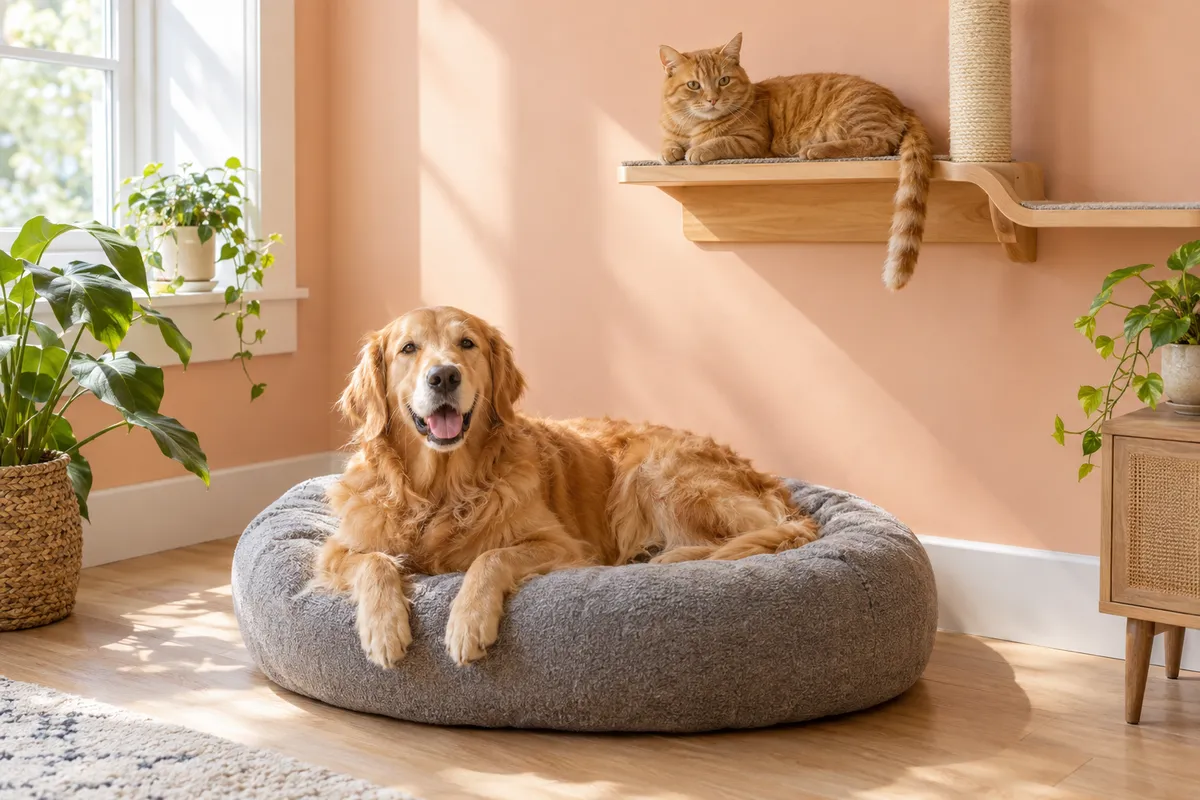
- A dog and a cat share a home most easily when the cat has places the dog cannot follow: a gated room, high shelves and a tall cat tree.
- A pet gate with a small cat door lets the cat walk through while a larger dog stays on the other side.
- Feed them apart: cat bowls on a counter, shelf or raised stand, dog bowls on the floor in another spot.
- A top-entry litter box or a litter box enclosure keeps a curious dog's nose out of the cat's box.
- Give each pet its own bed and quiet corner, and keep small cat toys in a closed basket when the dog is around.
- For worries about how your pets get along, or anything about their health, ask your vet.
Hello, lovely. A dog and a cat can live happily under one roof, and the setup does a lot of the work. The idea is simple: the cat gets up and away, the dog stays on the ground, and the busiest room in the house becomes a calm place they both enjoy. Below is a room-by-room plan you can put together in a weekend. It is practical setup only. If you have questions about how your two get along, or about their health, ask your vet.
Bringing home a second cat rather than a dog? Our second cat room setup checklist covers that one.
The hallway and doorways: a gate with a cat door
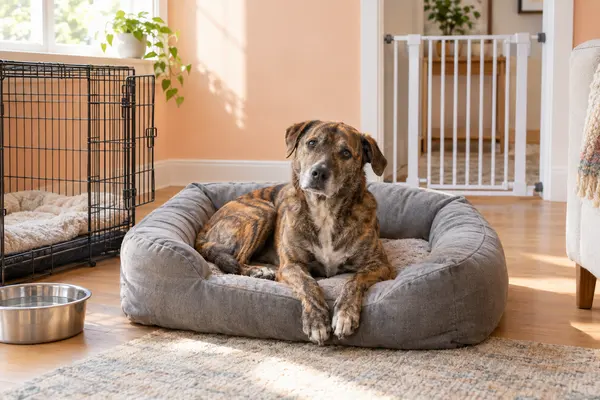
A gate across one doorway gives the cat a whole room the dog cannot enter. The most useful kind has a small swing door built into the bottom panel: the cat steps through, a medium or large dog cannot. Pick the room the cat already likes (a spare bedroom or a home office works well) and put the litter box, a bed and the cat's food in there.
- Measure the opening first. Pressure-mounted gates fit a range of widths, and many come with extension pieces for wider doorways.
- Check the cat door size against your dog. A cat door of about 7 by 5 inches suits a cat and keeps out most dogs, but a very small dog may fit through too. If yours does, choose a taller gate or a room door with a cat flap instead.
- Pick a height that fits your dog. A taller gate suits a dog that likes to stand up on things.
- Walk-through gates save your back. A door that swings open and closes by itself means you are not stepping over the gate with a laundry basket.
Gates with a small pet door
Each has a cat-size door in the bottom panel; check the width range against your doorway.


Every room: go vertical for the cat
Cats like to watch the room from above, and height is the easiest cat-only zone to create. Wall shelves, steps and a tall cat tree let the cat cross a room, rest and keep an eye on the dog without ever touching the floor.
- Build a route, not a single perch. Two or three shelves set like a staircase let the cat climb up and come down by a different way, so it never feels cornered.
- Put the first step out of the dog's reach. Think about how high your dog can reach standing on its back legs, and start the shelves above that.
- Fix shelves into studs or with the anchors supplied, and check them by pressing down firmly before the cat tries them.
- Add a cat tree near a window. A tall, heavy tree with a wide base gives the cat a lookout and a hiding spot in one.
Wall shelves and steps for a cat route
Wood shelves and steps, several with a sisal or jute top for grip.


Tall cat trees with lookouts and hideaways
Multi-level trees with perches, caves and scratching posts.


Choosing a tree is its own job: our guide on how to choose a cat tree explains height, base size and sisal. A window perch is another good high spot.
The kitchen: feeding stations apart
Most dogs will happily finish the cat's dinner. The fix is two separate stations at two different heights. Cat food goes up high, on a counter, a sturdy shelf, a cat tree platform or inside the gated cat room. Dog bowls stay on the floor, in a different part of the kitchen.
- Raised cat bowls sit on a stand and are often tilted, so the cat eats comfortably from a counter or shelf.
- Wide, shallow dishes suit cats that dislike their whiskers touching the sides of a deep bowl.
- A raised stand for the dog keeps the dog's bowls in one tidy spot and makes it clear which bowls belong to whom.
- Feed at the same times. When both pets eat at once, in their own spots, there is less wandering over to the other bowl. Pick bowls up when meals are done if your dog keeps checking.
Raised bowls for the cat's high station
Ceramic and stainless steel, several wide and shallow.


A raised stand for the dog's floor station
Adjustable height for small dogs and puppies.

The bathroom or laundry room: a litter box the dog cannot reach
A dog nosing in the litter box is one of the most common complaints in a mixed home. You have three good ways around it, and you can combine them.
| Option | How it keeps the dog out | Good to know |
|---|---|---|
| Top-entry litter box | The cat jumps in through a hole in the lid; most dogs cannot or will not climb in | Not for kittens, older cats or cats that find jumping hard |
| Litter box enclosure | A cabinet with a cat-size side opening hides the box inside | Doubles as an end table or bench; check the inside fits your box |
| Box behind the cat gate | The box sits in the gated cat room | Works with any box, including an open low-entry one |
Top-entry litter boxes
The lid has small holes that catch litter from paws on the way out.


Litter box enclosures that look like furniture
Wood cabinets and a planter-style cover, each with a side entrance.



For a dog that keeps visiting the box
A large top-entry box with a perforated lid that doubles as a litter-catching mat. The cat goes in from above, so the opening is not at dog-nose height.
- Lid catches litter from paws
- Scoop included
- Large size suits a full-grown cat
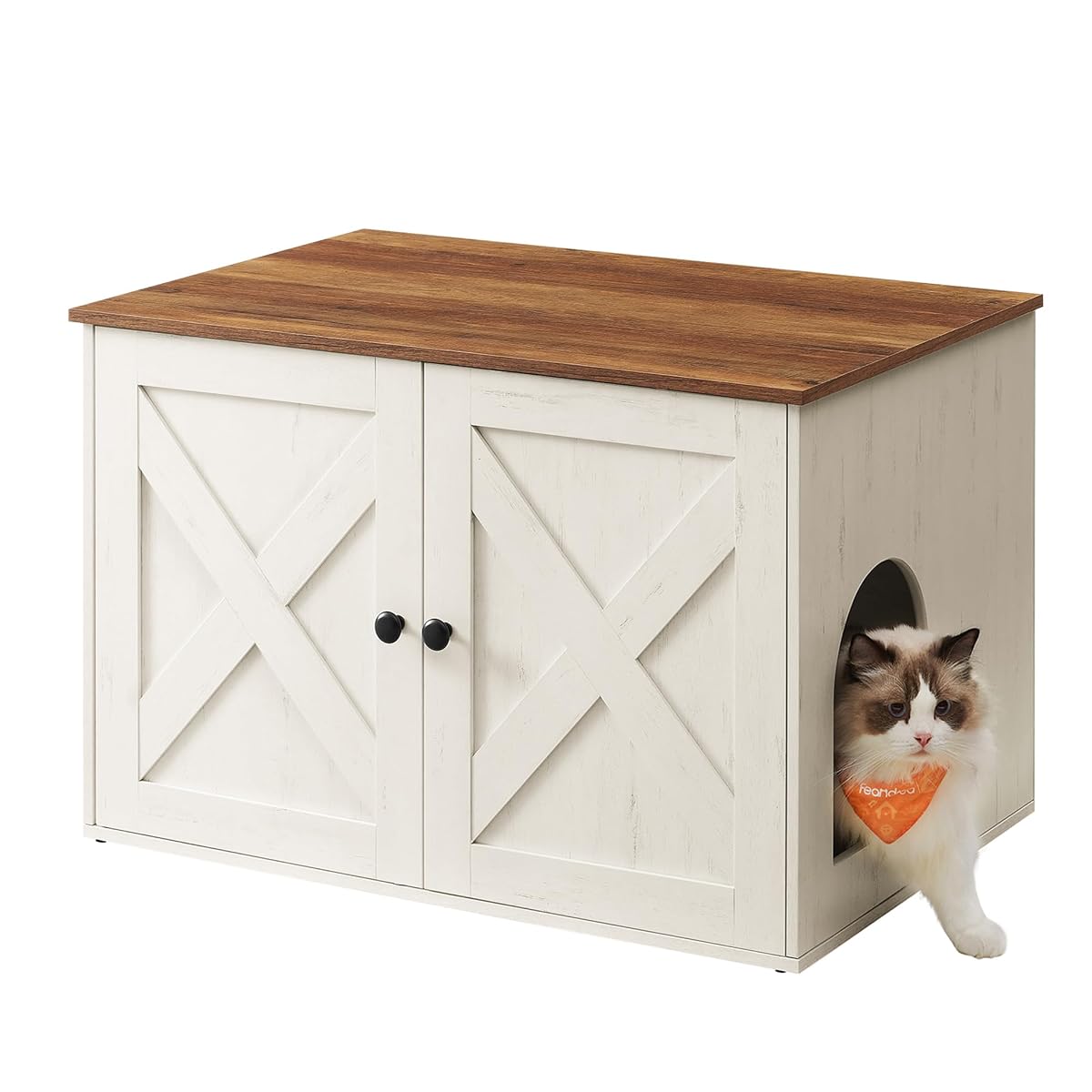
For a living space
A white wood cabinet with double doors on the front and an arched cat opening on the side. The box hides inside, and the flat top works as a side table.
- Front doors open wide for scooping
- Side entry can face a wall to block a dog
- Looks like furniture
Living with more than one cat as well? See litter boxes for multiple cats for how many boxes and where.
Bedrooms and corners: separate beds and quiet spots
Each pet needs a place to rest where the other does not bother it. The cat's bed goes up high or in the cat room; the dog's bed goes on the floor, ideally in a corner where it is not in the walkway.
- A covered cat bed or cave gives a cat a hidden nap spot inside the cat room or on a wide cat tree platform.
- A bolster or orthopedic bed for the dog sits on the floor and gives the dog its own clear spot to settle.
- Washable covers make life easier when two coats of fur land everywhere.
Cat caves and covered beds
Felt, plush and cube styles for a hidden nap.


Dog beds for the floor
Bolster, donut and foam beds in several sizes.


More beds by type are in dog beds.
The play area: toys that will not mix
Small cat toys, like crinkle balls, little mice and springs, are the right size for a cat's paw and also small enough for a dog to pick up. Keep them in a closed basket or in the cat room, and bring them out when the dog is elsewhere. Wand toys go away after play too.
- Play with the cat in the cat room or up on the cat tree.
- Give the dog its own toys, sized for the dog, in its own basket.
- Tidy up at the end of the day, so nothing small is left on the floor overnight.
Small cat toys to keep on the cat's side
Balls, mice and teaser sets.


Baskets for each pet's toys
A lidded or tall basket keeps small cat toys out of reach.


The living room: the shared calm space
The living room is where everyone comes together, so set it up for calm. A dog bed on the floor, a cat perch or shelf up high, and a clear escape route for the cat to the gated room or the next shelf. When the cat can always leave, both pets can relax in the same space.
- Place the dog's bed against a wall, away from the cat's route.
- Put a cat tree or shelf near the sofa or a window, so the cat can join the family from above.
- Keep the doorway to the cat room clear, so the cat can reach the gate quickly.
- Spend calm evenings together and stay close while they share the room.
Questions people ask
Can a dog and a cat live in the same house?
Many do. A home that gives the cat places to get away (a gated room, high shelves, a cat tree) and keeps food, litter and beds separate makes daily life easier for both. If you have worries about how your pets get along, ask your vet.
How do I keep my dog out of the cat's litter box?
Use a top-entry litter box, a litter box enclosure with a side opening, or place the box in a room behind a gate with a cat door. A top-entry box is not ideal for kittens or cats that find jumping hard, so pick the low-entry box behind a gate for them.
How do I stop my dog eating the cat's food?
Feed the cat up high, on a counter, shelf or raised stand, or inside the gated cat room, and feed the dog on the floor somewhere else. Feeding both at the same time and picking bowls up afterwards helps too.
What kind of gate lets a cat through but not a dog?
A pet gate with a small built-in cat door. The cat door sits low in the gate panel and is sized for a cat, so a larger dog stays on the other side. Measure your doorway, and check your dog is too big for the cat door.
Should a dog and cat share a bed?
Give each its own bed so both have a place to rest in peace. The cat's bed works best up high or in the cat room, and the dog's on the floor in a quiet corner. If they choose to nap together, that is their call.
About the numbers
- Product details on this store, read 2026-10-28: Gate widths of 29 to 43 inches with extensions and a 7 by 5 inch cat door; top-entry boxes with perforated, litter-catching lids; enclosure sizes.