Puppy Teething Toys by Stage: Soft Rubber, Frozen, Rope and Rings
Start a teething puppy on soft rubber and puppy-formula chews, add a freezable toy and gentle rope or plush, then size up as the jaw grows. Rotate toys and stay close.
In short
- The best puppy teething toys are soft enough to give a little under a thumbnail, sized so the whole toy cannot fit behind the back teeth, and made for puppies rather than adult power chewers.
- Build a small kit with four kinds of toy: a soft rubber or puppy-formula chew, a freezable toy, a soft rope or plush for gentle tug, and a textured ring.
- Freezable toys add a cold, firm texture that many puppies enjoy chewing; soak or chill them exactly as the label says and hand them over during supervised play.
- Size up whenever your puppy grows into the next weight band on the label, and retire any toy that cracks, tears or loses a piece.
- Rotating three or four toys keeps chewing interesting, and covering cords and tidying shoes away gives your puppy fewer wrong things to chew.
- If your puppy seems sore, stops eating or you notice a loose or broken tooth, ask your vet before trying a new toy.
Hello, lovely: if your new puppy is chewing everything from the table leg to your slipper laces, you are in good company. Puppy teething toys give that urge a better place to go. The short answer: choose softer rubber and puppy-formula chews first, add a freezable toy and something soft to tug, size every toy so it cannot be swallowed, and keep a few in rotation. Here is how to put a kit together, stage by stage, plus how to puppy-proof the room around it.
Just bringing a puppy home? Our new puppy checklist covers the rest of the first week, and this guide fills in the chewing part.
What makes a good puppy teething toy?
A good teething toy is softer than an adult chew, sized for your puppy today and simple to clean. Puppy mouths are small and still changing, so the hard nylon bones built for grown power chewers are the wrong starting point. Look for toys labelled for puppies, with a clear weight band on the pack.
- Give. Press a thumbnail into it. Puppy toys should flex a little, not feel like stone.
- Size. The whole toy should be too big to slip behind the back teeth. If it can disappear into the mouth, it is too small.
- One piece. No glued-on eyes, loose bells or parts that pop off.
- Washable. Rubber and nylon rinse clean; rope and plush go through the wash. See how to clean dog toys for each material.
| Toy type | How it feels to chew | Best moment to offer it |
|---|---|---|
| Soft natural rubber | Squishy, bouncy, can be stuffed | Everyday chewing and solo play in a pen |
| Puppy-formula nylon | Firm with soft nubs and ridges | Settling down after play |
| Freezable fabric or rubber | Cold and firmer than usual | Short, supervised sessions |
| Soft rope | Fibrous, good to grip | Gentle tug games with you |
| Plush, no stuffing | Crinkly and soft | Cuddles, carry and calm play |
| Textured ring | Easy to hold, ridged surface | Chewing while lying down |
Stage one: soft rubber and puppy-formula chews
Start with the softest toys. Puppy rubber is a gentler blend than the classic adult version, and a hollow shape can be stuffed with a little of your puppy's own food for a longer chew. Puppy-formula nylon bones add raised nubs and ridges that give tiny teeth something to work on. Browse more shapes in chew toys.
Soft rubber for first chews
Gentle puppy rubber in several sizes; pick the one that matches your puppy's weight today.


Puppy-formula bones and nubbly chews
Firmer than rubber but made for puppies, with ridges and nubs to explore.


A first toy for the smallest puppies
A soft puppy rubber toy in the extra-small size, with a hollow centre you can stuff and an uneven bounce that turns chewing into a chase.
- Gentle puppy rubber blend
- Stuffable for longer, calmer sessions
- Comes in bigger sizes to grow into
Stage two: freezable toys for a cool, firm chew
Freezable toys are a lovely second texture. Some are fabric you soak in water and freeze; others are rubber you chill or fill. Cold makes the toy firmer and changes how it feels in the mouth, which many puppies find interesting. Treat the cold as a texture, not a remedy, and if your puppy seems uncomfortable, ask your vet.
- Follow the label: soak, fill or chill exactly as the maker says.
- Let a frozen toy sit for a minute so the surface is not icy-sharp.
- Offer it during short, supervised sessions on an easy-to-wipe floor.
- Take it away once it thaws, rinse it and let it dry before the next freeze.
Freezable toys
Soak-and-freeze fabric sticks, chillable rubber and a two-piece ring set.


Stage three: soft rope and plush for gentle tug
Soft rope and stuffing-free plush are for playing together. Keep tug games low and slow: let your puppy pull, move the toy side to side rather than up and down, and let go often so they win. Stop the game if teeth touch skin, and put rope toys away afterwards, because loose threads are not for swallowing. Find more in rope and tug toys and plush toys.
Rope, crinkle and no-stuffing plush
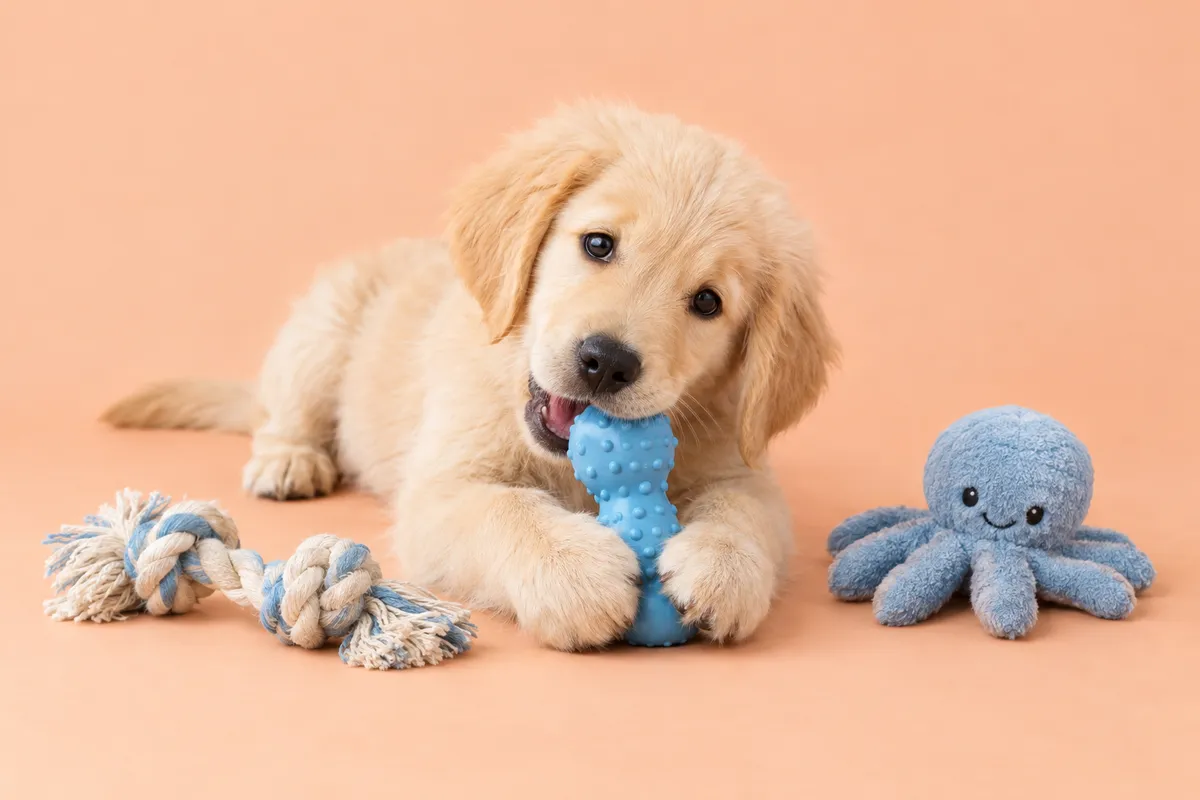
Knotted cotton rope, a rope-and-rubber bone, crinkle octopus legs and flat plush with no fluff inside.


For puppies who love to shake and carry
A stuffing-free plush octopus with crinkle legs: light enough to carry, with long legs that are easy to grab for a gentle tug.
- No stuffing to pull out
- Crinkle sound keeps play interesting
- Soft enough for small mouths
Stage four: textured rings and sizing up
Rings are easy for a puppy to pin between both paws while lying down, and a ridged surface gives them plenty to explore. As your puppy grows, move up through the weight bands printed on each pack. When the toy starts to look small in their mouth, or they can fit most of it in, it is time for the next size.
Rings and ring bones
Puppy-formula rings and ring bones in more than one size.


- Check every few days. Run your fingers over each toy for cracks, splits or loose threads.
- Retire, do not repair. A toy with a missing piece goes in the bin.
- Graduate slowly. Once the adult teeth are in and chewing gets serious, our chew toys for strong chewers guide covers the tougher materials.
A mixed bag to try textures
Not sure what your puppy likes yet? A variety pack lets you test rope, rubber and plush in one go, then keep the favourites and pass on the rest.
Variety packs
Mixed puppy sets with rope, rubber and squeaky plush.


Rotate, supervise and puppy-proof the room
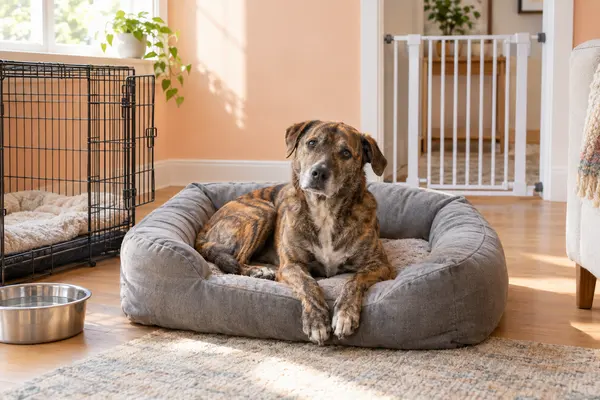
Toys work best inside a simple routine. Leave out three or four at a time and swap the set every few days, so each one feels new again. Stay close while your puppy chews, especially with frozen, rope or plush toys, and use a pen or gated room when you cannot watch. Our guide to what to put in a puppy playpen shows a tidy layout.
Then look at the room from puppy height. Shoes, socks, phone chargers and lamp cords are the usual targets.
- Cords: tuck them behind furniture or slide them into a clear cord cover, and unplug what you do not need.
- Shoes and laundry: a closed cupboard or a basket up high.
- Furniture legs: a taste-deterrent spray can make a favourite leg less tempting; test it on a hidden area first and follow the label.
- Swap, do not scold: when your puppy grabs something wrong, offer a teething toy instead and praise the switch.
Cord covers and chew deterrents
Clear tubing for cords and a bitter taste spray; see more in training and behavior.


Questions people ask
What toys are best for teething puppies?
Soft puppy rubber, puppy-formula nylon with nubs, a freezable toy, soft rope and stuffing-free plush make a well-rounded kit. Choose toys labelled for puppies in the right weight band, and avoid hard chews made for adult power chewers.
Is it OK to freeze puppy teething toys?
Yes, when the toy is made to be frozen. Follow the label for soaking, filling or chilling, let it soften for a minute, and offer it during supervised play. Do not freeze toys that do not say they are freezable.
How do I know if a chew toy is too small for my puppy?
If your puppy can fit the whole toy into their mouth or it slips behind the back teeth, it is too small. Use the weight band on the label as a starting point and size up as your puppy grows.
How many teething toys does a puppy need?
Three or four out at a time is plenty, with a few more stored away to rotate in every few days. Mix textures so there is always something soft, something firm and something to tug.
How do I stop my puppy chewing cords and shoes?
Put shoes away, cover or hide cords, and use a pen when you cannot watch. When your puppy picks up something wrong, swap it for a teething toy and praise them for taking it.
About the numbers
- Product details of each item shown, read 2026-10-28: Materials, freezing directions and weight bands described here come from each product's own details.