What to Put in a Puppy Playpen: Pen, Layout and Floor Setup
Put a bed, water and a chew toy at one end of the playpen and a pee pad or grass patch at the far end, on a washable floor mat. Here is how to choose the pen and lay it out.
In short
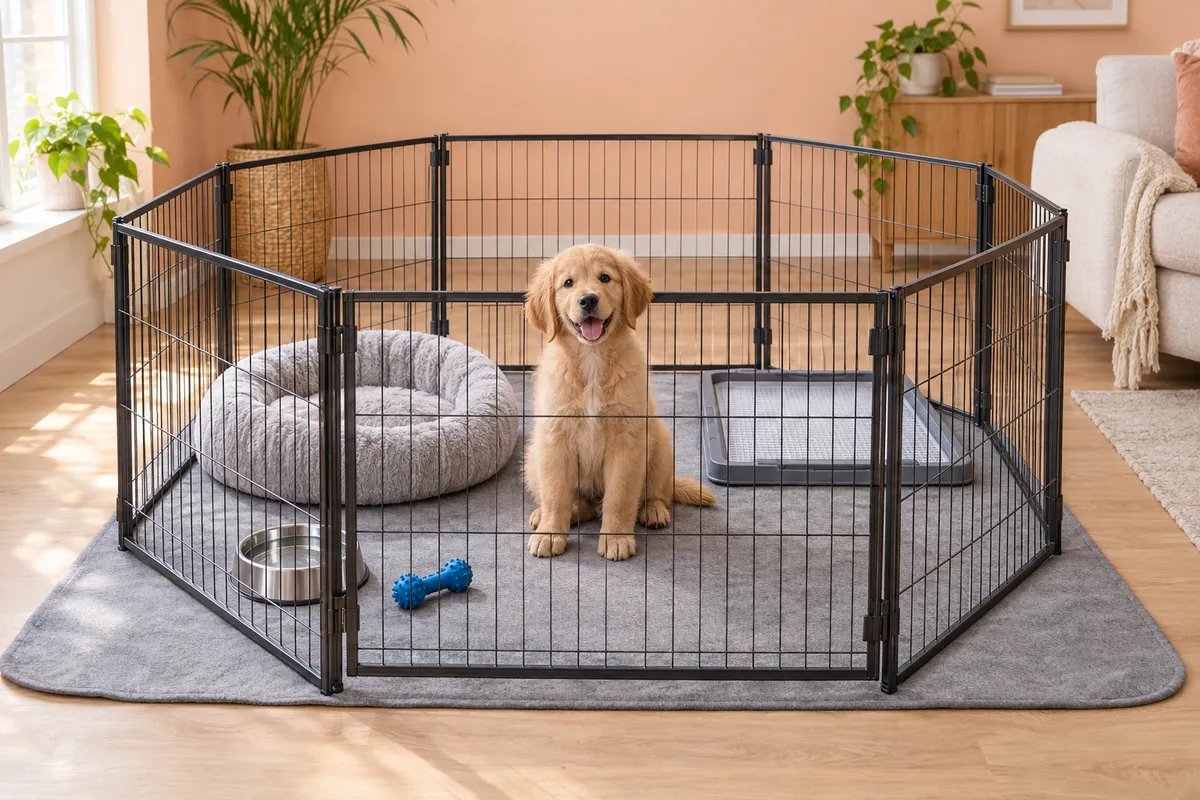
- A good puppy playpen holds four zones: a bed or open crate, water, a chew toy and a potty spot on the far side.
- Choose pen height by how tall your puppy will grow and how much it climbs, not by how small it is today.
- Leave out loose blankets, rope scraps, cords and anything a teething puppy can shred and swallow.
- A crate and a playpen work well together: the crate is the bedroom, the pen is the studio apartment around it.
Hello, lovely. A new puppy needs a safe little world of its own, and a playpen is the easiest way to build one. The short answer to what to put in a puppy playpen: a bed or a crate with the door open, a spill-resistant water bowl, one or two chew toys, and a pee pad or grass patch on the far side, all sitting on a washable mat. The rest of this guide is about choosing the pen, where to put it, and how to lay it out so it stays tidy and happy.
If you are still building your shopping list, our new puppy checklist walks the whole house room by room. This guide zooms in on one corner of it.
Choosing the pen: metal, plastic or fabric
Pick the material by your puppy's size and how determined it is. Metal exercise pens are the sturdiest and the most flexible: each panel folds flat, many have a latching door, and the panels can be linked to a crate. Plastic panel pens are lighter, gentle on floors, quiet when bumped and easy to wipe. Fabric pop-up pens fold into a disc for travel and visits, but a puppy that chews or digs can work through mesh, so they suit calm, supervised time best.
| Pen type | Good at | Watch for | Best for |
|---|---|---|---|
| Metal exercise pen | Strong, reshapes into many layouts, often has a door, links to a crate | Can scuff floors without a mat, rattles when climbed | Growing dogs, long-term home setups, yards |
| Plastic panels | Light, quiet, wipeable, non-skid feet on many | Shorter heights, some puppies push light pens around | Small breeds, apartments, rabbits later on |
| Fabric pop-up | Folds flat, packs for trips, soft sides | Mesh and zips are chewable, not for unsupervised time | Travel, visits, calm naps with you close |
Metal exercise pens
Folding wire panels in several heights; some with a latching door.


Plastic and fabric pens
Lighter panels for small puppies, and pop-up pens for trips and visits.


Height, panels and the door
Height: choose for the dog your puppy will become. Pens are sold in heights like 24, 30, 36, 42 and 48 inches (read the listing). Toy and small breeds usually do well in the lower pens; athletic, long-legged or climbing breeds need the taller ones sooner than you think. If your puppy hooks its paws over the top rail, it is time to go up a size or add a mesh top cover.
Panel count: more panels mean a bigger floor and more shapes. Four make a snug square for a tiny puppy; eight leave room for real zones, and you can fold two away for now. A latching door lets you walk in to clean and refill water without stepping over the panels.
Where to put the playpen
Put the pen where the family actually lives: the kitchen, a living room corner or near your desk. Puppies settle better when they can see and hear their people. Avoid heaters, vents, strong sun and drafty doors.
- Hard floor is easiest. On carpet, a waterproof mat under the pen is a must.
- Keep panels a little away from walls with outlets, curtains or houseplants a puppy could pull through the wire.
- Set one side against a wall or sofa so the pen feels sheltered, not stranded in the middle of a room.
The layout: four zones inside the pen
Most puppies prefer not to go potty where they sleep and eat, so give them distance. Put the bed and water at one end and the potty spot at the opposite end, with play space in between. In an eight-panel pen that is easy; in a small square pen, make the bed area cosy and keep the pad right at the far edge.
- Rest zone: a washable bed, or a crate with its door propped open, in the most sheltered corner.
- Water zone: a heavy, spill-resistant bowl or a bowl that clips to the panel, close to the bed but not under it.
- Play zone: one or two chew toys in the middle, swapped every few days so they stay interesting.
- Potty zone: a pad in a holder, or a grass patch tray, on the far side from the bed.
Rest: a bed or an open crate
A low round bed with a raised rim gives a puppy something to curl into. Choose one with a machine-washable cover, because accidents happen. If your puppy already uses a crate, set it inside the pen with the door open or fastened back. Our guide to what size crate you need covers measuring.
Washable beds for the rest zone
Low sides for small puppies, removable covers for easy washing.


Water that stays in the bowl
Puppies paddle, pounce and tip. A wide-based, non-tip bowl or a no-spill bowl keeps the floor drier. A bowl with a bracket that bolts to the wire of a metal pen is the tidiest of all: it cannot be pushed around or flipped, and it lifts out for washing.

A bowl that clips to the pen
This stainless steel bowl sits in a bracket with two wing nuts that fasten to wire panels, so it stays put while the puppy plays.
- Locks to wire crate and pen panels
- Bowl lifts out of its bracket for washing
- Brushed stainless steel
Bowls that stay put
Non-tip bases and splash-reducing lids for little paddlers.


Play: chew toys that suit puppy teeth
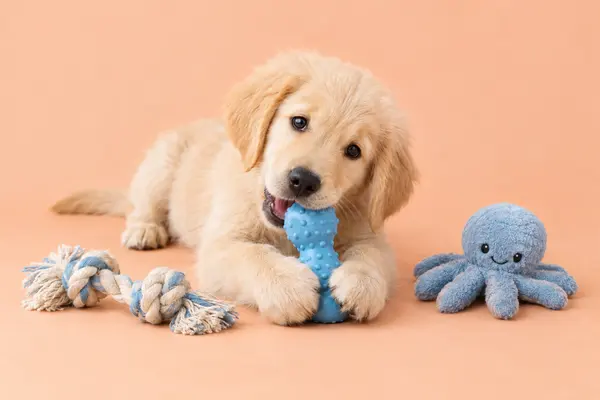
A stuffable rubber puppy toy, a textured teething bone and one soft toy is plenty. Rotate them rather than piling them in. Match each toy to your puppy's size and check it for wear. When adult teeth arrive, see chew toys for strong chewers.
Puppy chew toys for the play zone
Rubber, nylon and wood-alternative chews sized for young mouths.


Potty: pad, holder or grass patch
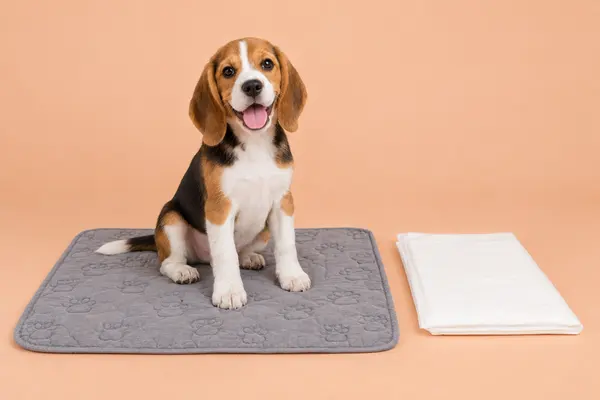
If your puppy will be in the pen for longer stretches, give it a clear potty spot on the far side. A disposable pad on its own gets dragged and shredded; a pad holder clamps the edges flat under a frame. A grass patch tray layers artificial turf over a grate, a pad and a tray, which some families like as a step toward going outside. Ask your vet or a trainer how to fit indoor pads into your house-training plan.
Pads, holders and grass trays
Disposable pads, frames that hold them flat, and turf-topped trays.


Protecting the floor
Lay this first, before the panels go up. A large washable mat under the whole pen catches spills and misses and stops metal feet scratching wood. Pick one a little bigger than the pen's footprint, or a bottom pad cut to its shape, and keep a second for wash day.
Mats and bottom pads for under the pen
Waterproof, machine-washable layers sized for pen floors.


What to leave out
A playpen is only as safe as what is inside it and within reach of the wire. Do a puppy's-eye check at floor level before every long stretch.
- Cords and cables: move chargers, lamp leads and speaker wires well away from the panels.
- Loose blankets and towels: teething puppies shred fabric. Choose a fitted bed cover instead of a loose throw.
- Worn toys: remove anything split, fraying or small enough to fit fully in the mouth.
- Houseplants and curtains within paw reach of the wire.
- Food bowls left down all day: feed at set times, then lift the bowl. Ask your vet about feeding amounts.
Pen or crate, or both?
Use both, for different jobs. A crate is a small bedroom for sleep and short rests. A playpen is a bigger safe room for the hours you are home but busy. Many families set the crate inside the pen with its door open, so the puppy can choose between curling up and stretching out.
| Crate | Playpen | |
|---|---|---|
| Space | Room to stand, turn and lie down | Room to walk, play and keep a potty spot apart |
| Best for | Naps, bedtime, car trips | Daytime while you are busy at home |
| Inside it | A bed or mat | Bed or open crate, water, toys, potty spot |
| Works together | Becomes the bedroom inside the pen | Becomes the playroom around the crate |
How long a puppy stays in a pen, and where it sleeps at night, depends on its age and temperament. Ask your vet or a trainer for a schedule that fits.
When the crying starts
The first nights can be noisy. Be patient: a new puppy has just left everything it knew. Keep the pen near you and bedtime calm and the same each night. If the crying goes on, ask your vet or a trainer for a gentle plan.
To close off a doorway or the stairs instead of the whole room, see our guide on how to choose a dog gate, from measuring the opening to pressure-mounted versus hardware-mounted.
Questions people ask
What should I put down in a puppy playpen to protect the floor?
A large waterproof, machine-washable mat or a bottom pad cut to your pen's shape. It catches spills and misses and keeps metal feet from scratching. A second mat makes wash day easy.
Is it okay to leave a puppy in a playpen for a few hours?
It depends on your puppy's age, bladder and temperament, so ask your vet or a trainer for a schedule. Whatever the length, give the pen water, a chew toy, a potty spot and nothing it can shred.
Can a puppy sleep in a playpen overnight?
Many families use a crate inside the pen at night, with the pen as the larger safe space around it. Ask your vet or a trainer what suits your puppy, and keep the pen close to where you sleep at first.
My puppy is crying at night in the playpen. What should I do?
Be patient: the first nights in a new home are a big change. Keep the pen near you and bedtime calm and the same each night. If it continues, ask your vet or a trainer for help.
Should I use a crate or a playpen while I am at work?
The playpen gives room for a separate potty spot, water and play, while the crate is a cosy bedroom. Many people combine them by setting the open crate inside the pen. Ask your vet or a trainer how long your puppy can be left.
About the numbers
- Google search, people also ask and related searches, United States, read 2026-10-08: questions on leaving a puppy in a playpen for a few hours, overnight sleeping in a playpen, crying at night, what to put down in a playpen, and crate or playpen while at work or at night