Chew Toys for Strong Chewers: Materials, Sizes and Wear
No chew toy is indestructible. For a strong chewer, match the material to how your dog chews, size up so it cannot be swallowed, rotate toys and bin any that crack or shed pieces.
In short
- No chew toy is truly indestructible, so the goal is a toy that wears slowly and wears safely while you watch.
- Match the material to the chewing style: firm natural rubber for crushers, dense nylon for patient gnawers, thick rope or lined plush for shredders who play with you.
- Size up: a strong chewer's toy should be too big to fit fully into the mouth or slide toward the back of the throat.
- Check toys before every session and throw one away once it cracks, splits, sheds chunks or wears down small enough to swallow.
- For anything about teeth, gums or swallowed pieces, ask your vet, and always stay close while your dog chews.
Hello, lovely. If your dog turns a new toy into confetti before lunch, you are in good company. Here is the honest truth first: no chew toy is indestructible. Every label that says so is describing a hope, not a promise. What you can choose is a toy that suits the way your dog chews, wears down slowly, and gives you clear signs when it is time to let it go. This guide walks through the materials, the sizing rule, the three chewing styles and a simple routine that keeps playtime happy.
First, what kind of chewer do you have?
Watch your dog with a toy for five minutes and you will usually see one of three styles. Knowing yours matters more than any single product, because the same toy can last months with one dog and an afternoon with another.
- The gnawer settles in, holds the toy between the front paws and works at it slowly with the side teeth. Gnawers wear a toy down gradually, scraping thin shavings rather than tearing chunks.
- The shredder grabs, shakes and pulls. Fabric, stuffing and rope fibers are the target. Shredders are often happiest with toys made for tug and supervised play.
- The crusher clamps down hard with the back teeth and bites through. Crushers can split hard plastics and pop hollow toys, so they need thick, springy materials that give a little under pressure.
Chew toy materials and how each one wears
Each material fails in its own way. The table below is the quick version; the sections after it show what each looks like in practice. Browse the full range of chew toys for dogs once you know which row fits.
| Material | Best for | What to watch |
|---|---|---|
| Natural rubber | Crushers, fetch and stuffing games | Splits along seams or edges, chunks torn from the rim |
| Nylon | Gnawers who chew slowly | Sharp edges or bristled ends that come loose; replace once worn small |
| Rubber and nylon blends | Dogs that want firmness with a little give | The softer layer tearing away from the harder core |
| Rope | Shredders during tug with you | Loose threads and frayed strands; never leave it out alone |
| Ballistic or lined plush | Gentle shredders and cuddlers | Torn seams, exposed stuffing or squeakers |
| Wood composite | Stick lovers and gnawers | Flakes or splinter-like pieces; replace as ends wear down |
| Antler-style alternatives | Gnawers who like a firm, textured chew | Hardness (try the thumbnail test) and worn-down size |
Natural rubber: springy, bouncy, forgiving
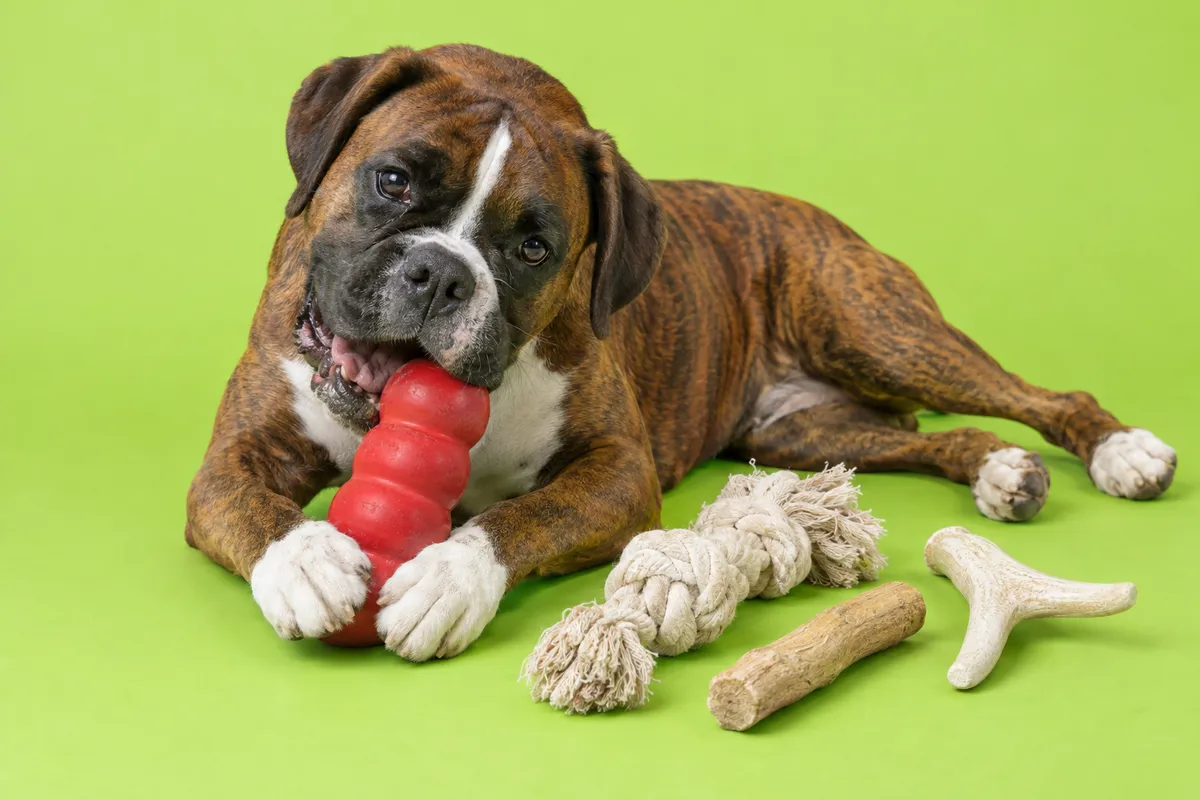
Thick natural rubber flexes under a hard bite and springs back, which is why it suits crushers. Hollow shapes double as stuffable toys and bounce in unpredictable directions for fetch. Rubber tends to fail at its thinnest point, so look for solid walls and check the openings for nicks.
Thick rubber for crushers
Firm, springy shapes; the hollow ones can be stuffed.


Nylon and nylon blends: slow and steady
Dense nylon resists crushing and wears by surface scraping, which makes it a favorite for dedicated gnawers. Many nylon chews are flavored all the way through and shaped so a dog can brace them between the paws. Blends add a rubbery outer layer or plant fibers such as bamboo for a slightly different texture. If you are curious how one flavored nylon chew came about, read our story on the wishbone-shaped chew.
Nylon and blended chews for gnawers
Easy-grip shapes made for long, slow chewing.


A nylon and rubber blend for big chewers
This long alligator shape pairs a harder nylon head with a softer, ridged rubber body, so your dog can choose which end to work on. It is sized for medium and large dogs, and the length makes it easy to hold between the paws.
- Two textures in one toy
- Long enough to brace with both paws
- Retire it if the rubber body starts to separate
Wood composite and antler-style chews
Dogs that steal sticks from the yard often love a chew with real wood or antler material blended into a tougher base. These keep the smell and feel of the real thing in a shape made for chewing. They are firmer than rubber, so they suit gnawers more than crushers.
Stick and antler alternatives
The scent of the outdoors in a shape made to be chewed.


An antler alternative for patient gnawers
Shaped like a forked antler and made with naturally shed antler material, this chew gives a gnawer a textured, nubbed handle to grip and two tines to work on. Choose the size that comfortably exceeds your dog's mouth.
- Nubbed grip on the base
- Comes in small, medium and large
- Do the thumbnail test before you hand it over
Rope and tough plush: for play with you
Rope and plush are wonderful for tug and fetch, and less suited to solo chewing for a determined shredder. Look for thick, tightly twisted rope with firm knots, and plush built with an extra inner lining and reinforced seams. Put them away when the game ends. More tug options live in rope and tug toys, and softer ones in squeak toys.
Rope and lined plush for supervised play
Tug with them together, then tuck them away.




A giant rope for big dogs and big tug games
At 42 inches with six thick knots, this rope gives two hands and one large dog plenty to hold. It is a play-together toy: tug, toss, then put it out of reach so loose strands are never chewed alone.
- Six knots to grab
- Long enough to keep hands away from teeth
- Snip loose strands or retire it as it frays
The size rule and the thumbnail press test
Size up for strong chewers. A chew should be too large to fit completely inside your dog's mouth, and a ball should be too big to slip toward the back of the throat. When a size chart gives a weight range and your dog sits near the top, choose the next size. Toys also shrink as they wear, so a toy that started out the right size can become too small.
The thumbnail press test is a common rule of thumb for hardness. Press your thumbnail firmly into the toy's surface. If it leaves a slight dent, the material has some give. If your nail makes no mark at all, the toy is very hard, and it is worth asking your vet whether it suits your dog's teeth.
Rotate toys and know when to throw one away
Rotating toys keeps them interesting and gives you a natural moment to inspect them. Keep three or four out, put the rest in a cupboard, and swap every few days. A toy that comes back after a break often feels new again, and checking it as it goes in and out of the cupboard becomes a habit.
Throw a toy away when you see any of these:
- Cracks, splits or deep tooth gouges along an edge
- Chunks, flakes or shavings bigger than a grain of rice
- A rubber layer separating from a harder core
- Rope with loose, long strands or plush with an open seam
- A toy that has worn down small enough to fit fully in the mouth
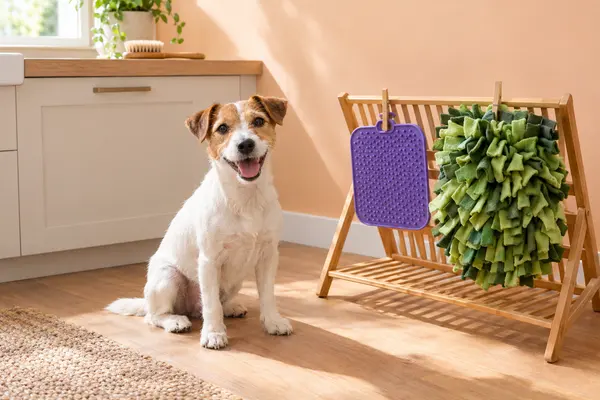
For calm, slower activities between chew sessions, try a snuffle mat or lick mat, or read the story of the snowman-shaped rubber toy.
Always supervise, especially with something new
Stay close the first few times your dog meets a new toy. You will learn quickly whether it suits their style: a gnawer scraping slowly is a good sign, while a crusher popping off chunks in minutes tells you to switch materials. Offer toys after a walk, when your dog is ready to settle, and swap a worn toy for a fresh one rather than taking it away empty-handed. A little attention turns chewing into one of the loveliest parts of the day.
Questions people ask
What is the best chew toy for aggressive chewers?
The best one matches how your dog chews. Crushers usually do best with thick natural rubber, patient gnawers with dense nylon or an antler-style chew, and shredders with thick rope used during tug with you. Choose a size bigger than your dog's mouth and stay close while they chew.
Are there truly indestructible dog toys?
No. Every toy wears down eventually, whatever the label says. Look for one that wears slowly and predictably, inspect it before each session, and replace it once it cracks, sheds pieces or gets small.
What is the best toy for a dog that destroys everything?
Start with a firm natural rubber or nylon chew sized up from your dog's weight range, and keep plush and rope for supervised play only. Rotate a few different materials to see which one your dog wears down slowest.
What do vets recommend dogs chew on?
That depends on your dog's age, size and teeth, so ask your vet. General guidance is to choose a chew too big to swallow, check its hardness, and always supervise.
How often should I replace my dog's chew toys?
Replace a toy as soon as it shows cracks, loose pieces, frayed strands or open seams, or once it has worn small enough to fit fully in the mouth. Checking each toy as you rotate it makes this easy.
About the numbers
- Google search, people also ask, read 2026-10-07: Shoppers ask what chew toy suits aggressive chewers, what toy suits a dog that destroys everything and what vets recommend dogs chew on; related searches include indestructible stuffed toys and chew toys for large aggressive chewers.