Cat Tunnels and Play Mats Explained: Types, Setup and Safety
A cat tunnel gives an indoor cat a place to hide, pounce and nap. Pick crinkle, multi-way, felt donut or a play mat by how your cat likes to play, then set it up by a wall with a toy inside.
In short
- A cat tunnel works because it gives a cat two things it seeks indoors: a covered spot to hide in and an opening to ambush from.
- Crinkle tunnels suit bold, noisy players; quiet plush or felt tunnels suit shy cats and cats who like to nap where they play.
- Multi-way tunnels with peek holes turn one toy into a little maze, which keeps two cats or a busy kitten interested for longer.
- Set a tunnel along a wall, tuck a toy inside and trail a wand toy past the exit to show your cat what it is for.
- Check every tunnel and play mat for loose strings, worn elastic and chewed dangling toys, and put string toys away after play.
Hello, lovely. If your indoor cat loves cardboard boxes, the space under the bed and the gap behind the sofa, a cat tunnel is the toy built for exactly that feeling. It is a covered path to dash through, a hideout to wait in and, for many cats, a favourite spot to doze. Play mats and activity centers take the same idea and add things to bat at. Here is what each type does, how to set one up so your cat actually uses it, and how to keep play safe.
Why cats love tunnels
Cats are ambush hunters: they like to watch from cover, then pounce. A tunnel gives them that cover anywhere in the house. From inside, your cat can see out while feeling tucked away, and the open ends make it easy to burst out at a passing toy (or a passing ankle).
Tunnels also give an indoor cat a bit of novelty without rearranging the furniture. You can move a tunnel to a new room, join two together or hide a toy inside, and the same toy feels new again. If you are building a fuller day of play, our indoor cat play routine shows where a tunnel fits between wand time and perch time.
The main types of cat tunnel
Most tunnels are a fabric sleeve stretched over a spring-steel coil, so they pop open and fold flat. What changes is the fabric, the shape and how many ways in and out there are.
| Type | What it is | Best for |
|---|---|---|
| Crinkle tunnel | Polyester with a crinkly paper or film layer that rustles as the cat moves | Bold, playful cats who like noise and a chase |
| Multi-way tunnel | Two, three, four or five branches joined at a centre, often with peek holes | Kittens, multi-cat homes, cats who like to stalk |
| Plush or suede tunnel | Soft fabric outside, sometimes a plush lining, quieter than crinkle | Shy cats and cats who nap in their toys |
| Felt or donut tunnel | A ring of thick felt or plush with an open centre and side openings | Cats who want a bed and a hideout in one |
| Spiral or spring tunnel | A springy coil with a toy on the end that wobbles when touched | Solo play for curious cats |
Crinkle tunnels
The crinkle layer is the whole point: every step makes a rustle that sounds like something small moving in leaves. Many cats find that thrilling. A few find it alarming at first, so lay it flat in a quiet room and let your cat sniff before any play. Look at the diameter on the label: a wider tube, around 12 inches across, is roomier for a large cat than a narrow 10-inch one.
Crinkle and long straight tunnels
Straight tubes are easy to start with and easy to join to a second tunnel later.


Multi-way tunnels with peek holes
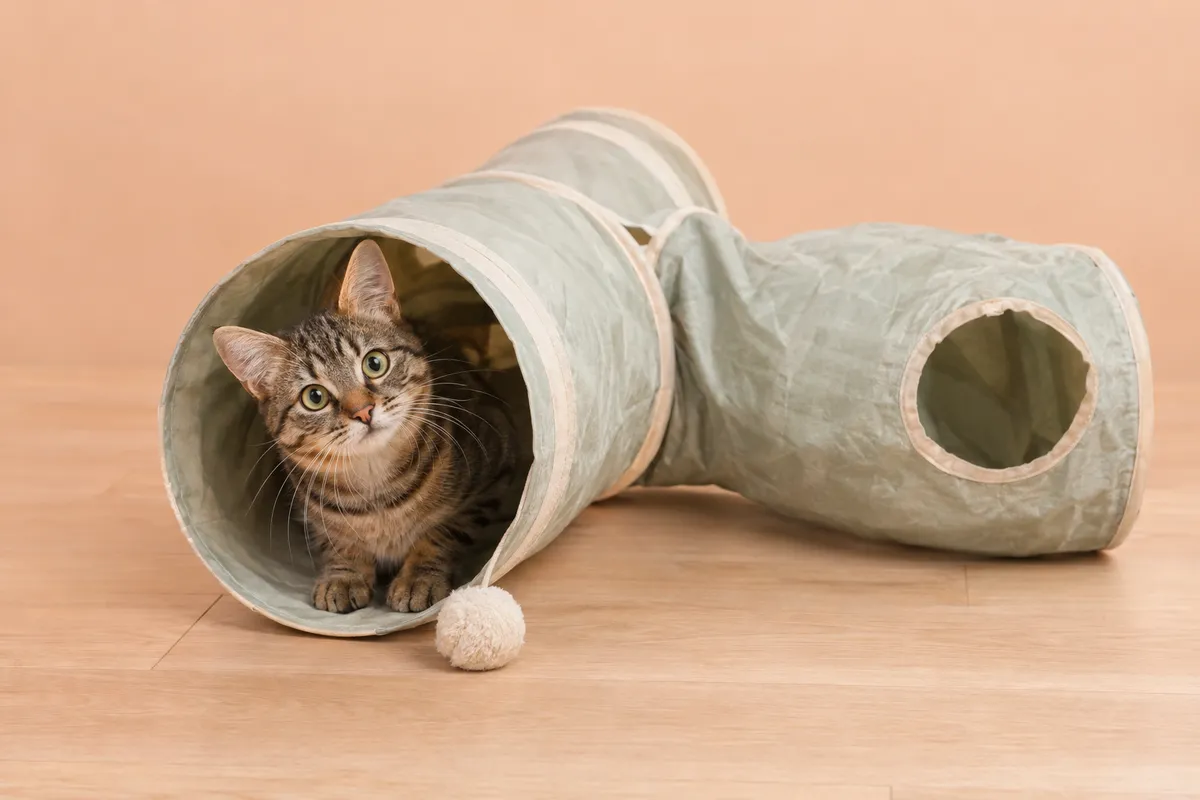
A three-way or four-way tunnel is a tiny maze. Peek holes along the sides let your cat spy, poke a paw through and dart back in. They are lovely for two cats, because one can hide while the other hunts, and for kittens who need somewhere to burn energy. S-shaped versions curve, so your cat cannot see straight through, which makes the far end more of a surprise.
Multi-way tunnels for stalking and chasing
More branches means more hiding places; check the length fits your floor space.


Felt and donut tunnels that double as beds
A donut tunnel is a ring with a hollow middle and openings around the side. Cats play through the ring, then curl up on top or inside it. Thick felt versions hold their round shape on their own and often unzip into halves for washing. Plush donut tunnels usually have a removable cushion in the centre, so the play spot becomes the nap spot without moving anything. Check the size against your cat: many list a weight range on the label.

A felt cave that stays round
Thick felt keeps its donut shape without a frame, so there is no wire coil to wear through, and the zip lets you take it apart to wash it.
- Works as a bed on top and a hideout inside
- Large size sized for big cats or two cats sharing
- Quiet fabric for cats who dislike crinkle noise
Donut and tunnel beds
Pick one with a washable centre cushion if your cat naps where it plays.


Play mats and cat activity centers
A cat play mat is a flat or ring-shaped base with something to chase: toys on springs or strings, a ball hidden under fabric or a tunnel ring around a soft centre. An activity center goes a step further and combines a tunnel, a cube or a track with toys built in. They are handy for short solo sessions while you cook or answer emails, and they suit kittens who play in bursts. For a kitten, our guide to toys for kittens by age explains which kinds fit which stage.
Play mats, tunnel playgrounds and activity centers
Hanging balls and moving toys invite solo play; always check the strings before each session.


How to set up a cat tunnel so your cat uses it
The most common reason a cat ignores a tunnel is where it sits. Out in the middle of a room, a tunnel feels exposed. Tucked along a wall or behind the sofa, it feels like a hidden path. Try these steps:
- Place it along a wall or beside furniture, with one end facing an open part of the room so your cat can watch from inside.
- Let your cat explore first. Leave it open for a day with no pressure; many cats walk through on their own once it smells familiar.
- Put a toy inside. A crinkle ball, a soft mouse or a little catnip toy just past the opening gives your cat a reason to step in.
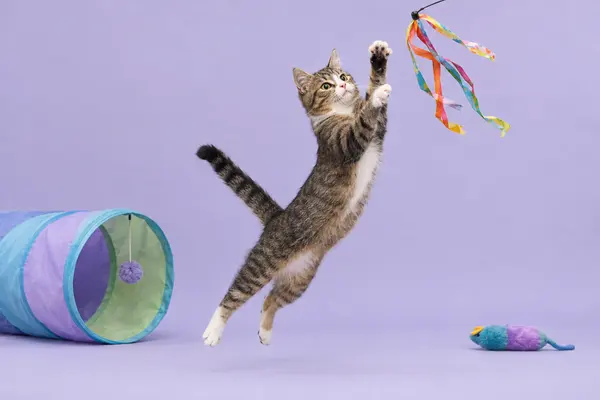
- Use a wand at the exit. Trail a feather or ribbon on a wand toy slowly past the far end, then let it disappear around the corner. Most cats dash through to catch it.
- End with a catch. Let your cat grab the toy at the end of each session so play finishes on a win.
- Move it now and then. A new room or a second tunnel joined on keeps it fresh.
Wands to lure a cat through
A long wand keeps your hand away from paws while you play at the tunnel exit.


Storing collapsible tunnels
Most fabric tunnels fold flat by twisting the coil into loops, much like folding a pop-up sunshade. Hold both ends, push them together, then twist and fold. Many come with a strap or a storage bag to keep them closed. Store flat tunnels away from your cat, because a folded coil can spring open suddenly. Felt donuts usually unzip into two shallow halves that stack. Before putting any tunnel away, shake out hair and check the inside for small toys.
Safety: strings, dangling toys and supervision
Tunnels are gentle toys, but the extras need a quick check. Look over each one before play and after a busy week.
- Loose strings and threads: snip loose threads and retire a tunnel when the stitching comes apart.
- Dangling toys: check the cord on balls and pom-poms hanging inside tunnels and over play mats. If a toy is chewed or the cord is fraying, remove it.
- Exposed wire: if the fabric wears through and the coil shows, it is time for a new tunnel.
- Small pieces: feathers, bells and pom-poms can come loose. Gather up any that fall off.
- Supervise string play: put wand toys and anything with long string away after play, out of reach.
- Stay close at first: introduce new toys gently and watch how your cat uses them. If you have questions about your cat chewing or swallowing toys, ask your vet.
Want to know which play ideas are worth your time? Our cat toy myths vs facts sorts the helpful from the not so helpful.
Rabbits and ferrets like tunnels too
Tunnels are not just for cats: rabbits, guinea pigs and ferrets love a covered run as well, and you will find sized-down versions in rabbit and small pet supplies. For a full ferret setup, see what ferrets need.
Tunnels for small pets
Sized for bunnies, guinea pigs and ferrets.


Questions people ask
Do cats actually like cat tunnels?
Many do, because a tunnel gives them a covered spot to hide in and an opening to pounce from. Some cats take a day or two to warm up. Place it along a wall and put a toy inside to help.
What size cat tunnel should I get for a big cat?
Look at the diameter on the product details. Wider tubes, around 12 inches across, give a large cat more room than narrow ones. For donut tunnels, check the weight range the label lists.
Are crinkle tunnels too loud for shy cats?
They can be at first. Lay a crinkle tunnel flat in a quiet room and let your cat explore it on their own terms. If the noise still worries them, a plush, suede or felt tunnel is much quieter.
How do I get my cat to go in a tunnel?
Put a favourite toy just inside the opening, then drag a wand toy slowly past the far end so your cat follows it through. Keep sessions short and let your cat catch the toy at the end.
Are cat tunnels with hanging toys safe?
They are fine with a quick check before play. Look at the cords on dangling balls and pom-poms and remove any that are chewed or fraying. Supervise play with string toys and put them away afterwards.
Can rabbits and ferrets use cat tunnels?
Yes, many small pets enjoy tunnels. Choose one sized for them and check it for loose threads, especially if your pet likes to chew fabric.
About the numbers
- Hey Lovi product details for the tunnels shown, read 2026-10-28: tube diameters (about 10 to 12 inches), felt and plush materials, washable cushions and weight ranges come from each product's own listing