What Do Ferrets Need? A Setup Checklist for Cage, Beds and Play
Ferrets need a tall multi-level cage with solid shelves, soft hammocks for long naps, a corner litter box, steady water, chew-safe toys, a harness and a ferret-proofed room for daily play.
In short
- A ferret's home is a tall, multi-level cage with solid shelves and covered ramps, because ferrets love to climb and their feet are happier off bare wire.
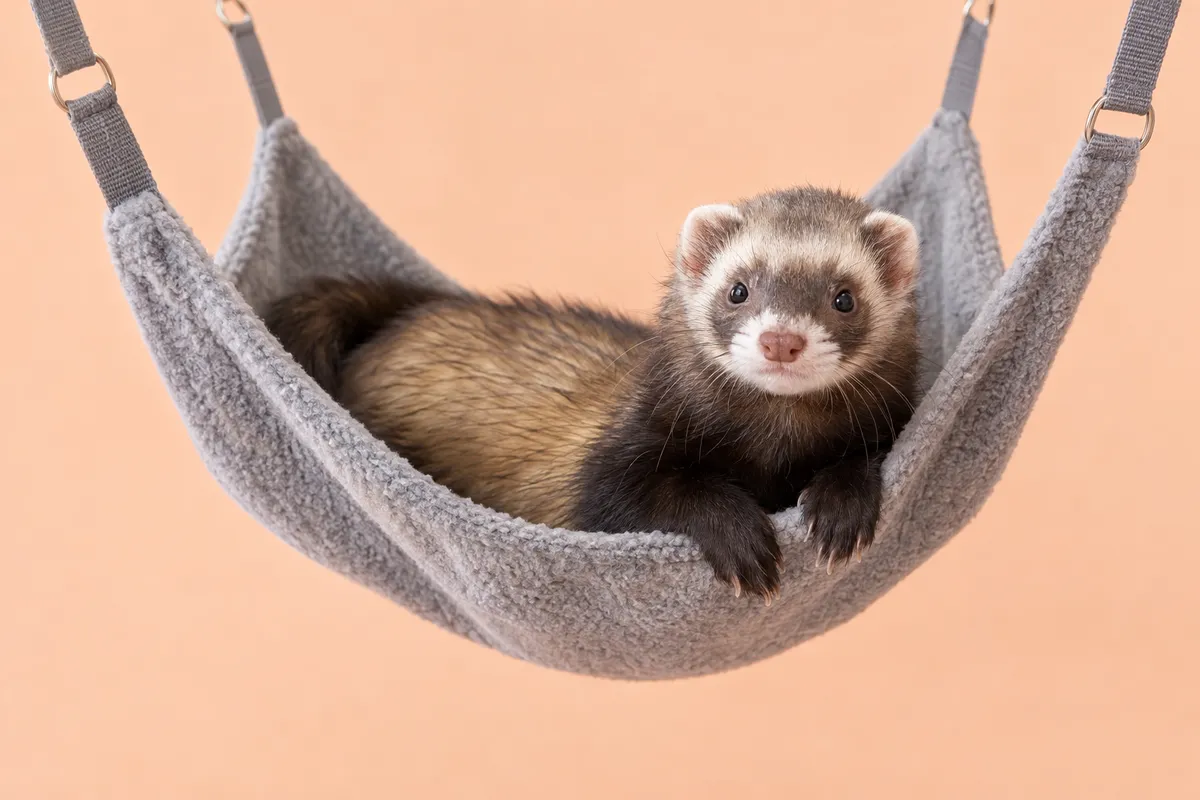
- Ferrets spend a large part of the day asleep, so give them at least two soft places to nap, such as a hanging hammock and an enclosed sleep sack.
- Most ferrets back into a corner to go, which is why a corner litter box with a high back wall works better than a flat open tray.
- Toys should be too big to swallow and sturdy enough to chew: tunnels, large balls and a dig box are safer than soft foam or rubber.
- Every ferret needs supervised time out of the cage each day in a room checked for gaps, recliners and anything rubbery they could chew.
- Ferret ownership is restricted in some places, so check your local and state rules before you bring one home, and ask your vet about diet and care.
Hello, lovely! If you are wondering what ferrets need, the short answer is a roomy multi-level cage, plenty of soft bedding to sleep in, a corner litter box, fresh water, safe toys, a harness and a ferret-proofed room for daily play. Ferrets are curious, bouncy and very good at finding trouble, so a good setup is half comfort and half clever planning. This checklist walks through each piece and why it matters.
1. A tall, multi-level cage with solid shelves
Choose a cage that goes up, not just out. Ferrets love to climb, explore and nap high up, so a wire cage with two to five levels joined by ramps gives them room to move between a bedroom, a bathroom and a lookout. Look for narrow bar spacing so a slim ferret cannot squeeze through, large front doors so you can reach every corner for cleaning, and a pull-out tray at the bottom.
Wire ramps and shelves are where many cages fall short. Ferret feet are small and soft, and climbing on bare mesh all day is not comfortable. Solid shelves, fabric shelf covers and ramp covers give them steady footing. A fitted fleece liner on the bottom pan makes the floor cozy and is easy to pull out and wash. Browse more small pet habitats if you want to compare sizes side by side.
Multi-level cages and comfy upgrades
Tall cages with ramps, plus covers and liners that soften wire floors.


| Cage feature | Why it matters | What to look for |
|---|---|---|
| Several levels | Ferrets climb and like separate spots to sleep, eat and play | Two or more shelves joined by ramps |
| Narrow bar spacing | Ferrets are slim and can slip through wide gaps | Bars close enough that a small head will not fit |
| Big doors | Daily tidying and weekly deep cleans need easy reach | Front doors that open fully, ideally on each level |
| Solid or covered shelves | Soft feet stay comfortable off bare wire | Shelf covers, ramp covers or a fleece liner |
| Wheels or a pull-out tray | Cleaning and moving the cage gets much easier | Locking casters and a tray that slides out |
2. Hammocks and sleep sacks for long naps
Plan for more beds than you think you need. Ferrets spend a large part of the day asleep, and most love to burrow into something soft and dark. A hanging hammock near the top of the cage, an enclosed nap sack they can crawl inside, and a cushy bed on a lower shelf give them choices as the room warms up or cools down.
Fleece and plush fabrics with metal clips hang on almost any wire cage. Keep two sets so one can be in the wash, and swap out anything with loose threads or holes. Find more hammocks and hideouts to mix and match.
Hammocks, sleep sacks and soft beds
Hanging nap spots plus a burrow-style bed for a lower shelf.


A snuggle sack big enough to share
This hanging nap sack is a soft fleece pocket on four straps that clips inside or outside the cage. Its pouch shape gives a ferret the dark, wrapped-up feeling it looks for when it wants to sleep.
- Hangs from four straps with metal clips
- Pouch design to crawl inside
- Soft fabric that goes in the wash
3. A corner litter box and the right litter
Use a corner litter box with a tall back wall. Many ferrets back up into a corner to go, so a triangle-shaped pan that clips to the cage fits their habit and keeps mess inside the box. Put one on the bottom level and, in a big cage, another on an upper level near where your ferret naps.
For litter, choose a low-dust, unscented option made for small animals or a recycled paper pellet. Avoid clumping clay made for cats, since ferrets dig and can kick it everywhere. Pick a box with a removable drawer or grate so daily scooping takes seconds. Our rabbit setup checklist covers litter training habits that carry over nicely.
Corner litter boxes and small animal litter
Pans that clip in place, plus a dust-controlled litter.


4. Heavy bowls or a water bottle
Ferrets tip things over for fun, so food and water need to stay put. A bowl that clamps to the cage wire stops spills, and a hanging bottle with a metal sipper keeps water clean between refills. Many owners offer both so there is always a backup.
Ask your vet what to feed, how much and how often, and keep food away from the litter corner.
Spill-proof water and food
A wide-mouth bottle and a bowl that locks to the cage.


5. Ferret-safe toys and tunnels
The best ferret toys are sturdy, washable and too big to swallow. Ferrets chew, carry and stash things, so skip soft foam, latex and small rubber pieces. Tunnels are the classic favorite: a long fabric tube to dive through, or an extendable plastic tube to scurry along. A dig box, a deep storage tub filled with large plastic balls, gives them somewhere to burrow and bounce.
- Tunnels: fabric tubes for snuggling and racing, or stretchy plastic tubes you can bend into shapes.
- Large balls: use balls far bigger than your ferret's mouth, and remove any that crack.
- Dig box: a sturdy tub of large balls with a hole cut in the side for a door.
- Rotation: swap a few toys each week so playtime feels new.
Tunnels and play
Tubes to run through and a ball pack for a dig box.


6. A harness, a leash and a play pen
A ferret harness lets you take your friend outside or around the house safely. Choose an H-style or vest harness made for small animals, adjust it so you can slip a finger under the straps, and let your ferret wear it indoors for short spells before the first outing. A light lead clips to the back so it never pulls on the neck. Find more options among our harnesses and leashes.
A small exercise pen is handy for supervised floor play or while you clean the cage. Browse pens and gates that fold flat.
Out-and-about and playtime gear
A harness and lead set sized for ferrets, plus a fold-flat pen.


7. Ferret-proof a room for out-of-cage play
Every ferret needs time out of the cage each day, and the room they play in should be checked first. Ferrets squeeze into tiny gaps and love anything soft and squishy, so get down on the floor and look at the room from ferret height.
- Block gaps behind and under the fridge, washer, dryer, dishwasher and stove, and around pipes and vents.
- Skip recliners and sofa beds in the play room, or block underneath them. The moving parts are a real risk to a curious ferret.
- Pick up soft rubber and foam: earbuds, phone cases, shoe insoles, erasers, stress balls and remote buttons.
- Tuck away cords and close cabinet doors, ideally with child locks.
- Check doors and windows so nobody slips out, and keep toilet lids down.
- Count heads before you open any appliance, closet or drawer.
8. A simple cleaning rhythm
Scoop litter boxes and refresh water every day. Each week, swap in clean hammocks and liners, wipe shelves and ramps, and scrub bowls and bottles. Every few weeks, deep clean the whole cage with warm water and a mild, pet-safe cleaner, and let it dry fully before putting it back together.
Setting up for a smaller friend too? See what size hamster cage you need or how to set up a guinea pig cage. You can also search all ferret gear in one place.
Questions people ask
What do ferrets need in their cage?
A ferret cage needs several levels with ramps, solid or covered shelves, at least two soft beds such as a hammock and a sleep sack, a corner litter box, and a water bottle or heavy bowl. Add a tunnel or a toy or two, and keep litter and food on opposite sides.
Can I leave my ferret alone for 8 hours?
Many ferrets nap through a good part of the day in a safe, well-stocked cage while their people are at work. What matters is that they have water, food, clean litter and soft beds, and that they get plenty of supervised play and attention once you are home. Ask your vet what suits your ferret's age and routine.
Will ferrets cuddle with you?
Many ferrets enjoy curling up on a lap or in a hoodie pocket after a burst of play, but every ferret is different. Let yours come to you, keep handling sessions short and gentle at first, and offer a soft blanket on your lap to make it cozy.
Is owning a ferret hard?
Ferrets are playful and affectionate, but they need daily time out of the cage, a ferret-proofed room, regular cleaning and a vet who knows ferrets. With the right setup and a steady routine, most of the work becomes a quick daily habit. Check your local rules first, since ferrets are restricted in some places.
What is the 3-3-3 rule for ferrets?
The 3-3-3 rule is a general guide many people use for any newly adopted pet: about three days to decompress, three weeks to learn the routine and three months to feel at home. Every ferret settles at its own pace, so stay patient, keep the setup consistent, and ask your vet if anything worries you.
About the numbers
- Google search, people also ask and related searches, read 2026-10-08: Shoppers ask what ferrets need in their cage, whether ferrets can be left alone for 8 hours, whether ferrets cuddle, whether owning a ferret is hard, the 3-3-3 rule and whether ferrets need a friend.