What Size Hamster Cage? Floor Space, Bedding Depth and Wheels
Choose a hamster home by its unbroken floor area, not its height. The PDSA suggests at least 100 x 50 cm of floor for any hamster, with deep bedding and a wheel sized to the species.
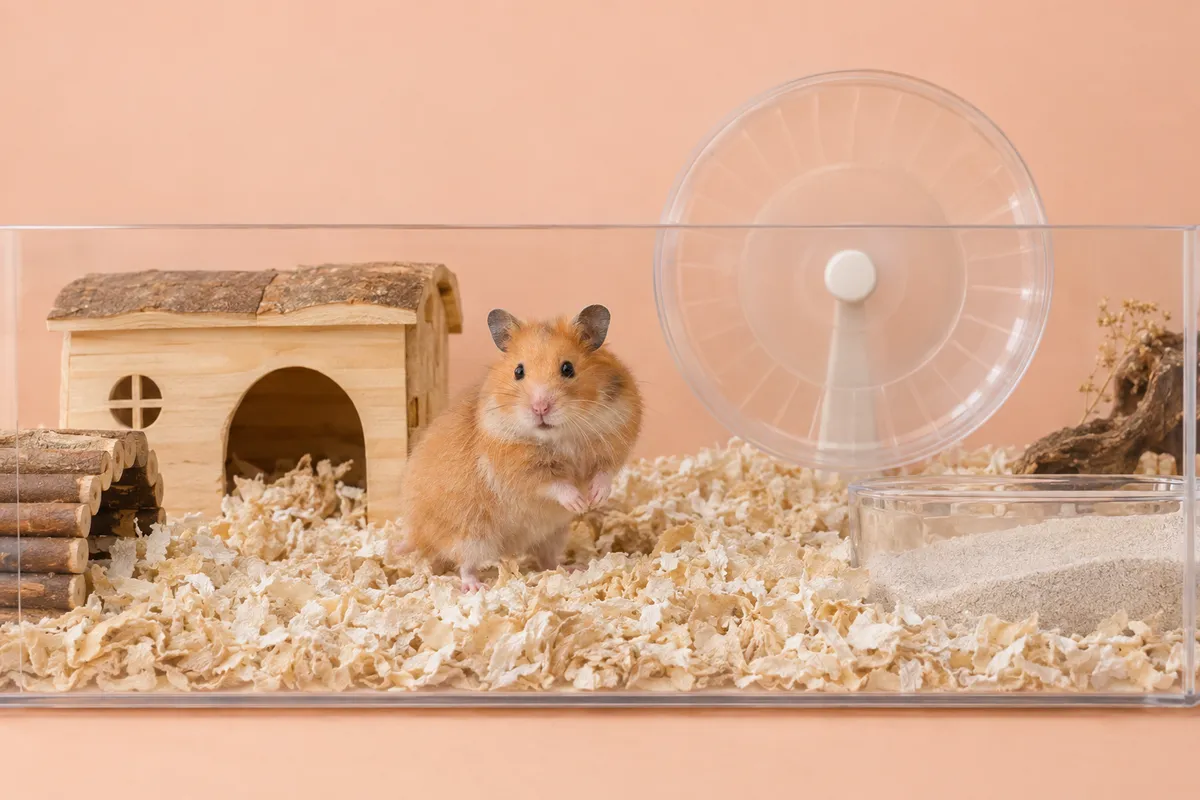
In short
- Floor space matters more than height: hamsters run, dig and forage along the ground, so measure the longest stretch of unbroken floor before anything else.
- The PDSA, a UK veterinary charity, recommends a minimum enclosure of 100 x 50 cm (about 39 x 20 inches) for hamsters, with single-level homes preferred over tall multi-level ones.
- Plan for at least 25 cm (10 inches) of bedding in part of the enclosure, which means the walls need to be tall enough to hold it in.
- Wheel size follows the hamster: at least 20 cm (8 inches) for dwarf hamsters and at least 30 cm (12 inches) for Syrians, so the back stays level while running.
- A standard 10 gallon tank is far smaller than the PDSA minimum, so treat it as a carrier or a sand bath station rather than a home.
Hello, lovely. If you are standing in front of a wall of colourful hamster cages wondering which one is right, here is the short answer: buy for floor, not for height. A hamster lives along the ground. It runs long loops at night, digs tunnels, stuffs its cheeks and stashes food in a hidden pantry. The bigger the stretch of open floor, the more of that it can do.
Below you will find the size the PDSA recommends, how the main enclosure styles compare, and what goes inside: bedding, a wheel that fits, hideouts, a sand bath and things to gnaw. If you also share your home with guinea pigs, our guide on how to set up a guinea pig cage covers their very different needs.
What size cage does a hamster need?
The PDSA recommends a minimum cage size of 100 x 50 cm for hamsters, which works out to roughly 39 by 20 inches of floor. That is a minimum, not a goal. Many keepers go larger, and larger is always kind as long as the floor is continuous.
Unbroken floor area means one connected surface your hamster can walk across without climbing. Platforms, shelves and tubes are fun extras, but they do not count toward the floor. A tall cage with three small levels can feel roomy to us and still give a hamster very little ground to run on. The PDSA puts it simply: single-level, larger cages tend to be better than multi-level, tall cages.
Height matters in one way: the walls must hold deep bedding and clear the wheel. So choose long and wide first, then tall enough at the sides.
Syrian vs dwarf hamsters: a quick sizing table
The PDSA gives one floor minimum for all hamsters, so a tiny Roborovski deserves the same generous floor as a big golden Syrian. Where the species really differ is wheel size and bar spacing.
| What to check | Syrian hamster | Dwarf hamsters (Roborovski, Campbell's, winter white) |
|---|---|---|
| Floor space | At least 100 x 50 cm (about 39 x 20 in), bigger if you can | At least 100 x 50 cm (about 39 x 20 in), bigger if you can |
| Bedding depth | At least 25 cm (10 in) in part of the enclosure | At least 25 cm (10 in) in part of the enclosure |
| Wheel diameter | At least 30 cm (12 in) | At least 20 cm (8 in) |
| Bar spacing (wire tops or cages) | Narrow enough that the head cannot pass through | Narrower still: dwarfs slip through gaps a Syrian cannot |
| Hideouts | Large hides with a wide doorway | Small hides plus tunnels and cork or wood tubes |
Bin cages, tanks, wire cages and modular habitats compared
Any style can work if it meets the floor size and holds deep bedding. Each has trade-offs worth knowing before you choose.
- Large tanks and clear-sided enclosures: solid walls hold deep bedding well and stop it spilling onto the floor. Glass is heavy, so place it once and leave it. A ventilated mesh lid on top keeps air moving.
- Bin cages: a big clear storage tote with mesh panels cut into the lid and upper sides. They are light and roomy for the size, but the plastic must be thick enough to resist chewing, and the ventilation has to be generous.
- Wire cages: good airflow and easy to clip a bottle to, but many have a shallow base that cannot hold deep bedding, and bars give a determined hamster something to chew. If you choose one, look for a deep plastic tray and narrow bar spacing.
- Modular habitats with tubes: the bright pods and connecting tubes look playful, yet each pod is usually small and the tubes do not add floor. Tubes can be hard to clean, too. Use them as an add-on to a large main space, never as the whole home.
So, can you keep a hamster in a 10 gallon tank? Not as a home. Its floor is a small fraction of the PDSA minimum, with no room for a correctly sized wheel, deep bedding and hides side by side. A small tank is still handy as a sand bath station or a safe spot during cleaning.
Deep bedding for burrowing
Give at least 25 cm (10 inches) of soft, unscented bedding in part of the enclosure, as the PDSA advises. Hamsters dig tunnels and nests below the surface, and deep bedding is what lets them do it. Many keepers pile one end deep and keep the other end shallower for the wheel and sand bath.
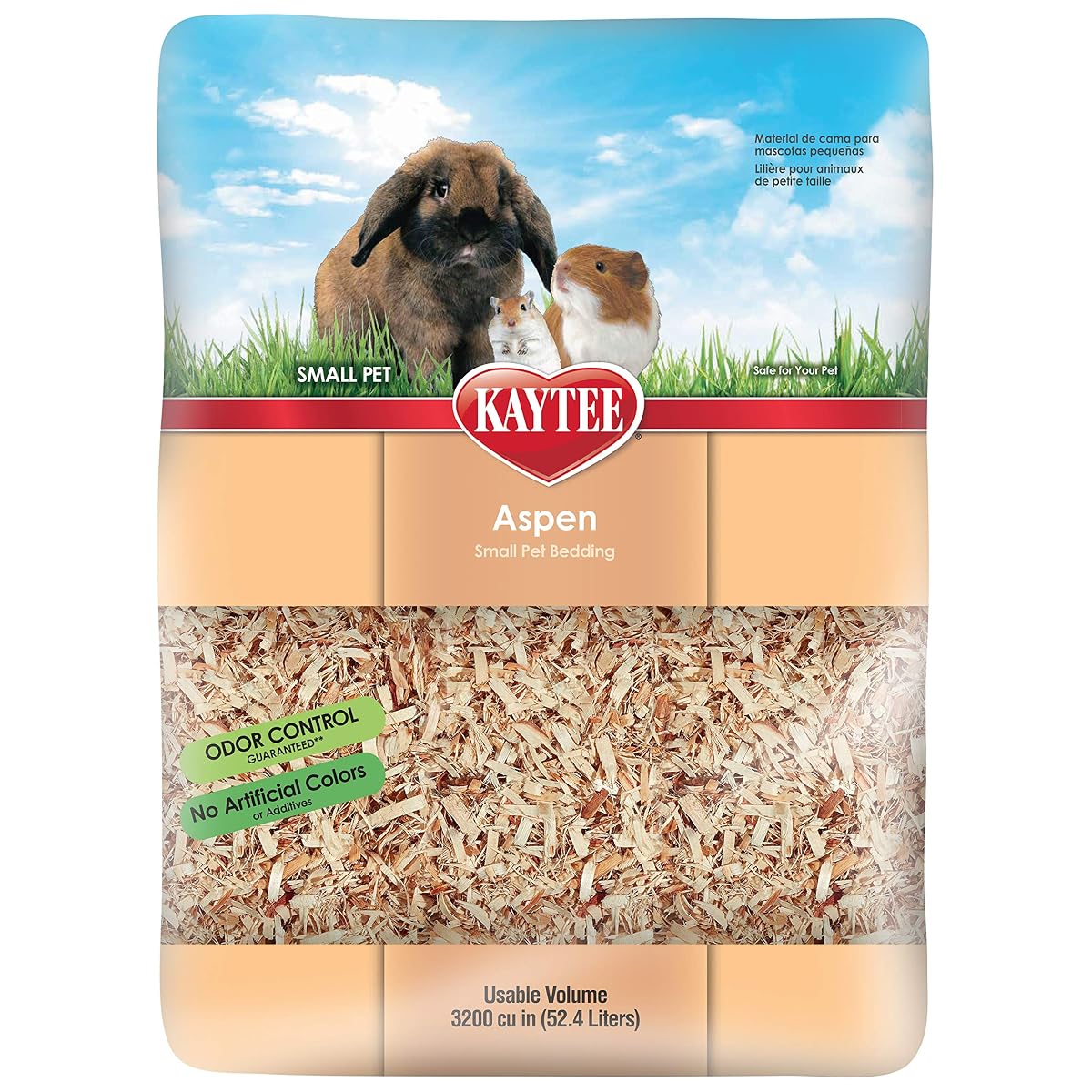
Paper bedding is soft and holds tunnel shapes well. Aspen shavings add texture and mix nicely with paper. Coconut chips or a little cork make the top layer feel like a forest floor. Avoid scented bedding, and if you have questions about any material and your hamster's comfort, ask an exotics vet.
Bedding for deep digging
Unscented paper, aspen and coconut options you can layer together.




Wheel size by species: keep the back straight
Pick a solid-surface wheel big enough that your hamster runs with a level back: at least 20 cm (8 inches) for dwarfs and at least 30 cm (12 inches) for Syrians, per the PDSA. Watch your hamster run. If its spine curves upward like a little rainbow, the wheel is too small.
Choose a solid running track rather than rungs or mesh, so tiny feet cannot slip through. If the wheel sits on bedding, set it on a flat tile so it stays steady.

A quiet wheel with an adjustable stand
A clear, solid-track wheel on a sturdy acrylic base with a stand you can raise or lower, so it sits at the right height above deep bedding.
- Solid running surface with shallow grip lines
- Stand adjusts to the bedding level
- Comes in sizes for dwarf and Syrian hamsters
Wheels for dwarfs and Syrians
Check the diameter against the table above before you choose.


Hideouts, tunnels and a cozy nest
Offer more than one hide, spread around the enclosure. A hamster likes a choice of places to nap, store food and retreat. Wooden houses with a removable roof make spot checks easy, and a multi-room hide gives space for both a nest and a pantry.
Hollow logs, curved wood bridges and woven grass huts double as tunnels. Bury one end of a tube in the deep bedding and your hamster will treat it as the entrance to its own burrow. You can browse more ideas in our hamster shelf.
Hides, tunnels and huts
Mix a big house with smaller tunnels for variety.


A sand bath, and the toilet question
Add a shallow tray of plain, dust-free bathing sand. Hamsters roll and dig in sand as part of grooming themselves, and many choose a sand tray as their toilet corner too. That answers one of the most searched questions: hamsters do not need a toilet, but a sand tray in a corner often becomes one, which makes cleaning simpler.
Use sand made for small pets, not chinchilla dust. Scoop it every day or two.

A roomy sand bath with a lid you can stand on
A clear acrylic box measuring 12.2 by 8.6 inches with a wooden top, so sand stays inside while your hamster digs, and the lid becomes a little lookout.
- Large enough for a Syrian to turn around
- Clear sides let you see when it needs a scoop
- Wooden top doubles as a platform
Sand trays and bathing sand
Pair a container with sand made for small pets.


Chews, water and the little extras
Hamsters love to gnaw, so keep a few untreated wood chews in reach. Apple wood sticks, wooden rollers and woven grass toys give busy paws and teeth something good to work on. Scatter-feeding part of the daily food through the bedding turns dinner into a forage. For any question about teeth or diet, ask an exotics vet.
A water bottle on a free-standing holder keeps the spout clear of bedding, which helps in a tank or bin with deep litter. See this bottle with a stand, or search for more hamster bedding.
Chews and water
Natural wood and grass chews, plus a bottle that stands on its own.


Where to place the cage
Pick a quiet, calm room away from noise, draughts and direct sunlight. The PDSA suggests keeping hamsters away from things like the TV or washing machine, at a steady temperature of 18 to 21°C (roughly 64 to 70°F). Bedrooms can work, but remember the wheel will be busiest while you sleep.
- Set the enclosure on a sturdy surface at a comfortable height, so you meet your hamster from the side rather than looming from above.
- Keep it out of sunny windows and away from heaters, air vents and doors that slam.
- Keep other pets from sitting on or staring into the enclosure.
- Leave space around it so you can lift the lid and reach every corner for cleaning.
The wheel matters as much as the cage: here is what size hamster wheel suits Syrians, dwarfs and Robos.
Questions people ask
What is the ideal size cage for a hamster?
The PDSA recommends a minimum of 100 x 50 cm, about 39 x 20 inches, of floor for any hamster. Bigger is better as long as the floor is one unbroken surface. Single-level homes are preferred over tall, multi-level cages.
Do hamsters like big or small cages?
Hamsters need room to run, dig and forage, so a large enclosure suits them far better than a small one. Fill a big space with deep bedding, several hides, tunnels and scattered food so it feels busy and safe rather than empty.
Do hamsters need a toilet?
Not strictly, but many hamsters pick one corner as their toilet. Placing a sand tray there often turns it into a natural litter spot, which makes daily spot cleaning quick.
Can I keep a hamster in a 10 gallon tank?
Not as a permanent home. A 10 gallon tank offers only a small fraction of the floor the PDSA recommends and cannot fit a correctly sized wheel, deep bedding and hides together. Use it for a sand bath or a safe spot during cleaning instead.
What size wheel does a Syrian hamster need?
The PDSA advises at least 30 cm (12 inches) for Syrian hamsters and at least 20 cm (8 inches) for dwarf hamsters. Watch your hamster run: its back should stay level, not arched.
About the numbers
- PDSA, Hamsters as pets (pdsa.org.uk), read 2026-10-07: minimum cage size 100 x 50 cm; at least 25 cm (10 in) of bedding; wheels at least 20 cm (8 in) for dwarf and 30 cm (12 in) for Syrian hamsters; steady 18 to 21°C; quiet spot away from noise, draughts and direct sunlight; single-level larger cages better than tall multi-level ones
- Google search results and people also ask, United States, read 2026-10-07: questions on ideal cage size, big vs small cages, hamster toilets and 10 gallon tanks