How to Set Up a Guinea Pig Cage: Space, Hideouts and Hay
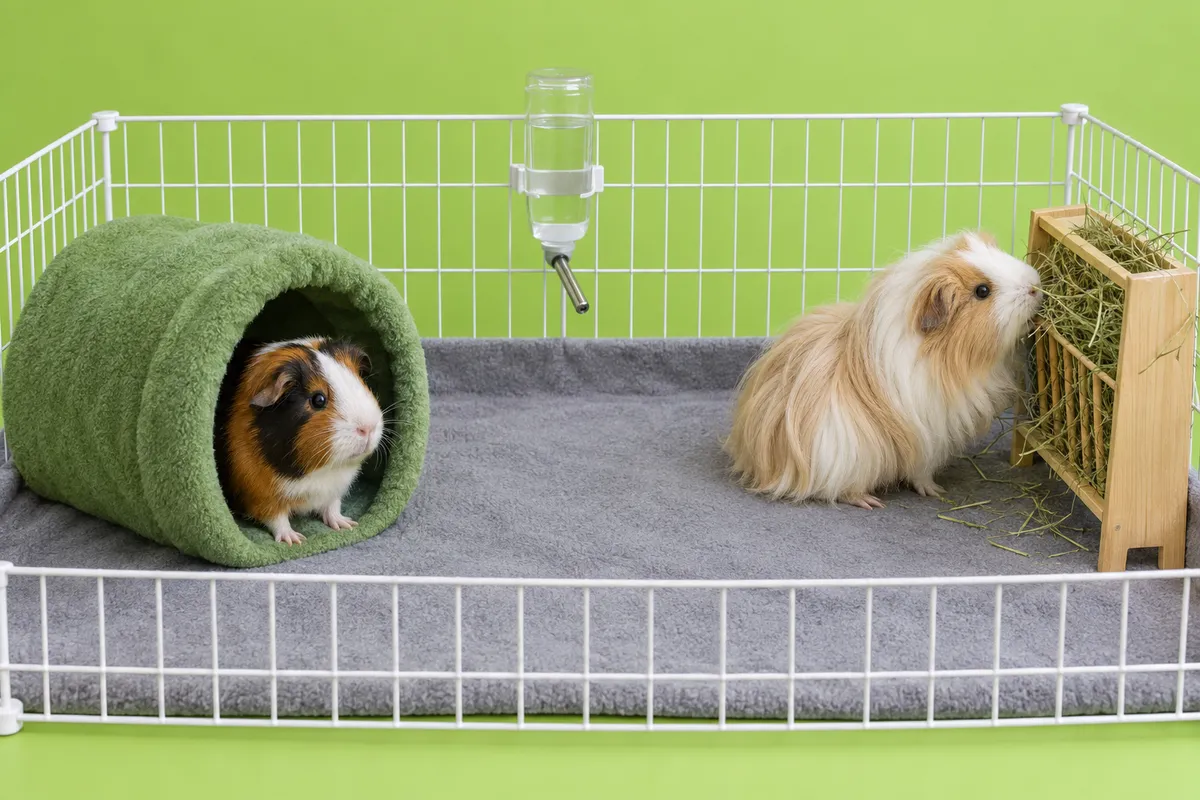
Give guinea pigs a long, flat floor, a fleece liner or deep unscented bedding, one hideout each plus a spare, a hay rack that stays full and a water bottle at nose height.
In short
- Floor space matters more than height: guinea pigs run, graze and nap along the ground, so choose the longest flat, solid floor you can fit.
- Cover the floor with a fleece liner over a waterproof base or a deep layer of unscented paper or aspen bedding, plus a washable pad under the hay rack.
- Give every guinea pig its own hideout plus one spare, ideally with two ways out, so a shy pig never feels cornered.
- Keep hay in a rack or bag off the floor, refill it every morning, and set the cage up indoors, away from drafts, heaters and direct sun.
Hello, lovely. The best guinea pig cage is not the tallest one. It is the one with the most floor. Start with a long, flat, solid base, cover it with a fleece liner or deep unscented bedding, then add a hideout for each guinea pig plus a spare, a hay rack that stays full and a water bottle at nose height.
Start with floor space, not height
Guinea pigs live along the ground: they run laps, graze, pop up in happy little jumps and flop down to nap, but they are not climbers. So compare the floor, not the height. One long level beats a tall tower with steep ramps, and a solid floor beats wire, so little feet always land on something soft.
There are two easy routes. A ready-made habitat clips wire walls onto a waterproof base and is ready in minutes. A C&C cage (cubes and corrugated plastic) is built from square wire grids, roughly 14 inches each, standing in a corrugated plastic tray with raised sides. Sizes are written in grids: a 2x4 cage is about 28 by 56 inches, or 10.5 square feet, the minimum the rescue guide below sets for two guinea pigs. Add grids for a longer run when your herd grows. A wire panel kit with grids of about the same size works the same way: stand the panels in a waterproof tray and build one long level instead of two stories.
| Setup | How it is built | Why people choose it | What to check |
|---|---|---|---|
| Ready-made habitat | Wire walls clipped onto a waterproof base | Quick to set up, often with a folding lid | The floor size is fixed unless you can join a second unit |
| C&C grid cage | Square wire grids around a corrugated plastic tray | Any length or shape, easy to make bigger | Needs a waterproof tray and a little building time |
| Wooden hutch | A wooden house with a ramp to a second level | Looks like furniture | Often more height than floor; bare wood soaks up urine |
Habitats with a long, flat floor
A ready-made habitat with its own base, and a grid kit you can build as one long level.


A habitat that is ready in minutes
A 47 by 24 inch floor inside 14 inch walls, a folding top panel to help keep curious cats and dogs out, and a leak-proof, PVC-lined canvas base that hand washes clean. A divider panel splits off one end, handy for a kitchen corner or for closing off half while you tidy. One unit gives about 8 square feet, a little under the 10.5 the rescue guide below sets for two guinea pigs, so for a pair or more, plan to join a second unit; the habitat is made to expand.
- Waterproof canvas base, no wire underfoot
- Folding lid
- Divider panel for a kitchen
Lay the floor: fleece liners or loose bedding
Every floor needs an absorbent layer, and there are two good systems. Pick the one that suits how you like to clean.
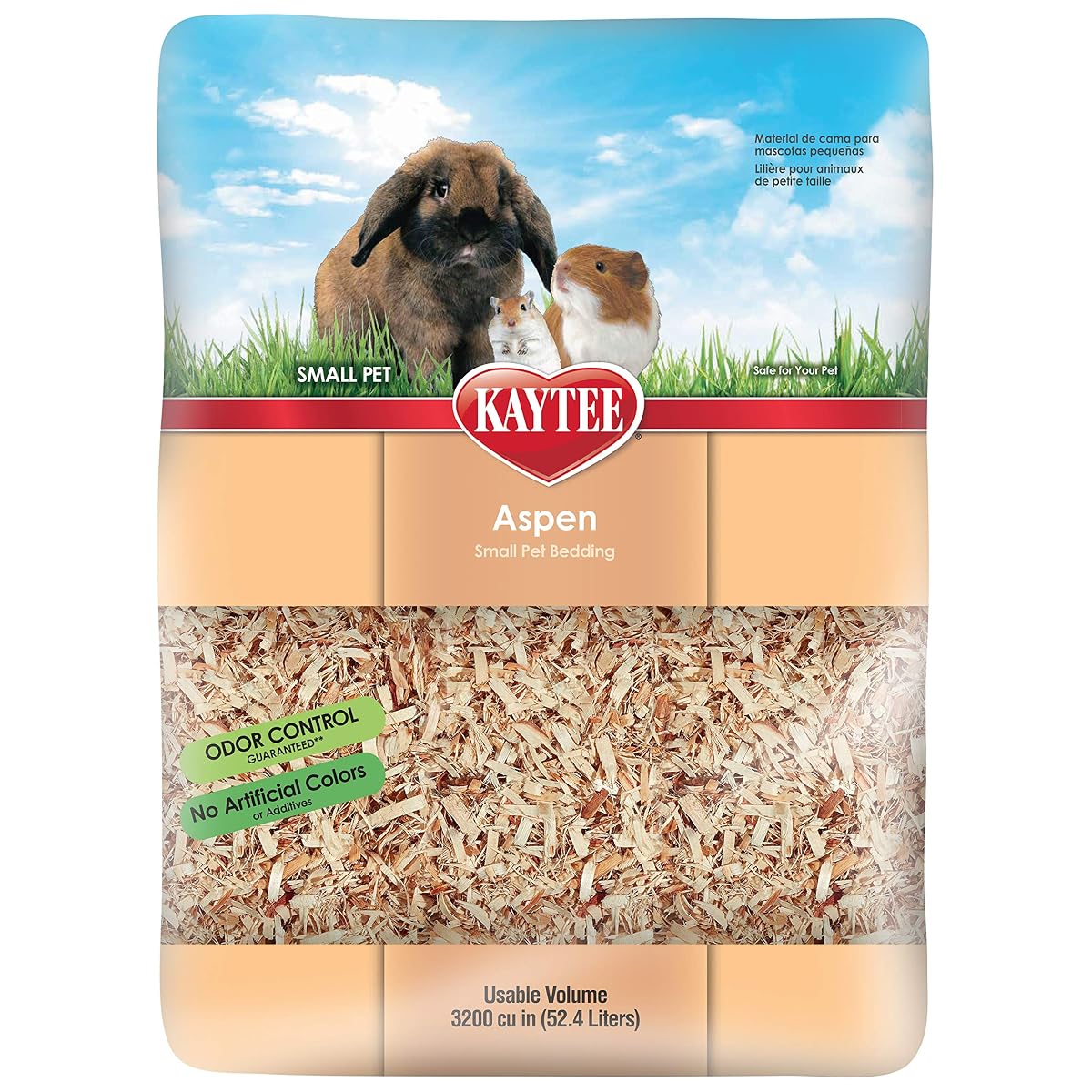
Fleece liners have a fleece top that lets moisture pass into an absorbent core above a waterproof backing, so the surface stays dry. Sweep out droppings daily and swap in a fresh liner every few days, so keep two sets. Loose bedding, such as paper or aspen shavings, is spread deep, spot cleaned daily and changed each week. Choose unscented bedding and skip softwood shavings such as pine and cedar. Browse fleece cage liners by cage size for a snug fit.
| Floor layer | Daily care | Full change | Good to know |
|---|---|---|---|
| Fleece liner | Sweep out droppings | Wash gently, no fabric softener | Wash new fleece a few times before first use so it absorbs well |
| Paper bedding | Scoop wet spots | Replace all of it | Soft and absorbent, in white or natural shades |
| Aspen shavings | Scoop wet spots | Replace all of it | A hardwood without aromatic oils |
Fleece liners and washable pads
Absorbent tops over waterproof backs; two sets mean one is always dry.


A liner made for messy corners
Sized for a 2x4 C&C cage, with a non-stick velvet fleece top that makes spot cleaning easy, a waterproof bottom and an extra absorbent layer in each corner, the spots many guinea pigs pick as a toilet.
- Non-stick velvet fleece
- Reinforced corners
- Waterproof backing
Paper and aspen bedding
Unscented, soft and easy to scoop.


Hideouts: one for every guinea pig, plus a spare
Guinea pigs are prey animals, and a roof overhead is how they relax. Give each one its own hideout plus a spare, so nobody has to share with a cagemate who wants space. Two openings, or a curtain of fleece strips, let a shy pig slip out the other side instead of feeling cornered.
Mix the styles and spread them around the edges, so no hideout blocks the way to the hay or water. Woven grass and hay huts double as chews, so replace them as they wear down. You can rotate in more guinea pig hideouts later.
| Hideout | Made of | Best place | Cleaning |
|---|---|---|---|
| Corner fleece curtain | A fleece top with hanging strips | A corner, hooked onto the bars | Shake out, wash as the label says |
| Fabric tunnel | Fabric over a foam or wire frame | Along a wall, as a corridor | Wash as the label says |
| Wooden house | Plywood with windows and doorways | In the open, doors facing the room | Wipe dry; replace if soaked |
| Grass or hay hut | Hand-woven grass or timothy hay | Anywhere; it doubles as a chew | Replace when chewed through |
Hideouts in every style
A fleece curtain, soft tunnels, wood and woven grass, so every pig finds a favorite.


A corner curtain hideout
Hooks clip it onto the corner bars of a C&C cage or habitat, and fleece strips hang into a soft curtain that guinea pigs push through, peek out of and nap behind. The fabric is reversible for a fresh look.
- Turns an empty corner into a den
- Many ways out
- Reversible fabric
Cuddle cups and tunnels for naps and play
A cuddle cup is a soft, hooded bed with a wide doorway: part hideout, part pillow, and lovely in a cooler room. Look for a washable base and an opening your biggest guinea pig can walk into without squeezing. A collapsible play tunnel makes a fun extra for floor time outside the cage. Tuck a little hay at each end and stay close while they explore.
Cuddle cups and a play tunnel
Soft beds with wide doorways, plus a tunnel for floor time; check each label for washing.


Hay, water and chews in the kitchen corner
Guinea pigs graze through the day, so keep hay in a rack or bag that holds it off the floor, clean and dry, and top it up every morning. A wooden manger with a lid stops pigs from sleeping in the hay, while a fabric hay bag with two openings lets two pigs eat side by side. For how much hay, which pellets and which fresh foods suit your guinea pigs, ask your vet. Browse more hay racks and feeders.
Hang the water bottle outside the bars with the spout at nose height, over the liner rather than the hay so drips never spoil it. Each morning, check that water flows and rinse the bottle at every refill. If your pigs gnaw the plastic, look for a steel chew guard made for your bottle's size. Woven grass mats and apple wood sticks give them something to gnaw and rearrange.
Hay racks, bottles and chews
Hay off the floor, water at nose height, something to nibble.


A hay manger with a lookout deck
This 9-7/8 by 6-3/4 by 8 inch plywood manger screws onto the cage grid and fills through a flap in its lid, while wooden bars across the front let guinea pigs pull hay through. The closed lid doubles as a little deck to sit on, and it stops pigs from jumping in, so the hay stays clean instead of turning into a bed.
- Flap lid for quick refills
- Wooden bars keep hay tidy
- Lid doubles as a seat
Where to put the cage
Indoors, in a room where the family spends time, is the easiest home for guinea pigs. They learn your voices and routine, and you notice quickly when a bottle runs dry. Choose a level spot away from radiators, heating vents, drafty doors, full sun and loud speakers. If cats or dogs share the home, a lid or a sturdy stand helps keep curious noses apart. Find bedding, bottles and more in our small pet supplies.
Set it up in eight steps
- Measure the spot and choose the longest flat floor that fits.
- Build the cage on a level surface and check every clip.
- Lay the waterproof base, then a liner or deep unscented bedding.
- Make the kitchen corner: hay rack, washable pad and water bottle.
- Place one hideout per guinea pig plus a spare, around the edges.
- Add a cuddle cup in a quiet corner.
- Leave an open runway down the middle for laps.
- Spot clean and refill hay and water daily; swap liners every few days or change all the bedding weekly.
Then let them settle, and keep the layout the same for the first few weeks so everyone learns where things are.
Questions people ask
What do you need to put in a guinea pig cage?
A solid floor covered by a fleece liner or deep unscented paper or aspen bedding, a hideout for each guinea pig plus a spare, a hay rack or hay bag, a water bottle at nose height and a few chews. A cuddle cup and a tunnel are lovely extras, as long as an open runway stays clear.
Can guinea pigs live outside?
Indoors is the easier and safer home for most guinea pigs. Outdoors they face heat, cold, damp, drafts and predators, and it is harder to notice when something is not right. For fresh air, use a covered pen in the shade on a mild day, stay close and bring them back inside; ask your vet what suits your climate.
What is the 3-3-3 rule for guinea pigs?
It is a rule of thumb rescues use for newly adopted pets: about three days to decompress, three weeks to learn your routine and three months to feel at home. Early on a new guinea pig may hide a lot, so keep the room calm, handling gentle and hideouts plentiful. Treat it as a guide, not a deadline.
What is the best guinea pig hutch?
For most homes, not a tall hutch but an indoor habitat or C&C cage with one long, flat floor. If you love a wooden hutch, choose one with a large ground floor, a gentle ramp with sides, a deep pull-out tray and good airflow, line it well, and keep it indoors or somewhere sheltered.
What do you put on the bottom of a guinea pig cage?
A waterproof base first, such as a habitat's canvas bottom or a C&C cage's corrugated plastic tray. On top goes a fleece liner with a waterproof backing, or a deep layer of paper or aspen bedding, plus a washable pad under the hay rack.
About the numbers
- SoCal Guinea Pig Rescue, Cage guide, read 2026-10-06: At least 10.5 square feet (28 by 56 inches) for two guinea pigs, which a C&C cage of 14 inch grids at 2 by 4 grids meets; a 24 by 47 inch cage is too small for a pair; no wire bottoms or multi-level cages.
- RSPCA, Creating a good home for guinea pigs, read 2026-10-06: Hiding places should exceed the number of guinea pigs by one; avoid grid floors and softwood products such as pine; keep the home away from radiators, sunny windows and draughts; spot clean daily and deep clean at least weekly.
- ASPCApro, Pet adjustment periods: 3 days, 3 weeks, 3 months, read 2026-10-06: Newly adopted pets may be stressed for the first three days, settle in over three weeks and feel at home by about three months.