Chinchilla Dust Bath Explained: Why They Roll in Dust, Not Water
Chinchillas clean their thick coats by rolling in fine bath dust, not water. Here is which dust to use, how to contain the mess, where to set it up and how to tidy afterwards.
In short
- Chinchillas clean their coats by rolling in fine bath dust instead of water, because their fur is so dense that it stays damp for a long time once it gets wet.
- Use dust made for chinchillas, which is much finer than the sand sold for hamsters and gerbils; the two are not interchangeable.
- A covered bath house or a deep, high-sided container keeps most of the dust off the floor and the rest of the cage.
- For how often and how long to offer the bath, follow the dust's label, and ask an exotic-pet vet if your chinchilla's skin or coat ever worries you.
- Degus also dust bathe, while hamsters and gerbils bathe and dig in coarser bathing sand.
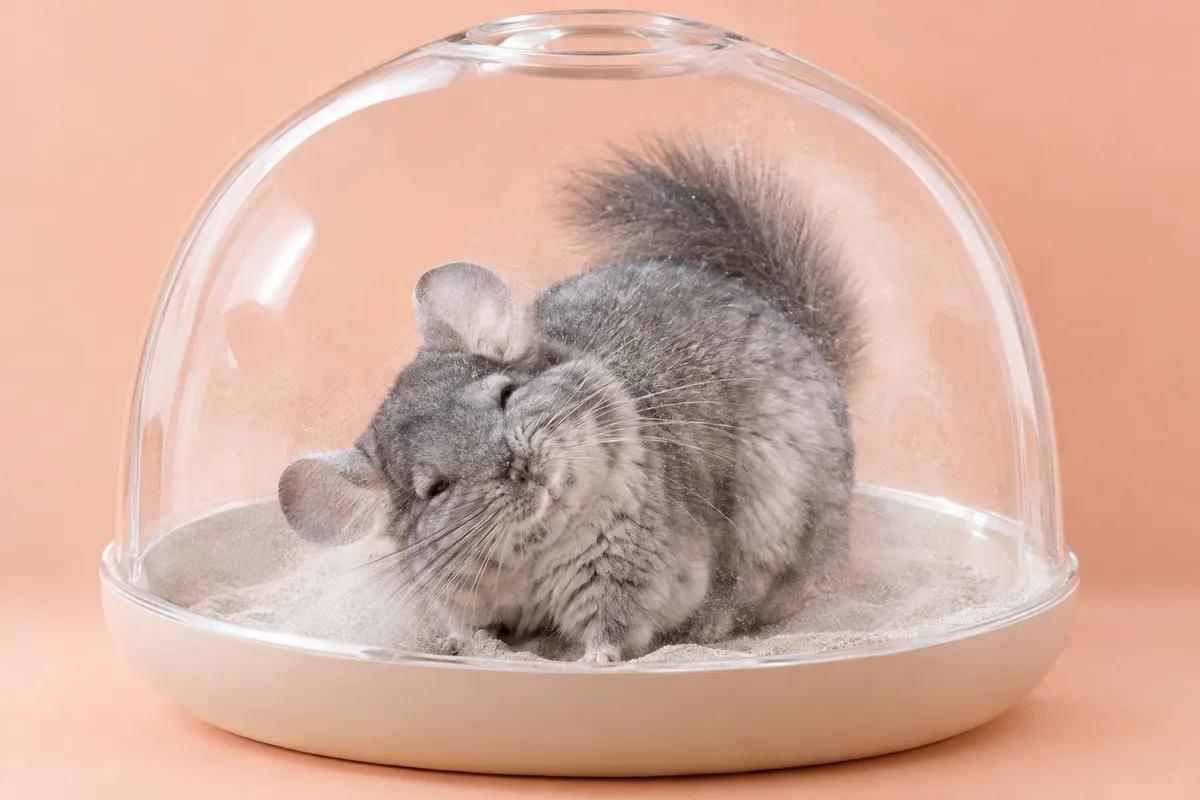
Hello, lovely chinchilla people. If you have just watched your chinchilla flip, roll and wriggle through a dish of powder, you have seen a chinchilla dust bath, and it is exactly how this soft little animal keeps itself clean. No sponge, no shampoo, no water. Just the right dust, a container that holds it, and a few minutes of very happy rolling.
This guide explains why chinchillas bathe in dust, how bath dust differs from the sand other small pets use, which containers keep the mess in check, where to put the bath and how to tidy up afterwards.
Why chinchillas roll in dust instead of water
The short answer: their coat is too thick for water. Chinchillas come from the dry, high mountains of South America, and their fur is famously dense, far denser than a hamster's or a rabbit's. Water soaks into a coat like that and takes a long time to dry, so chinchilla keepers avoid wetting them at all.
Fine dust works the other way round. As the chinchilla rolls, the powder works down through the fur and is shaken back out, taking grease and grime with it. Afterwards the coat looks fluffier and the fur separates again. For many chinchillas the bath is also clearly a joy: the flips and spins are part of their daily routine.
Bath dust vs bathing sand: which one to use
Use dust made for chinchillas. It is milled very fine, close to a powder, so it can reach down through that dense coat. Bathing sand for hamsters and gerbils is coarser and grainier: it suits their lighter coats and their love of digging, but it is not a stand-in for chinchilla dust. Read the bag before you buy, since many products are labelled for several species.
| Chinchilla bath dust | Small animal bathing sand | |
|---|---|---|
| Texture | Very fine powder | Fine to medium grains |
| Made for | Chinchillas, often degus | Hamsters, gerbils, mice and similar |
| How it is used | Rolling and flipping to clean a dense coat | Rolling, digging and sometimes as a toilet corner |
| Where to set it | A covered bath house or deep tub, offered for a session | A sand box that can stay in the enclosure |
Dust made for chinchilla baths
Fine, powdery dusts labelled for chinchillas.


Store the dust in its closed jar or bag in a dry place so it stays loose and clean. A scoop or measuring cup keeps your pour tidy.
Bath houses and containers that limit mess
A good chinchilla bath is tall, steady and hard to tip. A chinchilla throws dust upwards and sideways while it rolls, so an open shallow dish sends a cloud over everything nearby. A covered bath house with a single doorway holds most of it in, and the clear plastic sides let you watch the fun.
- A roof or high sides. The higher the walls, the less dust lands on the floor.
- Room to roll. Your chinchilla should be able to turn round and flip completely inside it.
- A wide, flat base. A heavy or anti-skid bottom stops it sliding when your chinchilla bounces in and out.
- Easy to take apart. A lid that lifts off makes emptying and wiping much quicker.
- Smooth inner walls. Fewer corners mean less dust caking in hard-to-reach spots.

A covered bath house for chinchillas
This two-piece plastic bath house has a domed, see-through roof and a deep tray, with one doorway at the front. The roof lifts off for emptying, and the tinted sides keep most of the rolling dust inside.
- Two pieces that separate for cleaning
- Clear roof so you can watch the roll
- Single front entrance keeps dust in
More bath houses with roofs
Covered designs for chinchillas, degus and other dust bathers.

How often and how long to offer a dust bath
Follow the dust's label. Bath dusts give their own guidance on how often to offer the bath and how much to pour, and those directions are written for that product. Many keepers offer the bath for a short session and then lift it out, rather than leaving it in the cage all day, so the dust stays clean and does not become a toilet.
Watch your own chinchilla too. Some roll for a minute and hop out; others want a second go. If the coat ever looks greasy, patchy or the skin looks dry or flaky, ask an exotic-pet vet. They can tell you what your chinchilla needs and whether the bath routine should change.
Where to set up the bath
Set the bath somewhere calm and easy to clean. A play area, a hard floor, or inside a tall cage on a level shelf all work. Avoid carpets, soft furnishings and spots next to electronics, since fine dust drifts. A tray or washable mat under the bath house catches what escapes.
Chinchillas love a safe place to retreat once the fun is over. A wooden hut or a fleece corner hideout nearby gives a quiet spot to settle while the dust drifts off the coat. Browse more small animal hideouts and habitats to round out the space.
Hideouts for after-bath naps
Wooden huts and soft hideaways sized for chinchillas.


If you are planning the whole home, a tall, multi-level cage gives a chinchilla room to jump and a level shelf for the bath house. See the small pet cages and supplies for tall wire cages with ramps and doors wide enough to slide a bath house through.
Tall cages with room for a bath house
Multi-level wire cages with wide doors.


Cleaning up after a dust bath
- Lift the bath house out once your chinchilla has finished and hopped away.
- Sift out droppings and clumps with a small scoop or sieve.
- Pour clean dust back into its jar only if the label allows reuse; otherwise top up with fresh dust next time.
- Wipe the bath house with a dry cloth. If you wash it, let it dry completely before the next bath, since damp dust clumps.
- Dry-dust or vacuum the nearby surfaces. A damp cloth is fine for shelves once the chinchilla is elsewhere.
A little dust in the air is part of the deal. Running the bath in the same corner every time keeps the clean-up to one spot.
Which other small pets use sand baths?
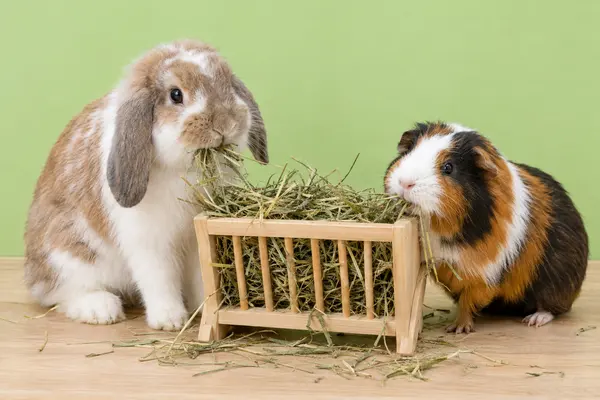
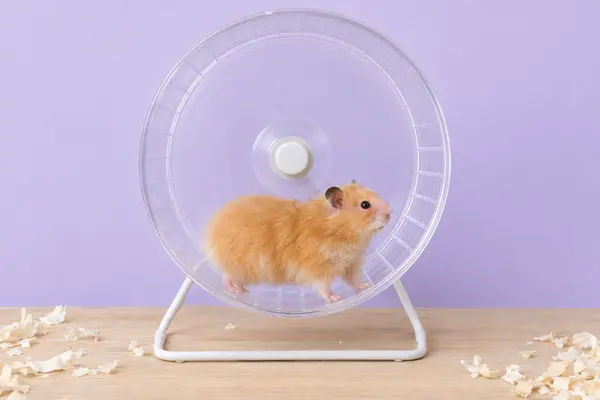
Chinchillas are not the only small pets who bathe without water. Degus dust bathe too, and many chinchilla dusts list degus on the label. Gerbils and hamsters roll and dig in bathing sand instead, which is coarser than chinchilla dust and often lives in a sand box inside the enclosure. Our guides to hamster bedding and hamster cage size cover where a sand box fits in a hamster setup.
Bathing sand for hamsters and gerbils
Grainier sands made for small rodents that dig and roll.


Sand boxes for hamsters and gerbils
Clear containers that sit in the enclosure, some with a scoop.


Looking for something specific? Try a search for bath sand to see every size and style.
Questions people ask
Why can't chinchillas take a water bath?
Their fur is extremely dense, so water soaks in and takes a long time to dry. Chinchilla keepers clean the coat with fine bath dust instead. If your chinchilla does get wet, ask an exotic-pet vet for advice.
Can I use hamster sand for a chinchilla dust bath?
It is better not to. Hamster and gerbil bathing sand is coarser than chinchilla bath dust, which is milled very fine so it can work through a thick coat. Pick a dust labelled for chinchillas.
How often should a chinchilla have a dust bath?
Follow the directions on your bath dust's label, since each product gives its own guidance. If you are unsure, or your chinchilla's coat or skin changes, ask an exotic-pet vet.
Should I leave the dust bath in the cage all the time?
Many keepers offer the bath for a session and then lift it out, so the dust stays clean and is not used as a toilet. Check your dust's label for its own guidance.
How do I stop dust getting everywhere?
Use a covered bath house or a deep, high-sided container, set it on a tray or washable mat on a hard floor, and keep it away from carpets and electronics. Run the bath in the same spot each time so the clean-up stays in one place.
Do degus, gerbils and hamsters need a sand bath?
Degus dust bathe much like chinchillas. Gerbils and hamsters roll and dig in coarser bathing sand, usually in a sand box kept in the enclosure. Choose the product labelled for your pet.
About the numbers
- Product labels and descriptions of the bath dusts and bathing sands shown, read 2026-10-28: Which species each dust or sand is labelled for, and that each product gives its own usage directions.