Best Bedding for Hamsters: Paper, Aspen, Hemp, Hay and Sand
The best hamster bedding is soft, unscented and holds a tunnel: paper as the base, aspen or hemp for texture, hay for structure, sand in its own corner.
In short
- Soft, unscented paper bedding is the easiest base for most hamsters because it is gentle on paws and holds the shape of a tunnel.
- Aspen shavings and hemp add texture and structure, and they work best mixed into paper rather than used alone.
- Hay pressed into the layers helps tunnels stay standing, and plain hay, shredded paper or cardboard make good nesting material.
- Cotton wool and other fluffy nesting, scented bedding, and cedar or pine shavings that are not kiln-dried are commonly advised against; ask your vet if you are unsure.
- Spot clean the toilet corner and soiled patches every few days and do a deeper change once or twice a month, keeping some clean old bedding so home still smells familiar.
Hello, lovely. If you are standing in front of a wall of bags wondering which one your hamster will actually like, here is the short answer: a soft, unscented paper bedding as the base, with aspen, hemp or hay mixed in for texture, and sand in its own little corner. That mix is comfy to dig, holds a tunnel and is simple to keep fresh.
This guide is all about materials: what each one does, what to mix, what to skip and how to pack it so burrows do not cave in. For floor space, depth and wheel size, start with our guide on what size hamster cage you need, then come back here to fill it.
What is the best bedding material for hamsters?
For most homes, plain paper bedding is the best starting point. It is soft underfoot, light enough for little paws to push around, and it clumps together just enough to keep the roof of a tunnel up. Look for unscented, low-dust paper with no added colour if you want the calmest, most natural look.
Paper comes in two styles. Fluffy, pillowy paper is lovely to burrow in and fills a deep end quickly. Pelleted or crumbled paper is firmer and better for a toilet corner. Most keepers use the fluffy kind for the main layer.
Soft paper bedding for the base layer
Unscented, plain paper that fluffs up and packs down into tunnels.


Paper, aspen, hemp, coco and moss compared
Each material has one job it does best, which is why so many keepers mix two or three. Here is how they compare in everyday use.
| Material | Feel and look | Holds tunnels? | Best used as |
|---|---|---|---|
| Paper (fluffy) | Very soft, light, bright or natural tones | Yes, once packed | The main base layer |
| Aspen shavings | Firm curls of pale hardwood, woodland smell | Some, better mixed | Texture mixed into paper |
| Hemp | Short, dense fibres, earthy look | Yes, holds a shape well | A sturdier mix-in or lower layer |
| Timothy hay | Long strands, sweet meadow smell | Helps a lot as a frame | Pressed into layers and for nesting |
| Coco chips or cork | Chunky, forest-floor look | No, too loose | A thin top layer in one area |
| Forest moss | Springy, green | No | A cozy patch near a hide |
| Sand made for small pets | Fine and soft | Not a bedding | A separate sand bath or digging box |
Aspen shavings
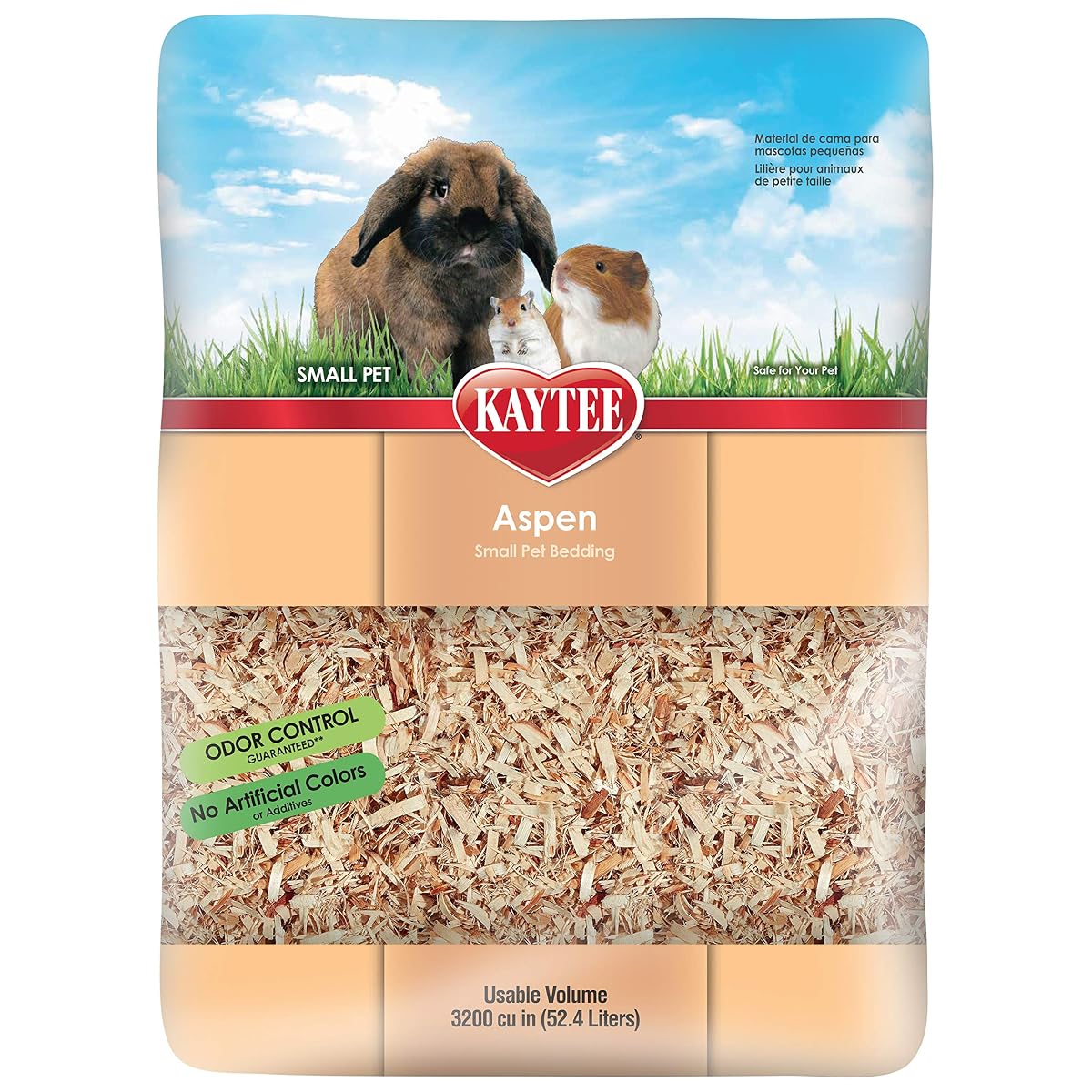
Aspen is the wood most often suggested for hamsters because it is a pale hardwood without the strong aromatic oils of softwoods. On its own it is a bit loose and pokey for deep tunnels, so stir a few handfuls into paper. It also gives the enclosure a pretty, natural look.
Hemp
Hemp bedding is made from the chopped woody core of the hemp stalk, often called hurd. It is dense, absorbent and holds a burrow well, which makes it a nice lower layer under softer paper. Some hemp is cut coarser for coops and stalls, so choose a fine cut for a small pet.
Aspen and hemp for texture
Mix these into paper for a sturdier, more natural dig.


What to avoid in hamster bedding
A few materials are commonly advised against for hamsters, so it is worth asking your vet before you use them. Here is what keepers and welfare groups most often flag.
- Cotton wool and fluffy nesting. The RSPCA advises against nesting that separates into thin strands, because the strands are hard to break and can tangle around tiny limbs.
- Cedar and pine shavings that are not kiln-dried. These softwoods carry strong aromatic oils, and they are widely advised against for small pets. If a bag simply says pine, ask your vet before using it.
- Scented bedding. Hamsters live nose first, and added perfume or scented petals are commonly skipped in favour of plain bedding. Choose unscented.
- Anything with inks, dyes or glue, such as glossy printed paper or craft stuffing.
How to keep tunnels standing
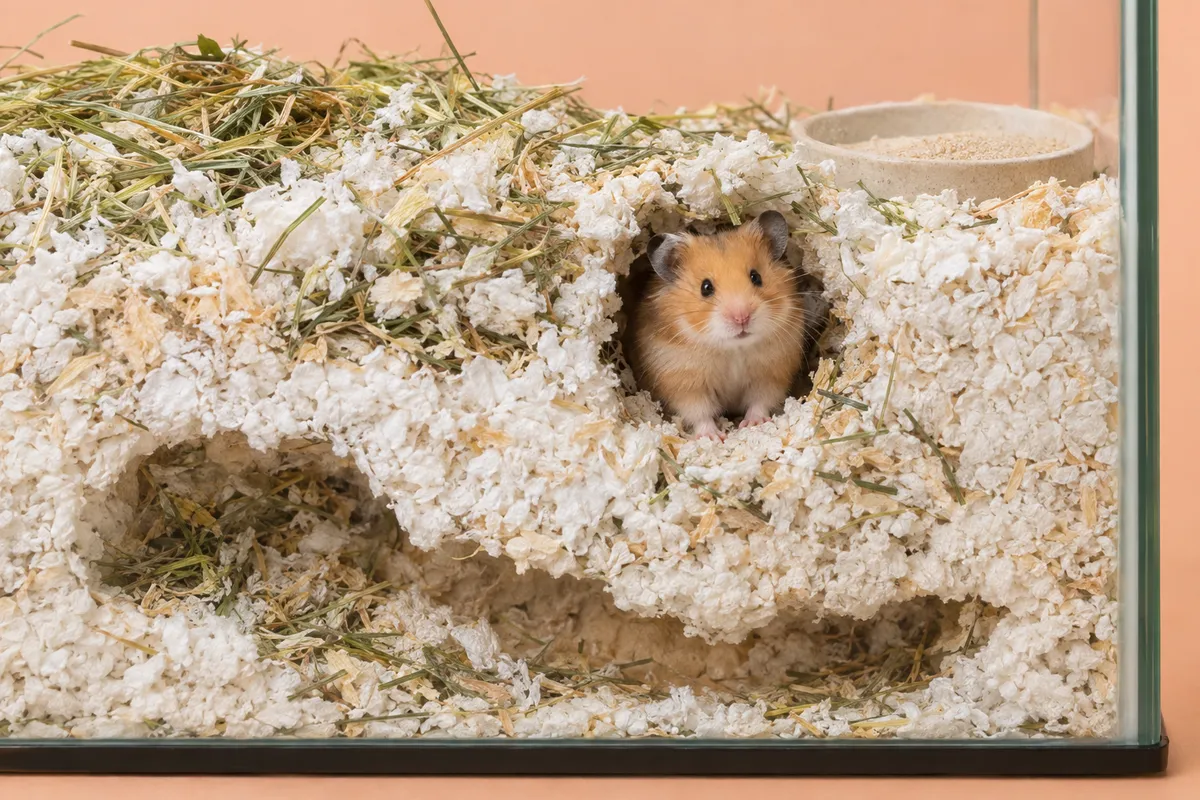
Pack the bedding down and layer in hay, and the tunnels hold. Loose, freshly poured bedding is like dry sand: each burrow collapses as soon as it is dug. A few minutes of pressing turns it into a soft but stable soil.
- Pour paper into the deep end a few inches at a time.
- Press each layer firmly with flat hands before adding the next.
- Scatter a generous handful of hay and a little aspen or hemp between layers, like rebar in a wall.
- Bury one end of a tube or hide so it becomes the doorway to a burrow.
- Finish with a loose, fluffy top so the surface still invites digging.
How deep? The PDSA advises at least 25 cm (10 inches) of bedding in part of the enclosure; our hamster cage size guide goes into the layout. A shallower side for the wheel, food and sand keeps everything steady.
Hay for building tunnels and nests
Long, soft strands that bind the layers together. For questions about diet, ask your vet.


What do I put at the bottom of my hamster's cage?
The bottom of the cage is simply where the base of your bedding mix starts: no wire floor, no liner the hamster can shred. Pour packed paper, or hemp under paper, straight onto the solid floor. On top of that you add the extras that make it a home: nesting material, a hide or two, and a sand area.
Nesting material
Good nesting material is hay, plain shredded paper or torn cardboard, all of which the RSPCA lists as suitable. Leave a little pile near the main hide and your hamster will carry it in and arrange it. A soft patch of moss or coco chips around a hide adds a woodland feel.
Natural extras for nesting and hides
Coco chips, moss and multi-room hides for a burrow-like setup.


A sand bath area
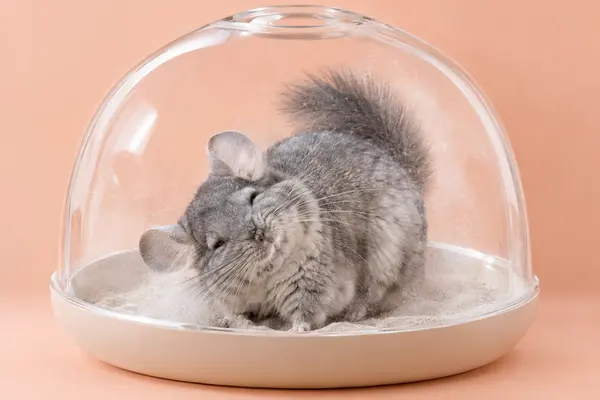
Sand goes in its own dish or box, not mixed through the bedding. Hamsters roll in it to groom and some use it as a toilet. Choose fine, low-dust sand made for small pets rather than chinchilla dust, and a container with walls tall enough to keep it in. Browse hamster sand for more choices.
Sand and sand bath boxes
A wide, walled box keeps the sand in and the bedding clean.


A sand box that doubles as a lookout
This clear acrylic box has a wooden lid covering half the top, so it works as a sand room and a platform at once.
- See-through walls let you check the sand at a glance
- The half lid keeps sand from being kicked across the bedding
- The lid holds a small wooden dish
Syrian vs dwarf hamsters: layout differences
The materials are the same for both; the layout is what changes. Syrian hamsters are bigger, so they need wider tunnels, larger hides and sand boxes with roomy entrances. Dwarf hamsters such as Roborovski, Campbell's and winter whites are tiny and quick, so several small tubes and hides scattered through the bedding suit them well.
| Setup detail | Syrian hamster | Dwarf hamsters |
|---|---|---|
| Tubes and burrow doors | Wide openings they pass through without squeezing | Smaller tubes, several entrances |
| Hides | One large multi-room hide plus a spare | Several small hides spread out |
| Sand area | A big box they can turn around in | A smaller dish or box works |
| Bedding mix | Paper base, hay layered in, aspen or hemp for texture | The same, with finer pieces on top |
If you also keep guinea pigs, their bedding and setup work quite differently; see our guide on how to set up a guinea pig cage.
Spot cleaning vs a full change
Spot clean often and change everything rarely. The RSPCA suggests removing soiled bedding, uneaten food and droppings every few days, with a deep clean once or twice a month. Deep burrows usually stay dry, so you rarely need to dig them up.
- Every few days: scoop the toilet corner and sand, and lift out damp patches.
- Once or twice a month: replace most of the bedding, leaving the nest alone if it is clean.
- Always: mix a handful of clean old bedding into the fresh, so home still smells like home.
Questions people ask
What is the best bedding material for hamsters?
A soft, unscented paper bedding is the easiest base for most hamsters. Mixing in aspen shavings, hemp or hay adds texture and helps tunnels hold their shape. If you have a question about a material and your hamster's comfort, ask your vet.
What do I put at the bottom of my hamster's cage?
Pour your bedding straight onto the solid floor and pack it down, with paper or hemp as the base. Add hay between layers, nesting material near a hide and sand in a separate dish or box. Avoid wire floors and liners your hamster can shred.
What is the best safe bedding for hamsters?
Plain, unscented paper and aspen are the materials most often suggested. Cotton wool, fluffy nesting, scented bedding and cedar or pine shavings that are not kiln-dried are commonly advised against. Your vet can help if you are unsure about a particular bag.
What is the best bedding for hamsters to burrow?
Fluffy paper packed down in layers with hay pressed between them holds burrows best. Hemp underneath adds firmness. Loose coco chips and moss look lovely but do not hold tunnels, so keep them to the top.
How often should I change hamster bedding?
The RSPCA suggests spot cleaning soiled bedding, food and droppings every few days and a deep clean once or twice a month. Leave some clean old bedding in so the enclosure still smells familiar.
About the numbers
- RSPCA, Hamster environment advice (rspca.org.uk), read 2026-10-08: suitable nesting is hay, wood wool, shredded paper or cardboard; avoid cotton wool and fluffy bedding whose strands can tangle limbs; spot clean every few days and deep clean once or twice a month
- PDSA, Hamsters as pets (pdsa.org.uk), read 2026-10-07: at least 25 cm (10 in) of bedding in part of the enclosure
- Google search results and people also ask, United States, read 2026-10-08: questions on the best and safest hamster bedding and what goes at the bottom of the cage; related searches for Syrian hamsters, burrowing, paper and hemp bedding