Best Toys for Kittens by Age and Play Style: A Gentle Guide
The best kitten toys match the kitten's age and how it likes to play: light balls and soft kickers for tiny paws, wands for pouncers, puzzles once it is steady. Here is how to choose.
In short
- The best toys for kittens are light, chewable without breaking apart and big enough that nothing comes off in a small mouth.
- Most kittens play in three styles, chasing, pouncing and kicking, so a small mix of a ball or track, a wand and a kicker covers almost every kitten.
- Wand toys with feathers, strings or ribbons are for play together only and go into a drawer or closet when the game ends.
- Hands and feet are never toys: redirect a nibbling kitten to a kicker it can grab and bunny-kick instead.
- Rotating a few toys every few days keeps them feeling new, so a kitten needs fewer toys than you might think.
Hello, lovely new kitten parent. The best toys for kittens are the ones that fit two things: how old your kitten is and how it likes to play. Tiny kittens want light things they can bat and carry. Older kittens want something to stalk, chase and wrestle. Get those two right and you need far fewer toys than the shelf suggests. Stay close during play, introduce new things gently, and you will learn your kitten's favorite game within a week.
Just brought your kitten home? Start with our new kitten checklist for the basics, then come back here for play.
What toy do kittens like the most?
There is no single winner, because kittens have play styles. Watch yours for a few days and you will see one of three patterns, often all three in one afternoon.
- Chasers sprint after anything that rolls. They love balls, ball tracks and tunnels.
- Pouncers crouch, wiggle and leap at things that flutter or hide. They love wands with feathers or a soft lure.
- Kickers grab a toy with their front paws and bunny-kick it with their back legs. They love long, soft kicker toys.
| Play style | What you will see | Toys that suit it |
|---|---|---|
| Chaser | Dashing after rolling things, skidding on floors | Crinkle balls, ball tracks, tunnels |
| Pouncer | Crouching low, tail twitching, then a leap | Feather wands, lure wands, hide-and-seek toys |
| Kicker | Hugging a toy and kicking it with back feet | Long plush kickers, crinkle pillows, soft fish |
| Thinker | Poking paws into gaps, patient sniffing | Kitten-sized puzzle feeders and treat boxes |
Kitten toys by age: 8 to 12 weeks, 3 to 6 months, 6 to 12 months
A kitten's paws, mouth and confidence change quickly in the first year, so the toy basket can change with them.
8 to 12 weeks: light, soft and easy to carry
Very young kittens are still finding their balance. Choose toys light enough to bat across the floor and soft enough to carry in the mouth: crinkle balls, small plush mice and short kickers. Keep sessions short and gentle and let your kitten win often. A simple ball track is lovely at this age because the ball stays inside the ring.
3 to 6 months: the busy, bitey stage
This is when most people search for the best toys for kittens who bite. Kittens are teething and testing everything with their mouths. Give them chewy kickers and fabric toys to grab, and bring in a wand so the pouncing happens on a feather, not on your ankles. A tunnel adds a place to hide and ambush from.
6 to 12 months: stronger, faster, curious
Older kittens are agile climbers and fast learners. Taller ball tracks, longer wands and their first puzzle feeder keep them thinking. This is also a good time to set up a daily rhythm; our indoor cat play routine shows how to mix wands, tunnels, perches and puzzles through the day.
Chaser toys: balls, ball tracks and tunnels
Chasers need things that move away from them. Crinkle balls are light, rustle at the slightest touch and slide well on hard floors. Pick balls too big to fit fully in your kitten's mouth. Ball tracks keep the ball in a ring or a stacked tower, so a kitten can play alone without the ball vanishing under the couch. Some tracks wrap around a cardboard scratch pad, which gives a kitten a place to stretch between laps.
Balls and tracks for chasers
Tracks keep the ball in play; crinkle balls add sound and speed.


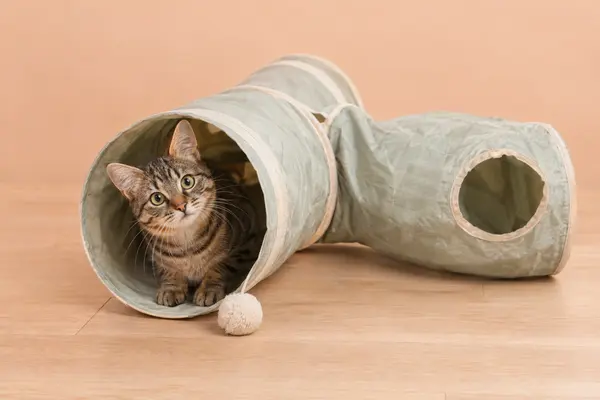
A collapsible tunnel is part toy, part hideout. Kittens race through, pop out of the peek hole and ambush passing feet. Fold it flat when you want the floor back.
Tunnels to dash through
Collapsible, with peek holes or a dangling ball.


Pouncer toys: feather wands and lures
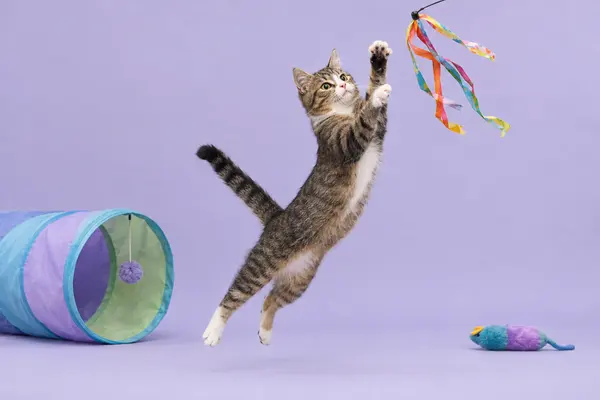
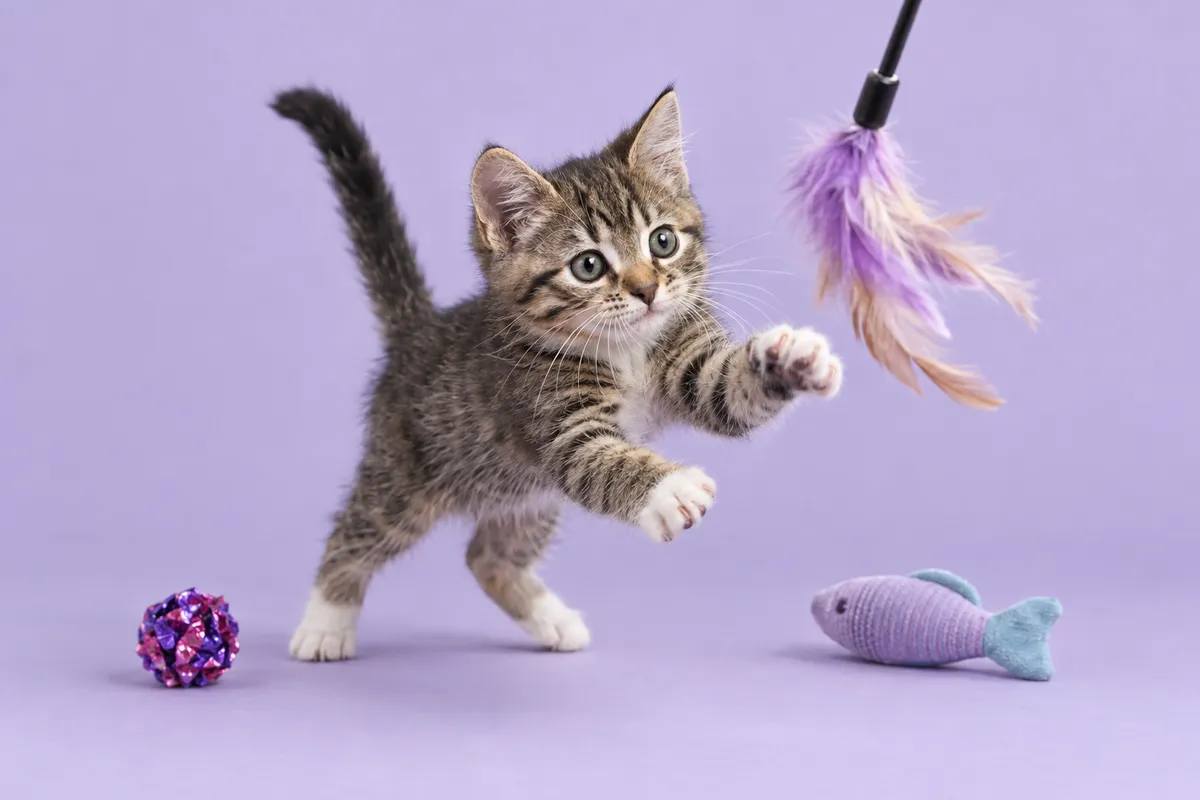
Wand toys are the closest thing to a real hunt, and they keep a kitten's teeth on the toy and away from your hand. Move the lure like a small creature: along the floor, behind a chair leg, a pause, then a dash away. Let your kitten catch it at the end of every round so the game finishes with a win.
Wands for pouncers
Feather, wire and lure wands, plus refills for when feathers wear.


A simple wire wand for first games
A thin, springy wire with small rolled cardboard pieces at the end. It flicks and bounces with tiny wrist movements, so it suits small kittens and short play sessions.
- Light enough for very young kittens to catch
- Unpredictable bounce keeps pouncers interested
- Easy to tuck away after play
Kicker toys, crinkle toys and soft toys
Kickers are long enough for a kitten to hug with its front paws while kicking with its back legs. That is exactly the move a bitey kitten wants to do to your arm, so a kicker is the polite alternative. Many have crinkle paper inside, and some hold catnip or silvervine. Some young kittens show little interest in catnip, and that is fine: the shape and the crinkle still do the work.
Kickers and crinkle toys
Long enough to hug and kick, soft enough to carry.


Soft toys and plush mice
Carry toys for quiet moments and solo play.


Puzzle feeders sized for kittens
A puzzle feeder turns a few pieces of kibble or treats into a game of paws and patience. For kittens, pick wide openings and shallow wells so small paws reach the food easily, and start at the easiest setting. Measure out food from your kitten's daily amount rather than adding extra, and ask your vet about portions for a growing kitten.
First puzzles for curious kittens
Wide openings and shallow wells for small paws.


What to skip: string, small parts and hands as toys
Kitten-safe play is mostly about what stays out of the toy basket.
- String, yarn, ribbon, hair ties and rubber bands left out unsupervised. Kittens chew and can swallow them.
- Small parts that can come loose: bells, glued eyes, sequins, tiny feathers. Check toys often and retire worn ones.
- Toys smaller than your kitten's mouth. If it fits fully inside, it is too small.
- Hands and feet as toys. Wiggling fingers teaches a kitten that skin is for biting. Redirect to a kicker or wand every time.
- Anything that alarms your kitten. If a toy startles or upsets them, put it away and try again another day, gently.
If your kitten swallows something, or you have questions about biting, play or behavior, ask your vet.
What keeps kittens entertained? Rotate toys
Kittens get bored of toys that never move from the same spot. Keep three or four out at a time and swap them every few days from a closed box. The returning toys feel new again, and you need fewer toys overall. Add vertical spaces as your kitten grows: a cat tree for climbing and a window seat from our cat window perch guide for quiet watching between games.
Starter sets for rotating
Mixed baskets of balls, mice and wands to split into rotation groups.


What is the 3-3-3 rule for kittens?
The 3-3-3 rule is a popular rule of thumb about settling in, often shared by adoption groups: roughly the first three days to decompress, three weeks to learn the routine and three months to feel truly at home. It is a loose guide, not a rule from us, and every kitten moves at its own pace. Play helps at every stage: short, gentle wand sessions in the first days, then more games as your kitten relaxes. Browse more teasers and wands when you are ready to add to the basket.
Questions people ask
What toy do kittens like the most?
It depends on the kitten's play style. Chasers love balls and ball tracks, pouncers love feather wands and kickers love long plush toys they can hug and kick. Offer one of each and watch which one your kitten keeps coming back to.
What keeps kittens entertained?
A mix of play together and toys they can use alone. A wand session with you, a ball track or tunnel for solo play and a few toys rotated every few days keep things feeling new. Short, frequent games suit kittens better than one long one.
What is the 3-3-3 rule for kittens?
It is a popular rule of thumb about settling in: about three days to decompress, three weeks to learn the routine and three months to feel at home. It is a loose guide rather than a strict rule, and each kitten has its own pace. Gentle play can help a kitten feel comfortable along the way.
What are the best toys for kittens who bite?
Kicker toys and wands. A kicker gives a bitey kitten something to grab and kick, and a wand keeps teeth on the lure instead of your hand. Never use fingers as toys, and ask your vet if biting worries you.
Are wand toys safe to leave out?
No. Wands, strings, ribbons and feathers are for supervised play only. Put them away in a closed drawer or closet after each game.
About the numbers
- Google search, people also ask, United States, read 2026-10-08: Questions shoppers ask about kitten toys: what toy kittens like most, what keeps kittens entertained and the 3-3-3 rule for kittens.
- Google search, related searches, United States, read 2026-10-08: Related searches include best toys for kittens who bite and stimulating cat toys for indoor cats.