New Kitten Checklist: What You Need for the First Week Home
A kitten's first week goes best in one small, safe room with a low litter box, shallow bowls, a bed with a hiding spot, scratchers and a carrier. Here is the list, day by day.
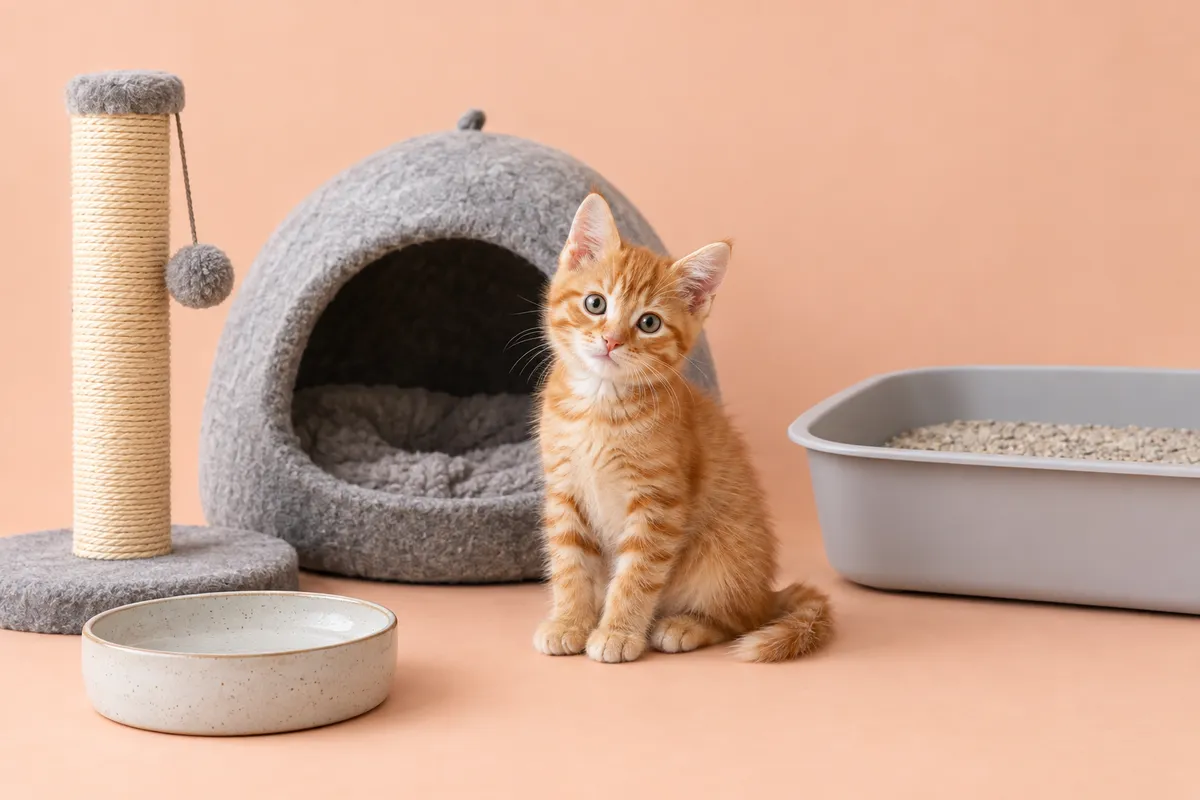
In short
- Start your kitten in one small, quiet room with everything they need inside it, then open up the rest of the home over the following days.
- A kitten needs a litter box with a low entry, a wide shallow food dish and water dish, a bed plus a place to hide, a vertical and a horizontal scratcher, and a sturdy carrier.
- Play with wand toys only while you are there to hold them, and put anything with a string, ribbon or elastic away afterwards.
- A breakaway collar with an ID tag is designed to open if it snags, which is why it is the usual choice for cats.
- Kitten-proof before day one: cords, blind pulls, toilet lids, small objects and every houseplant checked against the ASPCA's list of plants toxic to cats.
- Book the first vet visit for the first week and take your questions about food, vaccines and anything health related there.
Hello, tiny tiger. A new kitten needs less than the shopping lists suggest, but the few things they do need matter a lot. The short answer: one small safe room set up before they arrive, with a low litter box, shallow bowls, a cozy bed, somewhere to hide, two kinds of scratcher and a carrier by the door. Below is the full checklist, arranged day by day, so you are never buying in a panic at bedtime.
Bringing home a puppy instead? Our new puppy checklist walks through the house room by room. Kittens are a different story: they settle best when their world starts small.
Before day one: set up a small safe room
Pick one quiet room with a door: a spare bedroom, a home office or a bathroom with the toilet lid down. A big open home is a lot for a small cat, and a single room means your kitten always knows where the litter box, the water and the bed are. It also keeps other pets at a distance until everyone is ready to meet.
Lay the room out in zones. Food and water on one side, the litter box on the opposite side (cats prefer not to eat next to their toilet), and the bed plus a hiding spot in a corner where they can see the door. Add one scratcher near the bed, since many cats stretch and scratch right after waking.
- Litter box, litter and a scoop
- Shallow food dish and water dish, plus a mat under them
- A bed and a hiding spot (a cave bed covers both)
- One vertical and one horizontal scratcher
- Two or three kitten-sized toys and a wand you keep in a drawer
- The carrier, open, with a soft blanket inside
- A breakaway collar with an ID tag
Day 1: litter box, litter and bowls
Set out the litter box first, because it is the thing a kitten needs soonest. Choose a box with a low entry that short legs can step over, and a size that still lets a growing cat turn around. Ask the shelter or breeder which litter the kitten already uses and start with the same type; an unscented, low-dust litter is a gentle choice for a small nose. A litter mat outside the box catches what sticks to paws.
Low-entry boxes and the basics
Short sides for small legs, plus a scoop and a mat to keep the floor tidy.


For bowls, think wide and shallow. A kitten's face is small and their whiskers are sensitive, so a saucer-style dish lets them reach food without pressing their whiskers against the sides. Ceramic and stainless steel are heavy enough not to slide and easy to wash. Keep water in its own dish, a little apart from food.
On food itself: ask the shelter or breeder what the kitten eats now, keep to it for the first days, and ask your vet before changing anything. For the dish, small soft pieces and wet food both sit easily in a shallow saucer.
Shallow dishes for small faces
Low rims, stable bases and a mat for splashes.


Day 1: a cozy bed and a place to hide
A new kitten will almost always hide at first, and that is fine. Give them a hiding spot you chose, rather than the gap behind the washing machine. A cave bed does two jobs at once: it is a bed with a roof. A cardboard box on its side with a towel inside works too. Add a soft round bed somewhere in view for when they feel brave enough to nap in the open.
Caves and cuddle beds
Enclosed for hiding, round and soft for open-plan naps.


Days 2 and 3: scratchers and kitten-sized toys
Scratching is normal cat behaviour, so the goal is to give it a good place to happen. Offer one vertical and one horizontal scratcher and watch which the kitten prefers. A short sisal post suits a kitten now; a flat cardboard pad or a sisal mat covers cats that like to scratch along the floor. Our sisal vs cardboard comparison goes deeper on textures.
| Scratcher type | How kittens use it | Where to put it |
|---|---|---|
| Vertical sisal post | Stretching up tall and pulling down | Beside the bed, or near a sofa arm |
| Horizontal cardboard pad | Scratching flat along the floor | In a doorway or a sunny spot |
| Sisal floor mat | Kneading and long sideways strokes | Near the food area or a window |
| Scratcher with a ball track | Scratching plus batting a ball | In the middle of the room for play |
Vertical and horizontal scratchers
A short post for stretching and flat pads for floor scratchers.


For toys, size is the rule: big enough that a kitten cannot swallow it, small enough to bat and carry. Furry mice, lattice balls with a bell and a tunnel give them things to do on their own. Wand toys are the best way to play together, but only while you hold them. Ribbons, strings and elastic are a swallowing risk, so wands go back in a drawer when playtime ends. Browse more cat teasers and wands.
Kitten-sized toys
Wands for playing together; mice and balls for solo play.


A ribbon wand for together time
A long, flexible ribbon on a thin wand moves like something alive, which makes kittens leap, pounce and roll. Hold it low and drag it away from them, the way prey would move.
- Lets you play from a little distance, so fingers are not the toy
- Keep it out of reach between games, because the ribbon is a string
Days 2 and 3: collar, ID and the carrier
Even an indoor kitten can slip out of a door. A breakaway collar has a buckle designed to pop open under pressure if it catches on something, which is why it is the common choice for cats. Fit it so two fingers slide underneath, check the fit often while they grow, and attach an ID tag with your phone number. Ask your vet about a microchip at the first visit.
Breakaway collars
Small adjustable sizes for kittens, with a bell and reflective stitching.


The carrier came home with the kitten, but leave it out rather than stashing it in a closet. Open, with a blanket inside, it becomes another den, and that makes the vet trip far easier. Our guide on how to choose a cat carrier compares hard, soft, backpack and expandable styles.
Carriers that double as a den
Leave one open in the safe room so it feels familiar.


Days 4 to 7: grooming basics and opening up the house
Short, calm grooming sessions now make brushing and nail trims ordinary later. A soft brush a few times a week gets a kitten used to being handled. Small cat nail clippers sized for little claws only need to take the clear tip; if you are unsure where to stop, ask your vet to show you at the first visit. Pair each session with a game so it ends on a happy note.
Grooming starter set
A gentle brush and clippers sized for small paws.


Once your kitten is eating, using the box and playing confidently, open the door and let them explore one more room at a time. Leave the safe room as their base for a while longer.
Kitten-proofing: cords, blinds, toilet lids and houseplants
Kitten-proof each room before the kitten meets it. Get down to floor level and look for anything that dangles, wiggles or fits in a small mouth.
- Cords: tuck charging cables away and cover lamp and TV cords with a cord protector.
- Blinds and curtains: tie up blind cords and curtain pulls out of reach.
- Toilet lids and appliances: keep toilet lids down and check the washer and dryer before every load.
- Small things: hair ties, rubber bands, thread, needles and bottle caps go into closed drawers.
- Houseplants: check every plant against the ASPCA's Toxic and Non-Toxic Plants list and move anything listed as toxic to cats out of the home. True lilies are a well-known example. If in doubt, ask your vet.
- Windows and balconies: keep screens secure and balcony doors closed.
Cord covers
Wrap lamp and electronics cords so they are less tempting to chew.


The first vet visit
Book the first vet visit for the first week, and bring any papers from the shelter or breeder. This is the place for every health question: what and how much to feed, vaccines, parasite care, spaying or neutering, and a microchip. Write your questions down beforehand. Bring the kitten in the carrier they have been napping in all week, with their familiar blanket.
Questions people ask
What do I need for a kitten on the first day?
A small safe room with a litter box, litter, a shallow food dish, a water dish, a bed with a hiding spot and the carrier left open. Ask the shelter or breeder what the kitten eats and which litter they use, so the first day feels familiar. Toys, scratchers and grooming tools can follow over the next few days.
How do I care for a new kitten in the first week?
Keep them in one quiet room, let them hide and come out when ready, and play gently with them a few times a day. Check the litter box daily, keep fresh water out and book the first vet visit. Open up the rest of the home one room at a time once they are confident.
Should a kitten wear a collar?
Many owners use a breakaway collar with an ID tag, since its buckle is designed to open if the collar catches on something. Fit it with two fingers of space and check the fit as the kitten grows. Ask your vet about a microchip as well.
Can I leave my kitten alone for a full workday?
That depends on the kitten's age and how settled they are, so ask your vet for advice on your kitten. In the first week, try to be home as much as you can. When you do go out, leave them in their safe room with water, the litter box, a bed and a few safe solo toys, with wands and strings put away.
About the numbers
- Google search results for "new kitten checklist", United States, read 2026-10-07: related searches include new kitten checklist printable, kitten starter kit list and bringing a new kitten home to another cat; people also ask how to care for a kitten and whether a kitten can be left alone for a workday
- ASPCA, Toxic and Non-Toxic Plants list: the list readers should check each houseplant against; true lilies are listed as toxic to cats