Sisal vs Cardboard Cat Scratchers: Texture, Mess, Placement
Sisal is stiff, tidy and long-lasting; cardboard is softer, crumblier and easy to renew. Choose by how your cat scratches, upright or flat, and place it where they already scratch.
In short
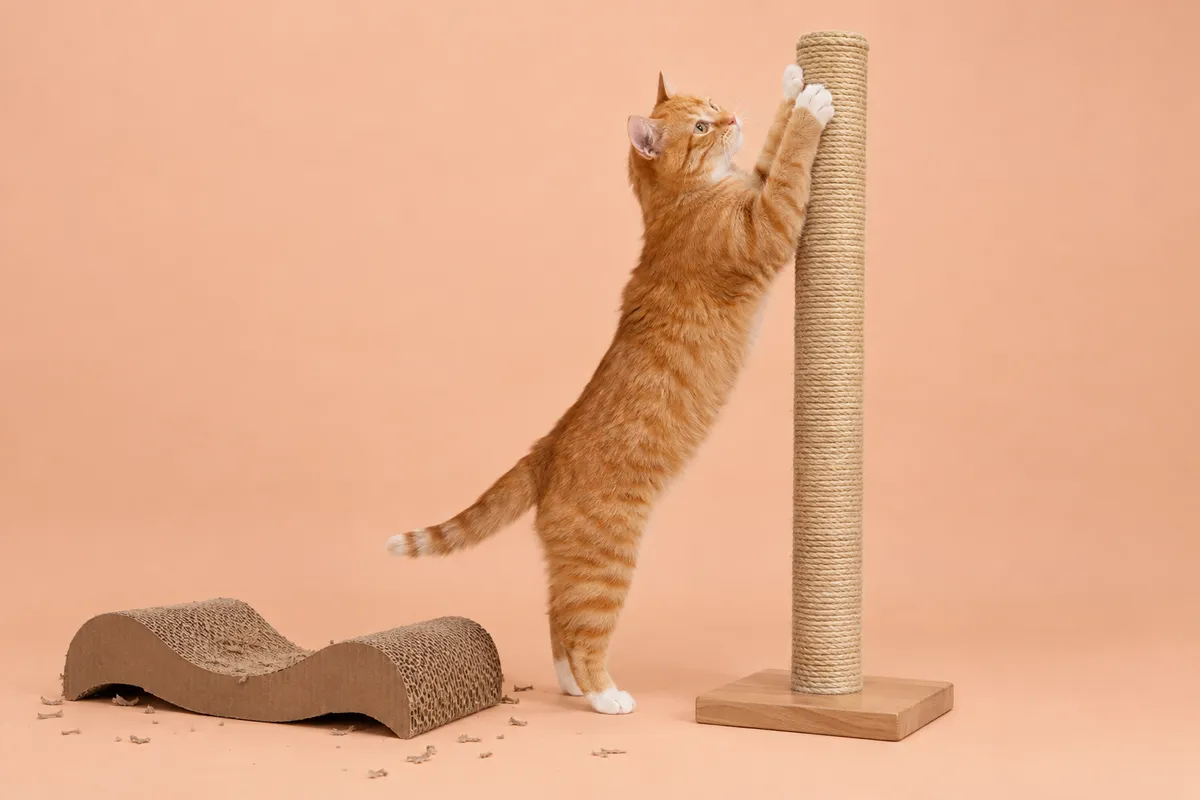
- Sisal and corrugated cardboard both make good cat scratchers: sisal is stiff, tidy and long-lasting, while cardboard is softer, crumblier and easy to renew.
- Cardboard suits floor scratching, kittens and cats who like to nap where they scratch; sisal suits tall upright stretches and strong, heavy scratchers.
- Cardboard leaves brown shreds and wears into a dip, so flip it and refill it; sisal frays slowly and can be re-wrapped or swapped section by section.
- Put each scratcher where your cat already scratches: a post beside the sofa arm, a flat pad on the rug, a lounge near the nap spot.
- An upright scratcher must never wobble: pick a wide, heavy base or mount it to the wall, and choose one taller than your cat at full stretch.
- Unsure? Offer one sisal post and one cardboard pad and let the claw marks decide.
Choose sisal or cardboard by how your cat scratches. Sisal is a stiff, rough plant fiber that suits tall posts and strong, upright stretches, and it lasts a long time with little mess. Corrugated cardboard is softer and tears under the claws, suits flat pads and loungers on the floor, and wears out sooner, leaving brown shreds behind. Plenty of homes end up with one of each, and where you put a scratcher matters as much as what it is made of.
Sisal vs cardboard at a glance
Both give claws something to pull against. They differ in feel, direction, cleanup and lifespan.
| Corrugated cardboard | Sisal | |
|---|---|---|
| What it is | Layers of fluted paper glued together and set on edge, so claws meet the cut flutes | Fiber from the leaves of the sisal agave, twisted into rope or woven into a flat fabric |
| Feel under the claw | Gives way and tears into soft flakes | Stiff and rough; claws catch and drag, pulling fibers loose slowly |
| Usual shapes | Flat and wave pads, bowls, boxes, L-shapes, hanging boards | Upright posts, cat tree trunks, floor mats, wall boards |
| Scratching direction | Mostly flat or sloped, a few upright | Mostly upright, plus flat mats |
| Mess | Brown crumbs and shreds around the scratcher | A few loose fibers and some fuzz on the surface |
| How it wears | A dip forms where your cat scratches most; flip it, then refill or replace | Frays slowly; re-wrap the rope or swap a post section |
| A good fit for | Kittens, rug scratchers, cats who nap where they scratch | Big or strong cats, full-length stretchers, a lasting post by the sofa |
Texture: why cats choose one over the other
Texture is the first thing a cat judges. Cardboard has a soft bite: claws sink between the flutes and rip a little away with every stroke. Sisal pushes back. Its fibers are tough enough that claws drag through them instead of cutting, so a cat can lean its whole weight into a long, slow pull.
The form of sisal matters too. Sisal rope is wound around a post in coils, so a downward stroke runs across the coils. Woven sisal fabric is a flat, tight weave, so claws hook in and pull straight down in long strokes. Jute rope sits in between: smoother and gentler than sisal, though it fuzzes up sooner.
Cardboard scratchers: shapes, strengths and crumbs
Cardboard shines on the floor. Flat and wave-shaped pads suit cats who stretch out long and rake backward, bowls and boxes double as beds, and a ball track around a cardboard center adds a game. Look for thick, tightly packed corrugate with the flutes standing on end. Many boards are reversible, so you can flip them once one side wears into a dip, and some list plant-based or starch glue, worth checking if your cat likes to chew. Browse more cat scratchers and pads.
Cardboard pads, loungers and boxes
Flat pads and a curved chaise for floor stretchers, a bowl and a box for nappers, a ball track for players.


For a cat who scratches, then naps
A three-sided cardboard lounge, about 13 by 22 inches, so your cat can rake the floor, lean on a side and curl up in the same spot. The floor is reversible and catnip comes in the box.
- Three-sided design plus a flippable floor
- Dense, honeycomb-style cardboard
- Wide enough to lie down in
The trade-off is cleanup. Cardboard sheds brown flakes every time it is used, and a busy scratcher gathers a small drift of them around its edges. Set it on a hard floor or a washable mat you can clear quickly, and replace the insert once the surface turns smooth, sags or splits.
Sisal scratchers: posts, mats and wall boards
Sisal is the choice for height and strength. A cat scratching upright wants to reach high, hook in and pull with the whole body, and a sisal post takes that pressure for a long time. Measure your cat stretched up on the hind legs, from back toes to front paws, and choose a post taller than that. Then check the base: it should be wide and heavy enough that the post never rocks when your cat leans in, because a post that tips can leave a cat wary of it. Browse all scratching posts.
Sisal posts from kitten size to extra tall
Short posts for kittens, tall ones for a full stretch.


For big cats and multi-cat homes
A 3-foot post wrapped in sisal rope on an extra-wide, faux-fur base, made for cats who throw their weight into every stretch.
- Over three feet tall, wrapped in sisal rope
- Extra-wide base built for stability
Flat sisal mats bring the same tough texture to the floor. Look for a bound edge that keeps the sides from unraveling and a non-slip back that holds the mat still under a raking cat. Some come with hook-and-loop tape so you can fix them to a wall or the side of a sofa; test the adhesive on a hidden spot first.
Sisal mats for floors and walls
Lay them flat by a rug or fix them upright where claws already land.


Mess, wear and upkeep compared
Cardboard is the messier, shorter-lived material, but it is also the easiest to renew: lift out the worn insert and drop in a fresh one. Sisal is tidier and lasts longer. It sheds a few fibers and turns fuzzy with use, and when the rope frays down to the core you can re-wrap it or swap in a replacement sisal post section.
- Flip a reversible cardboard board as soon as the first side shows a clear dip.
- Buy refills sized for your frame, such as these double-wide cardboard refills.
- Vacuum around cardboard often; brush loose sisal fuzz off the surface by hand.
- Retire any scratcher that wobbles, splits or shows a loose screw or staple.
Refills and replacement parts
Keep a favorite scratcher going instead of starting over.


Placement: where scratchers belong
Placement matters as much as material. Cats scratch to stretch, to shed worn outer claw sheaths and to leave scent and visible marks where they spend their time, so a scratcher works best in the rooms your cat uses most and right where they already scratch, not tucked away in a spare room. Many cats stretch and scratch the moment they wake, so one beside a favorite nap spot earns its keep too.
| Where your cat scratches now | What to put there |
|---|---|
| The arm or back of the sofa | A tall sisal post or an upright L-shaped cardboard board right beside it |
| A rug, carpet edge or doormat | A flat cardboard pad or a sisal mat in the same spot |
| A door frame or hallway corner | A doorknob hanger, or a board mounted on the wall at stretch height |
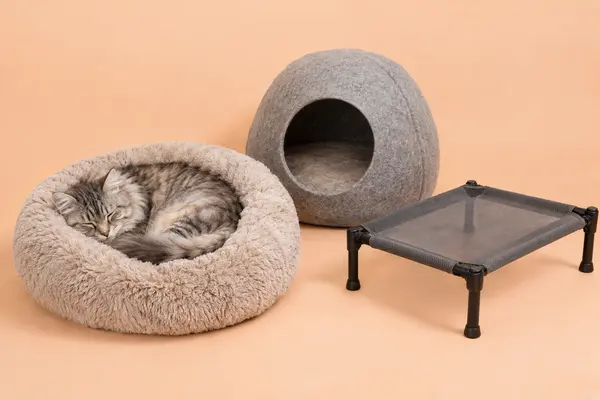
| The bed or a favorite nap spot | A cardboard bowl or lounge your cat can sleep in and scratch on waking |
| Shelves, curtains or anything high | Wall-mounted sisal posts and steps, or a cat tree with sisal trunks |
Short on floor space? Upright scratchers save room. L-shaped cardboard boards lean against a wall or fix to it, hanging scratchers loop over a doorknob, and wall-mounted sisal boards and posts go up at whatever height suits your cat. Fix them into studs or with anchors meant for the load, and use the hardware in the box. For a climber, a cat tree with sisal-wrapped trunks combines scratching and height in one piece.
Upright and wall-mounted scratchers
A cardboard L-shape, doorknob hangers, wall boards and wall posts for small spaces.


One cardboard scratcher, two angles
An L-shaped board, 18.7 by 16.5 by 9.64 inches, made of cardboard 1.57 inches thick. Your cat can scratch straight up the back or stretch out along the base, and you can stand it against a wall, lay it flat as a lounge or tip it over as a little den.
- Upright and flat scratching in one piece
- Thick cardboard for a deep claw grip
- Comes with a ball toy
Why many homes keep both
If you are not sure, start with one of each: a tall sisal post beside the sofa and a cardboard pad on the floor where your cat naps or plays. Before long the claw marks show you which one wins, and you can add more of that kind in other rooms.
To introduce a new scratcher, rub a pinch of catnip into the grooves or fibers (it appeals to some cats and leaves others cold), or drag a wand lure across the surface so claws land on it mid-chase. Our indoor cat play routine shows how to fold that into the day. Praise your cat when they use it, never press their paws onto it, and stay close for the first few sessions.
Picked your scratcher? Placement is the other half: read where to put a cat scratching post so it gets used.
Questions people ask
What is the best material for a cat scratcher?
Sisal and corrugated cardboard are the two classic choices, and the best one is the texture your cat picks. Sisal is stiff and long-lasting, ideal for tall posts and strong scratchers. Cardboard is softer and tears away in flakes, ideal for flat pads and loungers. Unsure? Offer one of each.
Are cardboard cat scratchers good for cats?
Yes. Corrugated cardboard gives claws a satisfying surface to shred, and many shapes double as a bed. Choose thick, tightly packed corrugate, flip it when one side wears down and replace it once it sags or splits. If your cat chews and swallows the shreds, take it away and ask your vet.
What is the most effective cat scratcher?
The one your cat actually uses: the right direction, upright or flat, the right texture, steady enough not to move, and placed where your cat already scratches. A tall sisal post with a heavy base beside the sofa arm and a flat cardboard pad by a favorite rug cover both styles.
What material is best for cat scratcher rope?
Natural sisal rope is the standard: its stiff agave fiber grips claws and frays slowly. Jute rope is softer and smoother, a gentler feel for cats who prefer it, though it fuzzes sooner. Woven sisal fabric is another option, letting claws pull straight down instead of across coils. Skip slick synthetic cord that gives claws little to grip.
About the numbers
- ASPCA, Destructive Scratching: Why cats scratch, sturdy posts tall enough for a full stretch, catnip to invite use, and never forcing a cat's paws onto a post.
- Cornell Feline Health Center, Feline Behavior Problems: Destructive Behavior: Scratching leaves scent from paw glands and sheds the outer claw sheath; a post at least as tall as the stretched cat, set next to where it already scratches.
- American Association of Feline Practitioners, Living With a Clawed Cat: Scratching marks territory by sight and scent; cats often stretch or scratch on waking, so a scratcher belongs near the sleeping spot; sisal and cardboard are common favorites.