Washable vs Disposable Puppy Pads: Layers, Sizes and Washing
Disposable puppy pads are fresh every time and easy to toss; washable pads are a fabric layer you rinse and reuse. Here is how each is built, which sizes to pick and who each one suits.
In short
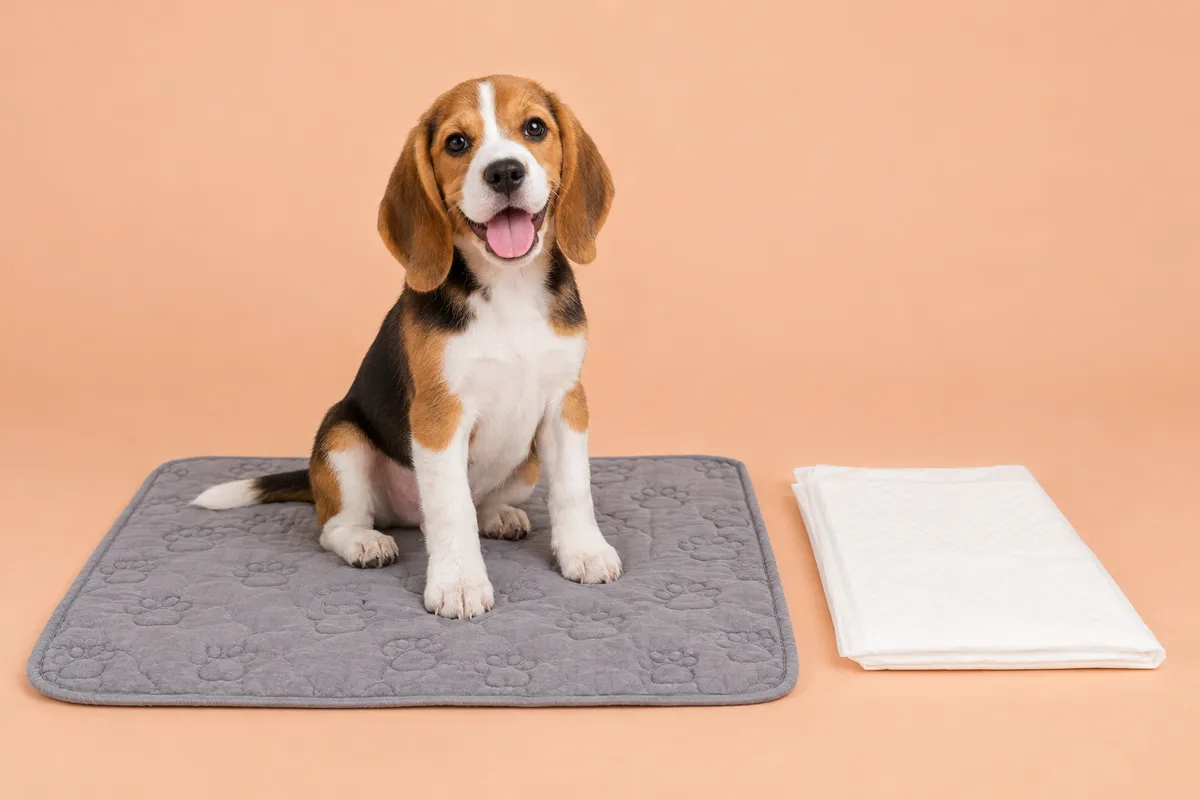
- Disposable puppy pads are layered paper and gel squares with a plastic backing that you throw away after each use, which makes them the easiest choice for a new puppy and for travel.
- Washable puppy pads are quilted fabric mats with a waterproof backing that you machine wash and reuse, which suits a grown dog with a steady routine, a crate or a playpen.
- Pick a pad that is wider than your dog is long from nose to tail base, so they can turn around and still land on it.
- Keep at least three washable pads for every spot you use: one on the floor, one in the wash and one drying.
- Wash reusable pads without fabric softener, because softener coats the fibers and makes the top layer push liquid away instead of soaking it up.
Washable vs disposable puppy pads comes down to who does the work. A disposable pad is a layered square of paper, absorbent gel and a plastic backing that you fold up and toss. A washable pad is a quilted fabric mat with a waterproof underside that you rinse, launder and lay down again. Both protect your floor; they just fit different homes.
Below: what is inside each kind, which size to buy, how many to keep, how to wash the reusable ones, and where pad holders fit in. If you are still setting up for a new arrival, our new puppy checklist covers the rest of the house.
How are disposable puppy pads built?
A disposable pad is a sandwich of five or six thin layers, and each one has a job.
- Top sheet: a soft non-woven fabric that lets liquid pass straight through, so little paws stay drier. Quilted top sheets spread the liquid out sideways before it sinks.
- Tissue layer: catches the first splash and spreads it evenly. Some packs put an attractant scent or baking soda here.
- Absorbent core: fluff pulp mixed with a super-absorbent polymer that turns liquid into gel and holds it in the middle of the pad.
- Charcoal layer (on charcoal pads): activated carbon that traps smells. These pads are usually grey or black.
- Leak-proof backing: a plastic film on the bottom that keeps everything off the floor. Some pads add adhesive strips here so they cannot slide.
Several packs state what a single pad holds: one six-layer extra-large pad says up to 8 cups, and one standard-size pad says up to 4 cups. Treat those as each maker's own figures, and size up if your dog fills a pad quickly.
Disposable pads with a clear layer story
Charcoal cores, quilted tops and leak-proof backings in standard to extra-large sizes.


What does the attractant on puppy pads do?
An attractant is a scent added to the pad that invites a puppy to sniff and go in that spot. Packs describe it as a pheromone or simply a scent, and some pads are unscented on purpose. Scented pads can help in the first weeks when you are teaching a puppy where the bathroom is. Unscented pads suit a dog who already knows the spot. Washable pads have no attractant, so if your puppy is brand new to pads you can start on disposables and move to fabric later.
How are washable puppy pads built?
A washable pad is usually four layers stitched into one mat. On top sits a quilted polyester or soft fabric that wicks liquid down fast. Under it is a thick absorbent layer that holds the liquid. Then comes a waterproof membrane, often thermoplastic polyurethane (TPU), and finally a backing with rubbery dots that grips the floor so the mat does not slide when a puppy zooms across it.
Because they are made of fabric, washable pads come in far bigger sizes than paper ones: playpen-sized squares, long crate liners and whelping mats you can cut to fit. They are also harder to shred, which matters with a puppy who sees a paper pad as a toy.
Washable pads for floors, crates and playpens
Quilted tops, waterproof middles and grippy backs, from small crate sizes to wall-to-wall playpen mats.


Washable vs disposable puppy pads: side by side
| Disposable pads | Washable pads | |
|---|---|---|
| Build | Paper top, gel core, plastic backing, often charcoal | Quilted fabric, absorbent layer, TPU membrane, grippy back |
| Attractant | Often scented; unscented packs exist | None |
| Clean-up | Fold and toss | Shake out, rinse, launder, dry |
| Smell control | Charcoal and gel lock it in | Depends on how often you wash |
| Chewing | Easy to shred | Tougher, harder to tear |
| Sizes | About 17 x 23 in. up to about 30 x 36 in. | From crate sizes up to 72 x 72 in. and cut-to-fit |
| Best for | New puppies, travel, quick changes | Steady routines, crates, playpens, older dogs |
What size puppy pad do I need?
Choose a pad wider than your dog is long, measured from nose to the base of the tail. Dogs circle before they go, and a pad that fits their whole body means fewer near misses on the edge.
- Small (about 17 x 23 in.): toy breeds and tiny puppies in a small crate.
- Standard (about 22 x 22 to 23 x 23 in.): most puppies and small adult dogs.
- Extra large (about 28 x 34 in.): medium dogs, boys who lift a leg, or a puppy who drifts off the edge.
- XXL and washable mats (30 x 36 in. and up): large breeds, a full playpen floor or under a whole crate.
For a crate, match the pad to the crate floor; our guide to what size dog crate you need has the measurements. For a pen, our puppy playpen setup shows where the pad goes beside the bed and water.
Extra-large pads for bigger dogs and bigger spaces
For medium dogs, leg lifters and puppies who miss the edge.


How many puppy pads should I keep on hand?
For washable pads, keep at least three for every spot where you use one: one down, one in the wash and one drying. A fourth helps, since fabric dries slowly. If you use pads in a crate and a playpen, that is two spots and six to eight pads.
For disposable pads, count how many you change in a typical day, multiply by seven and you have a week's supply. A young puppy goes often, so expect a busy first few weeks; the number usually drops as your puppy learns to hold it and spends more time outside.
How do you wash reusable puppy pads?
Always follow the care label first. Most washable pads are made to go in a home machine, and these steps keep them soaking up well for longer.
- Shake off anything solid outside or into the toilet, then rinse the pad under cold water.
- Wash on its own or with other pet bedding, in warm water if the label allows, using a regular detergent.
- Skip the fabric softener and dryer sheets. They leave a waxy coat on the fibers, and the top layer starts to push liquid away instead of soaking it up.
- Skip bleach unless the label says it is fine; it can wear down the waterproof layer.
- Tumble dry on low or hang to dry. High heat can crack the waterproof backing.
Do you need a puppy pad holder?
A pad holder is a tray or frame that keeps a pad flat and in place. It stops a puppy from dragging the pad around, keeps the edges down and catches the overflow that would otherwise reach the floor. Silicone trays roll up and wash in the sink; rigid frames clip the pad down so it cannot be pulled up and chewed; high-sided trays help a dog who aims low but lands near the edge. For a boy who lifts a leg, a wall holder keeps a pad upright behind the tray.
Pad holders and trays
Clip-down frames, flexible silicone trays and high walls for every pad size.


A soft tray for standard pads
This silicone tray sits under a 24 x 24 in. pad with a raised edge that keeps spills on the tray, and it bends to rinse in a tub.
- Fits standard square pads
- Raised edges keep spills in
- Easy to wash and store
Where should you put puppy pads?
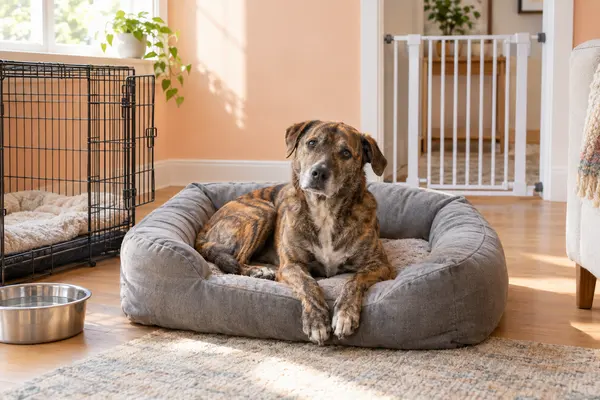
Put the pad in one quiet spot on an easy-to-clean floor, away from your puppy's food, water and bed. Dogs prefer not to go where they eat or sleep, so a pad beside the bed sends a mixed message. A corner of the kitchen, laundry room or bathroom works well, ideally near the door you use for outdoor trips, so moving the bathroom outside later is a short step. A dog gate can keep the pad area in reach and the rest of the house out of reach while your puppy learns.
Once your puppy uses the pad, keep it put. When you are ready to train outdoors, move it a little closer to the door every few days, then outside.
Which type suits your dog?
| Who | Our pick | Why |
|---|---|---|
| A brand-new puppy | Disposable, scented, in a holder | Easy to change many times a day; the scent helps teach the spot |
| A small dog in an apartment | Washable, kept in rotation | A steady daily spot with no boxes to store and carry |
| A senior dog | Washable mats under the bed, plus disposables nearby | Fabric is soft to lie on; ask your vet about any new accidents |
| Travel and hotel stays | Disposable | Pack flat, use once, nothing wet to bring home |
| A playpen or crate | Washable, cut or sized to fit | Covers the whole floor and is hard to shred |
Many homes use both: disposables for the training weeks and trips, washables for the long run. For an older dog, our guide to a senior-friendly home covers beds, ramps and bowls that go with soft floor mats, and a cut-to-fit whelping liner can cover an odd-shaped corner. You will find more in cleaning and potty and training.
Cut-to-fit liners for crates and whelping corners
Washable fabric you can trim to any floor shape.


Questions people ask
What are puppy pads used for?
Puppy pads give a dog an indoor bathroom spot. They are used while house training a young puppy, for small dogs in apartments, on long workdays, during travel and for older dogs who need a backup spot. They protect the floor and keep clean-up quick.
Are washable puppy pads better than disposable?
Neither is better for every home. Disposables are easier for a new puppy, smell less between changes and travel well. Washables are reusable, harder to shred and come in bigger sizes, but they need washing and drying, so keep several in rotation.
How often should you change a puppy pad?
Change a disposable pad once it is wet, or at least once it has been used a couple of times, so your puppy keeps choosing it. Wash a fabric pad after it is soiled, and at least once a day if it is used often.
Can you use fabric softener on washable pee pads?
No. Fabric softener and dryer sheets coat the fibers and stop the top layer from soaking up liquid, so it pools on top instead. Use a regular detergent and check the care label.
Do puppy pads with attractant really work?
The scent invites a puppy to sniff and go there, which can help in the first weeks. Routine matters more: take your puppy to the pad after naps, meals and play, and praise them when they go. Unscented pads work well once your dog knows the spot.
What is the difference between wee wee pads and puppy pads?
They are the same thing. Wee wee pads, pee pads, potty pads and training pads all describe an absorbent pad for a dog's indoor bathroom spot.
About the numbers
- Google Keyword Planner, United States, 12-month average, read 2026-11-01: about 27,100 searches a month for puppy pads, about 12,100 for dog pee pads, about 9,900 for puppy pee pads and about 8,100 for pee pads (rising)
- Google Keyword Planner, United States, 12-month average, read 2026-11-01: about 6,600 searches a month each for washable dog pee pads and reusable dog pee pads, about 3,600 for dog training pads and about 2,900 for wee wee pads (rising)
- Product listings on Hey Lovi, read 2026-11-01: pad layers, sizes and stated capacities (up to 4 cups for one standard pad, up to 8 cups for one six-layer extra-large pad) are each maker's own figures