Bringing Home a Rescue Dog: A First-Week Checklist
Set up a quiet base area, a snug harness with an ID tag, familiar food and a simple routine before the day. Then keep the first week small, slow and predictable.
In short
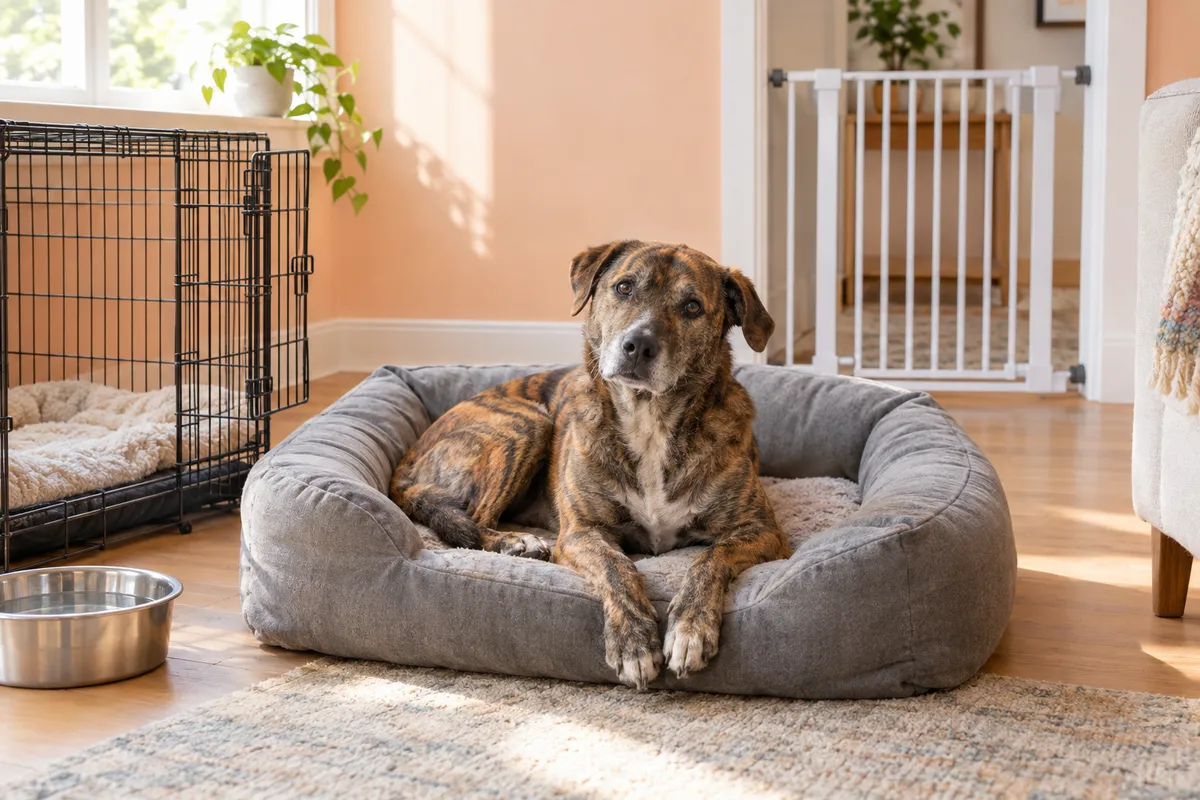
- Before your rescue dog comes home, set up one quiet base area with a bed, water and a crate with its door open, closed off with a gate.
- Fit a snug harness and keep an ID tag with your phone number on the collar from the very first car ride.
- A martingale collar or a harness with a belly strap is worth having for a dog that might try to back out of its gear.
- Keep the first week small: the same few rooms, short walks, simple meal times and no visitors yet.
- The 3-3-3 rule (3 days, 3 weeks, 3 months) is a rough rule of thumb from shelters, not a timetable, so let your dog set the pace.
- For anything about health, food changes or worrying behaviour, ask your vet, and for training help look for a certified trainer.
Hello, lovely new chapter. Bringing home a rescue dog goes best when the house is ready before the dog is. An adult dog arrives with a whole life behind them and a lot of new smells ahead, so the kindest first week is a small, quiet and predictable one. This checklist walks you through the gear to set up, the ride home, the first hours and the first seven days.
If you are bringing home a young pup instead, our new puppy checklist goes room by room.
Before the day: set up one quiet base area
Pick one low-traffic room or corner and make it the dog's base for the first days. Put a bed there, a water bowl, a chew and a crate with the door left open, so it is a den the dog can choose rather than a place they are put. A gate across the doorway keeps the world small without shutting a door on them.
- A crate sized so your dog can stand, turn and stretch out (our crate size guide shows how to measure).
- A washable bed or crate pad inside or beside it.
- A walk-through gate for the doorway, so you can step in and out easily.
- Water and food bowls that stay put on the floor.
- One or two chews and a couple of simple toys. Skip the toy mountain for now.
Crates and gates for a quiet base
Leave the crate door open at first so it reads as a den, not a door.


A single-door wire crate
A folding wire crate gives a good view of the room, which many new dogs like, and its pull-out tray makes clean-up simple. Drape a blanket over the back half for a cozier, den-like feel.
- Folds flat when you no longer need it
- Pair it with a soft crate pad
- Measure your dog before you choose a size
Beds and crate pads
Washable covers earn their place in week one.


Gear for the ride home: harness, collar and ID
Fit a snug harness and put an ID tag on the collar before the dog ever leaves the shelter parking lot. A new dog does not know your voice or your street yet, so the ride home and the first walks are when gear matters most. Many adopters use two attachment points: a harness for the leash and a collar that carries the tag.
A well-fitted harness sits flat, with room for two fingers under each strap. A martingale collar is a second option: it has a small loop that tightens to a set limit when the dog pulls back, so it is hard to slip out of but never closes like a choke. For a dog that might back out of a regular harness, a style with an extra strap behind the ribs adds one more point of hold. Our types of dog collars glossary explains each style, and the leash guide helps you choose a lead.
| Gear | What it does | Good for |
|---|---|---|
| Front-clip harness | Leash ring on the chest as well as the back | Everyday walks and a dog still learning to walk with you |
| Harness with belly strap | A third strap behind the ribs | A dog who tends to back out of gear |
| Martingale collar | Tightens to a set limit, then stops | Narrow-headed dogs and a backup to a harness |
| Flat collar with ID tag | Carries your name and phone number | Wearing at all times, indoors too |
Harnesses for the first walks
Measure the chest at its widest point before choosing a size.


A harness with a strap behind the ribs
This padded vest adds a third strap further back on the body, plus a top handle, so a dog who startles and reverses has a harder time wriggling free. Reflective trim helps on evening walks.
- Two leash rings
- Grab handle on the back
- Adjust every strap so two fingers fit underneath
Martingale collars
Set the loop so the two rings never meet when it tightens.


ID tags
Your phone number matters most. Update the microchip details with your vet too.


Food, bowls and chews: keep what is familiar
Feed the same food the shelter or foster used for the first days, and ask your vet before any change. Ask the shelter for the brand, the amount and the times they fed, and keep to that rhythm. Familiar food is one less new thing in a week full of them.
Choose bowls that stay put on the floor. A slow feeder bowl, with ridges that make a meal take a little longer, turns dinner into a small puzzle for dogs who enjoy one. A sturdy chew gives a new dog something to do with their mouth while they settle in a quiet corner. Offer chews when you can watch, and pick a size that suits your dog's mouth.
Bowls and slow feeders
Non-slip bases keep bowls where your dog expects them.


Long-lasting chews
Sized by your dog's weight. Supervise every chew session.


The ride home and the first hours
Keep the ride quiet and the arrival slow. Bring one calm adult as a helper, a towel or blanket for the seat, and keep the radio low. Many dogs are tired, unsure or both.
- Before you go inside, walk the dog on leash to the spot in the yard you want used as a potty area and give them time to sniff.
- Keep the leash on, even in a fenced yard. A new dog may not come when called yet.
- Go inside on leash and walk a slow tour of just the rooms they will use. Let them sniff, and keep your voice soft.
- End the tour at the base area, unclip the leash there or let it trail if you need a gentle way to guide them, and let them settle.
- Offer water. Do not worry if they skip a meal on the first day, and ask your vet if it goes on longer than that.
The first week: small, slow and the same every day
A simple routine is the most useful thing you can give a new dog. Meals, potty breaks, short walks and quiet time at about the same times every day let the dog learn what happens next. Keep walks short and on familiar streets, and save the dog park, the busy cafe and the family barbecue for later.
- Same wake-up, meal and bedtime each day.
- Short leash walks, two or three a day, on quiet routes.
- No visitors for the first days. Introduce friends one at a time later, outdoors if you can.
- Keep handling gentle: no baths, nail trims or new grooming unless your vet says they are needed.
- Supervise time with other pets, and keep it short at first.
- Note what you see each day: sleep, appetite, potty breaks and what makes your dog curious or wary. It helps your vet and you.
What the 3-3-3 rule means, and what it does not
The 3-3-3 rule is a rough rule of thumb many shelters share: about 3 days for a new dog to decompress, about 3 weeks to learn your routine and about 3 months to feel at home. It is a way to set gentle expectations, not a schedule your dog has to meet.
| Stage | What adopters often notice | What helps |
|---|---|---|
| First 3 days | Tired, quiet, unsure, sleeping a lot or skipping a meal | A quiet base, few people, no big outings |
| First 3 weeks | Learning the routine and starting to show more personality | The same daily rhythm, short walks, gentle house rules |
| First 3 months | More settled and more at home with the family | Slowly adding new places, people and play |
Some dogs relax in days and some take much longer, and both are fine.
When to call a vet or a certified trainer
Book a vet visit in the first week or two so your dog has a check-up and you have a vet who knows them. Call your vet sooner for anything that worries you about eating, drinking, potty breaks, energy or how your dog moves, and always ask your vet before changing food.
For help with manners, leash walking, meeting other pets or anything about behaviour that concerns you, look for a certified professional dog trainer or ask your vet for a referral. Gear and a calm home help a dog settle, but they do not replace professional advice.
Keep reading
Questions people ask
What should I do in the first week with a rescue dog?
Keep life small and predictable. Set up a quiet base area, feed the food the shelter used, keep walks short and on quiet streets, and hold off on visitors. Book a vet check-up early, and ask your vet about anything that worries you.
What is the 3-3-3 rule for rescue dogs?
It is a rule of thumb shared by many shelters: about 3 days to decompress, 3 weeks to learn your routine and 3 months to feel at home. It is a rough guide to set expectations, not a timetable, and each dog moves at their own pace.
Should a rescue dog sleep in a crate on the first night?
Many adopters offer a crate with the door open beside a soft bed, so the dog can choose a den. Place it in a quiet spot near where you sleep if your dog seems to want company. If your dog seems very distressed at night, ask your vet or a certified trainer for advice.
Do I need a harness or a collar for a newly adopted dog?
Many adopters use both: a snug harness for the leash and a collar that carries an ID tag. A martingale collar or a harness with an extra strap behind the ribs adds security for a dog who might back out of their gear.
About the numbers
- Pasadena Humane, The 3-3-3 Rule of Adopting a Dog, read 2026-10-08: describes the 3 days, 3 weeks, 3 months adjustment guide for newly adopted dogs
- ASPCApro, Pet Adjustment Periods: The 3 Days, 3 Weeks, 3 Months guide, read 2026-10-08: presents the same rule as a general guide to how new pets adjust