Types of Dog Collars: A Glossary From Flat Buckle to Martingale
Flat buckle, quick-release, martingale, breakaway, rolled leather, sighthound, tracker and ID collars explained in plain words, plus how a collar should fit.
In short
- A flat collar with a buckle or a quick-release clip is the everyday collar most dogs wear for ID tags and relaxed walks.
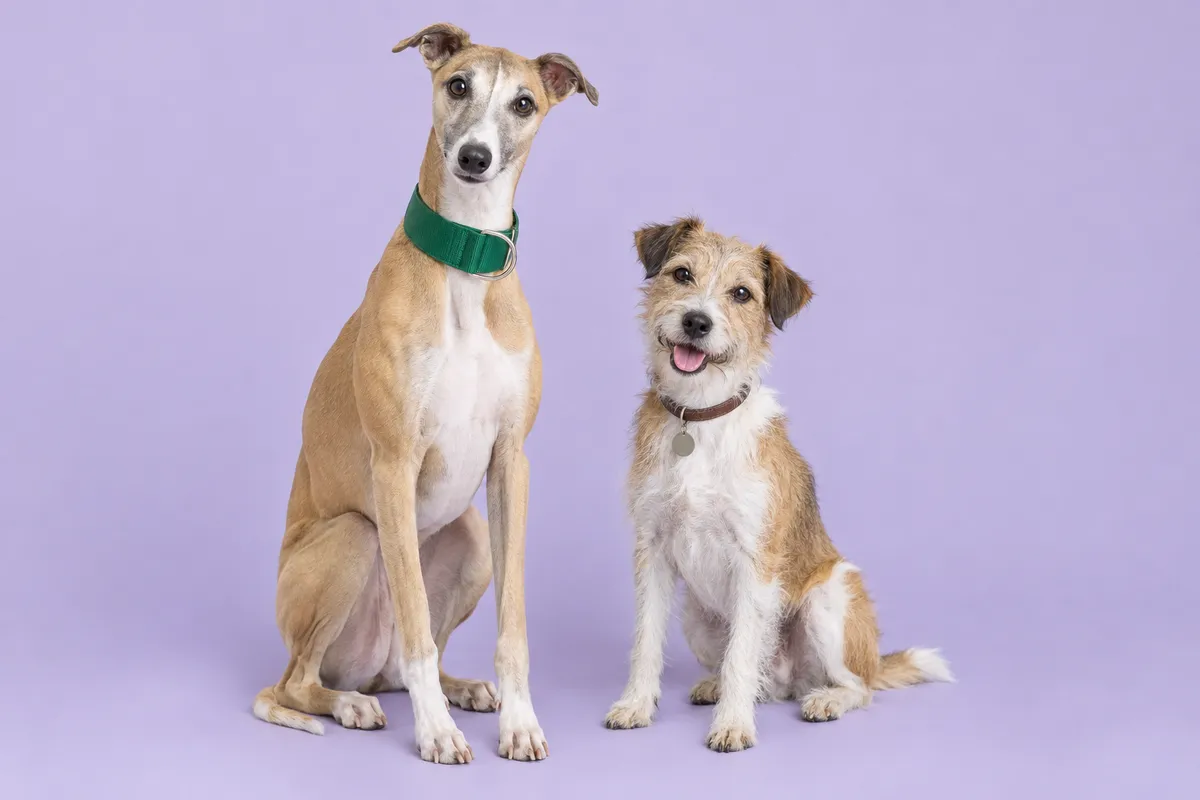
- A martingale is a limited-slip collar: a second loop tightens it to a set size when the leash pulls, which helps narrow-headed dogs such as greyhounds and whippets stay in it.
- A collar fits when two flat fingers slide between it and your dog's neck; one finger is too tight, three is too loose.
- An ID tag or an engraved collar with a phone number is the simplest thing a collar can carry, and slide-on tags sit flat and stay quiet.
- A head halter is not a collar: it guides the head and is best introduced slowly with treats, and many people clip it to a regular collar as a backup.
Hello, lovely. Collar words get confusing fast: martingale, D-ring, breakaway, limited slip. This glossary explains each type of dog collar in a sentence or two, says who it suits, and puts a few real examples right beside it. This guide sticks to everyday collars, so prong, choke and shock collars are not covered here, and Hey Lovi does not recommend aversive tools.
Everyday collars: the ones most dogs wear
Start here. An everyday collar holds the ID tag, gives you something to hold in a pinch, and clips to a leash for calm walks. Two things decide which one: how it fastens and what it is made of.
Flat buckle collar
A flat strap that closes with a metal buckle and holes, just like a belt. It keeps its size once set, which is why many people choose it for strong dogs and for leather collars. Leather softens with wear; coated webbing wipes clean and shrugs off mud and pond water.
Flat buckle collars
Genuine leather, cotton webbing and a waterproof coated strap.


Quick-release or side-release collar
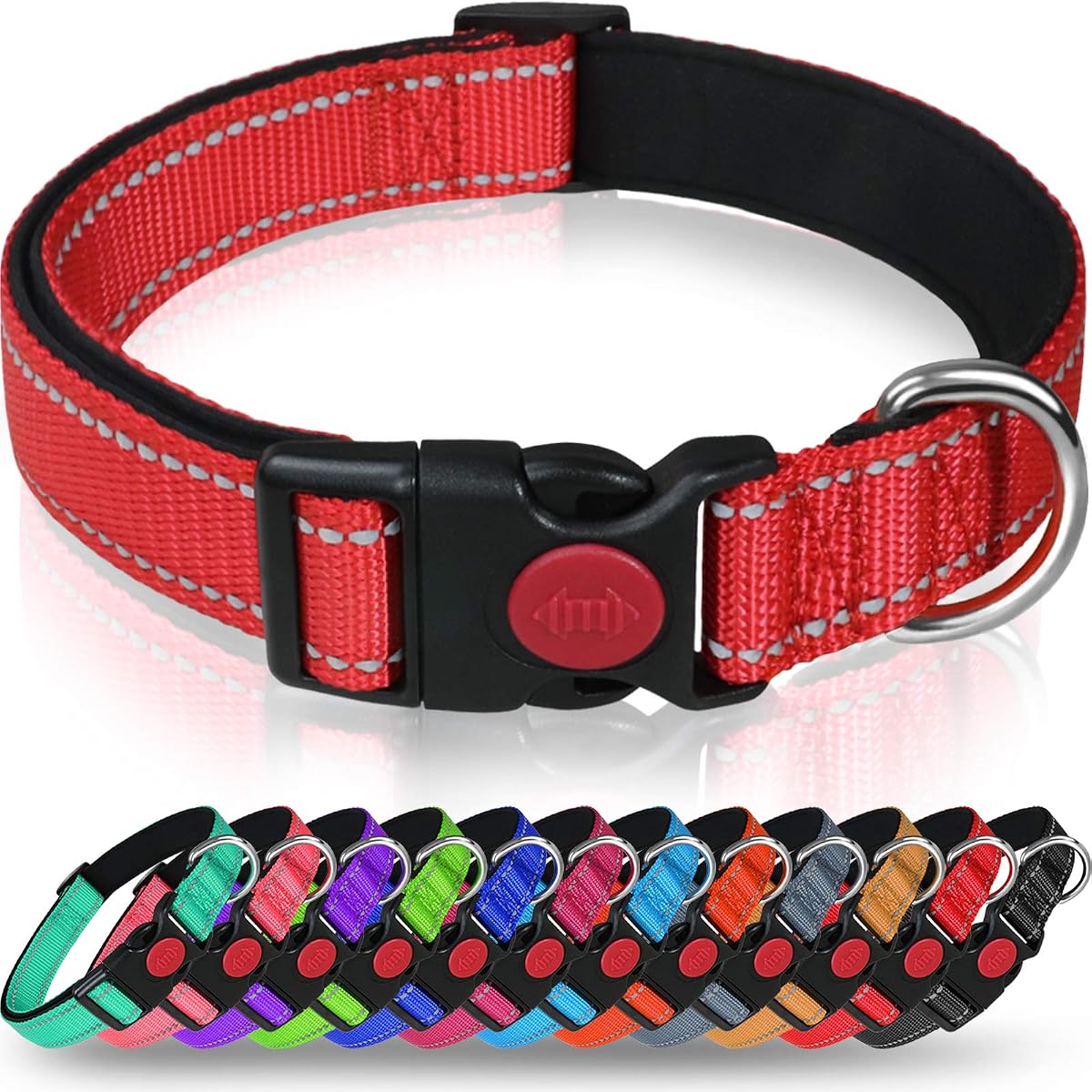
The plastic or metal clip you squeeze at the sides to open, with a slider to adjust the length. It goes on and off in a second, which makes bath time and bedtime easy. Look for a sturdy clip and a slider that holds its place; some clips add a small lock so they cannot pop open by accident.
Quick-release collars
Padded, reflective and easy to adjust.



Rolled leather collar
Leather rolled into a soft round tube instead of a flat band. Because it is narrow and round, it sits neatly in a long or thick coat and is less likely to flatten the fur into a ring. It is a lovely pick for small dogs and long-haired breeds.
Rolled leather collars
Round, soft and tidy in a fluffy coat.


Special-purpose collars
These collars solve one particular job: a head that slips out easily, a pet that climbs, a dog who roams, or an evening walk.
Martingale (limited slip) collar
A martingale collar has two loops. The big loop goes around the neck; the small loop holds the leash ring. When the leash goes tight, the small loop pulls the big one in, but only to a set limit, and it loosens again as soon as the leash relaxes. That stop is the point: set correctly, it closes to just snug, never smaller. It was made for dogs whose heads are narrower than their necks, like greyhounds, whippets and salukis, who can back out of a flat collar. Fit it so the two metal rings never touch when the collar is fully tightened. Take a martingale off at home and in the crate, because the loose loop can catch on things.
Martingale collars
Nylon, reflective and leather-with-chain styles, some with a buckle so they never go over the ears.


Wide sighthound collar
Sighthounds have long, slim necks and fine coats, so their collars are much wider than an everyday collar. A wide band spreads any pressure over more of the neck, and many come as martingales in soft lined fabric or padded, tapered leather. They are often the prettiest collars around, too.
Collars made for sighthound necks
Wide, soft and shaped for greyhounds, whippets and salukis.


Breakaway collar
A safety clip that opens by itself under a strong, sudden pull, so a pet caught on a branch or a fence can slip free. You will see it most on cats, who climb and squeeze into tight spots. Because it opens under pressure, a breakaway collar is not for leash walking. Breeders also use soft breakaway bands in different colours to tell young puppies in a litter apart.
Breakaway collars
Mostly for cats, plus colour bands for a litter of puppies.


GPS and tracker collars
Two different things share this name. A true GPS collar has its own battery and reports location through an app, usually with a charging routine. A tracker holder is a small case that fixes a coin-sized Bluetooth tag to an ordinary collar; the tag shows its last spot when a nearby phone passes by, so it works best in busy places. Either way, check the case is snug and waterproof, and keep a regular ID tag on too.
Tracker holders and collars
Cases that hold a small tracker tag flat against the collar.


Light-up and reflective collars
Reflective collars have stitched strips that shine back in headlights; light-up collars glow on their own from a rechargeable battery. For evening walks, our night walk checklist covers both in detail.
Glow and shine for dusk walks


ID tags and personalised collars
An ID tag is the hardest-working thing on any collar. Put your phone number first; your dog's name and a city are optional, and many people leave the full street address off for privacy. A note such as "microchipped" helps too.
Hanging tag, slide-on tag and engraved collar
- Hanging tag: the classic disc or bone on a split ring. Easy to swap between collars, and it jingles.
- Slide-on tag: a flat plate that threads onto the collar strap. It sits flat, makes no sound and cannot snag on a crate.
- Engraved or embroidered collar: the details are on the collar itself, so there is nothing to lose. Lovely as a second layer with a tag.
ID tags and personalised collars
Engraved steel tags, silent slide-ons and collars with the name stitched in.


Collar words worth knowing
D-ring
The D-shaped metal ring where the leash clips on and the tag hangs. Some collars have two: one for the leash and one for tags, so the tags stay out of the way of the clip.
Buckle vs clip
A buckle (pin and holes) holds one fixed size and is very secure. A clip (quick-release) adjusts by slider and opens fast. Some collars combine a metal buckle with a quick-release action for both.
Width
Narrow collars suit small and toy dogs; medium and large dogs usually wear a wider band so the load spreads out. Sighthound collars are the widest of all, for the reasons above. Match the width to the neck, not the look.
The two-finger fit rule
Slide two fingers, laid flat, between the collar and your dog's neck. If they slip in with no forcing, the fit is right. One finger means too tight; three or more means the collar can slip over the head. Check again as puppies grow and after a winter coat comes in.
| Collar | Fastens with | Best for | Wear it |
|---|---|---|---|
| Flat buckle | Pin and holes | Everyday wear, tags | All day |
| Quick-release | Side clip and slider | Easy on and off | All day |
| Rolled leather | Buckle | Long or thick coats | All day |
| Martingale | Slip loop, sometimes a clip | Narrow-headed dogs | Walks only |
| Breakaway | Safety clip that opens | Cats, puppy litters | At home, not on leash |
| Head halter | Neck strap and nose loop | Guided walks | Walks only |
Not a collar: the head halter
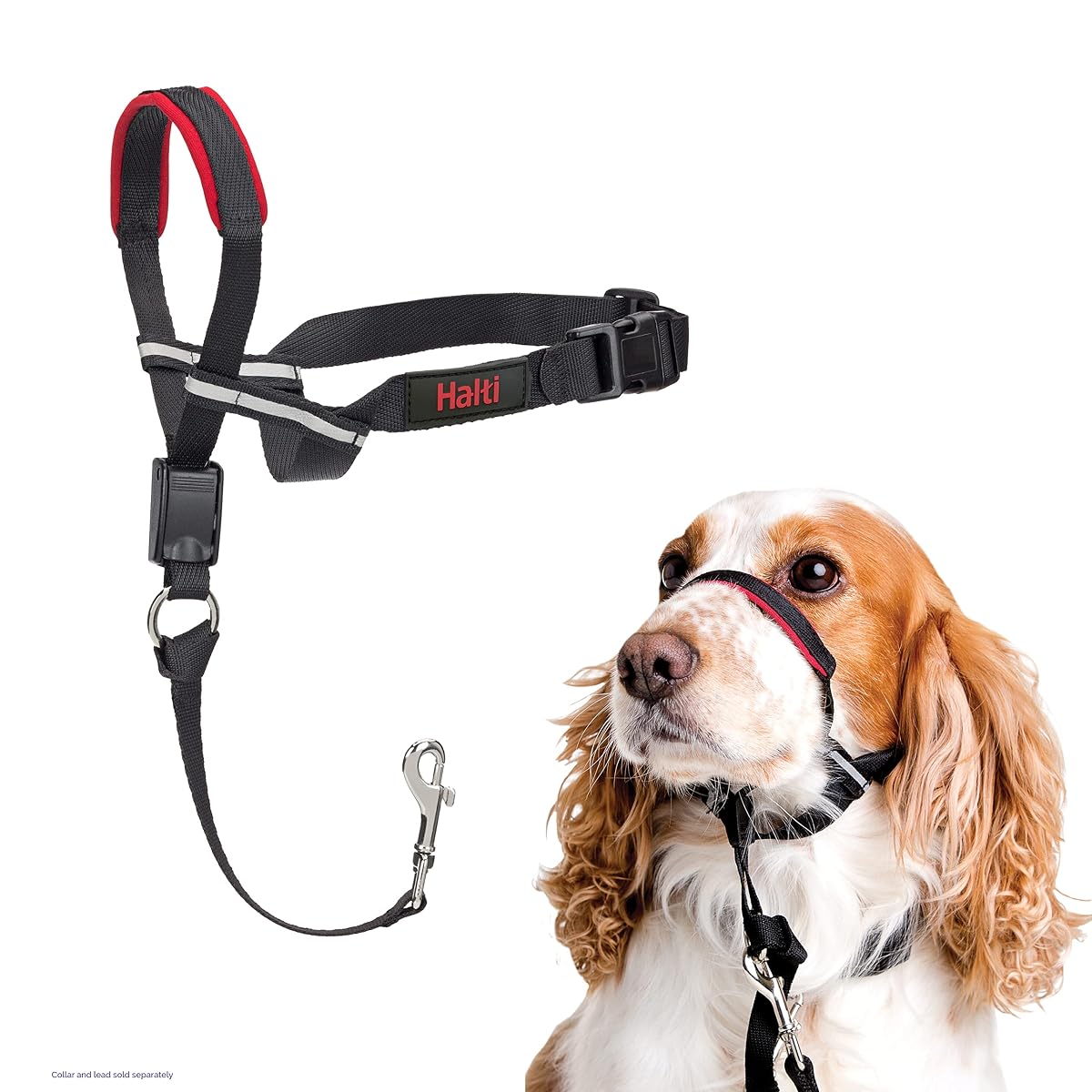
A head halter looks a little like a horse's halter: a strap behind the ears and a soft loop over the nose, with the leash clipped under the chin. It guides where the head goes rather than holding the neck. Introduce it gently, a few seconds at a time with treats, before you ever clip a leash on. Many people link it to a regular collar as a backup, and never use it with a sudden jerk. If walks feel like a tug of war, a harness may suit you better; our front clip vs back clip guide explains the options. For anything about behaviour, ask your vet or a certified trainer.
Head halters and a safety link
Padded nose loops, plus a short link that joins halter and collar.



What this guide leaves out
This guide sticks to everyday collars. Prong, choke and shock collars are not covered, and you will not find them recommended here. If you are wondering which collar is right for a particular dog, browse all dog collars, try on the two-finger rule, and when in doubt, ask your vet.
Questions people ask
What are the different types of dog collars?
The main everyday types are flat buckle, quick-release (side-release) and rolled leather collars. Special-purpose types include martingale (limited slip), wide sighthound, breakaway, tracker, light-up and reflective, and personalised or engraved collars. A head halter is a separate walking tool, not a collar.
What is the point of a martingale collar?
A martingale tightens to a preset limit when the leash pulls, so a dog with a narrow head cannot back out of it. It loosens again as soon as the leash relaxes. Fit it so the two rings never touch, and take it off when your dog is not on a walk.
How tight should a dog collar be?
Snug but comfortable: two flat fingers should slide between the collar and the neck. If only one fits, loosen it; if three fit, tighten it so it cannot slip over the head.
How do I tell my dog's collar size?
Measure around the middle of the neck with a soft tape, then add room for two fingers. Compare that number with the collar's adjustable range and choose a size where your measurement sits near the middle.
What should I put on my dog's ID tag?
Your phone number is the most important line, ideally two numbers. Your dog's name and your city are helpful, and many people skip the full street address for privacy. A "microchipped" note is a nice extra.
Are breakaway collars for dogs?
They are mostly for cats, because they open under a sudden pull. That same feature means they are not suited to leash walks. Breeders also use soft breakaway bands to tell young puppies apart.
About the numbers
- Google search results for "types of dog collars", United States, read 2026-10-07: people also ask about buckle types and collar names; related searches include martingale collar and collars for pulling
- Google search results for "how should a dog collar fit", United States, read 2026-10-07: the two-finger test: one finger too tight, three or more too loose
- Google search results for "martingale collar" and "dog id tags", United States, read 2026-10-07: martingale explained as a limited-slip collar with a preset limit; phone number is the key line on an ID tag