Should You Cover a Dog Crate? When It Helps and How to Fit One
Many dogs settle well in a partly covered crate that feels like a den, as long as air flows and one side stays open. Here is when a cover helps, when it does not, and how to fit one.
In short
- You can cover a dog crate if your dog seems to like it, but always leave at least one side open for air and a view of the room.
- A crate cover is not a must: many dogs rest happily in an open crate, so watch your own dog before you decide.
- Measure the crate's length, width and height before choosing a fitted cover, and pick one with roll-up door panels.
- In warm weather use a thin, breathable cover or none at all, and keep the crate out of direct sun and away from heaters.
- If your puppy chews fabric, skip the cover for now or choose furniture-style crate that is already enclosed on some sides.
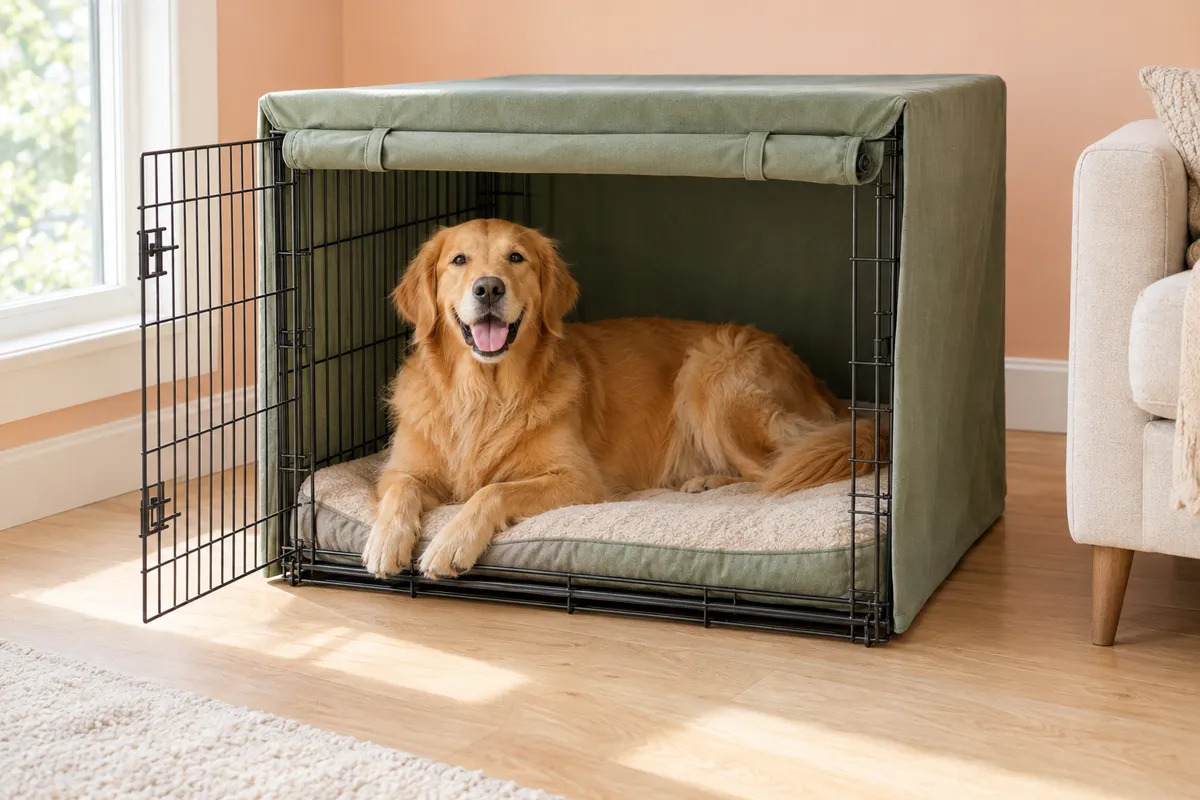
Should you cover a dog crate? Often yes, partly. A crate cover is a fabric shell or blanket that wraps a wire crate on some sides. Many owners use one to make the crate feel more like a den and to block light, but it is optional: leave one side open, keep air moving, and watch how your own dog responds.
A wire crate is airy and easy to see into, which is great for ventilation and not always great for napping. A cover shades the inside and softens what your dog sees. Here is when it is worth it, how to fit one, and the furniture-style crates that skip fabric altogether.
Does a dog crate need a cover?
No, a crate works perfectly well without one. Plenty of dogs sleep soundly in an open wire crate, especially in a quiet bedroom. A cover is a tool you can add if it suits your dog, not a piece of required kit.
Where a cover tends to earn its place:
- A busy room. If the crate sits in a living area with people walking past, a cover on the sides and back gives your dog a quieter view.
- Early light or late lamps. A cover over the top and sides shades the inside so your dog is not lying under a bright window or ceiling light.
- A dog who chooses tucked-in spots. If your dog naps under desks, behind the sofa or in the corner of the bed, a den-like crate may feel familiar.
- Looks. A fabric cover hides the wire and can tone in with your room, which matters when the crate lives in plain sight.
Still choosing the crate itself? Start with our guide to what size dog crate you need, because the cover has to match the crate, not the other way round.
When is covering a crate a bad idea?
Skip the cover, or take it off, whenever it would make the crate hot, stuffy or unhappy for your dog. Signs to watch for include heavy panting, whining, pawing at the fabric or pulling it through the bars.
- Heat. Hot rooms, direct sunlight, a spot near a radiator or heating vent, or a dog with a thick coat. Fabric traps warmth.
- Fully closed in. Never wrap every side. Air needs to move and your dog should be able to see out of at least one side.
- A chewer. If your puppy pulls fabric into the crate and chews it, the cover is a temptation, not a comfort.
- As a time-out. A cover should never be used to shut a dog away as punishment. The crate stays a pleasant place.
- Your dog simply does not like it. Some dogs prefer to see everything. That is fine, and it is your answer.
Fitted cover or blanket: which is better?
A fitted cover is the tidier, safer choice for everyday use, while a blanket is a fine way to test the idea first. The difference is mostly about how well it stays put and how much air gets through.
| Fitted crate cover | Blanket or throw | |
|---|---|---|
| Fit | Cut to the crate's size, stays square | Drapes and slips, can sag into the crate |
| Door access | Roll-up or zip panels over each door | Has to be lifted or folded back |
| Airflow | Panels can be opened on any side | Easy to cover too much by accident |
| Chewing risk | Sits outside the bars when fitted snugly | Loose corners get pulled through the wire |
| Washing | Usually machine washable, check the label | Depends on the blanket |
| Best for | A crate used every day | Trying a cover for a few nights first |
Trying a blanket? Cover only the top and back, tuck the edges so nothing hangs inside the bars, and check on your dog through the first evenings.
How do you measure a crate for a cover?
Measure the crate itself, not your dog: length, width and height, outside edge to outside edge. Crate covers are sold to fit crate sizes, so write those three numbers down before you choose.
- Length: front to back along the top, from the door to the back panel.
- Width: side to side across the front.
- Height: floor to the top of the wire, including any feet or tray lip.
- Doors: count them and note where they are (front, side or both), so the cover's panels line up.
A good fit sits snug without stretching. Too big and the fabric sags through the bars; too small and it pulls at the corners and will not close over the doors.
A crate that comes with its own cover
This double-door wire crate kit includes a fitted cover with roll-up door panels and a carry handle slot.

What should a good crate cover have?
Look for breathable fabric, door panels that roll up or zip open, and a shape that matches your crate's doors. Those three details decide how easy the cover is to live with.
- Roll-up door panels. They let you leave a door side open in the day and lower it at night, or open the side facing you so your dog can see the room.
- Breathable, washable fabric. Woven polyester or cotton canvas that air passes through is easier in warmer months. People searching for a breathable dog crate cover are after exactly this.
- Panels on every side. Being able to open any side gives you control over airflow and light.
- A secure fit. Ties, hook-and-loop tabs or zips that keep the cover from slipping.
Is a crate cover safe in summer?
Only if the room stays comfortable and air can move freely. In warm weather, many owners use a thin cover on the top and one side only, or take it off entirely.
- Keep the crate out of direct sun, away from windows that heat up in the afternoon, and away from heaters in winter.
- Open at least two sides when it is warm so air can pass through.
- Touch the inside of the crate: if it feels warmer than the room, take the cover off.
- Watch for heavy panting or a dog stretched flat against the floor tray. That is a cue to uncover and cool the room.
What about puppies that chew?
Hold off on fabric until your puppy has stopped pulling things into the crate. A chewed cover is a mess at best, and swallowed fabric is a reason to call your vet.
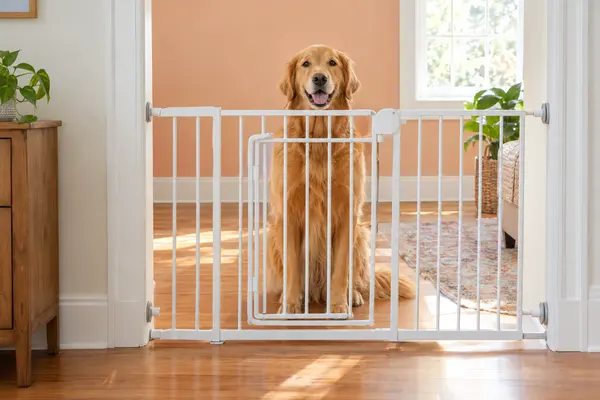
Fit the cover snugly so no corners hang inside the wire, tuck ties out of reach, and supervise the first few sessions. If your puppy still grabs at it, take it off and try again in a few weeks. In the meantime, a crate placed in a quieter corner, or furniture-style crate with solid panels, can give some of the same privacy with no fabric to pull. Pairing the crate with a dog gate for a small puppy zone can also help.
Is dog crate furniture a good alternative to a cover?
Yes, if the crate lives in a living room for good. Dog crate furniture is a crate built as a piece of furniture, usually wood or wood with metal bars, with a solid top you can use as an end table, TV stand or nightstand.
The solid top and sides already shade the inside, so there is nothing to fit, slip or wash. Most styles keep bars or slats on one or more sides for air and a view. Look at three things: the inside measurements against your dog's size, where the doors sit for your room, and whether the panels are solid wood, engineered wood or metal if your dog is a chewer. Browse the full range in crates, pens and gates.
End-table crates for small and medium dogs
Compact crates with a solid top that sit beside a sofa or bed.


Double doors and a cushion included
A wooden crate table with doors on two sides and a cushion inside, so you can set it against a wall either way round and still reach your dog easily.
- Two doors for flexible placement
- Comes with a cushion
- Top doubles as a side table
Crate furniture for large dogs and two-dog homes
Bigger frames, TV-stand styles and dividers for sharing.


A heavy-duty frame for big dogs
A 48-inch kennel made for dogs up to 110 lb, with metal bars on the sides for airflow and an enclosed wood base that keeps the lower part shaded.
- Double doors
- Steel tubes and particleboard frame
- Wide top for a lamp or a basket of toys
How do you introduce a crate cover?
Add it a little at a time, starting with the top, while your dog is happy and relaxed. Going slowly lets you see what your dog likes.
- Let your dog sniff the cover on the floor first, with a treat or a favourite toy nearby.
- Put the cover on the top only, with every side open. Carry on as normal.
- Over the next days, lower the back panel, then one side, during naps and quiet times.
- Leave the door panel up, or at least one side open, every time.
- If your dog whines, paws at the fabric or stops going in willingly, go back a step.
Bringing a new dog home? Our rescue dog first-week checklist covers setting up the crate area, and our guide to dog bed types helps you choose what goes inside it.
How do you wash a crate cover?
Follow the care label, and wash it as often as you wash your dog's bedding. Fabric near a dog collects hair, dust and smells quickly.
- Shake or vacuum off hair first so it does not clog the washer.
- Close zips and hook-and-loop tabs so they do not snag.
- Use a gentle cycle and a mild, unscented detergent, then air dry so the cover keeps its shape.
- Check the stitching and panels after each wash and replace a cover with holes or loose straps.
Questions people ask
Should you cover a dog crate at night?
You can, if your dog settles well with it. Cover the top and some sides, leave at least one side open for air and a view, and make sure the room is not warm. If your dog seems unhappy with it, leave the crate uncovered.
Are dog crate covers safe?
A well-fitted, breathable cover used on part of the crate is a common choice for many owners. Keep one side open, keep the crate out of direct sun and away from heaters, and remove the cover if your dog chews it or seems too warm.
Can I use a blanket instead of a crate cover?
Yes, a blanket is a fine way to try the idea. Cover only the top and back, tuck the edges so nothing hangs inside the bars, and check on your dog. For daily use, a fitted cover stays put better and has door panels.
Should I cover my puppy's crate?
Wait until your puppy stops pulling things through the wire. Until then, a cover can become a chew toy. If you do use one, fit it snugly, keep ties outside, and supervise.
What size crate cover do I need?
Match the cover to your crate's outside length, width and height, and to where its doors are. Measure the crate itself rather than your dog, and choose a cover made for that crate size.
About the numbers
- Google Keyword Planner, United States, 12-month average, read 2026-11-01: about 12,100 searches a month each for dog crate cover, crate cover and dog cage cover; about 2,900 for dog kennel cover; about 880 for breathable dog crate cover
- Google autocomplete, United States, read 2026-11-01: people ask whether a dog crate needs a cover and whether dog crate covers are safe