How to Brush a Dog's Teeth: A Gentle Step-by-Step Plan
Brush a dog's teeth with a soft dog toothbrush and dog toothpaste: build up over one to two weeks, lift the lip, angle the bristles to the gumline and keep it short and sweet.
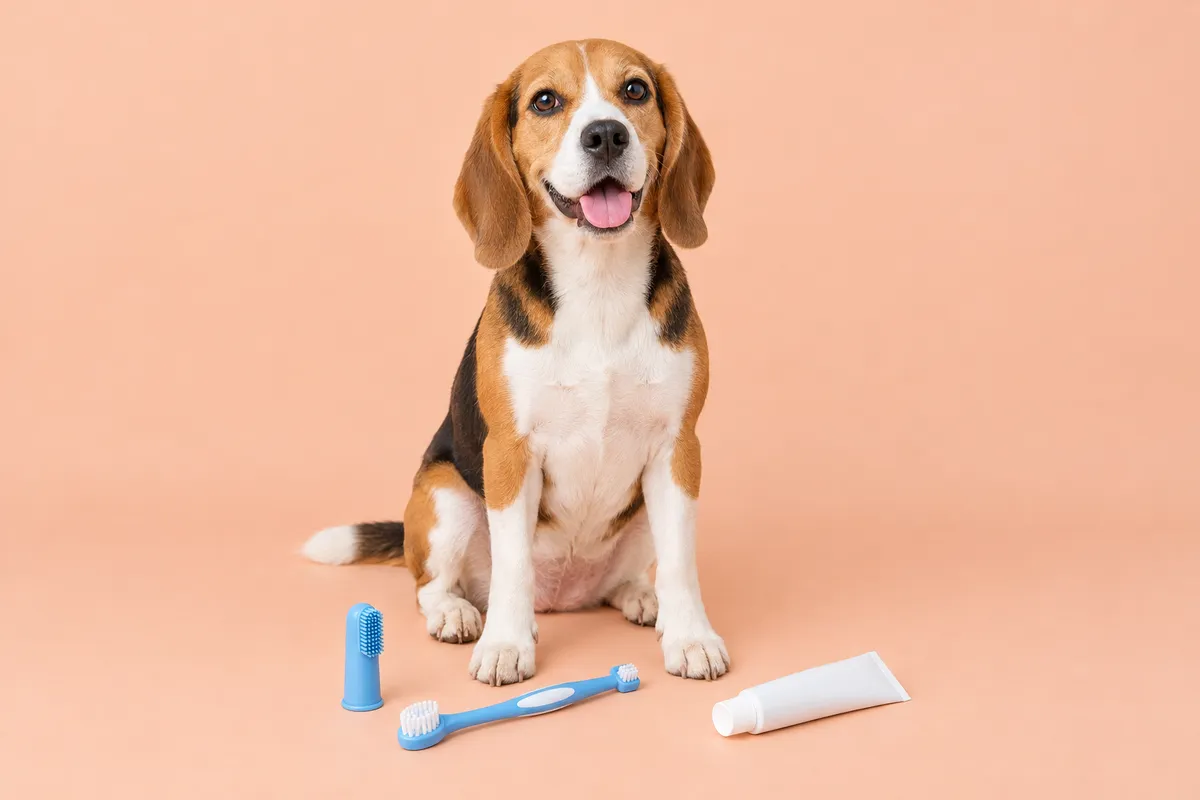
In short
- To brush a dog's teeth, lift the lip, angle a soft brush toward the gumline and work the outer surfaces in small strokes, then praise and reward.
- Build up slowly: a taste of toothpaste first, then a finger on the gums, then the brush on a few teeth, over about one to two weeks.
- Use only toothpaste made for dogs; the AKC warns that human toothpaste can contain ingredients such as xylitol and fluoride that are harmful to dogs.
- Veterinary sources such as the MSPCA and Colorado State University recommend brushing every day, and the MSPCA keeps each session under 30 seconds.
- Finger brushes are easiest for beginners, dual-head brushes suit most dogs once they are relaxed, and 360 brushes help with small mouths and wriggly dogs.
- If your dog pulls away, go back a step, shorten the session and ask your vet about teeth, gums and cleanings.
To brush a dog's teeth, let your dog lick a little dog toothpaste off your finger, gently lift the lip, then sweep a soft dog toothbrush along the outer surfaces of the teeth with the bristles angled toward the gumline. Start with a few teeth, keep it short, and finish with praise. Most dogs learn it over one to two weeks.
What do you need to brush a dog's teeth?
You need three things: a soft toothbrush made for dogs, a toothpaste made for dogs, and a pocket of small treats. A towel and a calm corner help too. Colorado State University's veterinary hospital suggests a soft-bristle brush kept for one pet only, so if you have two dogs, give each their own brush.
- A dog toothbrush: finger brush, dual-head or 360 (compared below). Soft bristles, always.
- Dog toothpaste: flavoured for dogs (poultry, beef, peanut butter, vanilla) and safe to swallow, because dogs do not rinse and spit.
- Rewards: tiny treats, a favourite toy, or the walk that follows.
- A routine slot: the MSPCA suggests a consistent time, such as just before a walk or a daily treat, so brushing becomes part of the day.
If you are starting from nothing, a kit with a brush and a matching paste is the simplest route. Browse the full shelf of dog dental care or the wider dental shelf for more choices.
Starter kits: brush and paste together
One box, everything you need for the first week.


Why do dogs need dog toothpaste and never human toothpaste?
Use dog toothpaste only. The AKC warns that human toothpaste can contain ingredients such as xylitol and fluoride that could cause significant harm to a dog, and the MSPCA advises against both human toothpaste and baking soda. Dogs swallow whatever is on the brush, so the paste has to be made for them.
Dog toothpastes also come in flavours dogs actually want, which turns the first lesson into a treat. Some are labelled enzymatic; Colorado State University mentions enzymatic pet toothpaste as one option. Pick a flavour your dog already loves, read the label, and if your dog has a sensitive tummy or any allergy, ask your vet which paste suits them.
Dog toothpastes in flavours dogs like
Poultry, peanut butter, vanilla ginger and more. Check the label for your dog.


How do you get a dog used to tooth brushing?
Go one small step at a time and only move on when your dog is relaxed. Colorado State University describes building up gradually over a one to two week period, and the MSPCA says to allow a few days for you both to get used to it. Here is a gentle plan that fits that window.
- Days 1 to 2, taste: let your dog lick a little toothpaste from your finger. Praise, treat, done.
- Days 3 to 4, touch: after the taste, slide a fingertip along the upper gums and outer teeth for a few seconds. Lift the lip gently with your other hand.
- Days 5 to 6, meet the brush: let your dog sniff and lick paste off the brush. Then touch it to a couple of front teeth and stop.
- Days 7 to 9, a few teeth: brush the outer side of the canines and the big teeth at the back on one side. Treat between sides.
- Days 10 to 14, the full outside: work around the whole mouth, upper teeth first, outer surfaces only. Most dogs accept the outer side long before they will open for the inner side, and that is fine.
Keep every session short and stop while your dog is still happy. A session that ends on a good note makes tomorrow easier. If your dog shows any sign of worry, go back to the step before and stay there a little longer.
How do you brush a dog's teeth, step by step?
Once your dog is comfortable, the routine takes well under a minute. Sit beside your dog rather than face to face.
- Put a small amount of dog toothpaste on the brush and let your dog lick a little off first.
- Lift the upper lip on one side with your thumb.
- Angle the bristles at about 45 degrees toward the gumline, as Colorado State University describes, with light pressure so the bristles do not flatten.
- Brush the outer surfaces in small strokes or circles, working from the back teeth toward the front. Colorado State University suggests about three back-and-forth strokes per tooth or section.
- Switch sides, then do the lower teeth if your dog is still relaxed.
- Finish with praise and the reward: a treat, a game or the walk.
The MSPCA keeps each session to less than 30 seconds, and focuses on the outside of the upper back teeth if that is all your dog will allow. Short and regular beats long and rare.
Finger brush, dual-head or 360 brush: which should you choose?
Choose a finger brush for the first weeks, a dual-head brush once your dog is relaxed, and a 360 brush for small mouths or wriggly dogs. Many people keep two styles and use whichever suits the day.
| Brush type | What it is | Good for | Watch out for |
|---|---|---|---|
| Finger brush | A soft silicone cap with nubs or bristles that slips over your fingertip | Beginners, puppies, nervous dogs; you feel exactly where you are | Short reach to the back teeth; your finger is near the teeth, so only for gentle dogs |
| Dual-head brush | A long handle with a large head on one end and a small head on the other | Most dogs once they accept brushing; the long handle reaches the back teeth | Needs a calm dog; the small head suits small mouths and front teeth |
| 360 or three-sided brush | A round head with bristles all the way around, or three rows that cover the front, top and back of a tooth | Small breeds, wriggly dogs, quick sessions; any angle touches the teeth | Bulkier head; check it is soft enough and the right size for your dog |
One point worth knowing: the MSPCA notes that a bristled brush is what reaches along the gumline, and Colorado State University says the bristle action is the most important part. So a finger brush is a lovely way to start, and many people move to a bristled long-handled brush once the dog is happy.
Finger brushes for the first weeks
Soft silicone caps that slip over a fingertip.


Dual-head brushes for everyday brushing
A big head for big teeth, a small head for the front and small mouths.


360 and three-sided brushes
Bristles on every side, handy for quick sessions.


Our pick for a first brush
A soft blue silicone finger cap with bristles all the way around, so whichever way your finger turns, there is something soft against the tooth.
- Fits over a fingertip, so you feel what you are doing
- Comes as a pair with little cases
- Good for puppies and nervous dogs
Our pick once your dog is relaxed
A long-handled brush with a larger head at one end and a smaller one at the other, so one brush covers the big back teeth and the little front ones.
- Long handle reaches the back teeth
- Two head sizes in one brush
- Soft bristles
How often should you brush a dog's teeth, and for how long?
Veterinary sources recommend every day. The MSPCA and Colorado State University both say to brush daily, and the AKC calls tooth brushing part of every dog owner's daily agenda. If daily feels like a lot at first, aim for most days and build the habit.
As for length, the MSPCA keeps a session under 30 seconds, and the AKC says to brush for as long as your dog will allow. In practice, a happy half minute every day is a great goal. Your vet is the right person for questions about your dog's teeth, gums and professional cleanings, so bring them up at your next visit.
What if your dog won't let you brush their teeth?
Slow down, go back a step and make each session tiny. Most resistance comes from moving too fast, holding too tight or brushing for too long.
- Go back a step: if the brush is too much, return to toothpaste on your finger for a few more days.
- Try a different brush: some dogs dislike a long handle near their face but accept a finger brush, or the other way round.
- Change the flavour: a meaty paste can win over a dog who ignored a sweet one.
- Brush a few teeth only: one side today, the other side tomorrow still counts.
- Pick a calm moment: after a walk or a play session, not when visitors arrive.
- Never pin or force: stop if your dog growls, snaps or tries hard to escape. The AKC suggests asking a vet or behaviourist for help with a fearful or aggressive dog.
Some dogs simply need more time. While you work on it, dental wipes can be a gentler first touch, and ask your vet what else suits your dog. Wipes, chews and sprays are extras alongside a brush; the veterinary sources above all put brushing first.
Wipes for a gentle first touch
Wrap around a finger while your dog gets used to the idea.


How does tooth brushing fit into a grooming routine?
Tooth brushing is the quickest part of grooming and the one to do most often, so it sits nicely beside the weekly jobs. Pair it with a coat session from our guide on how to brush a double-coated dog, keep nails tidy with a grinder or clippers, and save the full wash for bath day with our step-by-step bath checklist. Handling paws, ears and mouth often, with treats, makes every grooming job easier.
Rinse the brush after each use, let it air dry and replace it when the bristles splay. To compare every option, try a quick search for dog toothbrushes.
Questions people ask
Can I use human toothpaste on my dog?
No. The AKC warns that human toothpaste can contain ingredients such as xylitol and fluoride that could cause significant harm to dogs, and the MSPCA also advises against human toothpaste and baking soda. Use a toothpaste made for dogs, which is meant to be swallowed.
How often should I brush my dog's teeth?
Veterinary sources including the MSPCA and Colorado State University recommend brushing every day. If that is hard at first, brush most days and build up. Ask your vet how your dog's teeth and gums are doing and whether they need a professional cleaning.
Is a finger toothbrush as good as a regular dog toothbrush?
A finger brush is a gentle way to start because you can feel where you are. The MSPCA and Colorado State University both stress bristle action along the gumline, so many people move to a soft bristled long-handled brush once their dog is comfortable.
How long does it take to get a dog used to tooth brushing?
Colorado State University describes building up over one to two weeks, and the MSPCA says to allow a few days. Some dogs take longer. Move to the next step only when your dog is relaxed with the current one.
What if my dog only lets me brush the outside of the teeth?
That is completely normal. The MSPCA says the outside of the upper teeth is the most important area to reach, so brushing the outer surfaces is a good routine. Ask your vet about anything that concerns you inside the mouth.
Do I need to brush my puppy's teeth?
Starting young helps a puppy get used to having their mouth handled. Use a soft finger brush or a puppy kit, keep sessions very short, and ask your vet when to begin and what to use while baby teeth are changing.
About the numbers
- MSPCA-Angell, How to Brush Your Dog's Teeth, read 2026-11-01: Brush daily with a soft-bristled brush and veterinary toothpaste; no human toothpaste or baking soda; sessions less than 30 seconds; allow a few days to get used to it.
- Colorado State University Veterinary Health, How to Brush Your Dog's Teeth, read 2026-11-01: Build up over 1 to 2 weeks; bristles at 45 degrees to the gums; about three strokes per tooth or section; one brush per pet; finger brush as an option.
- American Kennel Club, How to Brush Your Dog's Teeth, read 2026-11-01: Human toothpaste can contain xylitol and fluoride; brushing on the daily agenda; ask a vet or behaviourist for a fearful or aggressive dog.