Dog Nail Grinder vs Clippers: Which Is Easier at Home
Clippers are faster and silent; a nail grinder is slower but takes off thin layers and leaves a smooth, rounded tip. The easier one is the tool your dog accepts, and many homes use both.
In short
- Clippers are quicker and silent; a nail grinder is slower but removes thin layers and leaves a smooth, rounded edge.
- The easier tool is the one your dog accepts: some dogs dislike the squeeze of clippers, others dislike the buzz of a grinder.
- Big dogs with thick nails often do well with sharp, heavy-duty plier clippers for length, then a grinder to smooth the edge.
- On black nails you cannot see the quick, so take tiny amounts; a grinder on low speed makes that easier to control.
- Ask your vet or groomer to show you where the quick sits on your own dog's nails before the first trim at home.
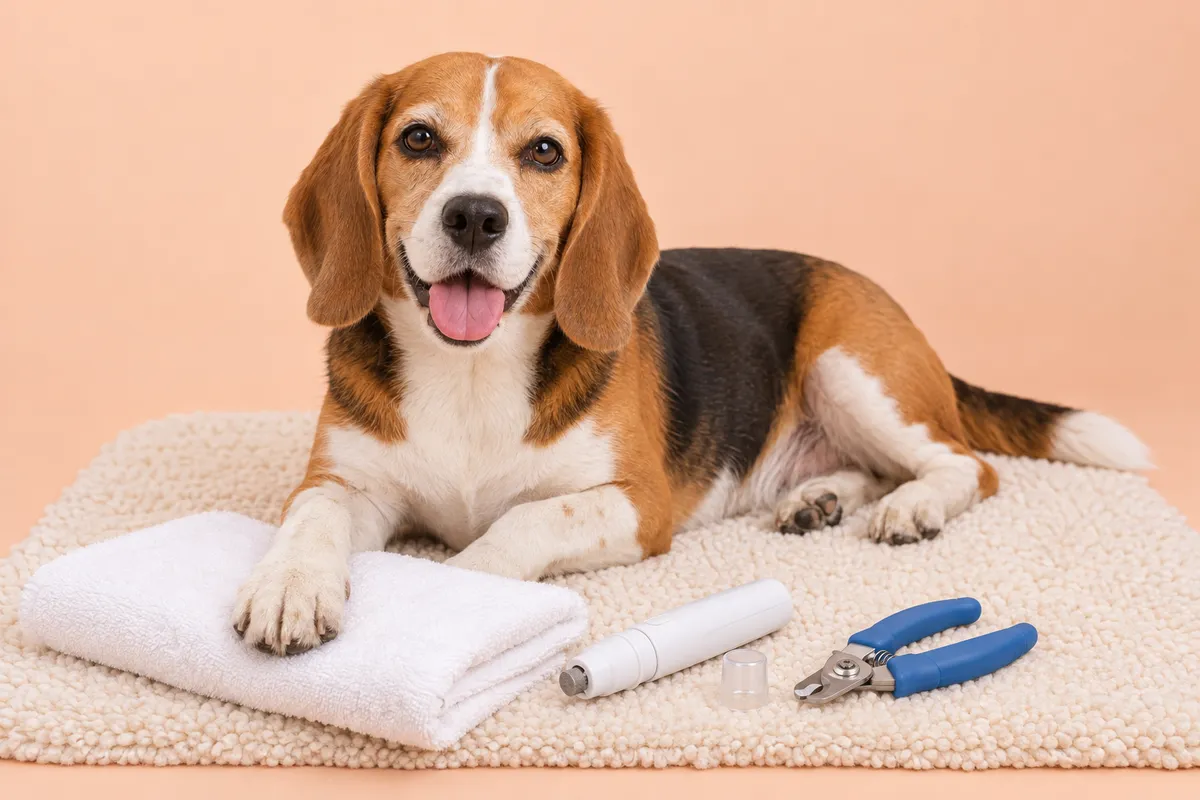
Hello, lovely. If nail day means a wriggling dog and a deep sigh, the tool may be half the problem. Clippers cut the nail in one squeeze: quick, silent, done. A nail grinder sands it down in thin layers: slower, buzzier, and much easier to stop before you go too far. The easier one is the tool your dog will sit still for, and plenty of homes use both: a clip for length, then a few passes of the grinder to round the edge.
The short answer: clip for speed, grind for control
Clippers suit dogs who dislike long handling, because each nail takes a single squeeze. The trade-off is precision. A clipper removes a whole slice at once, so a misjudged cut goes into the quick, the living core of the nail with its own blood supply and nerve. A grinder takes off a sliver at a time, so you watch the nail shorten and can stop early. It also leaves a rounded tip instead of a flat edge that snags on rugs. The catch: it takes longer, hums steadily and makes a little nail dust.
| Clippers | Nail grinder | |
|---|---|---|
| How it works | Blades cut the nail in one squeeze | A spinning diamond or sanding head files the nail |
| Time per paw | Seconds | A few minutes, longer on thick nails |
| Sound and feel | One click, no vibration | A steady hum and a gentle buzz |
| Control | A whole slice at once | Thin layers you check as you go |
| Finish | Flat edge that can feel sharp | Smooth, rounded tip |
| Easiest for | Dogs who hate long handling; pale nails | Dark or thick nails; dogs who dislike the squeeze |
Clippers: three styles and who each one suits
Choose a clipper by your dog's nail size first, then by style. Blades that are too small crush a thick nail instead of slicing it, and blades that are too big are hard to aim on a small nail. Browse every style in our grooming tools.
- Plier style has spring-loaded handles and curved blades that meet like a beak. It is the everyday choice for medium and large dogs, and most carry a safety guard: a small metal stop that limits how much nail enters the blades. Heavy-duty versions, sometimes sold as nippers, open wide on an all-metal body for thick nails on big dogs.
- Guillotine style has a ring the nail slides through and one blade that crosses it. It is easy to aim on small to medium nails, though very thick nails can be hard to fit.
- Scissor style has small notched blades for tiny nails on toy breeds and young puppies.
Clippers for medium and large dogs
Plier-style clippers, including a wide-opening all-metal pair for thick nails, most with a safety stop.


Clippers for small dogs and puppies
Smaller blades for fine nails.


For seeing where to stop
A plier-style clipper with an LED that shines through light-colored nails so the pink quick stands out.
- Safety stop guard
- Comes with a nail file

For a clean guillotine cut
A solid steel guillotine clipper whose cutting blade can be replaced when it dulls, so you keep a crisp cut without buying a new tool.
- Large size for medium to big dogs
- Replaceable cutting blade
Nail grinders: what the features really change
A pet nail grinder is a small cordless rotary tool. A head spins inside a plastic guard, and you touch the nail tip to it through an opening in the guard. Here is what the features mean for you and your dog.
- Diamond drum or sanding band. Compact pet grinders mostly use a long-lasting diamond-coated drum. Rotary-tool style grinders use paper sanding bands on a small mandrel, which wear faster but swap easily and come in different grits.
- Ports. A guard with two or three openings lets only the nail tip through, keeping fur and toes clear of the head.
- Speeds. Low speed is gentler for first sessions and small nails; high speed gets through thick nails faster. Six-speed and stepless models let you creep up gradually.
- LED lights show the nail surface clearly, which helps when you work slice by slice on dark nails.
- Noise. Every grinder hums; a quieter motor is worth it for a dog who startles easily.
Cordless nail grinders
Two-speed and stepless grinders, most with a guard and ports and several with LED lights, plus a single-speed rotary grinder that takes sanding bands.


For a first grinder
A simple rechargeable grinder with a diamond drum, two speeds and three grinding ports, so one tool covers small paws and big ones.
- Start on low speed
- Rechargeable and cordless

For thick nails and noise-shy dogs
Six speed settings let you begin low and step up for heavy nails, two LED lights brighten the nail, and the motor is built to run quietly.
- Removable cap catches nail dust
- Three grinding ports
Which is easier for your dog?
| Your dog | Easier start | Why |
|---|---|---|
| Toy breed or puppy | Small scissor or guillotine clipper | Tiny nails cut cleanly and fast |
| Large dog, thick nails | Heavy-duty plier clipper, then a grinder | Clip for length, smooth the hard edge |
| Black or dark nails | Grinder on low speed | Thin layers let you check as you go |
| Dislikes buzzing | Sharp clippers | One quiet squeeze per nail |
| Pulls away from the squeeze | Grinder | Light touches, no pressure |
| Older dog who likes to lie down | Grinder or small clips on a soft bed | No need to hold a paw up for long |
Older dogs often find nail time easier lying on a soft, non-slip spot; our senior dog friendly home guide has ideas for comfy beds and grippy steps. Bringing home a puppy? Start gently handling paws in the first week, alongside everything on the new puppy checklist.
Replacement bands, heads and files
When a sanding band looks smooth or clogged, or a diamond head needs more passes than it used to, it is time to swap. Three things to match:
- Grit: the lower the number, the coarser the surface. 60 grit removes length quickly; 100 or 120 grit leaves a smoother finish.
- Band size: bands are sold by diameter, such as 1/2 inch, and must fit your mandrel.
- Fitting: rotary-tool heads sit on a 1/8 inch shank, while compact pet grinders often take their own head, so check the model list first.
Spare bands, heads and files
The diamond hand file smooths a rough edge after clipping, no battery needed.


Set up a calm nail station
Pick a bright spot, a non-slip towel and a time when your dog is already sleepy, then follow a gentle routine:
- Lay out the tool, a towel and treats before you call your dog over.
- Spread a little soft food on a lick mat so your dog has something pleasant to focus on.
- Hold the paw gently, thumb on the pad and a finger on top of the toe, and look at the nail from the side.
- Clip a small slice, or grind in short touches, lifting away between touches so the nail does not warm up.
- Check the cut end each time, and stop that nail as soon as a small circle starts to show in the center.
- Do one paw, or even one nail, then praise and stop. Finish tomorrow.
For big or wiggly dogs, a grooming hammock holds them gently with paws free, so both your hands stay on the job. A lick mat keeps a busy mouth happy; our snuffle mat vs lick mat guide helps you choose one.
Helpers for nail day
Grooming slings in several sizes, a lick mat for focus, and a styptic powder for the first-aid kit.


Questions people ask
Is it better to clip or grind a dog's nails?
Neither is better for every dog. Clipping is faster and silent, which suits dogs who dislike long handling. Grinding is slower but takes off thin layers and leaves a smooth tip, so it is easier to stop short of the quick. Many owners clip for length, then grind to smooth.
What is the best device to trim my dog's nails?
The best device matches your dog's nail size and your own comfort. Sharp plier-style clippers sized to the dog suit most homes, while a cordless grinder with a guard and more than one speed suits slow, careful trimming. Owners of big dogs often keep both.
What do vets recommend for dog nail trimming?
No single tool suits every dog, so ask your own vet or groomer. They can show you where the quick sits on your dog's nails and which tool fits their size. A short demo makes the first session at home much less of a guess.
How do I trim black dog nails without hitting the quick?
Take thin slices with clippers, or short passes with a grinder on low speed, and look at the cut end after each one. When a small circle starts to show in the center of the cut end, you are close to the quick. Stop there and move on to the next nail.
Will a nail grinder scare my dog?
Some dogs notice the hum at first. Switch it on at a distance during treat time, bring it closer over a few days, then touch the guard to a paw before grinding. Keep early sessions very short.
About the numbers
- ASPCA, Dog Grooming Tips, read 2026-10-06: Two basic clipper styles, scissors and guillotine; a nail grinder sands nails down and offers great control but takes longer than clippers; on black nails the quick is harder to see; cut a little with each pass and stop when a circle appears on the cut surface, which means the quick is near.
- American Kennel Club, How to Trim Your Dog's Nails Safely (Harriet Meyers), read 2026-10-06: The quick holds blood vessels and nerves; hold the paw with the thumb on the pad and forefinger on top of the toe; on dark nails watch for a chalky white ring; grind only a small part of the nail at a time; let a puppy hear the clipper and feel the grinder before trimming.