New Puppy Checklist: First-Week Essentials, Room by Room
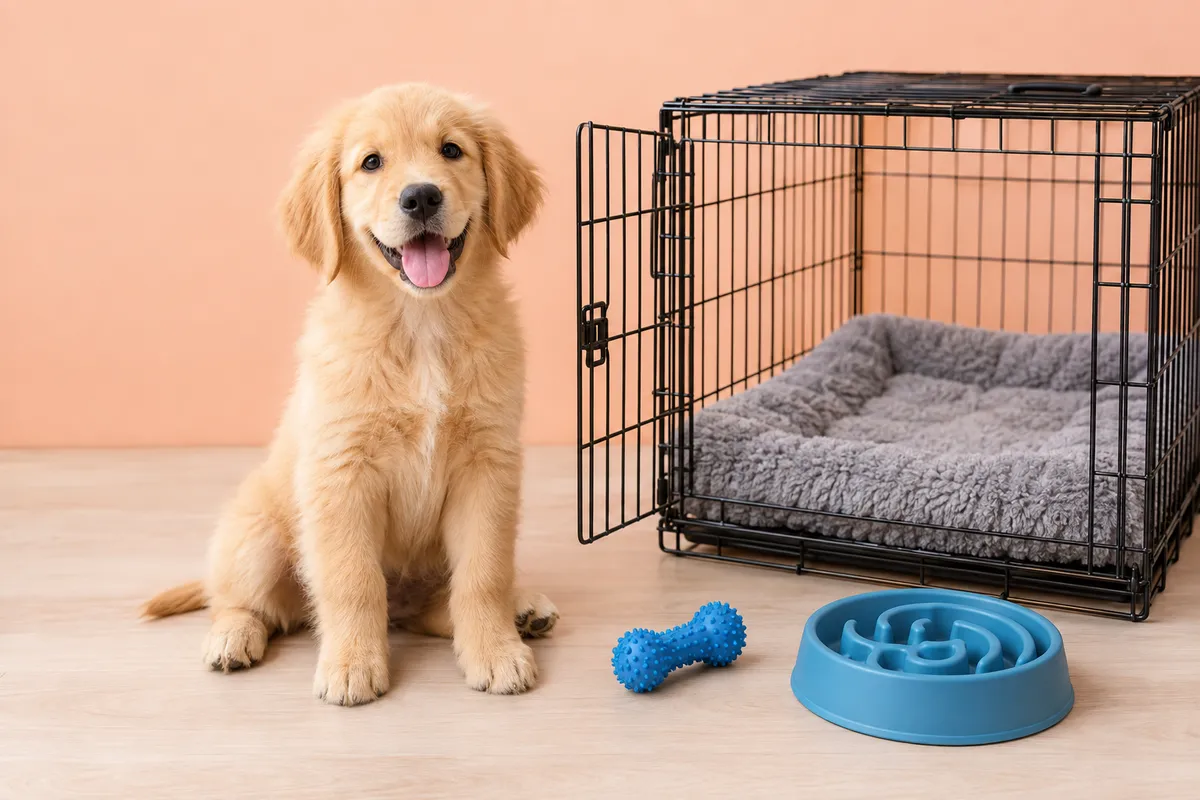
Before day one, set up a crate with a divider, a puppy-proofed play zone, a feeding spot, a potty station with an enzyme cleaner, and a collar with an ID tag by the door.
In short
- Set up five spots before your puppy comes home: a crate corner, a play zone, a feeding spot, a potty station and a walk kit by the door, plus a secured place in the car.
- Buy the crate for the grown dog and use the divider so the space is just big enough to stand, turn and lie down.
- Keep an enzyme cleaner within reach from day one; it is made to break down what causes the smell, not just cover it.
- For the first night, put the crate beside your bed so you hear when your puppy needs a potty trip.
A new puppy checklist is easiest to follow room by room. Before day one, set up a sleep corner with a crate and divider, a puppy-proofed play zone, a feeding spot, a potty station with an enzyme cleaner, and a hook by the door holding a collar with an ID tag, a leash and poop bags. Add a secured spot in the car for the ride home.
The new puppy checklist at a glance
- Bedroom: wire crate with a divider, washable crate pad or liner, a soft toy.
- Living room: exercise pen or gates, a few chew toys in different textures.
- Kitchen: food bowl or slow feeder, spill-proof water bowl, the food your vet suggests.
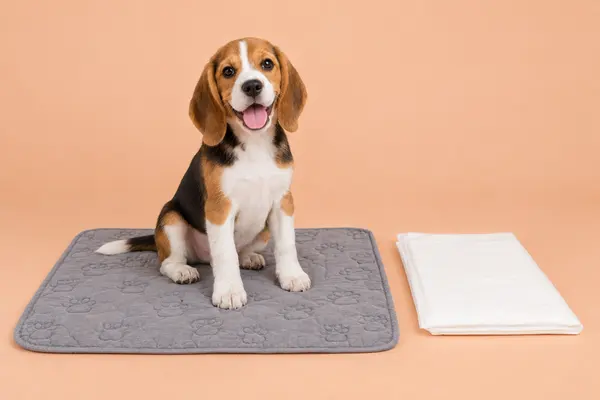
- Bathroom or laundry: training pads, enzyme cleaner, paper towels, a small brush.
- Front door: collar, engraved ID tag, leash, step-in harness, poop bags and a dispenser.
- Car: seat belt tether or booster seat, seat cover, a towel.
The bedroom: a crate sized for the grown-up dog
Buy the crate for the size your puppy will grow into, then slide the divider panel in so the space is just big enough to stand up, turn around and lie down. Most puppies prefer not to soil where they sleep, so a snug den supports house training, while extra room leaves a far corner to use as a toilet. Move the divider back as your puppy grows.
Folding wire crates let air through, fold flat, and have a pan that slides out for cleaning; a double-door crate gives more choice of where it sits. Measure first: the medium double-door crate below is 30.6 inches long, and the small two-door crate is 24 inches, for pets of 15 to 30 lbs. Browse every size in crates, pens and gates.

The crate that grows with your puppy
A folding metal wire crate with a single door, a divider panel and a leak-proof plastic pan. Set it up small for a puppy and open it out as your dog grows.
- Divider panel adjusts the space
- Pan slides out to clean
Start with washable bedding. A plush crate pad makes the den inviting; a flat, waterproof liner you cut to fit is a smart stand-in while accidents happen or if your puppy likes to shred. Add one soft toy, then check bedding and toys daily and remove anything with an open seam.
Crates and washable crate bedding
Wire crates with dividers, a plush crate pad and a cut-to-fit liner.


The living room: a puppy-proofed play zone
Your puppy spends most waking hours here, so give the space a boundary. An exercise pen works like a small indoor yard, and freestanding wooden gates close off a doorway with no screws in the wall. Then get down to puppy height and look around:
- Lift charging cables and lamp cords off the floor.
- Move shoes, socks, remotes and children's toys up high.
- Put houseplants out of reach and ask your vet which are safe around dogs.
- Use a trash can with a lid.
- Check under the sofa for coins, hair ties and other small things.
Pens and gates for the play zone
A metal pen with a door, a low arched gate and a tall folding gate.


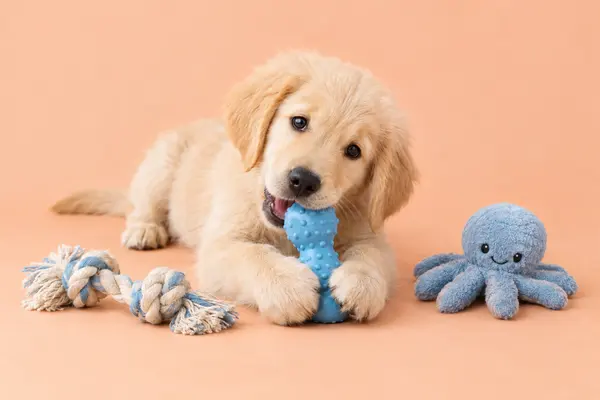
Puppies explore with their mouths, and chewing often ramps up during teething. Offer a mix of textures: a softer natural rubber toy you can stuff, a firmer nylon chew, a fabric stick you soak and freeze, and a no-stuffing plush for gentle tugging. Stay close while your puppy tries something new, and replace any toy that is breaking apart. Find more on the chew toys shelf.

A soft-rubber first chew toy
A snowman-shaped toy in the gentlest rubber formula of its maker's range, shaped for baby teeth. Stuff the hollow center with a little of your puppy's kibble for a quiet crate-time job, or toss it and watch the uneven bounce.
- Softer than the adult version
- Hollow center for kibble
More chews for the teething weeks
A freezable fabric stick, two nylon puppy chews and no-stuffing plush animals.


Read the story behind the classic rubber dog toy, and once the basics are in place, a snuffle mat or a lick mat gives a busy puppy another quiet job.
The kitchen: one feeding spot and steady mealtimes
Pick one corner for food and water and keep it there. Feed at the same times each day, and ask your vet what to feed and how much. A trip to the potty spot soon after each meal then becomes part of the routine.
A slow feeder spreads kibble between ridges or around a raised center, so a meal becomes a short puzzle instead of a race. Plastic maze bowls are light; stainless steel bowls with a rubber base are heavier and harder to push around. A spill-proof water bowl helps keep splashes off the floor. See every style in bowls and feeders.

A maze bowl for a speedy eater
A blue plastic bowl with ridges and grooves your puppy works around for each mouthful. It holds up to 4 cups, so it still fits when your puppy is grown.
- Maze spreads the kibble out
- Light and quick to rinse
Steel and spill-proof options
A stainless slow-feed bowl with a rubber base and a spill-proof water bowl.


The bathroom or laundry room: potty station and cleanup kit
Even if you train outdoors, set up a backup potty spot and a cleaning caddy. Accidents are part of week one. What matters is cleaning each one fully and taking your puppy out often: after waking, eating and play, and before bed. Pads come in a few forms:
| Option | How it works | Best for |
|---|---|---|
| Disposable training pads | Layers pull liquid into an absorbent core over a plastic backing | Apartments, long workdays, the first nights |
| Extra-large disposable pads | The same build with more surface | Bigger puppies or lining a pen floor |
| Washable pee pads | Quilted fabric over an absorbent layer with a waterproof, non-slip back | Pens and crates, with less waste |
| Cut-to-fit crate liner | An absorbent, waterproof mat you trim to size | Inside or under the crate |
For cleanup, choose an enzyme cleaner over an everyday household spray. Enzyme formulas are made to break down what causes the smell, and their makers say this helps stop a return visit to the same spot. Blot, soak, wait as the label says, then air-dry. Pads, cleaners and bags all live in cleaning and potty.

An enzyme spray for the first accidents
A spray with enzymes and what its maker calls pro-bacteria, made for pee and poop stains on carpet and upholstery. Test it on a hidden patch first.
- Enzyme formula
- Spring Breeze scent
Pads for the potty station
Small and extra-large disposable pads and washable pee pads.


Keep a small brush on the same shelf. Short, gentle brushing sessions get your puppy used to having paws, ears and tail handled, which pays off at every grooming session to come.
Brushes sized for puppies
A small slicker with coated tips and a soft brush and comb set.


The front door: collar, ID tag, leash and poop bags
Make a landing spot by the door: a hook for the leash and harness, a basket for bags and treats. The collar with an engraved ID tag goes on before the first trip outside. Put your phone number on the tag, and ask your vet about a microchip at the first visit.
A puppy collar should be snug enough not to slip over the head and loose enough that your fingers slide underneath. Puppies grow fast, so check it every few days. A step-in harness spreads pressure across the chest rather than the throat. For a future puller, see our guide to front-clip and back-clip harnesses.

An ID tag that stays readable
Stainless steel tags, laser engraved on a mirror finish, with room for up to 8 lines across both sides, in bone, circle, heart and other shapes.
- Engraved on both sides
- Stainless steel, not soft aluminum
The grab-and-go walk kit
A silent slide-on tag, a classic leash, a step-in harness, a collar set, poop bags and a clip-on dispenser.


The car: the ride home and every ride after
Bring a helper, a towel, poop bags and a couple of training pads for the ride home. Your puppy rides secured: in a strapped-down crate, a booster seat, or on a seat belt tether clipped to a harness, never a collar. A waterproof back-seat cover keeps the seat clean if the first ride gets messy.
Car gear for small and growing puppies
A seat belt tether, a booster seat for pets under 25 lbs and a waterproof seat cover.


The first 48 hours, step by step
- Go straight to the potty spot on arrival, on the leash, and praise quietly when your puppy goes.
- Let your puppy explore the play zone first, not the whole house.
- Offer a crate nap with the door open, then closed for short spells while you stay nearby.
- Feed at the kitchen spot at set times, then head to the potty spot.
- Keep visitors few and play short; puppies need lots of sleep.
- Keep the crate beside your bed and night trips calm and boring.
- Book the first vet visit and ask about food, vaccines, a microchip and when it is safe to meet other dogs.
Then the first week can be about the fun part: naps, small wins and getting to know each other.
Questions people ask
What should first-time puppy owners know?
Routine matters more than gear. Puppies need frequent potty trips, lots of sleep, short play sessions and plenty of things they are allowed to chew. Set up the crate, play zone and potty spot before your puppy arrives, keep the first week quiet, and book an early vet visit.
What is the 10-10-10 rule for puppies?
It is a house-training routine with a few versions. A common one: up to ten minutes at one potty spot, about ten feet of leash so your puppy stays focused, and ten minutes of close supervision back inside. If nothing happens, a short crate rest and another try soon after.
What is the hardest month for a puppy?
Many owners and trainers name early adolescence, often around 6 to 9 months, when a puppy may test boundaries, ignore cues it already knew, chew harder and slip a little in house training. Every puppy is different. A steady routine and plenty of chew toys help, and if anything worries you, ask your vet or a qualified trainer.
How do you bring a new puppy home in the car?
Bring a helper, a towel, poop bags and a training pad. Keep your puppy in a strapped-down crate, a booster seat or on a tether clipped to a harness, never loose on a lap, and plan a quiet potty stop on longer trips.
About the numbers
- Google related searches for 'new puppy checklist', read 2026-10-06: related searches include what do you need for a new puppy checklist at home, first 48 hours with a new puppy and bringing puppy home in car
- Google people also ask for 'new puppy checklist', read 2026-10-06: questions include where a puppy should sleep the first night and what the 10-10-10 rule for puppies is
- Google search results for '10-10-10 rule for puppies', read 2026-10-06: describe the rule as a house-training routine of up to ten minutes at a potty spot, about ten feet of leash space and ten minutes of supervision; versions differ
- Google search results for 'what is the hardest month for a puppy', read 2026-10-06: many owners and trainers name roughly 6 to 9 months, the start of adolescence, as the hardest stretch, with boundary testing, harder chewing and short slips in house training