Front Clip vs Back Clip: Choosing a No Pull Dog Harness
For a dog that pulls, clip the leash to a front ring on the chest: it turns each lunge back toward you. Back clips suit relaxed walkers, and a dual-clip harness gives you both.
In short
- For a dog that pulls, a front clip on the chest works better, because each lunge swings the dog sideways and back toward you.
- A back clip is the comfiest choice for a dog that already walks on a loose leash, but it gives a puller something to lean into.
- A dual-clip harness lets you train on the chest ring and move to the back ring as walks get calmer.
- A Y-shaped front leaves the shoulders free, and a good fit (two fingers under each strap, chest ring centered) matters more than any label.
Short answer: if your dog pulls, choose a front clip harness and attach the leash to the ring on the chest. When your dog surges ahead, the leash swings the chest around toward you, so pulling stops getting them anywhere. A back clip, between the shoulder blades, suits a dog who already strolls on a loose leash. A dual-clip harness carries both rings, so you can train on one and relax on the other.
In the United States, searches for no pull dog harness are down 22% over the last four weeks against the four before, yet related searches for "best dog harness for pulling" rose 300% across the past 90 days, and "front clip harness" is among the top related searches. This guide answers both parts: where to clip the leash, and which harness shape suits your dog.
How a front clip harness works on a puller
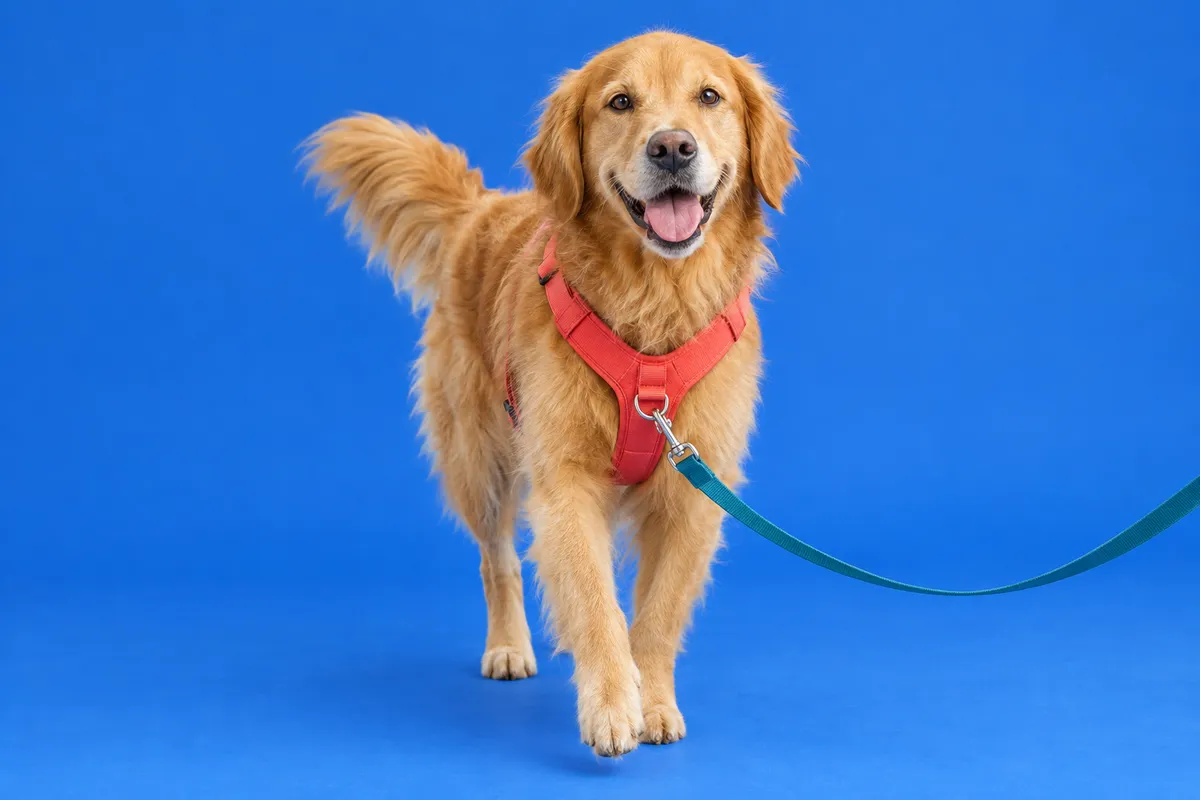
The front ring sits on the chest plate, right over the breastbone. When your dog leans into the leash, the pull comes from the front and a little to the side, so the chest turns toward you and your dog ends up facing sideways. Forward momentum goes nowhere, and the leash load lands on the chest rather than the throat.
The trade-offs: a long, slack leash on a front ring can loop around a front leg, so a 4 to 6 foot leash is the easy match. A loose girth strap lets the chest plate slide sideways and twist. And a front clip only manages pulling; manners come from rewarding every slack leash.
How a back clip harness works, and who it suits
The back ring sits between the shoulder blades. The leash runs up and away from the legs, so it rarely tangles, and your dog can sniff, trot and turn freely. That makes a back clip the comfiest option for small dogs, polite walkers, runners and hikers.
For a determined puller it does the opposite of what you want: it gives your dog a solid point to lean into with their whole body, the same idea sled and canicross harnesses use on purpose. If your dog tows you on a back clip, switch to a front ring.
| Clip style | Where the ring sits | When your dog pulls | Best for |
|---|---|---|---|
| Front clip | Chest plate, over the breastbone | The chest turns toward you | Dogs that pull, leash training |
| Back clip | Between the shoulder blades | Your dog can lean in and tow | Loose-leash walkers, small dogs, hiking |
| Dual clip | Chest and back | Your choice: redirect or relax | Most pullers, dogs in training |
| Step-in | Usually the back, at the buckle | Same as a back clip | Toy breeds, puppies, head-shy dogs |
Why a dual-clip harness suits most pullers
A dual clip dog harness is a training tool and an everyday harness in one. Start busy walks on the chest ring. Once your dog walks beside you on a loose leash more often than not, try the back ring on a quiet street. A leash with a snap at each end can even clip to both: the chest ring steers, the back ring steadies.
Look for metal rings, four or more adjustment points, a top handle for curbs and reflective trim. If your dog dislikes things going over the head, choose one that buckles at the neck. Every style sits side by side in dog harnesses.
Dual-clip harnesses for dogs that pull
Each has a ring on the chest and another on the back.


For a medium or large dog who pulls hard
A padded vest with two metal leash rings, reflective strips and a top handle. It slips over the head and closes with two quick-release buckles, and four straps fine-tune the fit. This one is the large size, made for medium to large dogs, so measure the neck and the chest girth first.
- Front ring to redirect, back ring for easy days
- Handle for a quick hold at crossings
Why Y-shaped harnesses are worth a look
On a Y-shaped harness, the neck strap meets a strap that runs down the breastbone and between the front legs. Nothing crosses the front of the shoulders, which leaves the front legs free to swing, and a pull lands on the breastbone. A strap straight across the chest is simple, but it sits where the shoulders move.
Y-fronts suit dogs who cover ground: hikers, joggers, long-legged breeds. When fitting one, the Y should meet on the breastbone, not at the throat, and the girth strap should clear the armpits.
Y-front harnesses for active dogs
Open shoulders, a chest attachment and a ring on the back.


For long walks and weekend trails
A padded Y-front with an aluminum V-ring on the back for everyday walks and a reinforced webbing loop at the chest for pulling days. This one is the medium size, so measure the rib cage just behind the front legs before you choose.
- Shoulders stay clear
- Chest loop and back ring in one
Step-in harnesses for small dogs and puppies
A step in harness is the gentlest to put on. Lay it flat, let your dog step both front paws into the loops, then click the buckle over the back. Nothing goes over the head, a relief for head-shy dogs and wriggly puppies. The ring usually sits at the buckle, so most step-ins are back-clip harnesses.
Soft mesh keeps them light on tiny bodies. Most are sized by the widest part of the chest, so measure there, and choose one shaped to stay on if your dog backs out of things.
Step-in and mesh harnesses for small dogs
Light mesh and back rings for toy breeds and puppies.


For a small dog who slips out of everything
A step-in harness made for small breeds that like to wriggle free. The largest size fits dogs up to about 35 pounds; this one is the medium, so measure the widest part of the chest first.
- Steps in, clips shut over the back
- Designed for dogs who back out of harnesses
Escape-proof and tactical harnesses for strong or slippery dogs
Deep-chested, slim-waisted dogs like whippets and greyhounds can back out of an ordinary harness in one smooth move. An escape-proof harness adds a third strap around the waist, behind the ribs, where the body is narrowest. It is handy on busy nights when doorbells and costumes can startle a dog; our Halloween safety guide has more.
Tactical harnesses are the sturdiest of the lot: thick nylon (one here is 1050D nylon with a water-resistant coating), metal buckles, a grab handle and rings front and back. They suit big, strong dogs, but they are warmer than mesh on a hot afternoon.
Escape-proof and tactical harnesses
Extra straps, metal hardware and a handle on top.


The leash matters as much as the clip
A no pull dog leash usually has a bungee section built in. The stretch softens the jolt for both of you when your dog lunges at a squirrel, and a second handle near the clip keeps your dog close at crossings. Skip retractable leashes for a puller: the line stays tight and pays out more length whenever your dog pulls.
Running together? A hands-free waist leash pairs best with a back clip, since a front ring would tug sideways with every stride. More styles live in dog leashes.
Leashes that take the jolt out of a lunge
Bungee sections and a second handle for close control.


For a dog who lunges
A 48-inch leash with a shock-absorbing bungee section, a second handle near the clip and reflective trim. Short enough to stay clear of the legs on a front clip.
- Bungee softens sudden lunges
- Traffic handle for curbs
How to fit a no pull harness
- Measure the widest part of the rib cage, just behind the front legs, and the neck where a collar sits. Go by the size chart, not weight.
- Between sizes, start larger and adjust down.
- Slide two fingers under every strap: snug, not tight.
- Check the chest ring sits centered on the breastbone. If it slides sideways on a pull, take up the girth strap.
- Make sure the girth strap clears the armpits and the harness stays put when your dog backs up.
- Introduce it gently with a sniff and a treat, stay close on the first walks and check for rubbing afterward.
Quick match: which harness for which dog
- Strong puller: a padded dual-clip harness, on the front ring to start.
- Trail lover: a Y-front with a chest loop and a back ring.
- Toy breed or puppy: a soft step-in on the back clip.
- Escape artist: a three-strap escape-proof harness.
- Polite walker: a back clip, the comfiest of all.
- Still deciding: compare chest plates in front clip harness results.
Questions people ask
What is the best harness to stop a dog from pulling?
For most dogs, a well-fitted dual-clip harness used on its front ring is the place to start. The chest ring turns your dog back toward you when they surge ahead, and the back ring is there for calmer walks. Pair it with rewards for a loose leash.
Do no pull dog harnesses actually work?
They work mechanically: a front clip turns your dog sideways, so forward lunges stop paying off. They do not teach loose-leash walking on their own, so reward every slack leash. If pulling keeps going, ask your vet or a qualified trainer.
Are Y-shaped harnesses better?
They leave the shoulders open. A Y-shaped front runs down the breastbone and between the front legs, so nothing crosses the front of the shoulders. Whether one suits your dog still comes down to fit: the Y should meet on the breastbone, not at the throat.
Should I clip the leash to the front or the back ring?
Use the front ring when your dog pulls or when you are practicing leash manners. Use the back ring once your dog walks on a loose leash, or when you run or hike together.
About the numbers
- Google Trends, United States, past 90 days, read 2026-10-06: no pull dog harness searches down 22% over the last four weeks against the four before; rising related search: best dog harness for pulling (+300%); top related searches: best dog harness no pull (100), no pull dog leash (30), front clip harness (26)