How to Choose a Dog Raincoat: Coverage, Hood, Fabric and Fit
Choose a dog raincoat by how much of your dog it needs to cover, whether the fabric is truly waterproof, and a fit taken from back length and chest girth. Here is what each choice changes on a wet walk.
In short
- A dog raincoat is chosen by coverage first: a poncho or cape covers the back, a full-body suit with legs also covers the belly and legs.
- Short-legged dogs and dogs with a thin single coat usually gain the most from a raincoat, because their belly and chest meet the spray from the ground.
- Waterproof fabric with sealed seams keeps a steady downpour out, while water-resistant fabric is fine for drizzle and short walks.
- Measure back length from the base of the neck to the base of the tail, then chest girth around the widest part of the ribcage, and size up if your dog sits between two sizes.
- A leash hole or harness opening lets you clip on over the coat, and reflective trim helps drivers see you both on dark, rainy evenings.
Rainy season walks are so much nicer when you come home to a damp coat on the hook instead of a soggy dog on the sofa. The right dog raincoat depends on three things: how much of your dog it needs to cover, how wet your weather really gets, and how well it fits the body underneath. Get those three right and the rest, from hoods to reflective strips, falls into place.
Not every dog needs one. Dogs with a dense double coat tend to shed light rain well on their own, while dogs with a thin single coat, small and toy dogs, and short-legged dogs that sit close to the wet ground often enjoy the extra cover. Puppies and senior dogs are worth a closer look too. If your dog is happy and comfortable without a coat, that is a fine answer, and if you have any question about your own dog in cold or wet weather, ask your vet.
Coverage styles: poncho, cape or full body with legs
Start with coverage, because it decides almost everything else. A poncho raincoat drapes over the back and sides and fastens with a strap or two under the chest. A cape is the lightest version: a panel over the back held by a neck and belly strap. A full-body raincoat with legs is a little suit with four sleeves that covers the belly, chest and the tops of the legs.
| Style | What stays dry | Best for | Trade-off |
|---|---|---|---|
| Cape | Back and top of the shoulders | Quick trips outside, dogs who dislike anything on their legs | Belly and chest still get splashed |
| Poncho | Back, sides and part of the chest | Most everyday walks, easy on and off | Legs and underside stay exposed |
| Full body with legs | Back, belly, chest and upper legs | Low dogs, muddy trails, long-coated dogs that hold dirt | Takes practice to put on, needs a closer fit |
Poncho and cape raincoats for everyday walks
Slip-over shapes that buckle under the chest, in sizes for small to large dogs.


Chest and belly coverage for low dogs
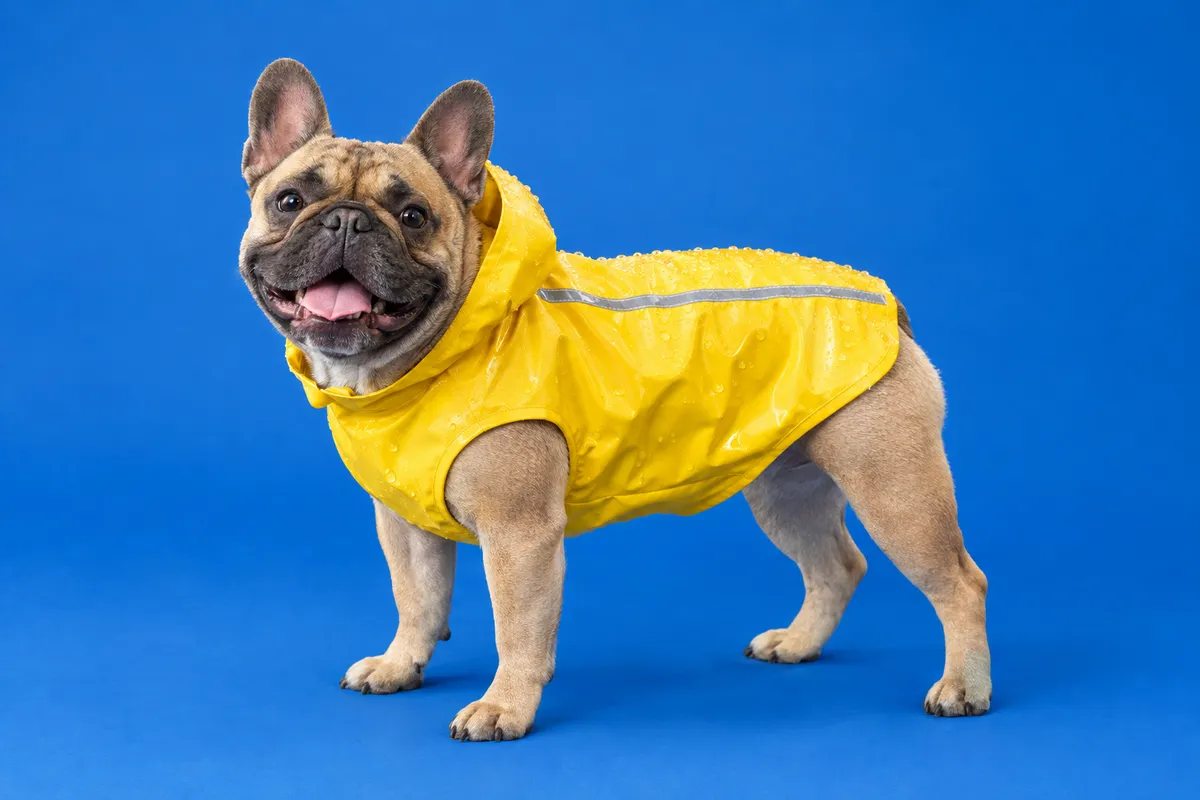
Short-legged dogs such as Dachshunds, Corgis, Basset Hounds and French Bulldogs walk with their chest only a few inches above the puddles. On a poncho, check how far the side panels and the chest strap reach: a wider belly band or a chest flap keeps far more spray off than a single thin strap.
For these dogs a full-body raincoat with four legs is often the tidiest choice. Look for elastic cuffs at the leg openings, which hold the sleeve in place without pinching, and a short cut under the belly so boys can still go to the toilet comfortably.

For low dogs who come home muddy
A four-leg rain suit with snap buttons down the front, elastic edges at every opening and an adjustable hood, so the chest and belly stay much cleaner on splashy pavements.
- Covers chest, belly and upper legs
- Snap front makes it easier to put on
- Hood with a drawstring toggle
Hood or no hood
A hood keeps rain off the head and the back of the neck, and many dogs accept one once it is adjusted so it never covers the eyes or ears. Choose a hood with a drawstring or toggle so you can snug it around the face, or a clear brim that lets your dog see forward and to the side. Some hoods detach or roll down, which is handy for dogs who would rather feel the breeze.

For dogs who need to see where they are going
A hooded raincoat with a clear brim at the front of the hood, a mesh lining inside and a pouch it folds into for your pocket.
- Clear brim keeps the view open
- Double layer with mesh inside
- Packs small for the walk home
Waterproof vs water-resistant fabric
The words on the label matter. Water-resistant fabric has a coating that makes drizzle bead up and roll off, which is plenty for short walks in light rain. Waterproof fabric, often a polyester or nylon shell with a PU or TPU coating, keeps out steady rain; the best ones also have taped or sealed seams so water cannot creep in through the stitching.
- Light, lined shells with mesh inside feel cooler and less clammy on mild rainy days.
- A soft fleece or quilted lining adds warmth, which suits cold rain more than summer showers.
- Glossy coated fabrics wipe clean in seconds; matte fabrics feel softer but may need a rinse.
If your rain often comes with a chill, a waterproof winter coat may do both jobs at once. Our guide on how to choose a dog winter coat covers insulation and coverage for colder days.
Waterproof coats for cold, wet days
Warmer shells and lined jackets for rain that comes with a chill.


Leash hole and harness compatibility
A raincoat should never come between you and the leash. Look for a leash hole, a small opening on the back, so you can clip onto a harness or collar ring through the coat. Check where that hole sits: it should line up with your harness's back ring when the coat is on. If you use a front clip harness, a poncho that sits above the chest strap or a coat with a chest opening will keep the front ring reachable.
Reflective harnesses that sit well under a raincoat
Flat, padded harnesses with back and front rings.


Reflective trim for dark, rainy walks
Rainy days are dim, and evening walks in fall and winter often happen in the dark. Reflective strips bounce headlight back toward drivers, so look for trim along the back and around the edges, where it shows from the side as well as behind. Bright colors such as yellow, red and orange help in daylight; reflective trim does the work at night. A reflective harness or leash adds more.
Sizing by back length and chest girth
Raincoats are sized by measurements, not breed or weight. Use a soft tape measure while your dog stands square.
- Back length: from the base of the neck, where the collar sits, along the spine to the base of the tail. This is usually the size on the label.
- Chest girth: around the widest part of the ribcage, just behind the front legs.
- Neck: around where the collar sits, for coats with a fitted collar or hood.
- Compare all three with the size chart. If your dog falls between sizes or has thick fur, size up and use the adjustable straps.
A good fit lets two fingers slide under the chest strap, ends at the base of the tail and leaves the front legs swinging freely. For step-by-step help with the tape, see how to measure a dog for a sweater; the same three measurements work for rain gear.
Getting a dog used to wearing a raincoat, gently
Most dogs are unsure the first time something new goes over their back. Go slowly and keep every step short and happy.
- Let your dog sniff the coat on the floor and reward with a favorite treat.
- Lay it over the back for a second, praise, then take it off.
- Fasten one strap, give a treat, and unfasten. Add the next strap on another day.
- Wear it indoors for a minute or two, then go out for a short walk on a dry day.
- Save the first rainy walk for when your dog walks happily in it at home.
Stay close the first few times, and take the coat off if your dog freezes or tries to wriggle out.
Drying and storing a dog raincoat
When you get home, take the coat off at the door, shake it out and hang it by the hook or collar to drip dry away from direct heat. Wipe muddy coats with a damp cloth, or follow the care label for a gentle wash and air dry; high heat can damage coatings and reflective tape. Make sure it is fully dry before you fold it, then keep it with the leash so it is ready for the next shower.
Paws and legs still meet the puddles, so a microfiber towel or a paw cleaner by the door finishes the job. If your dog walks on slushy streets, our look at whether dogs need boots in winter is a handy next read, and you can browse every dog coat and jacket in one place.
For the drying station by the door
Absorbent towels, robes and paw cleaners for after the walk.


Questions people ask
Do dogs really need a raincoat?
Not every dog does. Dogs with a dense double coat usually shed light rain well, while dogs with a thin single coat, small dogs, short-legged dogs, puppies and seniors often enjoy the extra cover. If you have a question about your own dog in cold, wet weather, ask your vet.
Should a dog raincoat have legs?
Choose legs if your dog comes home with a wet, muddy belly and chest, which is common for low dogs and long-coated dogs. A poncho is easier to put on and suits most everyday walks. Many owners start with a poncho and add a full-body suit for the muddiest days.
How should a dog raincoat fit?
It should reach from the base of the neck to the base of the tail, fasten under the chest with room for two fingers, and leave the front legs free to swing. If your dog sits between two sizes or has thick fur, size up and tighten the straps.
What is the difference between waterproof and water-resistant?
Water-resistant fabric makes drizzle bead and roll off, so it suits short walks in light rain. Waterproof fabric keeps out steady rain, and coats with taped or sealed seams stop water seeping through the stitching.
Can my dog wear a raincoat with a harness?
Yes. Put the harness on first, then the raincoat over it, and clip the leash through the coat's leash hole. Check that the hole lines up with the harness ring and nothing rubs under the front legs.
How do I wash a dog raincoat?
Wipe off mud with a damp cloth after each walk and hang it to drip dry away from direct heat. For a deeper clean, follow the care label, wash gently and air dry, since high heat can damage the waterproof coating and reflective tape.
About the numbers
- Dogster, "Do Dogs Need Raincoats?", read 2026-10-29: single-coated, small, short-legged, young and senior dogs tend to benefit most from rain gear; double-coated dogs often stay dry on their own
- Whole Dog Journal, "Which Dogs Need Raincoats?", read 2026-10-29: coat type decides how much a dog benefits from a raincoat