How to Choose a Dog Winter Coat: Fit, Fabric and Coverage
Choose a dog winter coat by chest size first, then a shell that matches your weather, then coverage that suits your dog's shape. Here is how to measure, compare fabrics and layer.
In short
- Size a dog winter coat by chest girth, measured around the widest part of the ribcage behind the front legs, then follow that coat's own chart.
- For snow, sleet and wind, choose a waterproof shell over a fleece or sherpa lining; a fleece sweater alone suits dry cold.
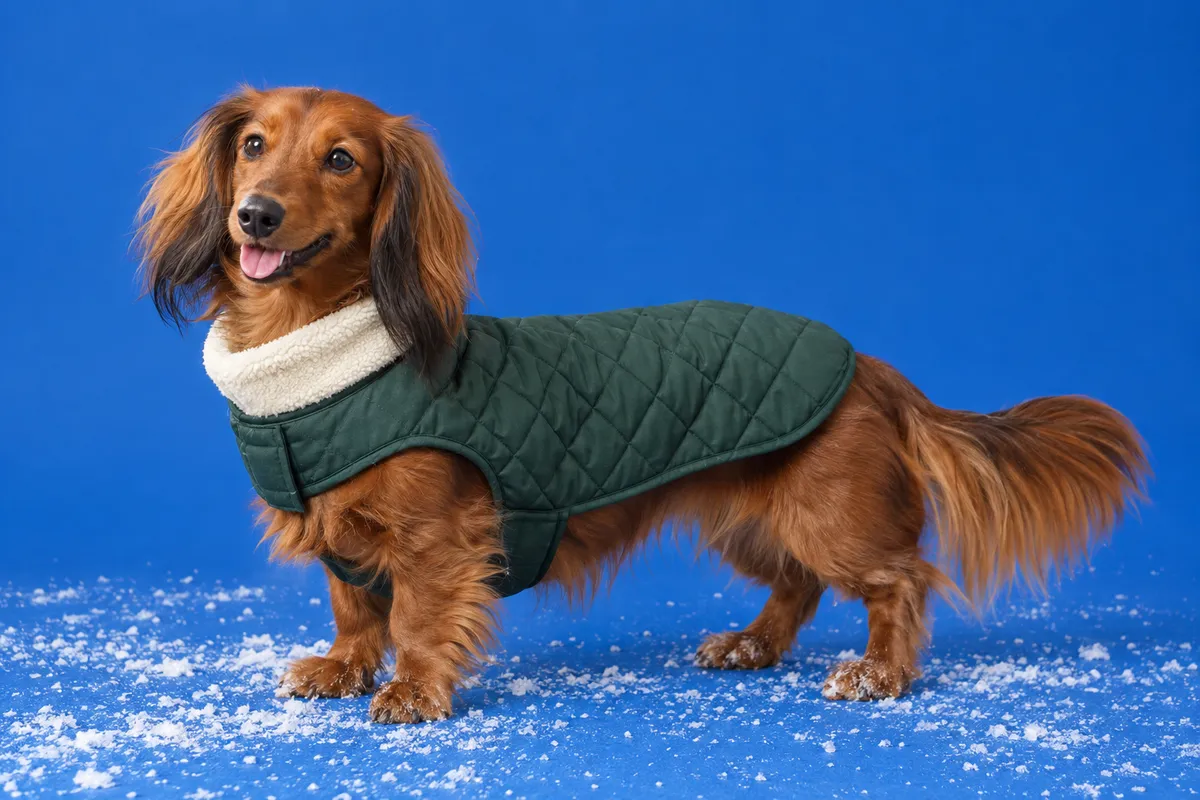
- Low-slung dogs such as Dachshunds and French Bulldogs do best in a coat that covers the chest and belly.
- A raincoat keeps fur dry but adds little warmth, so wear it over a fleece on cold, wet days.
- Small, slim and short-coated dogs usually welcome a coat; thick double-coated breeds often do not.
Short answer: choose a dog winter coat by fit first, fabric second and coverage third. Measure the chest, pick a shell that suits your weather, then make sure the coat covers the parts of your dog closest to the cold ground.
Pet parents are already thinking about winter. In the United States, searches for dog winter coats reached their 90-day high on September 26, 2026, and related searches such as dog coats and dog sweaters are climbing fast. Small dog coats, winter boots and waterproof coats lead the searches that go with them, and this guide covers all three.
Does your dog need a winter coat?
A small body loses warmth faster than a big one, and a short, single-layer coat traps far less air than a thick double coat. Toy breeds, Whippets, Greyhounds, Dachshunds, French Bulldogs, Boxers and slim, short-haired mixes tend to welcome a coat. Puppies and older dogs may feel the chill sooner; ask your vet what suits yours.
Siberian Huskies, Alaskan Malamutes and Bernese Mountain Dogs come with their own insulation, and a padded coat can leave them too warm.
Whatever the breed, watch your dog on a cold walk for:
- Shivering or trembling
- Lifting paws off the ground
- Slowing down or turning for home
- A hunched back and tucked tail
If you see these, head inside and warm up together.
How to measure your dog for a coat
Use a soft tape while your dog stands square. Chest girth sets the size on most charts; back length sets the coverage.
- Chest girth: around the widest part of the ribcage, just behind the front legs, with room for two fingers.
- Neck girth: around the neck where a collar sits.
- Back length: from the base of the neck to the base of the tail.
- Weight: a cross-check, since many charts for big dogs list a weight range.
Sizing is not shared between makers, so read each coat's own chart. If your dog falls between sizes, follow that chart's advice: some stretchy pullovers say to size down, some padded coats say to size up. If chest and length point to different sizes, go with the chest and use adjustable straps to take up the difference.
Fabric: shell, fill and lining
A winter coat works in three layers. A nylon or polyester shell with a waterproof finish blocks wind and sheds snow. Polyester fill, held in place by quilting, traps warm air. A fleece or sherpa lining sits soft against the fur. A sweater is a single layer: lovely on dry days, but wind passes through a knit and wet snow soaks in.
| Fabric | Does well | Watch for | Best for |
|---|---|---|---|
| Waterproof nylon or polyester shell | Blocks wind, sheds snow and rain | Less stretch | Snowy, windy walks |
| Quilted polyester fill | Traps warm air, stays light | Bulky on tiny dogs | The coldest days |
| Polyester fleece | Soft, light, quick to dry | Wind passes through | Dry cold and layering |
| Sherpa or plush lining | Soft, cozy warmth next to the fur | Slower to dry | Short-coated dogs |
| Acrylic knit or cotton hoodie | Cozy and easy to pull on | Holds wet snow | Indoors and mild days |
Warm coats with a weatherproof shell
Wind-resistant outers over fleece, sherpa or padded linings for snowy walks.


Two coats in one
A reversible coat with a quilted, waterproof side and a soft plaid side, plus a tall collar. Its chart runs from XS to 3XL by chest, neck and back length.
- Quilted side out when it is wet
- Plaid side out on dry, chilly days
Coverage: back, chest and belly
Coverage is where coats differ most. A cape covers the back and sides with one strap underneath. A wrap coat adds a chest panel and belly band. A zip-on puffer closes around the whole chest like a little sleeping bag.
Match it to your dog's shape. Dachshunds, Corgis, Basset Hounds and French Bulldogs carry their bellies close to the snow, so a full belly panel matters most for them. Lean sighthounds need extra back length and an adjustable belly strap.
| Coat style | Covers | Getting it on | Best for |
|---|---|---|---|
| Cape with chest strap | Back and sides | Over the head, fasten underneath | Quick walks |
| Wrap coat with belly band | Back, sides, chest, part of belly | Hook and loop at neck and belly | Most small and medium dogs |
| Zip-on puffer | Back, chest, belly and neck | Head and legs through, zip along the back | Low-riders, coldest days |
| Pullover sweater | Body and neck | Over the head, legs through | Layering, indoors |
Padded coats that wrap the chest and belly
Fleece-lined and padded: one zips along the back, the other snaps under the belly.


For big dogs in all weather
A quilted, fleece-lined jacket for dogs from 35 to 85 lbs. Your dog steps in, it zips up along the back and wraps the chest and belly, and a built-in harness takes the leash.
- Windproof, water-resistant outer
- Reflective band at the collar
Sweaters and fleece: the warm layer
A close-fitting fleece or knit keeps a small or short-haired dog cozy on drafty floors and dry walks, and makes the ideal mid-layer under a rain shell. Fleece vests pull on over the head, often with a leash opening; turtlenecks cover the neck.
Fleece vests, sweaters and hoodies
Soft layers for dry days, indoors and under a shell.


A fleece layer in every size
A stretch fleece vest that pulls on with no straps. The range runs to a 6XL that its maker says fits dogs of 100 lbs and up, so big dogs get the same easy layer.
- Stretch suits unusual body shapes
- Made for all-day wear
Rain, slush and dark evenings
Many dogs do well in a raincoat. Most are a light shell that keeps fur dry and floors cleaner but adds little warmth, so layer one over fleece when it is cold. Look for a hood that leaves the view clear, a leash opening and a coat that folds into its own pouch.
Winter also means walking in the dark. Many of the coats here carry reflective strips, and a fluorescent orange vest adds more. Browse more dog raincoats if wet weather is your main worry.
Rain shells and high-visibility layers
Light shells to pull over a warm layer, plus a blaze orange vest.


A shell made for layering
A waterproof, windproof jacket with no insulation, a fold-up storm collar and a cut that reaches over the thighs. Light enough on its own for mild, wet days, and made to go over an insulated layer when it turns cold.
- Fold-up storm collar
- Extra coverage over the hindquarters
Boots for snow, slush and sidewalk salt
Among the searches that go with winter coats, dog winter boots come second only to small dog coats. Boots stop snow balling between the toes and keep slush, grit and de-icing salt off paw pads. Look for a treaded rubber sole, wide hook-and-loop straps and reflective trim. A lined neoprene boot adds warmth; a rugged waterproof boot suits wet trails.
To size them, stand your dog on paper, mark both sides of the widest point of a paw and measure across. Measure a front and a back paw.
Winter boots with grippy soles
Treaded soles and reflective trim on every pair.


For snowy sidewalks
Neoprene boots with a warm lining, a nonslip rubber sole with a wavy tread and reflective stripes. The flexible neoprene fits a range of paw shapes.
- Warm lining for cold mornings
Your winter coat checklist
- Chest, neck and back measured against that coat's chart
- Waterproof shell for snow, fleece for dry cold
- A belly panel for low-riders
- A leash opening that lines up with your harness
- Closures your dog is happy with
- Reflective trim for short winter days
Ready to bundle up? Browse dog coats and jackets, sweaters and hoodies and boots and paw protection. Planning a costume this month? Here are our comfy dog Halloween costume picks.
Questions people ask
How cold is too cold for a dog?
No single number fits every dog. Size, coat, age, wind and wet all change how fast a dog gets chilly, and small, short-coated, very young and older dogs feel it first. Shorten walks on bitter days, watch for signs of cold and ask your vet what suits your dog.
How can you tell if a dog is cold?
Look for shivering, lifted paws, slowing down, a hunched back with a tucked tail, or leaning in and looking for shelter. Indoors, a chilly dog may curl up tight or burrow under blankets. Warm up inside, and ask your vet if it happens often.
Should dogs wear rain coats?
Many dogs are happier and cleaner in one, especially short-coated dogs and long-haired dogs that collect mud. A raincoat keeps fur dry rather than adding warmth, so layer it over fleece on cold, wet days. Skip the hood if your dog dislikes it.
What size dog coat should I buy?
Buy by chest girth, measured around the widest part of the ribcage behind the front legs, then check back length against that coat's chart. You should fit two fingers under the collar and chest strap.
About the numbers
- Google Trends, United States, past 90 days, read 2026-10-06: dog winter coat searches peaked on Sep 26, 2026; rising related searches: dog sweaters (Breakout), dog coats (+200%), dog coats for winter (+160%), best winter dog coat (+150%); top related searches: small dog winter coat (23), dog winter boots (17), dog winter coat waterproof (15)