How to Measure a Dog for a Sweater: Back, Chest, Neck and Fit
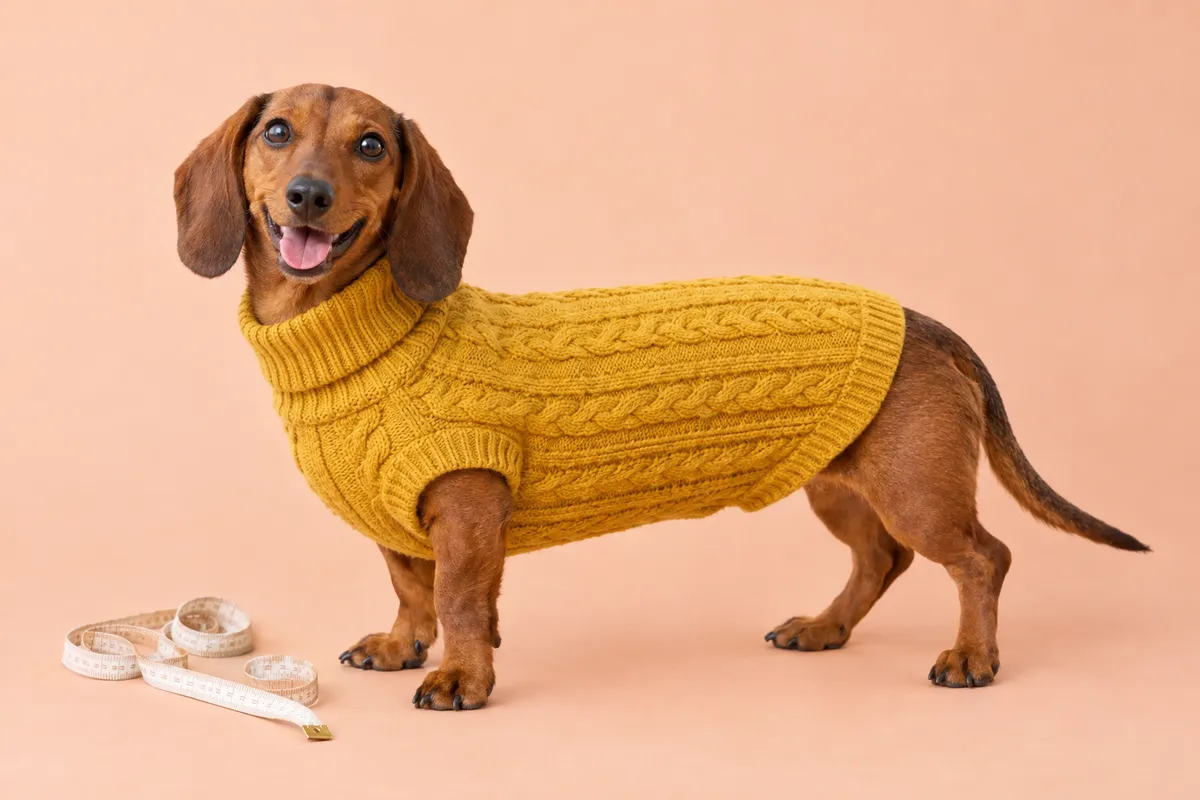
Measure the back from collar base to tail base, the chest at its widest point behind the front legs, and the neck. Chest girth usually decides the size; check each listing's own chart.
In short
- Take three measurements with a soft tape: back length from the base of the collar to the base of the tail, chest girth around the widest part of the ribcage just behind the front legs, and neck girth where the collar sits.
- Chest girth decides the size in almost every chart, because a sweater that is tight around the ribs cannot be stretched into fitting.
- Every maker uses its own size chart, so a dog who is a Small in one sweater can be a Medium in another; read the chart on each listing.
- Between two sizes, go up for thick knits and deep chests, and follow the listing's advice for stretchy fabrics, which often suggest sizing down.
- Wash a dog sweater the way its care label says, usually cool and gentle, and dry it flat so it keeps its shape.
Hello, lovely. If you have ever pulled a brand new sweater over your dog's head only to find it stops at the ribs, you already know the secret: dog sweater size is about the chest first. Three quick measurements, a few minutes and a soft tape are all it takes to get it right the first time.
This guide is all about measuring and choosing knitwear. For heavier outerwear, see our guide to dog winter coats, and for paws, do dogs need boots in winter?.
The three measurements that matter
Use a soft fabric tape, the kind used for sewing, and measure while your dog is standing square on all four paws. Sitting or lying down changes the shape of the chest and back. A helper with a treat helps.
- Back length. Start at the base of the neck, where the collar naturally rests, and run the tape along the spine to the base of the tail. Do not include the tail itself.
- Chest girth. Wrap the tape around the widest part of the ribcage, usually just behind the front legs. Keep it snug but flat, not pulled tight.
- Neck girth. Measure around the neck where the collar sits. For a turtleneck, this tells you whether the collar will roll comfortably or squeeze.
Which measurement decides the size?
Chest girth decides. A sweater that is a little long or a little short still works; one that will not close around the ribs does not. Read the chart for the chest first, then check the back length and neck against the size it points to.
Back length is the second check. A sweater should end just before the tail so it does not get in the way when your dog goes to the bathroom. On boys, many pullovers are cut shorter underneath for the same reason. The neck matters most on turtlenecks and on breeds with slim heads and thick necks.
| Measurement | Where | What it decides |
|---|---|---|
| Chest girth | Widest point behind the front legs | The size itself |
| Back length | Collar base to tail base | Whether it covers the back without bunching |
| Neck girth | Where the collar sits | Comfort of a turtleneck or crew neck |
Reading a size chart when your dog is between sizes
One of the most common questions is simply "Is my dog L or XL?" The honest answer is that it depends on the chart in front of you. Sizes are not shared across makers, and several listings say so plainly: a dog who wears a Small in one sweater may need a Medium in the next. Always compare your numbers with the chart on the listing, not with the size your dog wore last year.
- Thick cable knits have little give. If the chest sits between two sizes, choose the larger one.
- Stretchy velvet and jersey pullovers hug the body. Their listings often advise sizing down between sizes; follow what the listing says.
- Fleece vests stretch a little across the chest but not much along the back, so check length carefully.
- Long backs and deep chests rarely match one size on both numbers. Let the chest decide, then look for a style made for that shape.
Classic knit pullovers
Cable and rib knits with a snug collar. Check each chart for chest girth first.


Breed shapes that need a second look
Some dogs are built in ways that standard charts never quite fit. A style made for their shape helps.
Deep-chested sighthounds
Greyhounds, Italian Greyhounds and Whippets have a deep chest and a tiny waist. A regular sweater that fits the chest hangs loose around the tummy and slides around. Look for sighthound cuts: long, slim bodies, a high turtleneck for the long neck, and sometimes legs, like a cozy onesie.
Barrel-chested bulldogs and pit mixes
French Bulldogs, English Bulldogs and Pit Bull types have a wide chest and a short back. Their chest number often points to a size that is far too long. Choose a stretchy fabric or a knit with plenty of room through the ribs, and check the back length so it does not bunch at the tail.
Long dachshunds and corgis
Long and low dogs have the opposite problem: the chest fits a small size while the back needs a bigger one. Some sweaters are cut specifically for long backs. A stretchy pullover also helps, because it follows the body instead of riding up.
Made for special shapes
Sighthound onesies, long-back pullovers and roomy knits for big chests.


Sweater styles, from pullovers to fleece with a leash hole
Once you know the size, pick the style that suits your dog's day. Here is how the common ones compare.
| Style | How it goes on | Good for |
|---|---|---|
| Pullover | Over the head, front legs through holes | Everyday wear, most dogs |
| Turtleneck | Over the head, collar rolls down | Slim, long necks and cool mornings |
| Cardigan with buttons | Wraps around and buttons up | Dogs who dislike things over the head |
| Hoodie | Over the head, with a hood and often a pocket | Casual walks and looking adorable |
| Fleece vest with leash hole | Over the head, harness or collar ring through the back | Walks with a harness underneath |
| Pajamas or onesie | Step in, covers legs | Lounging at home, short-coated dogs |
A leash hole or leash ring lets you clip on without lifting the sweater, which is handy on cold walks. If your dog wears a harness, put the harness on first and the sweater over it, then pull the ring through. You can browse every style in sweaters and hoodies.
Turtlenecks, fleece and hoodies
Stretchy turtlenecks, fleece vests that work with a leash and soft hoodies.


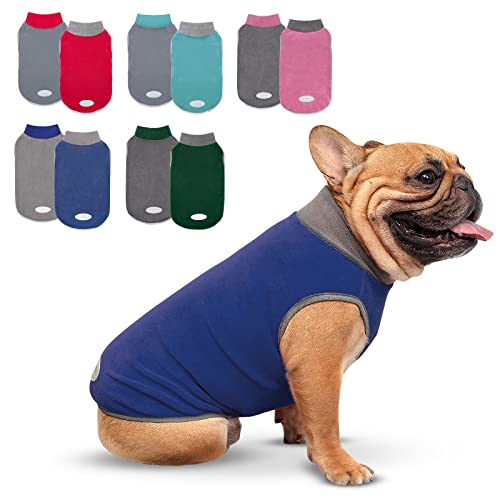


An easy first sweater
A simple fleece pullover is a gentle way to start: light, soft and easy to slip on, with a ring on the back for the leash.
- Pulls on over the head with a wide opening
- Leash ring on the back
- Comes in sizes from extra small up
Knit, fleece or wool blend?
Knits (often acrylic) look classic and come in cable and rib patterns. They are warm and cozy, with a little stretch at the cuffs and collar. Fleece is light, soft and dries quickly, which makes it a good everyday layer. Wool blends feel the most like a person's sweater and hold warmth well, but they need the gentlest washing.
Whatever you choose, look at the photos for seams under the front legs and around the neck. Smooth, flat seams are kinder on a short coat. If your dog's skin seems bothered by a fabric, take the sweater off and ask your vet.
Washing so it does not shrink
Follow the care label first. Most dog sweaters do best with a cool, gentle wash and air drying. Heat is what shrinks and felts knits, especially wool blends.
- Turn the sweater inside out and wash it in a mesh laundry bag.
- Use cool water and a mild detergent; skip fabric softener if the label says so.
- Press water out in a towel instead of wringing.
- Dry flat on a towel and reshape it while damp. Keep wool blends out of the dryer.
Introducing a sweater gently
Some dogs wear a sweater as if they were born in one; others freeze like a statue. Go slowly. Let your dog sniff the sweater, then lay it over their back for a moment with a treat. Next time, slip it over the head and praise, then take it off. Build up to a short walk around the house, then a real walk.
Watch how your dog moves. They should walk, sit and lie down normally, with no rubbing under the front legs. Take the sweater off indoors once your dog is warm, and never leave a dog unattended in clothing. If your dog seems unhappy in clothes, that is fine; ask your vet how to keep them comfortable in cold weather instead.
Cozy pajamas for lounging
Soft step-in sets for home, for dogs who already love their sweaters.


Questions people ask
How do you know what size dog sweater to get?
Measure your dog's chest girth at the widest point behind the front legs, the back from collar base to tail base, and the neck. Match the chest first to the chart on the listing, then check the back length. Each maker has its own chart, so always read the one in front of you.
Is my dog L or XL?
It depends on the size chart, not on your dog's breed or last sweater. Compare your chest measurement with that listing's chart. If it falls between the two, choose XL for a thick knit and follow the listing's own advice for stretchy fabrics.
How do you know what size clothes your dog wears?
Take three measurements with a soft tape while your dog stands: back length, chest girth and neck girth. Keep them written down and compare them with every chart, since sizes change from one maker to another.
Should a dog sweater be tight or loose?
Snug but not tight. You should be able to slide two fingers flat under the sweater at the chest and neck, and your dog should walk, sit and lie down easily without rubbing under the front legs.
Can a dog wear a sweater over a harness?
Yes, if the sweater has a leash hole or ring. Put the harness on first, then the sweater, and pull the ring through the hole so the leash clips on without lifting the sweater.
About the numbers
- Google search, people also ask, United States, read 2026-10-08: Shoppers ask how to know what size dog sweater to get, whether their dog is L or XL, and how to know what size clothes their dog wears
- Size guidance printed on the sweaters' own listings in this post: Several listings note that each maker uses its own size chart and that stretchy styles can be sized down between sizes