Do Dogs Need Boots in Winter? Types, Fit and When to Skip Them
Many dogs walk happily through winter without boots. Boots earn their place on salted sidewalks, icy paths, clumping snow and long trail days. Here is how to choose, measure and fit them.
In short
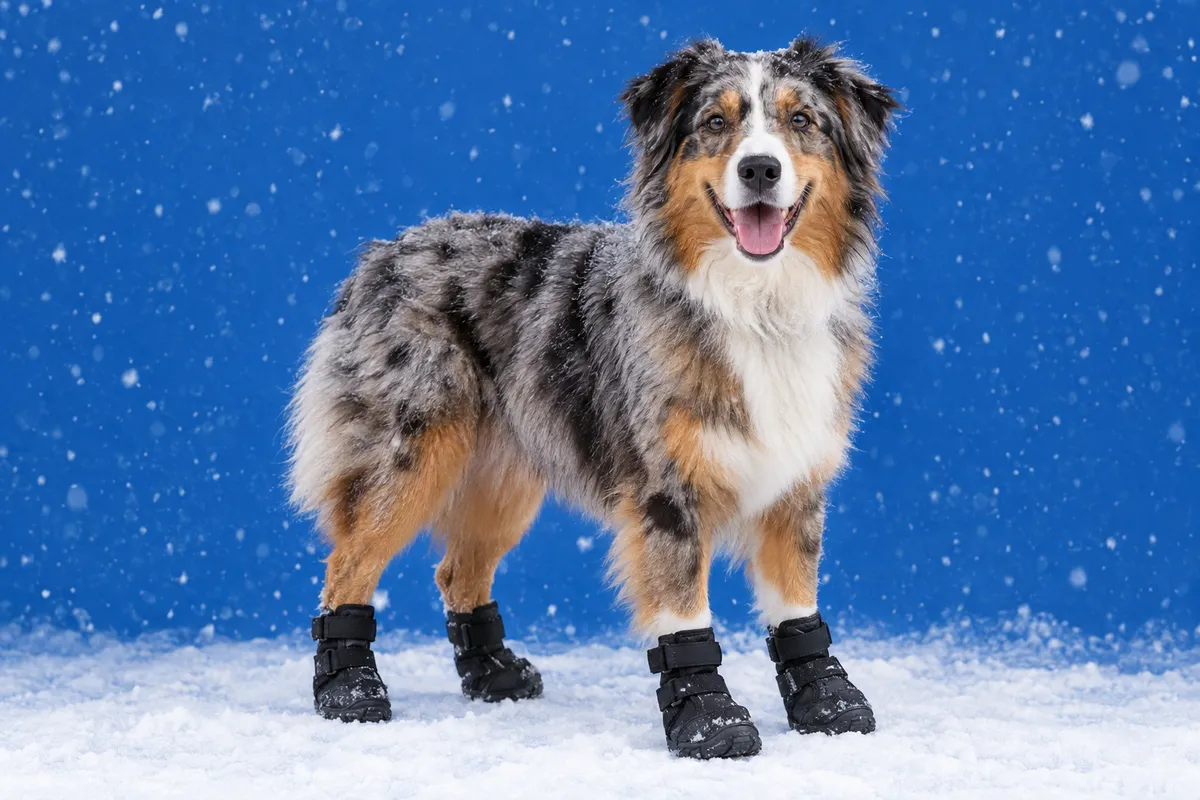
- Not every dog needs winter boots: they help most on salted or gritty sidewalks, ice, snow that balls up between the toes and long days on the trail.
- There is no single temperature at which every dog needs boots, so ask your vet about your own dog's coat, size, age and paws.
- The four main styles are thin rubber balloon booties, soft-sole fleece-lined boots, rugged trail boots with thick soles, and socks with grips for indoors or light use.
- Measure each paw while your dog stands on paper with its full weight down, then match width first and length second to the maker's own size chart.
- If boots are not for your dog, a quick paw wipe or rinse after every walk, a dry towel and a coat of paw wax are the simple alternatives.
Short answer: some dogs need winter boots and many do not. A dog trotting around a quiet, snowy yard often does fine with bare paws. A dog walking city sidewalks scattered with de-icing salt, slipping on icy steps or coming home with ice balls packed between its toes is a different story. This guide walks through when boots really help, the four styles to choose from, how to measure paws properly and how to help your dog actually keep them on.
When winter boots help (and when they do not)
Boots earn their place when the ground itself is the problem, so think about where your dog walks most.
- Salted and treated sidewalks. De-icing salt and grit stick to paw pads and get licked off at home. A boot keeps that mix on the boot, not on the paw.
- Ice. Smooth ice on steps, driveways and parking lots is slippery for paws too. A boot with a grippy, textured sole gives more traction.
- Snow that clumps. Dogs with fluffy, furry feet often collect hard little snowballs between their toes. A boot simply stops the snow from getting in.
- Long trail days. Crusty snow, frozen ground and sharp rocks add up over many miles. Rugged trail boots protect pads on the longest outings.
Boots matter less for a short potty break on untreated grass, a backyard romp in soft snow or a dog that already has thick fur between its pads and no fuss about the cold. If your dog lifts its paws, limps, licks its feet a lot after walks, or the pads look dry or sore, stop and ask your vet rather than guessing.
The four types of dog boots, side by side
Winter paw wear falls into four families, each trading off grip, warmth and ease of use.
| Type | What it is | Best for | Watch out for |
|---|---|---|---|
| Rubber balloon booties | Thin, stretchy rubber that rolls over the paw like a balloon, sold in multipacks | Salted city sidewalks, slush and short walks | Thin soles wear out on rough ground; rolling them on takes a little practice |
| Soft-sole fleece boots | Waterproof outer, plush or fleece lining, drawstring or strap at the top | Small and short-haired dogs on snowy walks | Softer soles give less protection on rocks and ice |
| Rugged trail boots | Thick, flexible rubber outsole, wide hook-and-loop straps, often reflective trim | Hiking, ice, crusty snow and long days out | Stiffer and heavier, so most dogs need longer to get used to them |
| Socks with grips | Knit socks with rubber dots on the bottom and an adjustable strap | Indoor traction on smooth floors and very light outdoor use | Not waterproof, so not for wet snow or slush |
Rubber balloon booties
These look like small rubber balloons and fit closely, so many dogs feel the ground through them and walk almost normally. They keep salty slush off the paw and come in packs, because they are made to be replaced as they wear thin. Size is chosen by paw width, so measure before you pick a pack.
Rubber booties for salty sidewalks
Thin, close-fitting and sold in sizes by paw width.


Soft-sole fleece and plush boots
These are the cozy option: a water-resistant shell with a soft, furry lining and a drawstring or strap to close the top. They suit small dogs and short coats on snowy neighborhood walks, especially paired with a well-fitted coat (see how to choose a dog winter coat).
Warm lined boots for small and medium dogs
Plush linings and drawstring or strap closures.


Rugged trail boots
Trail boots have a thick rubber sole with deep tread, two wide straps and a firmer shape that holds up to rocks, ice and frozen trails. They are the ones to pack for winter hikes, alongside the rest of the kit in our hiking with a dog checklist. Many have reflective strips, handy on dark winter evenings with light-up collars and reflective gear.

For dogs who hike in every season
A low-cut trail boot with a lugged rubber outsole and a breathable upper, built for dogs who hike, run and explore with their people.
- Grippy, flexible rubber sole for rocks and icy paths
- Mesh upper with a secure strap
- Sold in pairs, so you can buy a spare for the paw that wears fastest
Rugged winter boots with grippy soles
Thick soles, wide straps and reflective trim.


Socks with grips
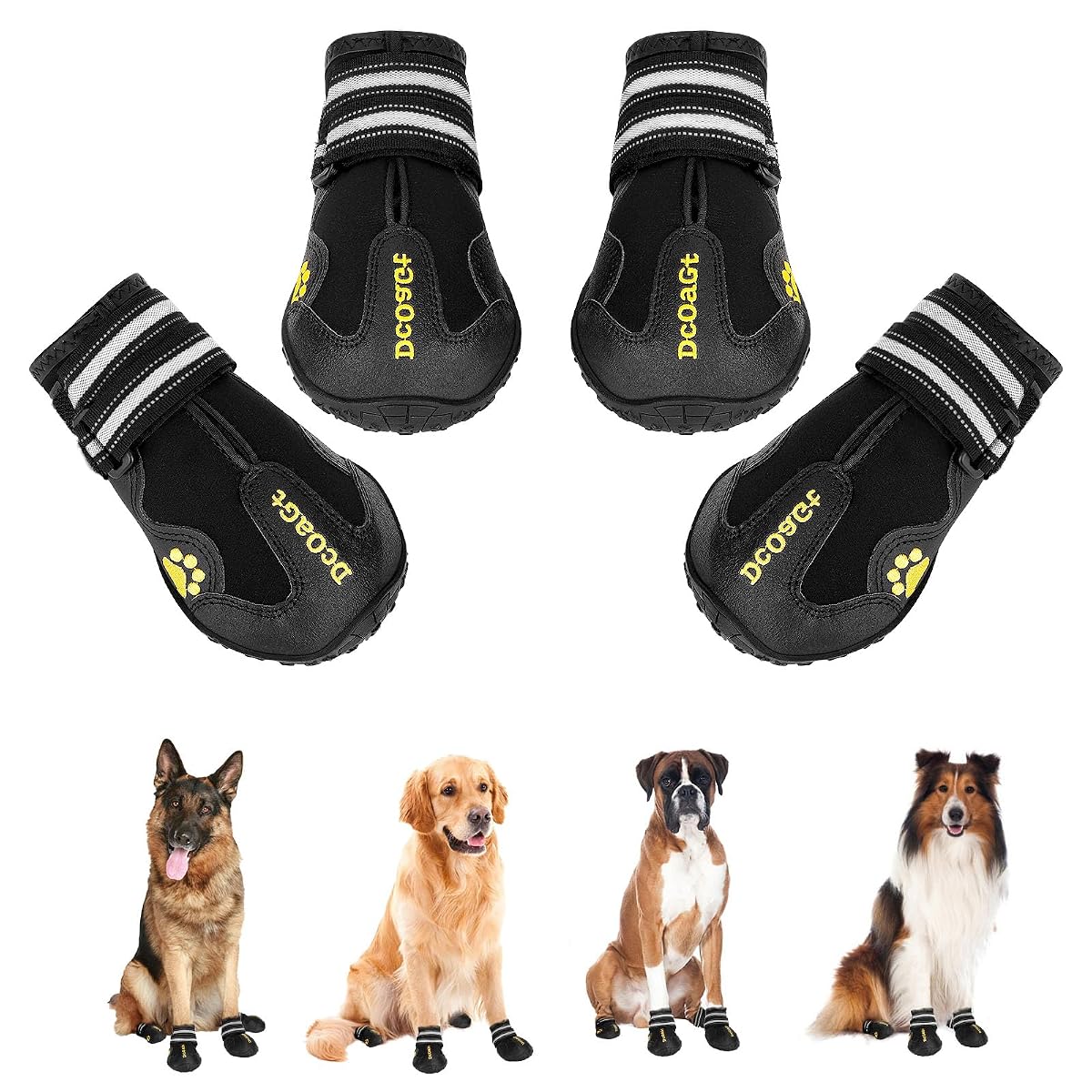
Grip socks are mostly an indoor tool. Rubber dots on the bottom help dogs stay steady on hardwood and tile, and the soft knit is a gentle way to get a dog used to something on its feet before you try real boots. They are not waterproof, so keep them for dry days and floors.
Grip socks for floors and boot practice
Adjustable straps help them stay up.


How to measure your dog's paws
The most common reason boots fly off in the snow is the wrong size. Measure each time you buy, and measure the front paws, since front paws are often a little bigger than back paws.
- Place a sheet of paper on a hard floor and have your dog stand on it, so the paw spreads under its full weight. Lift the opposite paw gently if your dog tends to shift.
- Mark the widest point on each side of the paw and the tip of the longest nail to the back of the main pad.
- Measure width first, side to side, then length, back to front.
- Compare both to the maker's own size chart. Width matters most for a secure fit. If your dog falls between sizes, follow the maker's advice on going up or down.
- Try the boots indoors before a walk: a good fit is snug but lets the toes move, and you can slip a finger under the strap.
Getting your dog used to boots, gently
Almost every dog does the famous high-stepping boot dance the first time. That is normal. Go slowly and keep it fun.
- Let your dog sniff the boots, with a treat nearby, and leave them out for a day or two.
- Put on one boot for a few seconds, praise, treat and take it off. Repeat over a few sessions.
- Move up to two boots, then all four, for a few minutes of indoor play.
- Head out for a short walk in boots, keeping your dog moving so it focuses on the walk instead of its feet.
- Build up the time over several outings, and stay close while boots are new.
How to keep dog boots on
A few small habits make a big difference.
- Two straps beat one. Boots with a strap above and below the wrist joint grip better than a single loose band.
- Mind the dewclaw. On front paws, the strap should sit snugly but never pinch the dewclaw. If it rubs, try a style with a higher cuff or softer strap.
- Tighten after a minute. Straps settle once your dog walks around, so check and snug them up again before you set off.
- Check after deep snow. Snow can work its way in at the top, so a quick look halfway through a long walk saves a lost boot.
What to use instead of dog booties
If boots are not right for your dog, a simple after-walk routine keeps salt, grit and ice off the paws and out of your home.
- Rinse or wipe after every walk. A cup-style paw cleaner with a splash of water, or a grooming wipe, takes salt and grime off in seconds.
- Dry thoroughly. A microfiber towel by the door dries between toes and pads before your dog heads for the couch.
- Paw wax before you go. A thin layer of paw wax on the pads before a walk is a popular way to help snow and slush slide off. Check the label and ask your vet if your dog's paws are dry or cracked.
- Trim the fur between pads. Keeping that fur neat means fewer ice balls. A groomer can show you how.
Paw wax for winter walks
Applied to the pads before heading out.


Rinse, wipe and dry by the door
Paw cleaners, wipes, towels and a tray for wet boots.


Browse every style in our active dog shop, find towels and wipes in grooming, or search all dog boots.
Questions people ask
At what temperature do dogs need boots?
There is no one temperature that fits every dog. Size, coat, age, fitness and the ground all change how a dog copes with cold. Ask your vet about your own dog, and watch for lifted paws, limping or a lot of paw licking on walks.
Do dogs actually need snow boots?
Not always. Many dogs are comfortable in snow without boots, especially on short walks over untreated ground. Boots help most on salted sidewalks, ice, snow that clumps between the toes and long trail days.
What can I use instead of dog booties?
Wipe or rinse paws after every walk to remove salt and grit, dry them well with a towel, and apply paw wax to the pads before heading out. Keeping the fur between the pads trimmed also means fewer ice balls.
How do I stop my dog's boots from falling off?
Measure paws while your dog stands with its full weight down and choose by width first. Pick boots with two straps, pull the paw fully into the boot before fastening, and tighten the straps again after a minute of walking.
Do dogs need snow jackets as well as boots?
Small, short-haired, young or older dogs often appreciate a coat on cold walks, while thick-coated breeds may not. Our guide to choosing a dog winter coat covers fit, fabric and coverage.
About the numbers
- Google search, people also ask, United States, read 2026-10-08: Shoppers ask at what temperature dogs need boots, what to use instead of dog booties and whether dogs actually need snow boots
- Google search, related searches, United States, read 2026-10-08: Related searches include dog boots for winter that stay on, how long dogs can walk in snow without shoes and whether dogs need snow jackets