How to Clean a Lick Mat, Snuffle Mat and Puzzle Feeder
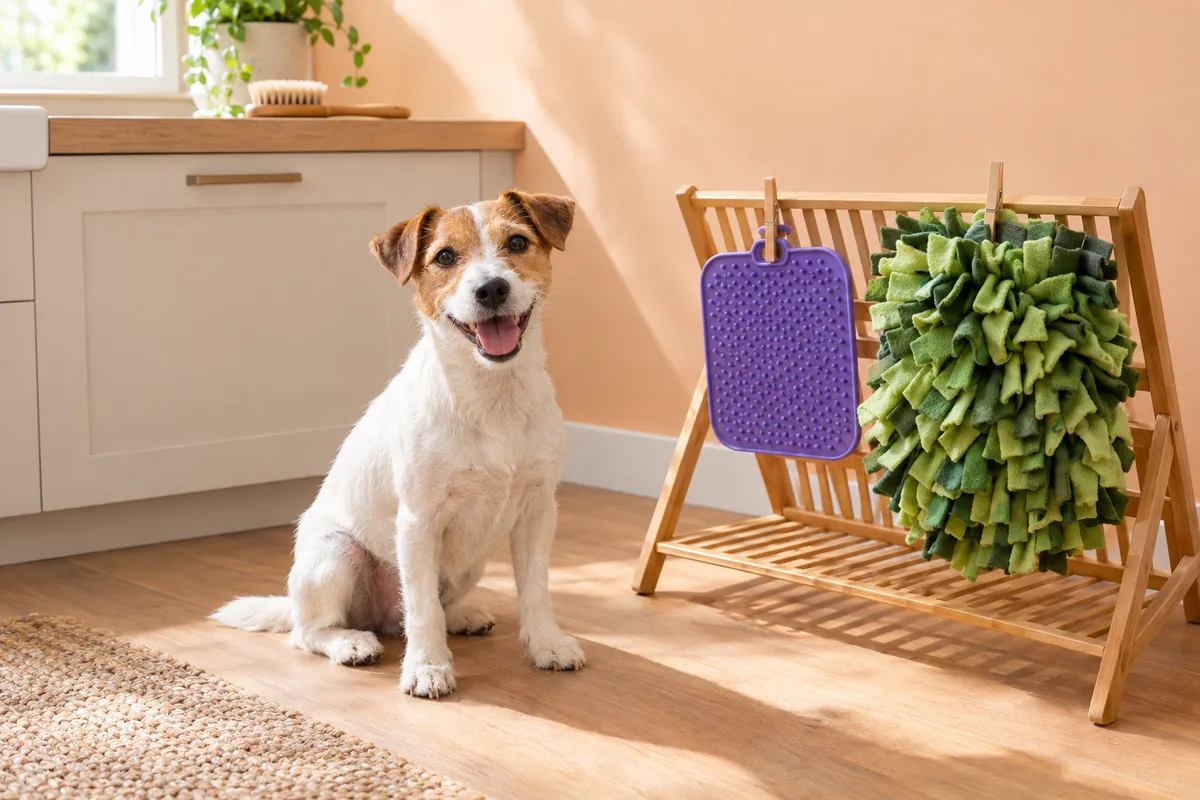
Rinse a lick mat right after use, scrub its grooves with a soft brush in warm soapy water, then let it dry fully. Snuffle mats get shaken out and washed gently; puzzles come apart and get hand washed.
In short
- Clean a lick mat after every use, ideally before the spread dries into the grooves.
- Many silicone lick mats can go on the top rack of a dishwasher, but rubber mats are usually hand wash only, so follow each item's own label.
- A fabric snuffle mat should be shaken out after each session and washed on a gentle cycle or by hand about once a week, more often after wet food.
- Plastic puzzle feeders come apart for cleaning: take out every slider and lid, wash the pieces in warm soapy water and dry them before putting the puzzle back together.
- Dry everything completely before storing it, because damp grooves and fleece are where smells and mildew start.
- Replace any mat or puzzle that is torn, cracked or missing chewed pieces.
How to clean a lick mat comes down to three steps: rinse it while the spread is still soft, scrub the grooves in warm soapy water with a soft brush, and let it dry all the way before it goes back in the drawer. Snuffle mats and puzzle feeders follow the same idea with a little more taking apart. This guide sorts it out by material, so you know what can go in the dishwasher, what wants a gentle hand wash and when it is time for a fresh one.
Not sure which enrichment tool does what? Our snuffle mat vs lick mat guide explains the difference, and how to clean dog toys by material covers plush, rope and chew toys.
Start with the label: each mat has its own care rules
The care label wins every time. Two lick mats can look alike and still need different care: one silicone mat may be marked top-rack dishwasher safe, while a natural rubber mat of the same shape may warp or fade in hot water. Check the box, the listing or the maker's care card before the first wash, and keep a photo of it on your phone if the packaging goes in the recycling.
| Material | Dishwasher? | Hand wash | Drying |
|---|---|---|---|
| Food-grade silicone lick mat | Often top rack, if the label says so | Warm soapy soak, soft brush in grooves | Air dry, textured side up |
| Rubber or TPE lick mat | Usually no; check the label | Warm soapy water, soft brush, no soaking for hours | Air dry away from heat |
| Stainless steel lick mat or bowl | Usually yes | Easy wipe and rinse | Towel or air dry |
| Fleece or felt snuffle mat | No | Shake out, then gentle cycle or hand wash | Hang or lay flat until fully dry |
| Silicone snuffle mat | Often, if labelled | Soak, then brush between the fronds | Air dry, fronds facing up |
| Plastic puzzle feeder | Some pieces, if labelled | Take apart, wash each piece | Dry every piece before reassembly |
| Cardboard puzzle box | No | Wipe only, spot clean | Air dry; replace if it gets soggy |
Silicone lick mats: the easiest to keep fresh
Silicone mats are the simplest to clean, because the surface is smooth and does not hold on to food once it is wet. Rinse the mat under warm water as soon as the session ends. If the spread has dried, let the mat sit in warm soapy water for ten or fifteen minutes so it softens, then work a soft brush along every ridge and dimple. Rinse well so no soap is left in the grooves.
If the label says dishwasher safe, put it on the top rack, away from the heating element, and lay it flat so the textured side faces the spray. Skip abrasive scrubbers and scouring pads on any lick mat: they rough up the surface and give food more places to hide.
Silicone lick mats with simple care
Smooth, flexible mats that rinse clean; check each one's label before the dishwasher.


Rubber and TPE lick mats: hand wash, gently
Rubber lick mats need a gentler routine. Natural rubber and TPE (thermoplastic elastomer) can soften, warp or turn chalky with high heat, so most are hand wash only. Use warm, not hot, soapy water, a short soak, and a soft brush. Do not leave them soaking overnight, and keep them off radiators and sunny windowsills while they dry.
Thick, deep-patterned mats and bowl-shaped lick feeders hold more spread, so they need more time with the brush. A small bottle brush or an old soft toothbrush reaches into the deepest cups and nubs.
Rubber and TPE lick mats and lick bowls
Deeper textures that reward a little extra brushing.


The low-fuss option: a stainless steel lick mat
If scrubbing grooves is the part you dread, a stainless steel lick mat is worth a look. Steel does not hold smells the way softer materials can, and it wipes and rinses clean quickly.
- Smooth metal surface that rinses easily
- Nothing for a chewer to tear off
- Low, whisker-friendly shape
Fleece and felt snuffle mats: shake, wash, dry fully
A fabric snuffle mat needs a shake after every session and a proper wash about once a week. Take it outside, turn it over and give it a firm shake so crumbs fall out from between the strips. Then check the label: many fleece and felt mats can go through a washing machine on a gentle, cold cycle with a mild, unscented detergent; others ask for a hand wash in a sink. Skip fabric softener, which can leave a coating on the fleece.
Wash more often if your pet drools a lot, if you hide wet or soft food in it, or if it has been used outdoors. The most important step is drying: hang the mat or lay it flat somewhere with good airflow and wait until the base is dry right through, not just the top strips. A damp base under thick fleece is where musty smells start.
Fabric snuffle mats
Felt and fleece mats; most can be washed gently, so check each label.


Silicone snuffle mats are the in-between choice: they look like a snuffle mat but clean like a lick mat. Soak, brush between the fronds and dry with the fronds facing up. You can browse more in bowls and feeders or search for a snuffle mat.
Silicone snuffle mats
Snuffle-style fronds in a material that rinses clean.


Plastic puzzle feeders and slow feeders: take them apart
Puzzle feeders get clean only when they come apart. Lift out every slider, cone, lid and peg, and empty the base. Wash each piece in warm soapy water and use a small brush on the compartments and tracks, where crumbs and saliva collect. Rinse and let every piece dry before you put the puzzle back together, or water trapped under a slider will linger.
Some plastic puzzles allow the top rack of the dishwasher and some do not, so check the label. Cardboard cat puzzle boxes are wipe-only: brush out crumbs, spot clean with a barely damp cloth and let them air dry. If you need a refresher on choosing the right challenge, see dog puzzle toys by level.
Puzzle feeders with parts that lift out
Sliders, lids and drawers make cleaning easier when you remove them all.


Slow feeder bowls are washed like any food bowl, after each meal. Ceramic and stainless steel bowls are often dishwasher friendly; plastic and silicone ones depend on the label. Use a brush in the maze ridges, where kibble dust builds up.
Slow feeders in different materials
Plastic, ceramic, stainless steel and silicone, each with its own care label.


Brushes and tools that make it quicker
- A soft bristle brush or an old soft toothbrush for lick mat grooves and puzzle compartments.
- A small bottle brush for deep cups, lick bowls and the inside of treat-dispensing toys.
- A dedicated sponge kept only for pet dishes, without a scouring side.
- Mild dish soap, rinsed off thoroughly.
- A drying rack or clean towel so items dry with air around them.
When to replace a lick mat, snuffle mat or puzzle
Replace an enrichment item as soon as it is damaged, not when it is worn out completely. Check each one while you clean it, since that is when you handle every part anyway.
- Tears, bite marks or missing pieces on a lick mat or silicone mat.
- Loose, chewed or missing fleece strips on a snuffle mat, or a fraying base.
- Cracked plastic, broken sliders or lost pegs on a puzzle.
- A smell or dark spots that come back after a full wash and dry.
- Suction cups that have torn away from the mat.
Stay close while your pet uses any enrichment toy, and take it away if pieces start coming off. If your pet has swallowed part of a toy, ask your vet.
A simple weekly cleaning rhythm
- After every use: rinse lick mats and slow feeders, shake out snuffle mats, empty puzzles.
- Daily: wash lick mats and food bowls in warm soapy water, brush the grooves and air dry.
- Once a week: wash fabric snuffle mats, fully take apart and wash puzzle feeders, and check everything for damage.
- Once a month: look over the whole enrichment basket and retire anything torn, cracked or missing pieces.
Having two of the items you use most often helps: one is in play while the other dries completely. For more toys to rotate, browse squeak and puzzle toys.
Questions people ask
Can you put a lick mat in the dishwasher?
Many silicone lick mats are top-rack dishwasher safe, but not all, and many rubber mats are hand wash only. Check the label on your mat. If it allows the dishwasher, lay it flat on the top rack and let it air dry rather than using a heated dry setting.
How often should you clean a lick mat?
Clean it after every use. Spreads and soft food stay in the grooves and dry quickly, so rinsing and scrubbing straight away is the easiest way to keep it fresh.
How do you wash a snuffle mat?
Shake it out after each use, then wash it about once a week on a gentle, cold cycle or by hand, depending on its label. Use a mild detergent, skip fabric softener and let it dry completely, base included, before using it again.
How do I get dried peanut butter out of a lick mat?
Soak the mat in warm soapy water for ten to fifteen minutes so the spread softens. Then work a soft brush along the grooves and rinse well. Avoid scouring pads, which roughen the surface.
What if my lick mat has black spots or a smell?
Give it a full wash and let it dry completely. If the spots or smell come back, replace the mat, and next time make sure it dries fully before it is stored.
When should I throw away a snuffle mat?
Replace it when strips are chewed, loose or missing, when the base frays, or when a smell remains after washing and drying. Check it each time you wash it.
About the numbers
- Product care details from the listings on this store, read 2026-10-29: silicone lick mats marked food-grade and top-rack dishwasher safe; felt, fleece and silicone snuffle mats; puzzle feeders with removable sliders
- Pet care guides on cleaning lick mats and snuffle mats, read 2026-10-29: top rack for silicone, hand wash for rubber, soak then brush grooves, gentle cold wash and full drying for fabric snuffle mats