How to Keep a Dog Warm Indoors in Winter: A Cozy Daily Routine
Keep a dog warm indoors by moving the bed away from drafts, lifting it off cold floors, adding a blanket or self-warming mat, and drying fur well after snowy walks.
In short
- The easiest way to keep a dog warm indoors is to place the bed away from doors, windows and vents, where cold air moves across the floor.
- A raised bed or a thick bolster bed keeps a dog off a cold floor, and a blanket on top gives them something to burrow into.
- A self-warming mat needs no plug: a layer inside reflects the dog's own body heat back to them.
- Short-coated, small, young and older dogs often enjoy a sweater or soft pajamas indoors on chilly days.
- After a snowy or wet walk, towel the coat, belly and paws dry before your dog settles down for a nap.
Hello, lovely. Winter is cozy season, and your dog wants in on it. The good news: keeping a dog warm indoors is mostly about small habits, not big purchases. Put the bed in the right spot, lift it off a cold floor, add a layer to snuggle into, and dry your pup well after every chilly walk. Here is a simple routine, morning to night, that keeps the whole day warm.
Every dog is different. A fluffy husky and a sleek whippet feel the cold in very different ways, so watch your own dog and adjust. If anything about how your dog seems in the cold worries you, ask your vet.
First, find the warmest spot for the bed
The best place for a winter dog bed is an inside wall, away from the front door, drafty windows and floor vents that blow cold air. Cold air sinks and slides along the floor, so a bed by a patio door can feel chilly even when the room feels fine to you.
- Kneel down where the bed sits and hold your hand near the floor. If you feel a breeze, move the bed a few feet.
- Keep the bed out of the path people walk through, so your dog can rest without being stepped around.
- A corner with two walls feels snug and sheltered, which many dogs love.
- Near you is good too: dogs like to nap where their people are.
Morning: lift your dog off the cold floor
A bed that sits up off the floor, or one with a thick base, stops the cold from tiles, hardwood and concrete reaching your dog. You have two easy ways to do it.
Bolster beds have raised, cushioned sides around a padded base. Dogs who curl up tuck into the walls and rest their chin on the rim, which keeps their body heat close. Look at bolster and sofa-style dog beds with a removable, washable cover, since winter means muddy paws.
Bolster and donut beds to curl into
Raised sides hold warmth around a curled-up dog.


Elevated cot beds lift the whole sleeping surface several inches up on a frame. They are usually sold for airflow in summer, but in winter that gap also keeps the dog off a cold floor. Lay a fleece blanket on top and the cot turns into a warm hammock.
Raised cot beds to layer with a blanket
Off the floor on a sturdy frame; add a fleece on top for winter.


| Bed type | How it keeps a dog warm | Best for |
|---|---|---|
| Bolster or donut bed | Raised sides wrap around a curled dog and hold body heat | Dogs who sleep curled in a ball |
| Elevated cot | Lifts the dog off a cold floor; add a blanket on top | Stretch-out sleepers, tile or concrete floors |
| Self-warming mat | A reflective layer sends the dog's own heat back to them | Inside a crate, on a sofa, on top of another bed |
| Thick crate pad | Padding between the dog and the crate tray | Dogs who sleep in a crate |
Still deciding on shape? Our side-by-side guide to bolster, mat, cot, cave and pillow beds walks through each one.
Midday: blankets and self-warming mats
A soft blanket is the simplest winter upgrade. Many dogs love to dig, nest and burrow, so give them something to rearrange. Sherpa and fleece feel warm and wash easily; a waterproof layer underneath protects the sofa from damp paws.
Fleece and sherpa blankets for nesting
Machine washable, easy to fold into a bed or drape over the sofa.


A self-warming mat goes a step further without any plug. Inside the padding sits a thin layer that reflects the dog's own body heat back toward them, so the mat feels warm a few minutes after they lie down. It is quiet, light and easy to move from room to room or slip into a crate.

A self-warming crate pad for bigger dogs
A plush, ribbed pad that fits inside a crate or on top of a flat bed, with a reflective layer that bounces body heat back. No cord, nothing to switch on.
- Sized for larger crates
- Soft, ridged plush top for nesting
- Works on a floor, a sofa or inside a crate
More self-warming mats
No electricity needed; they hold onto your dog's own warmth.


If you want a pad that plugs in and makes its own heat, read our guide to choosing a heated dog bed and using it safely before you buy.
Sweaters and pajamas for dogs who feel the chill
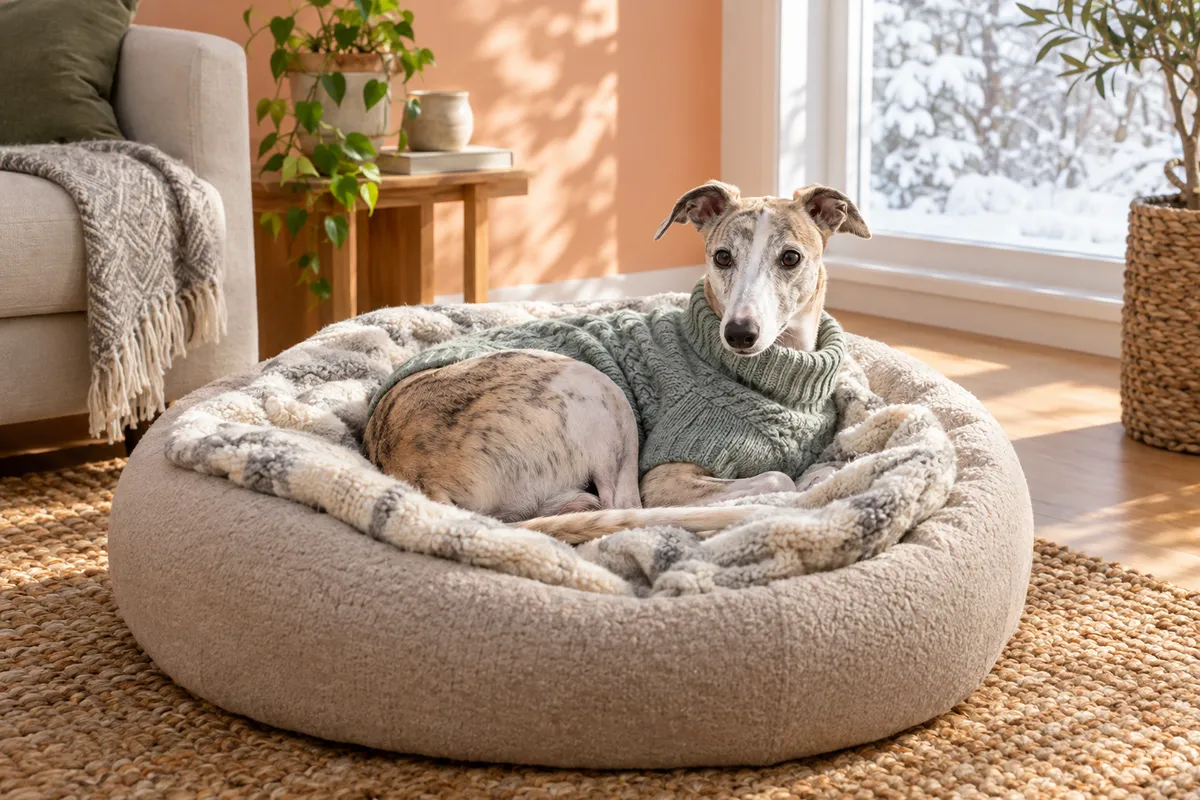
Not every dog needs clothes, but some really enjoy them indoors on cold days: short-coated breeds like greyhounds, whippets, chihuahuas and dachshunds, small dogs, young puppies and older dogs. A soft fleece pullover or a stretchy pajama onesie adds a light layer while they lounge.
- Pick soft, stretchy fabric with no scratchy seams around the armpits.
- It should fit close without pinching: you can slide two fingers under the neck and chest.
- Take it off for long naps under a heavy blanket so your dog does not get too warm.
- Introduce it gently: let your dog sniff it, put it on for a few minutes with a treat, then build up.
Cozy sweaters and pajamas for indoors
Soft fleece, knit and stretchy pajamas for small and short-coated dogs.


Not sure which size to order? Here is how to measure a dog for a sweater using back length, chest and neck.
Afternoon walk: shorter trips and a warm coat
On very cold or windy days, try two or three shorter walks instead of one long one, then bring the fun indoors with a puzzle toy or a game of tug. For short-coated dogs, a coat with a fleece lining and a wind-blocking outer shell keeps them comfortable outside.
Warm coats for winter walks
Fleece-lined and water-resistant shells for cold, wet days.


For a deeper look at coverage and fabrics, see how to choose a dog winter coat. If you walk on salted sidewalks, our guide on whether dogs need boots in winter helps you decide.
Back inside: dry fur before the nap
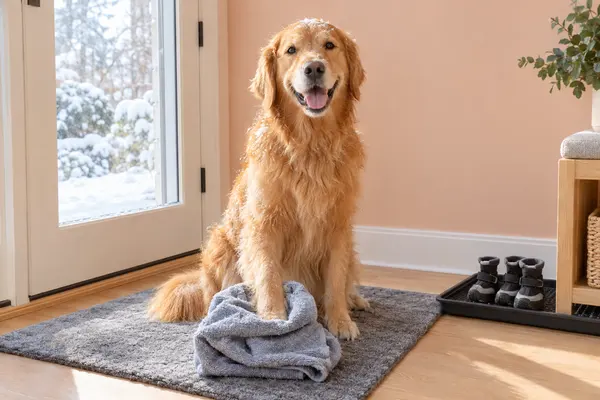
Damp fur pulls warmth away from the body, so drying is one of the most useful winter habits. Keep a towel by the door and give your dog a good rub before they head to bed.
- Wipe each paw and between the toes to clear snow, ice balls and sidewalk salt.
- Towel the belly, legs and chest, which pick up the most snow.
- Press and squeeze long coats instead of rubbing hard, so the fur does not tangle.
- Let your dog finish drying on a warm bed or blanket, away from the door.
Quick-drying towels and robes
Absorbent microfiber towels, a paw mitt and a robe to wear while drying.


Evening and night: a snug crate and a warm room
Dogs who sleep in a crate stay warmer with a thick pad on the tray and a cover over the top and sides. A crate cover blocks drafts and makes the crate feel like a little den. Leave the front open or rolled up so air still moves and your dog can see out.

A crate that comes with its own cover
A wire crate with a fitted fabric cover and roll-up panels, so you can close the sides on a cold night and open the front for airflow.
- Two doors for easy access
- Roll-up front and side panels
- Pairs well with a self-warming pad inside
Plush pads for inside the crate
Thick, washable padding between your dog and the crate tray.


Need the right crate size first? Start with what size dog crate you need.
Gentle signs your dog might be cold
Dogs tell us how they feel through their body. Common, gentle hints that a dog would like to be warmer include shivering, curling into a tight ball, tucking the tail, lifting paws off the ground outside, or heading for the warmest spot in the house. Offer a blanket, a sweater or a shorter walk and see how they settle.
Watch the other side too. A dog who pants, moves away from the blanket or flops onto a cool floor is probably warm enough. If shivering, weakness or anything else seems unusual to you, ask your vet.
Questions people ask
How do I keep my dog warm at night inside?
Place the bed away from doors, windows and vents, lift it off a cold floor with a bolster or raised bed, and add a fleece blanket or a self-warming mat. Crate sleepers stay snug with a thick pad and a crate cover that leaves the front open for air.
What is the best warm dog bed for winter?
It depends on how your dog sleeps. Curl-up sleepers love bolster or donut beds with raised sides, stretch-out sleepers do well on a raised cot with a blanket on top, and a self-warming mat adds warmth to almost any bed without a plug.
How warm is too warm for dogs?
Watch your dog rather than the thermostat. Panting, restlessness, moving off the blanket or lying on a cool floor are signs your dog wants to cool down, so take off a sweater or a layer. If you are unsure, ask your vet.
Do self-warming dog beds really work?
They hold onto warmth rather than making it. A thin layer inside the padding reflects your dog's own body heat back to them, so the bed feels warm after a few minutes with no cord or switch.
Which dog breeds can live outside in cold weather?
Some thick, double-coated breeds handle cold better than others, but every dog still needs a warm, dry, draft-free place to rest. Indoors with the family is the coziest place for winter, and your vet can advise on your own dog.
About the numbers
- Google search, United States, read 2026-10-28: People also ask: "How warm is too warm for dogs?", "What is the best warm dog bed for winter?", "Which dog breeds can live outside in cold weather?"; related searches: how to keep dog warm at night inside, self heating dog blanket, self warming dog bed.