Heated Water Bowl for Outdoor Cats and Dogs: A Winter Buying Guide
Choose a heated water bowl by size, wattage, cord protection and where it will sit. A thermostatic bowl in a sheltered spot on a GFCI outlet keeps water drinkable all winter.
In short
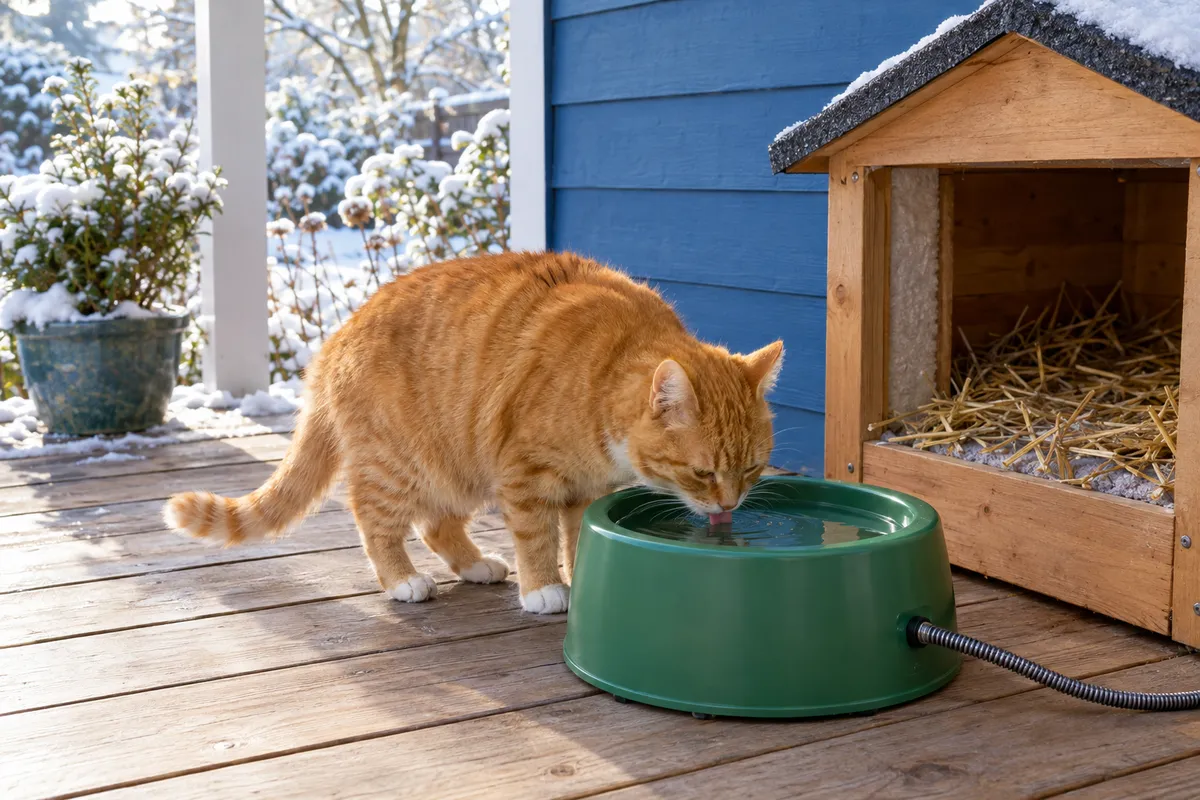
- A heated water bowl for outdoor cats is a bowl with a built-in heater that keeps water from freezing, so outdoor pets can drink on the coldest days.
- Thermostatic bowls switch their heater on only near freezing, which suits most homes.
- Pick capacity by who drinks: about a quart for one cat or a rabbit, a gallon or more for a big dog or a colony of community cats.
- Plug outdoor bowls into a GFCI-protected outlet, use one short outdoor-rated cord, and cover every exposed inch of cord against chewing.
- Place the bowl out of the wind near the shelter, but never inside a shelter where a spill would soak the bedding.
A heated water bowl for outdoor cats is a pet bowl with a sealed heating element and a thermostat that keeps water from freezing, so cats and dogs living or spending time outdoors always have something to drink. Choose one by capacity, wattage, how well its cord is protected, and whether it can sit sheltered beside a safe, GFCI-protected outlet.
Setting up a sleeping spot too? Our checklist of what to put in an outdoor cat shelter pairs nicely with this guide.
How does a heated water bowl work?
A heated bowl warms the water just enough to stop ice from forming, not to make it warm like tea. The heater lives in the base or inside a double wall, sealed away from the water, and a cord runs out to a regular household outlet.
Most use a thermostat, a small switch that turns the heater on as the water nears freezing and off again once it is safely above. That is why these bowls feel cool or barely warm to the touch, which is exactly right.
Heated bowls sized for cats
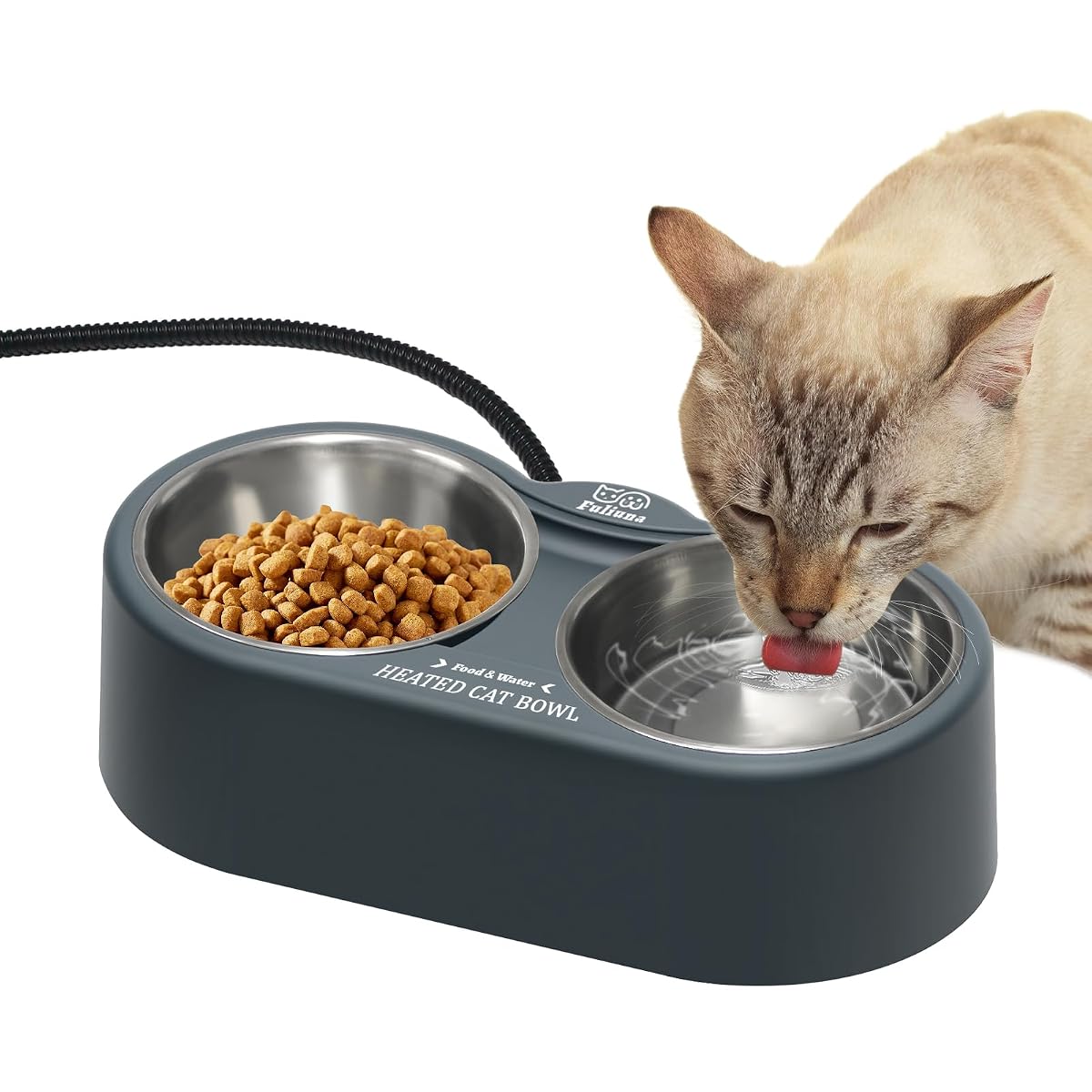
Quart to half-gallon sizes for one to a few cats, including double bowls that keep wet food from freezing too.


Thermostatic or always-on: which kind should you choose?
For most outdoor setups, choose a thermostatic bowl. It only draws power when the weather calls for it, so it can stay plugged in all season without you remembering to flip anything.
- Thermostatic: heats only near freezing, then rests. Set it up in late fall and leave it. Best for most homes and for community cats you visit once or twice a day.
- Always-on: some small bowls, including USB crate styles, hold a steady gentle warmth whenever powered. Better indoors, in a garage or on a kennel door.
- With an on/off switch: works as a plain bowl in spring and fall. Switch it back on before the first hard frost.
What wattage do you need, in plain terms?
Wattage is how much power the heater pulls while it is running, and more watts means it can keep more water ice-free in colder, windier spots. A thermostat means it only runs part of the time, so the label number is a ceiling, not what it uses all day.
Across the bowls on our shelves, quart-size bowls and heated rabbit bottles run on about 20 to 25 watts, mid-size bowls around 30 watts, and gallon-and-up dog bowls about 60 watts. Heated buckets and tubs go higher, because they protect far more water.
| Bowl size | Typical wattage on the label | Who it suits | Watch for |
|---|---|---|---|
| About 1 quart | 20 to 25 W | One cat, a rabbit, a small dog | Empties fast; refill daily |
| About 2 liters (half gallon) | Around 30 W | Two or three cats, a medium dog | Wide bowls show more surface to the wind |
| 1.25 to 1.5 gallons | About 60 W | Large dogs, multi-pet yards, cat colonies | Heavier to carry when cleaning |
| 3 to 16 gallon buckets and tubs | Higher, check the label | Horses, barns, big groups of animals | Needs a sturdy, level spot |
Larger heated bowls for dogs and busy yards
Gallon-class bowls, steel inserts, an auto-fill style and a switch-operated bowl.


What size and capacity is right for your pets?
Pick a bowl that holds at least a full day of water for everyone who drinks from it, with room to spare. In winter you may visit less often, and wildlife will happily share an outdoor bowl.
- One cat or a small dog: a quart to half-gallon bowl is plenty and easy to rinse.
- A double bowl keeps a dish of wet food from turning into an ice block next to the water, which is lovely for community cats fed once a day.
- A large dog or several cats: go for a gallon or more. Low, wide bowls are easier for flat-faced breeds; deep bowls keep long ears drier.
- Small pets in hutches: a heated bottle with a drinking valve keeps bedding dry and the water open.
For everyday indoor feeding, our guide on how to choose a dog bowl walks through shapes, heights and materials in more detail.
Is plastic or stainless steel better for a heated bowl?
Both work well; a stainless steel insert is easier to scrub, while an all-plastic bowl is lighter and often less fussy to set up. In a heated bowl the water stays above freezing, so a steel insert never gets icy cold the way a plain metal dish can on a frozen porch.
| Material | Cleaning | Weight and stability | Best for |
|---|---|---|---|
| BPA-free plastic body | Wipe and rinse; scratches can hold grime over time | Light; look for a non-tip or weighted base | Budget setups, cats, quick moves around the yard |
| Plastic body with stainless steel insert | Insert lifts out for a proper wash | Heavier, rubber feet help | Dogs, daily use, anyone who hates scrubbing plastic |
| Double stainless steel bowls | Each bowl lifts out | Wide footprint, stable | Food and water together for cats |
| Rubber heated bucket | Rinse and brush | Flexible, hangs on a flat back or sits on the ground | Barns, larger animals, rough handling |
How do you protect the cord from chewing?
Choose a bowl whose cord is already wrapped in a coiled metal or hard plastic guard, then cover any cord that runs beyond it. Puppies, curious cats and wild visitors all like to test a cord with their teeth.
- Check the guard runs right up to the bowl body, with no bare gap.
- Sleeve any extension cord and route it along a wall or under a deck board.
- Keep slack to a minimum; loops invite play.
- Look over the whole cord every week or two and replace it at the first bite mark or crack.
Cord protectors
Sleeves and a bitter-coated cover for cords that run past the bowl's own guard.


Where should you place a heated water bowl outside?
Set the bowl in a sheltered, level spot close to the shelter or feeding station, out of the wind, and never inside the sleeping shelter itself. Water and bedding do not mix: one tipped bowl can soak straw and leave a cold, damp bed.
- Out of the wind: a covered porch, under deck stairs, or a roofed feeding station. Wind steals heat far faster than still air.
- Near the shelter: a few steps from the doorway. Our guide to outdoor heated cat houses covers shelter placement.
- Off the ground: a board or paver keeps the base out of slush.
- Easy for you to reach: you will refill it in the cold, so keep the path short.
Alley Cat Allies suggests a sheltered feeding station to protect food and water from wind and snow, and recommends heated bowls for community cats' water and wet food.
How do you power it safely?
Plug an outdoor heated bowl into a GFCI-protected outdoor outlet. A GFCI (ground fault circuit interrupter) cuts power in a fraction of a second if it senses current leaking where it should not, such as through water.
- Look for TEST and RESET buttons on the outlet. If there are none, use a plug-in GFCI adapter or ask an electrician.
- Press TEST once a month through winter; power should cut, and RESET brings it back.
- If you need an extension cord, choose a short outdoor-rated one with nothing else plugged in.
- Let the cord dip below the outlet before it rises to the plug (a drip loop) so rain runs off.
- Use a weatherproof outlet cover and keep the connection off the ground.
- For a permanent setup, ask a licensed electrician about a dedicated outdoor outlet.
How often should you clean a heated pet bowl?
Refill with fresh water every day and give the bowl a proper wash at least weekly. Always unplug it first.
- Unplug the bowl and tip out old water and crumbs.
- Wash with warm soapy water and a soft brush; lift out steel inserts.
- Never submerge the heated base unless the label says you can.
- Rinse, dry the plug end, refill and plug back in.
If the bowl lives on a deck where your dog comes and goes, a quick paw wipe on the way back inside helps too. Our routine for winter paw care for dogs has the details.
What can you use if there is no power outside?
Without electricity you cannot stop water freezing in deep cold, but you can slow it down and refresh it more often.
- Deep, narrow containers freeze more slowly than shallow dishes because less water touches the cold air.
- A double-walled insulated bowl stays liquid longer on a mild freezing day, though not overnight in a hard frost.
- A sunny, sheltered corner out of the wind is warmer by day than open lawn.
- Rubber containers do not crack when the water freezes, a tip Alley Cat Allies staff share.
- Visit more often: fresh water morning and late afternoon on very cold days.
Unpowered insulated bowls
Double-walled steel that slows freezing on milder cold days.


Our picks for different setups
For community cats fed once a day
Two lift-out stainless bowls in one heated base, so food and water both stay usable between visits.
- Steel bowls lift out for washing
- Low profile suits cats of every size
For a large dog in the yard
A gallon-class heated bowl with a stainless steel insert and a heavy rubber base that resists tipping.
- Thermostat runs the heater only when needed
- Coiled guard on the cord
For a porch you use in spring and fall too
A roughly two-liter bowl with a waterproof on/off switch and a long, chew-resistant cord, so it works as a plain bowl outside the freezing months.
- Switch it off on warm days
- Long cord means fewer extension cords

For rabbits and guinea pigs in an outdoor hutch
A heated bottle with a drinking valve keeps water open without wetting the bedding.
- Low wattage
- Mounts on the hutch
Heated buckets and tubs for barns and bigger groups
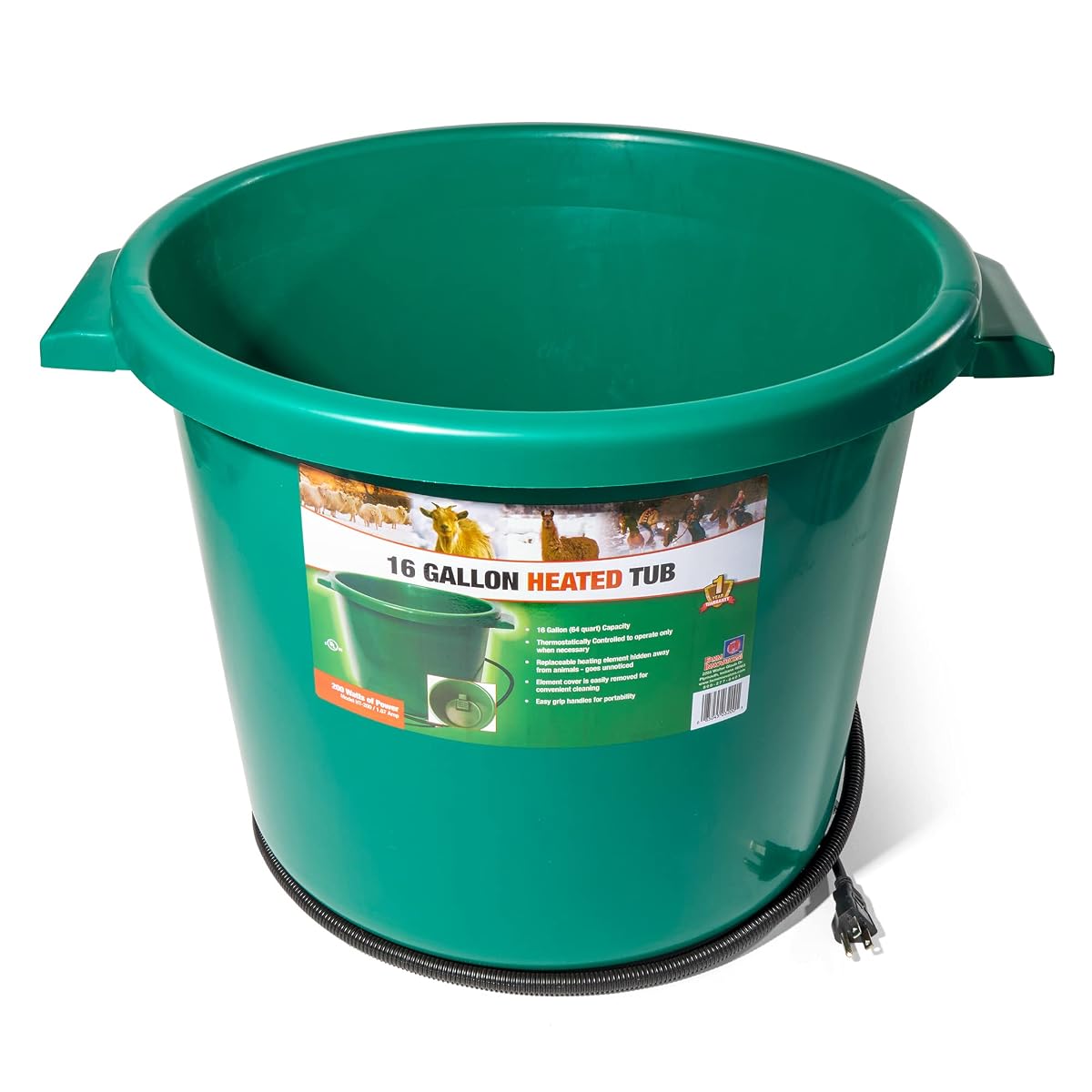
For horses and yards with many animals.

Browse every option in bowls and feeders, or search heated water bowls to compare sizes. Introduce a new bowl gently where the old one stood, and stay close for the first few drinks. Questions about how much your pet drinks in winter? Ask your vet.
Questions people ask
Can I leave a heated pet bowl plugged in all winter?
A thermostatic bowl is designed to stay plugged in and switch itself on only when needed. Check the cord, outlet and water level every day or two, and follow the label.
Is it safe to use an extension cord with a heated water bowl?
Use one only if you must, and choose a short, outdoor-rated cord on a GFCI-protected outlet with no other devices on it. Cover it with a cord protector and keep the connection off the ground. For a long-term setup, a nearby outdoor outlet installed by an electrician is better.
Can I put a heated bowl inside an outdoor cat shelter?
It is better not to. A spill soaks the bedding and leaves a cold, damp shelter. Place the bowl a few steps from the doorway, under a roof or in a feeding station.
What size heated bowl do I need for feral cats?
Choose a bowl that holds at least a full day of water for the whole group, plus extra for wildlife. For a small colony, a half-gallon to gallon bowl is a comfortable starting point.
How do I keep water from freezing without electricity?
Use deep, narrow or double-walled insulated containers, set them in a sunny, sheltered spot, and replace the water morning and afternoon on very cold days. Rubber containers will not crack if they freeze.
About the numbers
- Alley Cat Allies, Help Outdoor Cats in Winter: Top 10 Tips, read 2026-11-01: Recommends heated bowls for water and wet food, a feeding station to shield bowls from wind and snow, and rubber containers that will not crack when water freezes.