Road Trip With a Dog Checklist: Holiday Drives Made Easy
Before a holiday drive, secure your dog in the back seat with a harness, car seat or tied-down crate, pack water, food, bags and records, update the ID tag, and plan a stop every few hours.
In short
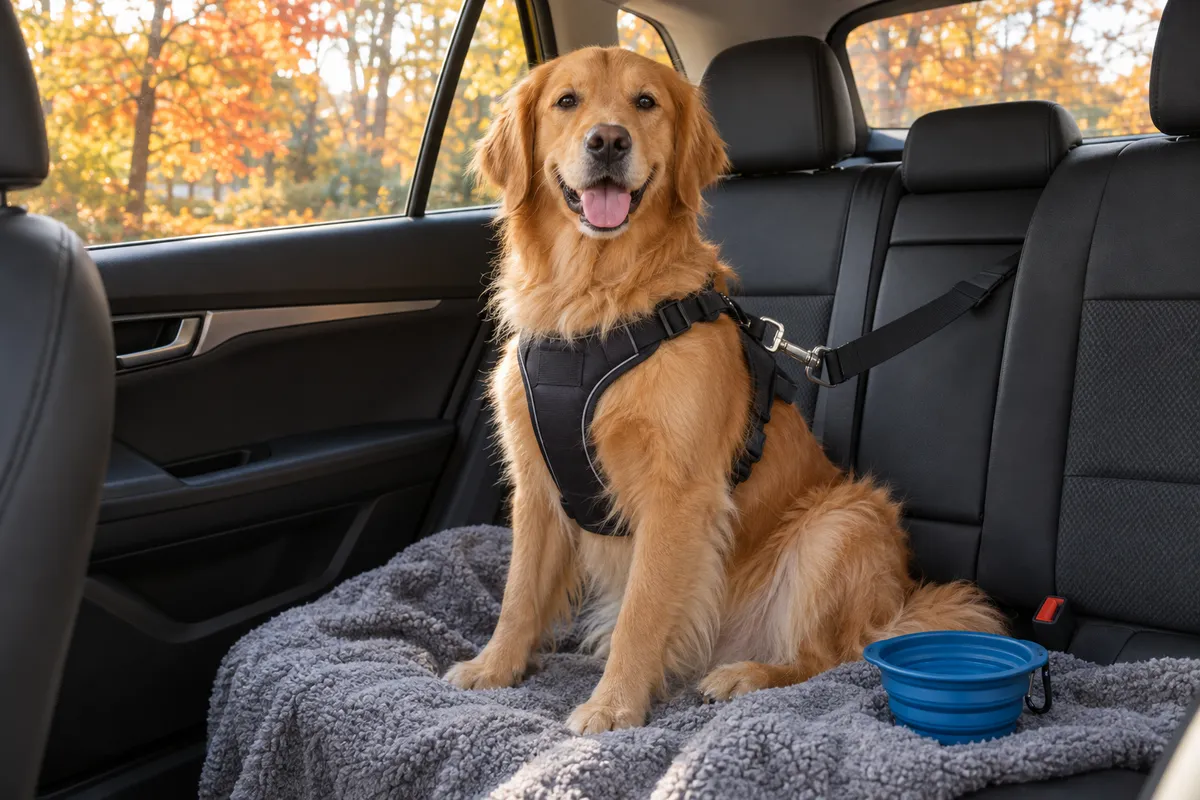
- Your dog should ride in the back seat, restrained by a car harness on a seat belt, a booster seat or a crate that is strapped down so it cannot slide.
- Pack water and a travel bowl, your dog's usual food in a sealed container, waste bags, wipes, towels and a blanket or bed that smells like home.
- Update the ID tag and the microchip contact details before you leave, and carry vaccination records on paper and on your phone.
- Plan a stop every few hours for a leashed walk, a drink and a potty break, and never leave your dog alone in a parked car, hot or cold.
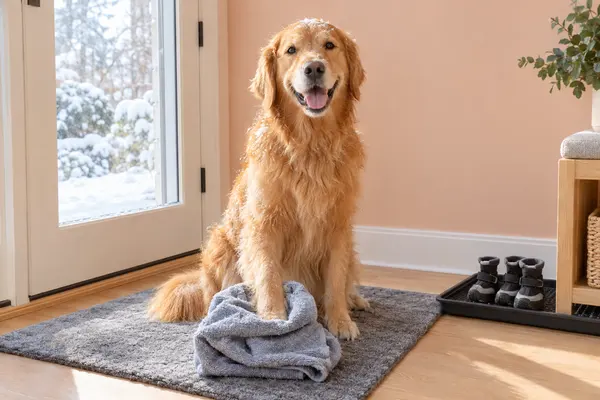
- For winter drives, add a towel for wet paws, a paw balm or wax, and a coat for short-coated or small dogs.
A road trip with a dog checklist is a short list of what keeps your dog safe, comfortable and fed in the car: a proper restraint in the back seat, water and food, waste bags, an up-to-date ID tag, records, and a familiar blanket. Get those right and Thanksgiving or December drives feel like part of the holiday, not a chore.
Holiday drives are different from summer trips. Days are short, roads are busy, rest areas are cold and wet, and you may be sleeping at a friend's house or a hotel your dog has never smelled. This checklist walks through each item in the order you will need it, from the driveway to the guest room.
How should a dog ride in the car?
In the back seat, restrained. A loose dog can slide into the footwell, climb onto your lap or be thrown forward if you brake hard, and a front-seat airbag is built for an adult person, not a dog. There are three good ways to do it, and the right one depends on your dog's size and temperament.
| Restraint | How it works | Best for |
|---|---|---|
| Car harness on a seat belt | A padded harness spreads the load across the chest; the seat belt or a tether clips to its back loop. | Medium and large dogs who sit or lie down calmly. |
| Booster or car seat | A raised, padded bed that buckles to the seat, with a short clip to the dog's harness. | Small dogs who like to see out of the window. |
| Crate secured in the car | A crate strapped down in the cargo area or behind the front seats so it cannot shift. | Dogs already crate trained, and anyone staying in hotels. |
Restraints for the back seat
Harnesses that clip to the seat belt, tethers for a harness and padded seats for small dogs.


A padded car harness for bigger dogs
This harness is built like a vest of wide seat belt webbing with a padded chest plate, and the seat belt threads through a loop on its back. The title states it was crash tested to a US standard.
- Wide padded chest panel spreads the load
- Seat belt passes through the back loop
- Adjustable straps for a snug fit
A plush seat for small dogs
A soft, bolstered seat that buckles to the car seat and works with a seat belt harness, for dogs up to about 30 pounds according to its listing.
- Raised sides help a small dog settle
- Short clip connects to a harness
- Fits dogs up to about 30 pounds
What do you need to protect the car?
A waterproof seat cover or hammock catches mud, fur and slush. Hammock covers clip to the front and rear headrests, so the dog cannot slip into the footwell. A back seat extender with a hard bottom makes a flat, steady floor across the seat and footwell, which suits large dogs who like to stretch out. If your dog rides in the cargo area of an SUV, a cargo liner with a bumper flap protects the edge when they jump in and out.
Covers, extenders and liners
Pick by where your dog rides: back seat, full bench or cargo area.


What should you pack for a road trip with a dog?
Pack for one more day than you plan to be away. Holiday traffic, a winter storm or a late night with family can add a day without warning. Keep the essentials in one bag on the back seat, not buried in the trunk.
- Water and a bowl. A travel bottle with a built-in trough, or a collapsible silicone bowl, so your dog can drink at every stop.
- Food in a sealed container. Your dog's usual food, portioned per day, plus a scoop. Keep treats in a separate pouch.
- Waste bags. More than you think, with a dispenser clipped to each leash.
- Two leashes. One on the dog, one spare in the glove box.
- Wipes and paper towels. For muddy paws and small accidents.
- A bed or blanket from home. Familiar smells help a dog settle in a strange room.
- Toys and a chew. A favorite toy and something to work on for quiet stretches.
- Medications. Anything your dog takes, packed in its original packaging, for the whole trip.
- Records. Vaccination records and your vet's phone number.
Water, food and a bag for it all
Spill-resistant bowls, bottles with drinking troughs, sealed food carriers and travel bags with pockets.


A bowl made for the car
A collapsible silicone bowl with an inward rim that keeps water from splashing out when the car moves, plus a lid and a carabiner for clipping it to a bag.
- Inward rim reduces splashing
- Folds flat between stops
- Lid and carabiner included
One bag for every supply
A travel tote with two lined food carriers, two collapsible bowls and zip pockets for leashes, toys and bags, so everything your dog needs stays in one place.
- Two lined food carriers
- Two collapsible bowls
- Shoulder strap and side pockets
Is your dog's ID ready for travel?
Check it now, before you pack. A dog who slips a leash at a rest stop in another state needs a tag a stranger can read and a microchip record that reaches you. Put your mobile number on the tag, not a home landline nobody will answer while you are away. Log in to the microchip registry and confirm your phone and email are current. See what to put on a dog ID tag for exactly what to engrave.
ID tags
A dangling tag and a silent slide-on tag; both can be engraved with your phone number.


How often should you stop on a road trip with a dog?
Stop every few hours, and sooner for puppies, senior dogs or any dog who seems restless. Each stop is a leashed walk on grass, a drink of water and a few minutes to sniff. Always clip the leash on before you open the door: rest areas are busy, and a nervous dog can bolt.
Feed lightly on travel mornings and give the main meal once you arrive. If your dog drools, pants or gets queasy in the car, ask your vet before the trip; they can suggest what is right for your dog. A short practice drive the week before also shows you how your dog handles longer rides.
Can you leave a dog in the car in winter?
No. Never leave your dog alone in a parked car, in heat or in cold. A closed car warms quickly in sun, even on a cool day, and it loses heat fast on a freezing night. Plan stops where someone can stay with the dog, use drive-throughs, or take turns going inside.
What extra gear helps on winter drives?
Winter adds wet paws, road salt and cold rest areas. A microfiber towel with hand pockets dries legs and belly before your dog climbs back in. A paw wax or balm before walks on salted pavement helps keep paws comfortable, and wiping paws after each stop removes salt and grit. Short-coated, small or senior dogs are happier in a waterproof coat for those quick walks; browse dog coats and jackets.
For cold, wet stops
Towels, paw wax, wipes, a warm coat and a waterproof blanket.


Staying with friends or at a pet-friendly hotel?
Ask before you arrive. With friends and family, check whether there are other pets, small children or rooms that are off-limits, and bring your dog's own bed so they have a spot of their own. Holiday homes are full of hazards, from food left on low tables to open doors as guests come and go; our Thanksgiving with dogs checklist covers the house side.
At a hotel, confirm the pet policy when you book, including size limits, fees and whether dogs may be left in the room. Many ask that a dog be crated when alone, so a crate or a familiar blanket in a corner helps. Ask for a ground-floor room near an exit for late-night potty trips. Walk your dog before you go into the room so they can settle.
Your printable road trip with a dog checklist
- Car harness, booster seat or secured crate, with a short tether to the harness
- Seat cover, hammock or cargo liner
- Travel water bottle and collapsible bowls
- Food in a sealed container, a scoop and treats
- Waste bags and a leash dispenser
- Two leashes and a collar with ID tag
- Microchip details checked and up to date
- Vaccination records and your vet's number
- Medications for the whole trip
- Bed or blanket from home, toys and a chew
- Towel, wipes and paper towels
- Paw balm and a coat for winter
- A current photo of your dog
- Pet-friendly stops and lodging confirmed
Traveling with a cat too? Our holiday checklist for traveling with a cat covers carriers and litter on the road. And if your trip includes trails, pack the extras from the hiking with a dog checklist.
Questions people ask
How should you travel with a dog in the car?
Put your dog in the back seat, restrained by a car harness clipped to the seat belt, a booster seat for a small dog, or a crate strapped down so it cannot move. Clip any tether to a harness, never to a collar. Keep heads inside the window and paws off the driver.
How often should you stop on a road trip with a dog?
Every few hours, and more often for puppies and older dogs. Use each stop for a leashed walk, a potty break and a drink of water. Watch your dog: restlessness or whining is a sign a break is due.
What documents do I need for my dog to travel?
Carry your dog's vaccination records, including rabies, and your vet's phone number, on paper and as photos on your phone. Some hotels and boarding places ask to see them. Check any rules at your destination before you go.
Are long car rides bad for dogs?
Many dogs ride well with a secure spot, regular breaks, water and a familiar blanket. Start with shorter practice drives so your dog gets used to it. If your dog seems uncomfortable or unwell in the car, ask your vet.
Can my dog ride in the front seat?
The back seat is the safer place. Front airbags are designed for adult passengers, and a dog in the front seat can also distract the driver. A restrained dog in the back is safer for everyone.
About the numbers
- Center for Pet Safety, CPS Certified program page, read 2026-11-01: Voluntary certification by an independent nonprofit covering safety harnesses, pet travel carriers and travel crates, with a public list of certified products.
- Google autocomplete, United States, read 2026-11-01: Real questions people type: how should you travel with a dog in the car, what documents do I need for my dog to travel, are long car rides bad for dogs, how often to stop on road trip with dog.