Traveling With a Cat for the Holidays: Car and Flight Checklist
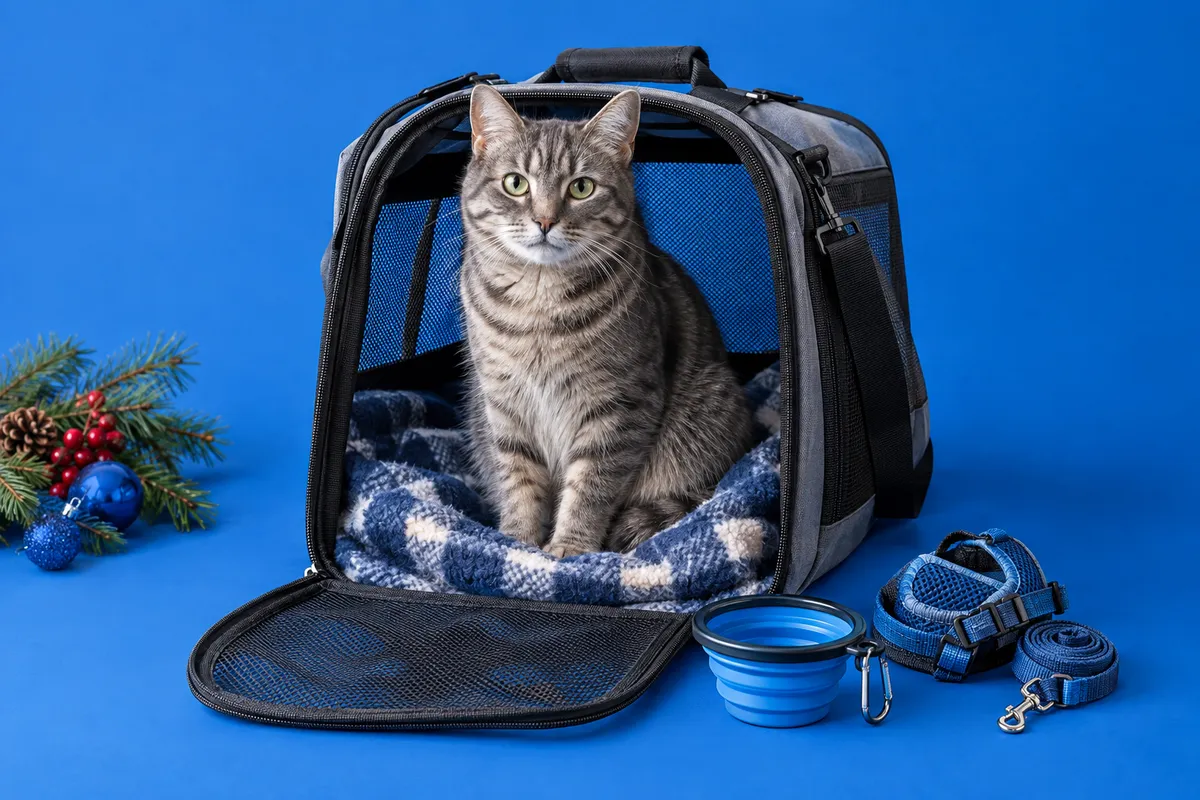
Start weeks ahead: make the carrier a cozy spot, try short practice drives, update ID and ask your vet about the trip. Then pack litter, bowls, a blanket and a harness.
In short
- Leave the carrier out at home for a few weeks with a soft blanket inside, so it becomes a familiar resting spot instead of a surprise.
- Short practice drives around the block help a cat learn that the car ends with a calm return home.
- Check that your cat's ID tag and microchip details show your current phone number before you leave.
- Ask your vet about the trip well ahead, and check your airline's rules for carrier size and any papers it wants.
- In the car or the terminal, open the carrier only when your cat is wearing a harness with the leash in your hand.
Traveling with a cat goes best when the trip starts weeks before you pack the car. A cat that already naps in its carrier, wears a harness and knows the sound of the engine has far less to get used to on the big day. Here is a calm, step-by-step checklist for holiday car trips and flights, plus a few signs that staying home with a sitter might suit your cat better.
Weeks before: make the carrier home
Bring the carrier out three or four weeks ahead and leave it open in a room your cat already likes. Put a worn T-shirt or a familiar blanket inside, drop a few treats in now and then, and let your cat explore on its own schedule. The goal is simple: the carrier stops meaning a vet visit and starts meaning a warm nap spot.
If you are still choosing one, our guide on how to choose a cat carrier walks through hard, soft, backpack and expandable styles. For a holiday trip, look for a top opening (easier to lift a cat in and out), mesh on at least two sides for airflow, and straps or a luggage sleeve that let you buckle it in.
Carriers for car trips and cabin travel
Soft-sided styles fold flat in the trunk; hard shells are easy to wipe clean.


Practice drives
- Sit in the parked car with your cat in the carrier for a few minutes, engine off. Offer a treat and go back inside.
- Next time, start the engine, sit for a minute, then turn it off.
- Drive around the block, then home again.
- Stretch to a 15 or 20 minute loop once your cat seems settled.
Keep each step short and end on a calm note. If your cat seems very unsettled in the car, ask your vet before the trip: they can talk through options that suit your cat.
ID, microchip and papers
Check the phone number on your cat's tag and in the microchip registry; an old number is a common gap. A breakaway collar with a slim engraved tag is a good travel habit even for indoor cats. Then book a visit or call with your vet to talk about the trip. If you are flying, check your airline's rules early: each airline sets its own carrier size, how many pets fit in the cabin, and which papers it may ask for.
ID tags and breakaway collars
Silent slide-on tags sit flat against the collar.


The packing list
Pack a cat bag the night before, separate from your own, so nothing gets buried under holiday gifts. Here is everything in one place:
- Carrier lined with an absorbent pad, plus a spare pad in a zip bag
- Travel litter box and a small bag of your cat's usual litter
- Collapsible bowls for food and water, and a bottle of water from home
- Your cat's regular food in pre-measured portions
- A familiar blanket or bed that smells like home
- Harness and leash for rest stops and security lines
- Pet wipes, paper towels and a few spare bags for cleanup
- Two or three favorite toys
- Any items your vet has given you, in their original packaging
Litter on the road
For long drives, a collapsible travel litter box opens at a rest stop or a hotel room and folds flat again. Disposable cardboard trays are handy at the destination: no scrubbing, and you can bring the same litter your cat already uses. Some larger car carriers have room for a small litter tray inside, which helps on a full-day drive.
Travel litter boxes
Fold-flat boxes for the car, disposable trays for the guest room.


A litter box that packs like a tote
This nylon box is about 16 by 12 inches with a 5 inch wall, lined with a wipeable inner layer, and it folds down small enough to slip into a door pocket.
- Opens in seconds at a rest stop
- Low wall that cats step into easily
- Comes with a small collapsible bowl
Bowls, bedding and cleanup
Silicone collapsible bowls pop open for a drink and squash flat into a pocket; the ones with snap-on lids keep kibble dry in the bag. Line the carrier with a pet pad under the blanket so a spill or accident stays on the surface.
Bowls, pads, blankets and wipes
Small things that make a long day easier.


On the day: car and airport
Give your cat a quiet morning. Keep the usual routine where you can, and ask your vet ahead of time about feeding timing on a travel day.
In the car
- Buckle the carrier in with a seat belt through its straps, or set it on the floor behind a front seat so it cannot slide.
- Never let a cat ride loose: a cat can slip under the pedals or bolt when a door opens.
- Keep the cabin comfortable, out of direct sun, and never leave your cat alone in a parked car, warm day or cold.
- Drape a light cloth over part of the carrier if your cat seems to prefer a cozy, dim den, leaving the mesh sides open for air.
- At rest stops, put the harness on inside the closed car before you unzip anything.
At the airport
At security you will usually be asked to take your cat out while the empty carrier goes through the scanner. This is the moment a harness earns its place: put it on before you leave home, clip the leash on before you open the carrier, and hold your cat firmly. Many airports offer a private screening room if you ask. Keep the carrier under the seat in front of you for the flight, and leave it zipped.
Cat harnesses for rest stops and security
Vest styles spread pressure and are harder to wriggle out of.


At the destination: a quiet base room
Before you open the carrier, set up one quiet room: a bedroom or a spare room with a door that closes. Put the litter box on one side, food and water on the other, and the blanket from home in a corner. Then open the carrier and let your cat come out when ready.
- Check the room first for gaps behind appliances, open vents and windows.
- Ask hosts to keep the door closed and tell guests the cat is inside.
- Keep holiday plants, ribbons, tinsel and food scraps out of the room.
- Spend a little quiet time with your cat each day, with a wand toy or just company.
A few toys from home
Wands pack flat and give a cat something familiar to do.


Or: a holiday at home with a sitter
Plenty of cats are happiest staying in their own territory. For a short trip, a trusted sitter who visits once or twice a day (or stays over) keeps your cat's food, litter and favorite window exactly where they belong. Leave a written note with feeding amounts, your vet's number and where the carrier is kept. An automatic feeder can help with timing, but it never replaces a person checking in. If you are unsure which choice suits your cat's age or temperament, ask your vet.
Questions people ask
Can I travel with a cat in a car?
Yes. Keep your cat in a carrier that is buckled in with a seat belt or set on the floor behind a front seat, and practice with short drives in the weeks before. Never let a cat ride loose in the car.
How long can you travel with a cat in a car?
It depends on your cat, so ask your vet before a long trip. On a long drive, plan regular stops where you can offer water and a travel litter box inside the closed car, and keep the cabin at a comfortable temperature.
How do cats go to the bathroom while traveling?
On a road trip, a collapsible travel litter box can be set up at a rest stop inside the closed car or in a hotel room. Line the carrier with an absorbent pad in case of an accident, and bring the litter your cat already uses.
Is it easy to take a cat on a plane?
It takes planning. Airlines set their own rules for carrier size, how many pets fit in the cabin and which papers they may ask for, so check your airline's rules before booking and talk to your vet about the trip.
What is the 3-3-3 rule with cats?
It is a rule of thumb used for newly adopted cats: roughly three days to decompress, three weeks to learn a routine and three months to feel at home. A short holiday trip is different, but the idea of giving a cat time and a quiet room in a new place still applies.
About the numbers
- Google search, people also ask for "traveling with a cat by car" and "flying with a cat tips", United States, read 2026-10-08: Shoppers ask how long a cat can ride in a car, how cats use the bathroom on the road, whether it is easy to fly with a cat and what the 3-3-3 rule means.