Winter Paw Care for Dogs: A Before, During and After Routine
Trim the fur between the pads, add booties or a paw wax before you go, skirt salted patches on the walk, then rinse, wipe and dry between the toes at the door.
In short
- Winter paw care for dogs is a three-part routine: get paws ready before the walk, choose your path during it, and clean and dry them properly after it.
- Trimming the fur between the paw pads level with the pads helps stop snow from packing into ice balls and lets paws dry faster.
- Booties or a paw wax put a layer between the pads and snow, grit and de-icer; use any wax or balm exactly as its label says.
- After every winter walk, rinse or wipe each paw and dry carefully between the toes, ideally at a small station set up by the door.
- If you notice cracks, redness, limping or a lot of paw licking, ask your vet.
Hello, lovely. Snowy walks are a joy, but paws do a lot of work in winter. They meet packed snow, slush, gritty sidewalks and the salty mix many towns spread on ice. The good news: winter paw care for dogs is a short routine, not a project. Get the paws ready before you leave, pick your path while you walk, and give them a proper rinse and dry when you come home. Here is how each step works, the tools that make it easy, and how to set up a little paw station by the door.
Before the walk: trim, then choose boots or wax
Start with the fur between the toes. On many dogs it grows past the pads, and in snow it collects little balls of ice that pull at the hair and make walking awkward. Trimming that fur level with the pads leaves less for snow to grab, and a trimmed paw dries far faster afterwards. Keep it a gentle job: a few minutes, a calm corner, a treat between paws.
Two tools suit it. A small paw trimmer has a narrow blade that fits between pads, and the quieter ones are easier for dogs who dislike buzzing. Ball-tipped scissors have rounded points, handy for the fur around the edge of the paw. Spread the toes softly, trim only the fur that sticks out past the pads, and never dig into the gaps. If your dog is wriggly, do one paw a day. Long nails spread the toes and give snow more room to pack in, so a trim helps too; our nail grinder vs clippers guide walks through both options.
Paw trimmers and round-tip scissors
Small blades and rounded points made for the fur around and between the pads.


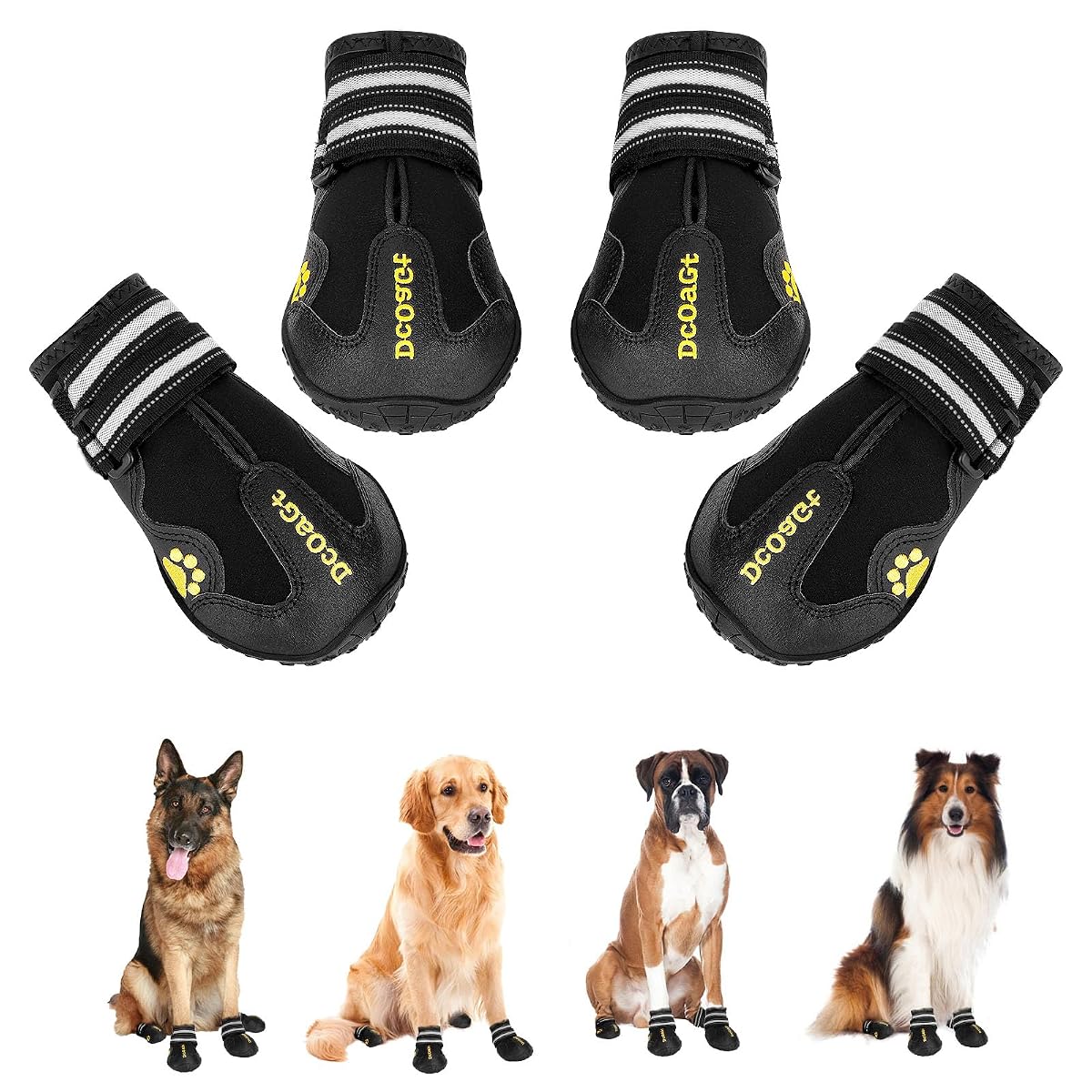
Next, decide between booties and a paw wax. They do a similar job in different ways. Booties put a sole between the pads and the ground, so snow, grit and de-icer never touch the paw. A paw wax or balm is rubbed into the pads to leave a thin layer on top. Many families keep both: wax for short neighborhood strolls, booties for long, slushy or heavily salted routes. Whether your dog needs boots at all depends on the walk, the weather and the dog; our winter boots guide covers types, fit and when to skip them.
| Choice | What it does | Best for | Keep in mind |
|---|---|---|---|
| Booties with rubber soles | A full sole between paw and ground, with straps to hold it on | Long walks, deep slush, salty sidewalks | Measure each paw and practice indoors first |
| Thin rubber balloon-style boots | A light stretchy cover that keeps paws dry | Wet sidewalks and quick outings | Grip and fit vary by paw size |
| Paw wax or balm | A thin layer rubbed into the pads | Short walks and dogs who will not wear boots | Apply and reapply exactly as the label says |
| Nothing extra | Bare paws, rinsed and dried after | Short trips on clear, unsalted ground | Still wash and dry when you get home |
Booties for snow, slush and grit
Rubber soles and snug straps; measure each paw before you choose a size.


With a wax or balm, read the label before the first walk. Labels say how much to use, whether to apply before going out, after cleaning, or both, and what the product is made from. Some say they are made with food-grade ingredients or are lick-safe; even so, a thin layer is the usual direction, and a short wait before going out lets it settle in. Check our Active Dog Shop for waxes made for outdoor walks.
Paw waxes and balms
Use each one exactly as its label directs.


During the walk: choose the route, not just the distance
The simplest paw care happens on the walk itself. Where you can, step onto untreated snow or grass instead of the white, crunchy patches by shop doors, driveways and crosswalks, where de-icer tends to pile up. Clean, fluffy snow is kinder underfoot than gritty slush.
- Walk on the snowy verge or grass when the sidewalk is heavily salted.
- Keep walks shorter on very cold or icy days and add indoor play instead.
- If your dog lifts a paw or starts walking oddly, stop and check for packed ice between the toes, then gently clear it with your fingers.
- Bring a small pack of pet wipes for a quick wipe if your dog wants to lick their feet on the way home.
- Check boots every so often on long walks: a twisted strap or a boot slipping off is easier to fix early.
A cozy coat helps your dog enjoy winter walks for longer, and longer happy walks are the whole point. If you are still choosing one, see how to choose a dog winter coat, and for wet days our new dog raincoat guide.
After the walk: rinse, wipe and dry between the toes
This is the step that matters most. Grit and de-icer cling to the fur between the toes, and dogs tend to lick their feet once they are warm inside. A rinse or a wipe straight away keeps all that on the doormat, not on your floors or in your dog's mouth.
- Stop at the door before your dog runs inside. Take boots off first, if they wore them.
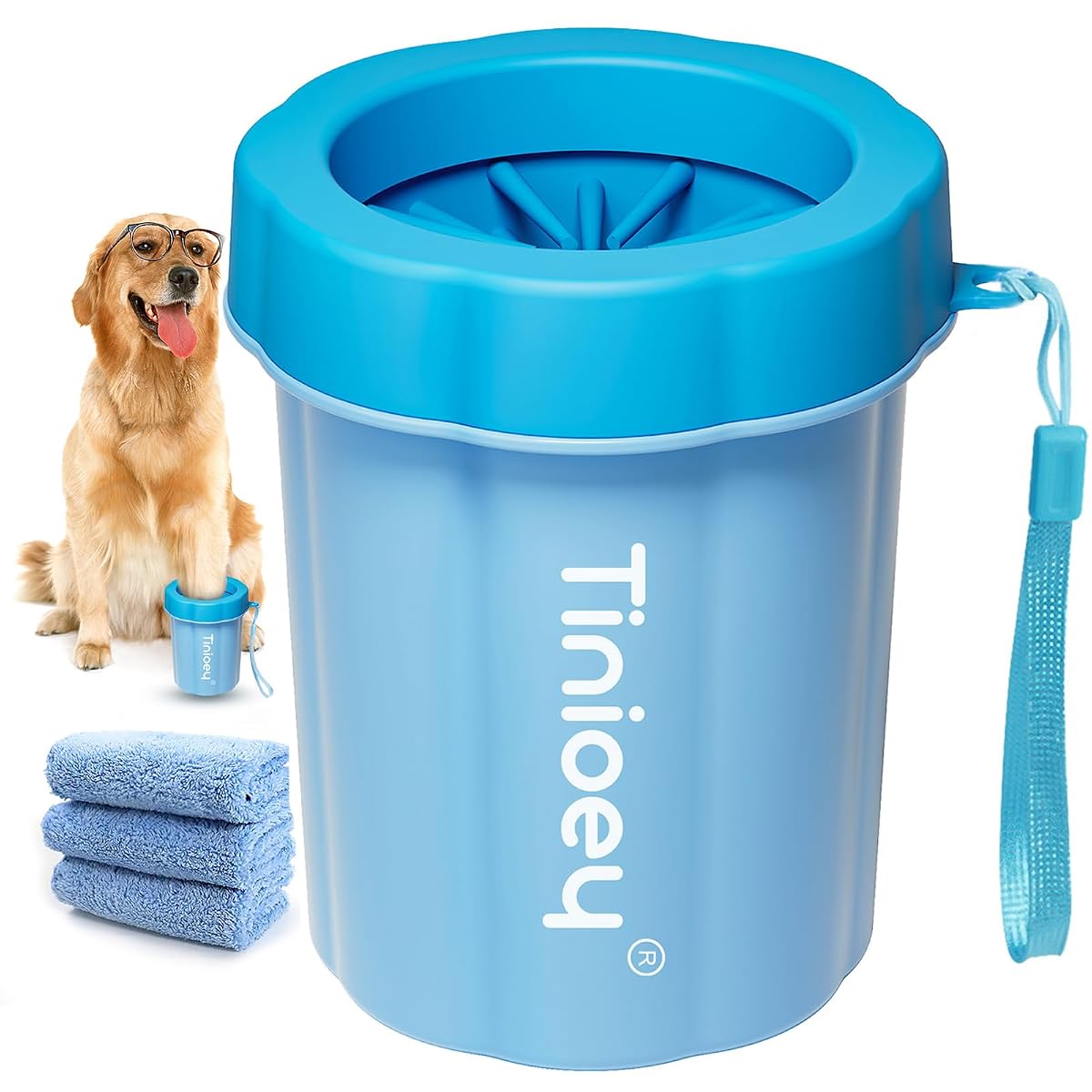
- Rinse each paw in a paw washer cup: add a little lukewarm water, put the paw in, twist gently so the soft bristles loosen the grit, then lift it out.
- On days without much mess, a pet wipe on each paw and between the toes is enough.
- Dry each paw with a microfiber towel, pressing it between the toes and pads, not just over the top.
- If your balm's label says to apply after cleaning, do it now, on dry paws.
- Finish with a quick look at each paw while you have it in your hand.
A paw washer cup is a lidded cup lined with soft silicone or plastic bristles. You add water, dip a paw, twist, and the bristles do the scrubbing. Sizes are made for small, medium and large paws, so measure the width of your dog's front paw and pick the cup that fits it with room to twist.
Paw washer cups
Fill with a little lukewarm water, dip, twist, lift. Choose the size by paw width.


Wipes are the quick option for between rinses or for the car. Look for wipes made for pets, and choose fragrance-free if you prefer. Browse more in grooming.
Pet wipes for paws
For quick cleanups when a full rinse is not needed.


Drying is where many routines fall short. Wet fur between the toes stays damp long after the top of the paw looks dry. Chenille and microfiber towels soak up a lot of water, and the ones with hand pockets let you hold the towel and the paw at the same time. A towel mitt is perfect for paws alone; a drying robe is lovely after a full snowy romp.
Towels, mitts and a drying robe
Microfiber and chenille for pressing between the toes.


Set up a paw station by the door
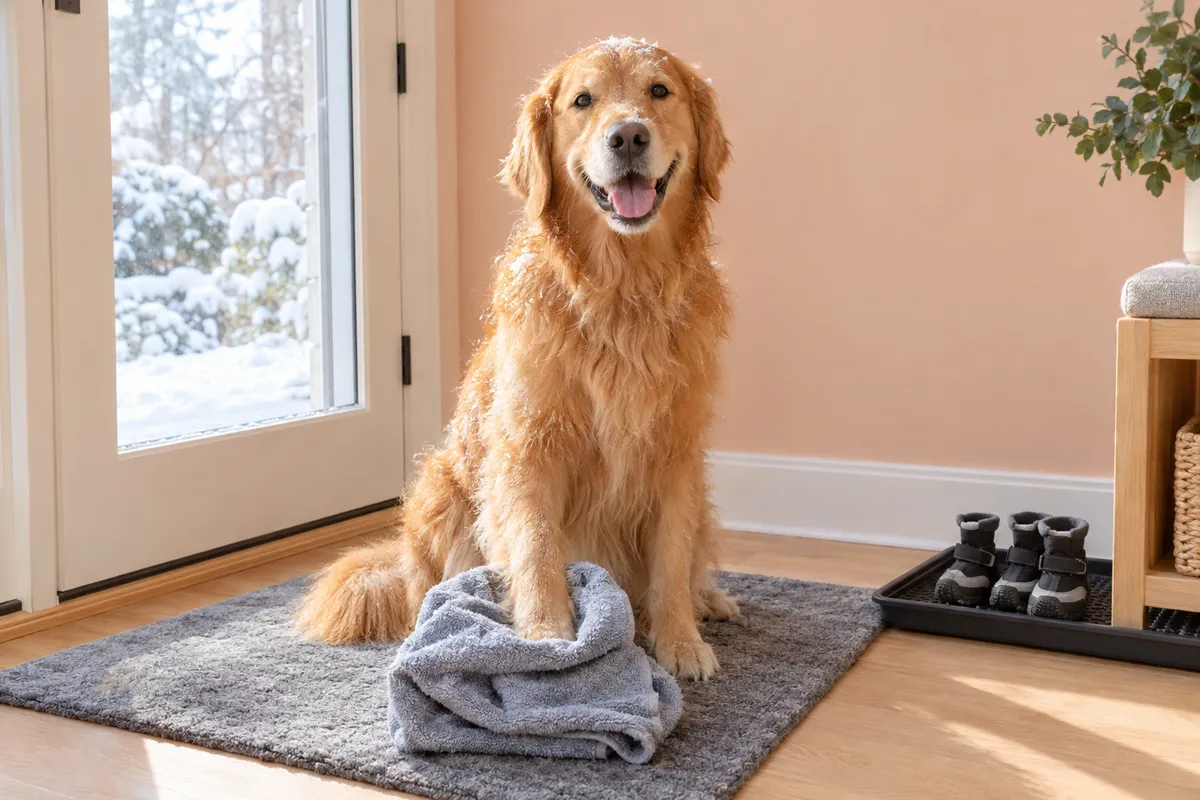
A routine only sticks when everything is where you need it. Pick the place just inside the door you use for walks and gather it all in one place. The station turns a muddy scramble into a calm thirty-second habit.
- An absorbent doormat inside the door, to catch drips while you work.
- A boot tray for wet booties, your own boots and the paw washer cup.
- A paw washer cup sized for your dog, kept half-filled on walk days.
- Two towels, one in use and one in the wash.
- A pack of pet wipes and the paw wax or balm, on a hook or shelf above.
- A small treat jar, so standing still for paw care always pays.
For the station
Absorbent mats and waterproof trays that keep slush off the floor.


The one thing to buy first
If you start with only one piece, make it an absorbent doormat inside the door. It gives you a place to stop, kneel and work on each paw while drips land on the mat instead of the floor.
- Absorbent top layer for wet paws and boots
- Machine washable
- Sets the place where the routine happens
When to ask your vet
Your quick look after each walk is the perfect moment to notice anything unusual. If you see cracks or bleeding on the pads, redness or swelling between the toes, limping that does not pass, or your dog licking or chewing a paw much more than usual, ask your vet. Do the same before using any new balm on a paw that already looks sore. Your vet knows your dog and can tell you what is going on.
Then get back to the fun part. With trimmed fur, the right layer for the weather and a station by the door, winter walks become something you both look forward to. For cozy evenings afterwards, see how to keep a dog warm indoors in winter.
Questions people ask
Should I wash my dog's paws after a winter walk?
Yes. Sidewalk grit and de-icer can cling to the fur between the toes, and dogs often lick their feet once they are inside. Rinse each paw in a little lukewarm water or wipe it with a pet wipe, then dry carefully between the toes.
Should I trim the fur between my dog's paw pads in winter?
Trimming the fur level with the pads helps stop snow from packing into ice balls and lets paws dry faster. Use a small paw trimmer or ball-tipped scissors, trim only what sticks out past the pads, and go slowly. If your dog is very anxious about it, a groomer can help.
Do I put paw balm on before or after a walk?
It depends on the product, so follow its label. Some waxes are meant to go on before the walk as a thin layer, and some balms are meant for clean, dry paws afterwards. Many families do both: wax before, a rinse and dry after.
Are booties better than paw wax?
Booties cover the whole paw, so they suit long walks, deep slush and heavily salted sidewalks. Wax is quicker and suits short walks or dogs who will not wear boots. Many dogs do well with wax most days and booties on the messiest ones.
How do I use a paw washer cup?
Add a little lukewarm water, put one paw in, twist the cup gently so the soft bristles loosen the dirt, then lift the paw out and dry it. Repeat for each paw and rinse the cup after. Pick the cup size by the width of your dog's front paw.
What if my dog's paws look cracked or sore?
Ask your vet. Cracks, redness, swelling between the toes, limping or a lot of paw licking are all worth a check, and your vet can advise before you try any product on a sore paw.
About the numbers
- Web search of common winter paw care questions, United States, read 2026-10-29: Pet-care guides agree on washing and drying paws after walks on salted ground, trimming fur between the pads to reduce ice balls, and applying paw wax before walks.
- Product listings on Hey Lovi, read 2026-10-29: Paw washer sizes, towel materials, boot soles and balm directions as stated on each listing.