Outdoor Cat Houses for Winter: Insulation, Heat and Placement
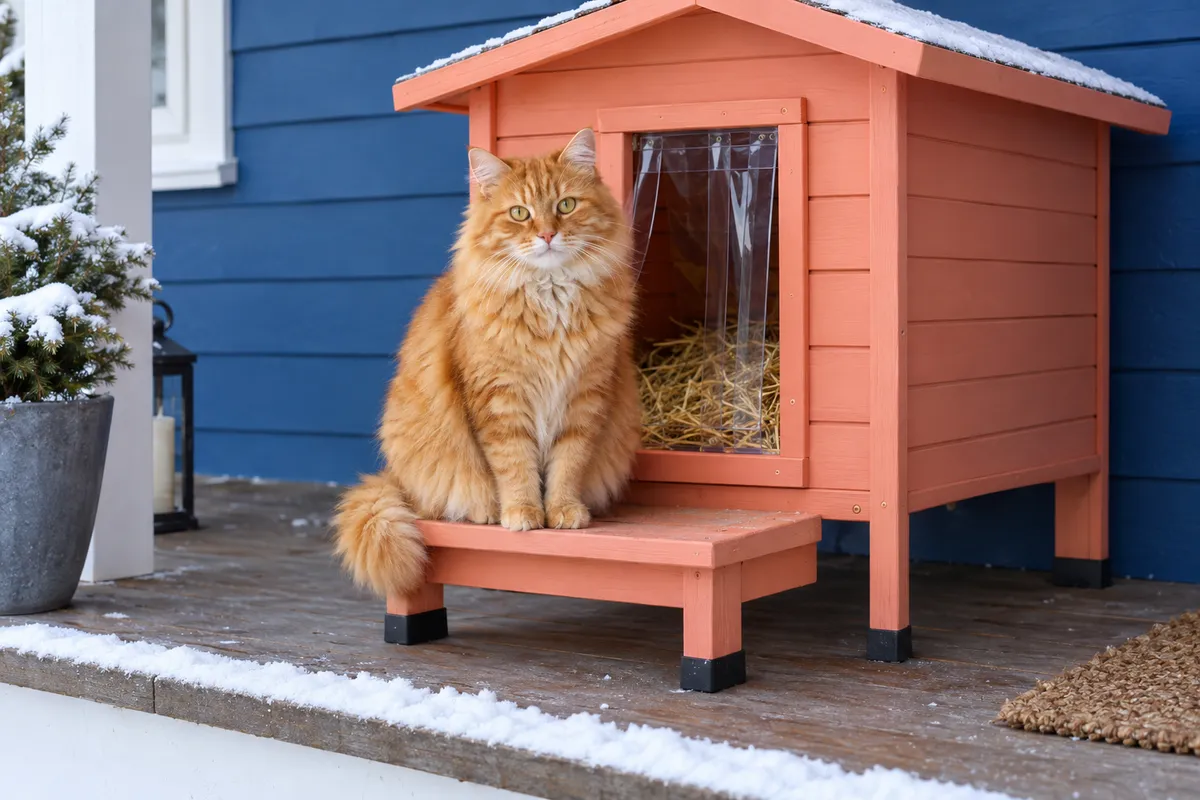
A warm outdoor cat house is small, raised off the ground, insulated on every side and bedded with straw, not blankets. Add a safe heated or self-warming pad and turn the door away from the wind.
In short
- The warmest outdoor cat house is a small, raised, insulated box, because a cat's own body heat warms a snug space far better than a roomy one.
- Bed the house with loose straw, not hay, towels or blankets: straw stays dry and fluffy, while fabric holds damp and turns cold.
- An electric pad belongs only in a dry house, with a chew-resistant cord, a thermostat and an outdoor GFCI outlet; with no outlet nearby, choose a cordless self-warming pad.
- Lift the house off the ground, give it a small door with a flap or curtain, and turn that door away from the winter wind.
An outdoor heated cat house keeps a cat warm when it is small, raised off the ground, insulated on every side, dry inside and turned away from the wind. Heat is the finishing touch, not the foundation: a well-built box bedded with loose straw already holds a cat's own warmth, and a safe pad adds more on the coldest nights.
What makes an outdoor cat house warm
Four things matter more than any heater. Look for all four when you compare outdoor cat houses.
- Size. A cat warms the air around it with its own body: in a snug house that warmth builds up, in a roomy one it drifts away. The smallest wooden house below is 14.5 by 17 inches inside with 15 inches of headroom, a cozy size for one cat.
- Insulation. Foam in the walls, floor and roof slows the warmth escaping. Some wooden houses have foam built in; one here takes a removable liner with a foam core about 0.78 inch thick.
- A raised floor. Frozen ground pulls warmth out of anything resting on it. Legs or a raised base that lift the floor a few inches, or a pallet underneath, keep the floor dry and out of the cold.
- A small, covered door. A doorway about 6 inches wide lets a cat in while keeping most of the wind and larger animals out, and a clear flap or strip curtain holds warm air inside while the cat can still see out.
Wooden houses for the yard
Each has a flap or curtain over its doors. The first three are insulated; the two-story house suits milder winters, bedded deep with straw.


| House type | How it holds warmth | Needs power | Best spot |
|---|---|---|---|
| Insulated wooden house | Foam in the walls or a foam liner holds in the cat's own warmth | No | Open yard, against a wall or under eaves |
| Heated fabric house | A heated pad under a washable cover, inside water-resistant walls | Yes, an outdoor GFCI outlet | Covered porch, garage or barn |
| Stackable heated house | A plug-in heat pad and clear flaps on both doors; stacks for more cats | Yes, an outlet nearby | Garage, barn or enclosed porch |
| Two-story wooden house | Two rooms; packed straw fills the extra space | No | Milder winters and small groups of cats |
Heated or self-warming: picking the heat
Choose by power first. With an outdoor outlet within reach, a heated pad adds real warmth on the coldest nights. Without one, a self-warming pad is the cordless answer: a reflective layer inside bounces the cat's own body heat back, with no plug and nothing to chew.
An electric pad outdoors needs a few non-negotiables:
- A cord wrapped in steel or a chew-resistant sheath, run where the cat cannot reach or chew it.
- A built-in thermostat or automatic shut-off, so the pad holds a gentle warmth instead of climbing.
- A safety listing mark such as UL, ETL or MET on the pad or its paperwork.
- An outdoor GFCI outlet with a weatherproof in-use cover, never an indoor extension cord.
- A pad made for pets. Heating pads made for people and space heaters do not belong in a cat house.
| Heat option | How it works | Power | Good to know |
|---|---|---|---|
| Straw only | Loose straw traps air and the cat burrows into it | None | The base layer in every house; replace it when damp |
| Self-warming pad | A reflective layer returns the cat's own warmth | None | Cordless and quiet; warm only while the cat lies on it |
| Heated pad | A heating element under a soft cover | Outdoor outlet | The most warmth; needs a protected cord and a dry house |
Heated houses with the pad included
Each comes with its heated pad and plugs into an outlet; all three do best under a roof.


Already have a sturdy house? Slip a heated or self-warming pad inside instead. On a heated setup, a timer lets the pad run through the coldest hours only.
Pads to slip inside a house you already have
A waterproof heated pad made for outdoor use, then cordless self-warming mats.


What to put inside an outdoor cat house
Straw, not hay, and no blankets. Straw shrugs off moisture, so it stays loose and dry and a cat can burrow in and shape a warm nest. Hay, towels and blankets soak up damp and turn cold. Set the house up in this order:
- Lay a self-warming mat, or the heated pad the house was made for, flat on the floor.
- Around a self-warming mat, pack straw loosely a quarter to halfway up the walls, deep enough to burrow into. With an electric pad, keep the straw to the sides unless the maker's instructions say otherwise.
- Check once a week and after every storm: pull out anything damp or flattened and add fresh straw.
- Keep food and water near the house, never inside, so a spill cannot wet the bedding.
Cats need open water through the winter too. A bowl with a sealed thermostat keeps water from icing over; set it a short walk from the shelter door on a flat, dry spot. See more heated water bowls.
Water that stays liquid
Thermostat-controlled bowls with chew-resistant cords for porches and yards.


Where to place it: wind, ground and snow
Put the house where the cat already likes to rest and where people and dogs pass least. Then:
- Turn the door away from the wind your yard usually gets in winter, or set the house a few inches from a wall so the wall takes the gusts.
- Tuck it under eaves, a deck or a carport roof so rain and snow land elsewhere. Fabric heated houses do best under cover.
- Keep it off bare soil: on its own legs, a pallet or a few bricks.
- Run any cord along a wall, never across a path, and look it over for chew marks every week.
- After snow, clear the doorway and the path to it the same morning.
If a cat looks unwell or seems to struggle in the cold, ask your vet, and bring the cat inside if you can.
Our picks for an outdoor heated cat house
For a small group in an open yard
Fir walls with foam insulation on all six sides, a raised base and an L-shaped entrance behind a PVC curtain, so the wind cannot blow straight in. At 34.5 by 21.5 inches it is the roomiest house here; tuck straw into the corners so there is less air to warm.
- Foam insulation on all six sides
- Roof opens for cleaning and fresh straw
For a covered porch with an outlet
A water-resistant fabric house on a waterproof base, with a heated pad under a washable cover, a timer for scheduled heating and a chew-proof cord on a 16-foot cable, so the plug can stay well away from the door.
- Two removable clear doors
- Five removable feet lift the waterproof base
For one cat in a small space
A compact wooden house, 14.5 by 17 inches inside, with a 6 by 7 inch door behind a clear flap and legs that lift it 5.5 inches off the ground. Small inside means warm inside: bed it with straw and add a self-warming mat folded to fit.
- Clear door flap holds the warmth in
- Landing step in front of the door

To heat a house you already own
A 23 by 20 inch waterproof heated pad with a memory foam core and two built-in thermostats, made for outdoor use. It needs a roomy floor, so measure inside your house first.
- Waterproof, with a memory foam core
- Two built-in thermostats

When there is no outlet nearby
A cordless self-warming mat, 24 by 18 inches, with a soft removable cover and a non-slip base. It returns the cat's own warmth, so it shines in an insulated house with straw around it.
- No plug and nothing to chew
- Quiet, with no crinkle
Helping a cat move in
Cats take their time with anything new, so introduce the house gently. Set it up before the first freeze so it smells familiar by the time the cold comes, and prop the door flap open for the first few days. For more styles, compare every heated cat house or start small with this compact insulated wooden house.
Once the house is in place, our checklist on what to put in an outdoor cat shelter covers bedding, warm pads and placement, and a heated water bowl keeps water from freezing nearby.
Questions people ask
What can I put in my outdoor cat house for warmth?
Loose straw is the best bedding, because it stays dry and lets a cat burrow in. Add a cordless self-warming mat underneath, or a pet heating pad made for outdoor shelters if an outdoor outlet is close. Skip hay, towels and blankets: they soak up damp and turn cold.
How do I make an outdoor cat house ready for cold weather?
Keep it small, raise it a few inches off the ground and insulate the walls, floor and roof. Fit a small door with a clear flap or strip curtain, bed it with straw and turn the door away from the wind. Check the roof seams before the first freeze.
How can I safely keep my outdoor cats outside in winter?
Give them a dry, insulated shelter, water that cannot freeze and a daily check after storms and snow. Run any heated pad from an outdoor GFCI outlet with a chew-resistant cord kept out of reach. If a cat seems unwell in the cold, ask your vet and bring the cat in if you can.
Do self-warming cat beds work outside?
Yes, as long as they stay dry inside an insulated shelter. They have no power of their own: a reflective layer returns the warmth the cat gives off, so they are only as warm as the cat and the house around them. On the coldest nights, a heated pad in a dry house adds more.
Is it safe to leave a heated cat house plugged in all winter?
A pad made for outdoor use, with a thermostat or automatic shut-off, can stay plugged in when used as the maker directs. Plug it into an outdoor GFCI outlet and look over the cord every week. A timer lets you heat only the coldest hours.
About the numbers
- Alley Cat Allies, Providing Shelter guide for community cats: Doorway about 6 to 8 inches wide; shelter elevated off the ground, pallets work; entry faced away from the wind or fitted with a door flap or L-shaped entry; straw, never hay; avoid blankets and towels.
- Alley Cat Allies, Straw, not Hay, for Outdoor Cat Shelters: Straw repels moisture, hay soaks it up and turns cold; pack straw loosely to the quarter or halfway point so cats can burrow.
- ASPCA, Winter Shelter Bins for Community Cats FAQ: A small, enclosed shelter helps cats keep their body heat; entrance about 5.5 to 6 inches wide, faced toward a wall; blankets and towels absorb moisture and get cold when wet; replace wet bedding.