What to Put in an Outdoor Cat Shelter: A Winter Checklist
Put loose straw inside an outdoor cat shelter, never hay or blankets, and add a self-warming or outdoor-rated heated pad if you can. Raise it, shrink the door and face it out of the wind.
In short
- Loose straw is the bedding animal welfare groups recommend for outdoor cat shelters, because it stays dry and lets a cat burrow into a warm nest.
- Hay, blankets, towels and pillows soak up moisture, turn cold and can freeze, so they do not belong in an outdoor shelter.
- A self-warming mat needs no power, while an outdoor-rated heated pad needs a safe outdoor outlet and a chew-resistant cord kept away from straw.
- Raise the shelter off the ground, keep the doorway about 6 to 8 inches wide and turn the opening away from the wind.
- Check the shelter every week through winter and swap out straw that is wet, flattened or dirty.
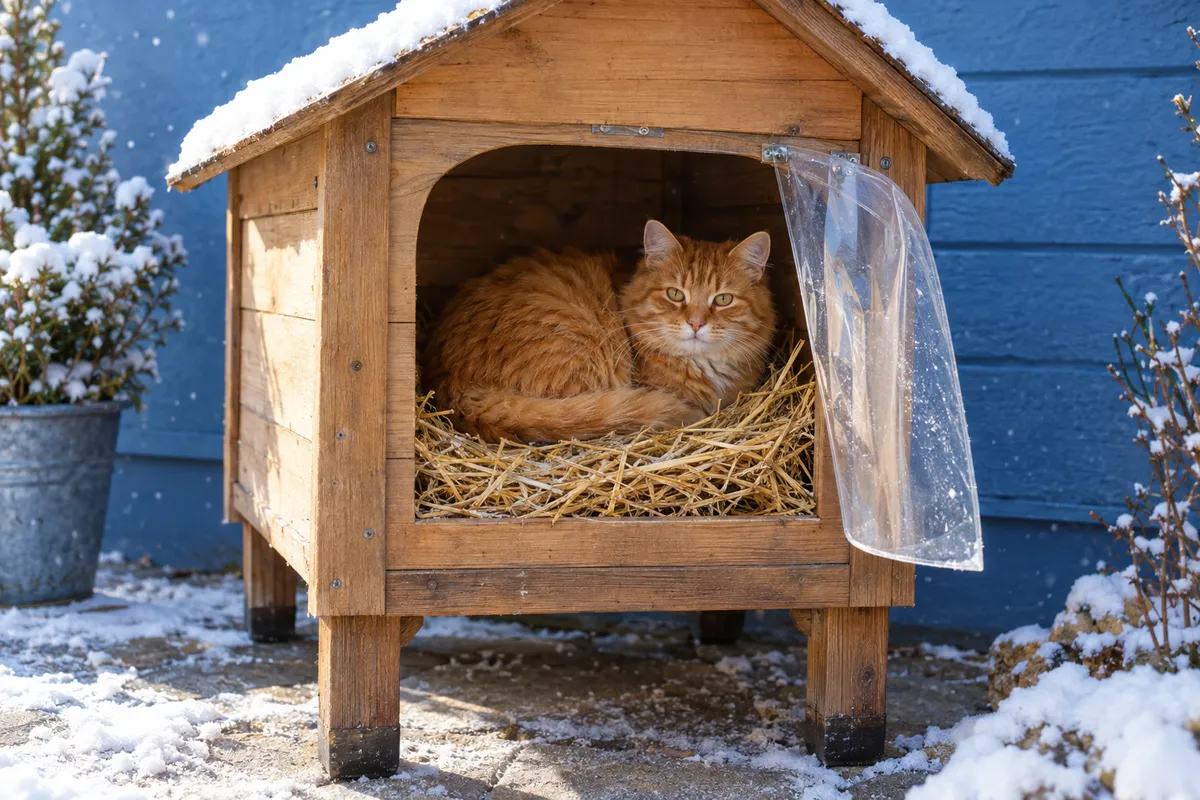
Put loose, dry straw inside an outdoor cat shelter, packed a quarter to half full, never hay, blankets or towels. An outdoor cat shelter is a small, insulated box that holds a cat's own body heat, so the bedding has to stay dry. Add a self-warming mat or an outdoor-rated heated pad if you can, then raise the box and turn its door out of the wind.
If you are still choosing the house itself, start with our guide to outdoor cat houses for winter and come back here to fill it.
What is the best bedding for an outdoor cat shelter?
Straw is the best bedding, and it is the one animal welfare groups name again and again. Straw is the dry, hollow stalk left after a grain harvest. It sheds moisture instead of drinking it, and a cat can push it aside to make a snug, body-shaped hollow that holds warm air around them.
Alley Cat Allies, a national advocacy group for community cats, recommends packing straw loosely to the quarter or halfway point of the shelter. The Humane Society of the United States' HumanePro fact sheet on outdoor bedding calls straw the top choice because it repels moisture and traps heat. Keep it loose: straw jammed in tight leaves no room to burrow.
Straw vs hay vs blankets: what is the difference?
They look alike on the shelf but behave very differently once it rains or snows. Hay is dried grass grown as animal feed. It soaks up water, stays damp and can grow mold. Blankets, towels and old pillows feel cozy indoors, but outside they hold moisture, pull warmth away from a lying cat and can freeze stiff overnight.
| Bedding | When it gets damp | Can a cat burrow in it? | Verdict outdoors |
|---|---|---|---|
| Straw | Sheds moisture, stays springy | Yes, it forms a nest | Best choice in cold, wet weather |
| Hay | Soaks it up, can turn moldy | Packs down flat | Skip it |
| Blankets and towels | Hold water, can freeze solid | Not really | Skip it |
| Shredded newspaper | Goes soggy fast | Somewhat | Only in mild, dry climates, changed often |
| Self-warming mat | Must stay dry to work | Lies flat on the floor | Good under or beside straw in a dry house |
| Outdoor-rated heated pad | Built for outdoor use | Lies flat | Good where a safe outdoor outlet exists |
How to tell them apart when you buy: straw is golden yellow, light and hollow. Hay is greener, heavier and leafy. Alley Cat Allies notes that hay usually costs two to three times as much as straw, so if a bale seems pricey, ask before you carry it home. Look for plain, untreated straw sold as animal bedding.
Can I use a heated pad in an outdoor cat shelter?
Yes, if it is made for outdoor use and you have a safe outdoor outlet. A heated pad gives steady warmth on the coldest nights, which a shy cat who sleeps alone will appreciate. The safety work is all about the cord.
- Choose a pad sold for outdoor or pet house use, with a chew-resistant cord: a steel-wrapped or hard spiral-wrapped cable is the one to look for.
- Plug into a covered outdoor outlet with a ground fault (GFCI) protector, and use only an outdoor-rated extension cord if you need one.
- Run the cord along the ground and out of reach, and feed it through the shelter's cord hole rather than under the door flap.
- Keep loose straw off the top of an electric pad. Lay the pad flat on the floor, put a thin washable cover on it, and bank the straw around the edges instead.
- Leave part of the floor unheated so a cat can move off the warm spot when they want to.
- Look at the cord on every visit. Any chewing, cracks or a damp plug means unplug it and replace it.
Heated pads with protected cords
Each has a wrapped or chew-resistant cable and a soft cover. Check that the one you choose is rated for where you will use it.


Not sure whether plugged-in heat or passive warmth suits your setup? We compared them side by side in heated vs self-warming cat beds.
What about self-warming mats with no power?
A self-warming mat is a padded pad with a reflective layer inside that bounces a cat's own body heat back to them. It needs no outlet and has no cord to chew, so it suits a garage-side shelter, a back fence or any spot far from power. It only works while it stays dry, so it belongs inside a raised, weatherproof house.
The neatest setup is a self-warming mat on the floor with loose straw around and over it, so the cat gets reflected warmth below and an insulating nest above. Shake the mat out and dry it indoors whenever you swap the straw.
Self-warming mats that need no outlet
Plush tops, reflective layers inside, washable covers.


A mat sized for a cat house floor
This plush, shaggy self-warming mat is made to line an outdoor cat house or a carrier, and its non-skid back stays put when a cat circles before settling.
- No cord, nothing to plug in
- Washable when the season turns
- Works well under a layer of straw
How big should the door be, and does it need a flap?
Keep the doorway small: Alley Cat Allies suggests about 6 to 8 inches wide, just big enough for a cat and too small for most larger visitors. A small opening also lets less cold air in. A clear plastic flap or an L-shaped entry keeps out blowing snow while still letting a cat see inside before stepping in.
Many outdoor houses add a second, escape door at the back. A cat who can see two ways out is more likely to settle in, especially in a yard shared with other cats or wildlife.
Size matters for the whole box too. Alley Cat Allies points to about 2 feet by 3 feet and at least 18 inches high as a good size, and warns that bigger is not warmer, because a cat has to heat all that air with their body. Room for a small group to huddle is plenty.
Where should I put an outdoor cat shelter?
Put it somewhere sheltered, raised and facing away from the wind. In most of the US, winter wind comes from the north or west, so a door facing south or east is a good starting point; watch where the snow drifts in your own yard and adjust.
- Raise it at least a few inches off the ground on legs, bricks or a wooden pallet so snowmelt and rain cannot seep in from below.
- Tuck it against a wall, a fence or under a deck overhang where it is out of the worst weather.
- Choose a quiet corner away from foot traffic, dogs and car doors.
- Plan your power route first if you will use a heated pad, so the cord never crosses a path or a lawn.
Browse more raised and insulated designs in our cat houses and condos.
Weatherproof, insulated outdoor cat houses
Raised floors, small doors and flaps, and a mix of soft-sided, wooden and molded shells.


Raised, flapped and pad-ready
A soft-sided waterproof house on adjustable legs, with a clear door flap, a cord port in the side wall and a heating pad layered over an insulated base.
- Legs keep the floor out of puddles
- Clear flap blocks wind but lets a cat peek in
- Cord exits through its own port
For a spot with no power at all
A molded, rounded shell with a short tunnel entry. The round shape has no corners for drafts, and the tunnel works like an L-shaped entry to keep weather out.
- Fill with loose straw and add a self-warming mat
- Hard shell shrugs off rain and snow
How do I keep water from freezing near the shelter?
Use a heated outdoor bowl with a thermostat and a protected cord, set a few feet from the shelter door, never inside it. Water inside the house spills into the bedding and turns a warm nest into a cold, wet one.
Heated bowls for outdoor water
Thermostat controlled, with chew-resistant cords.

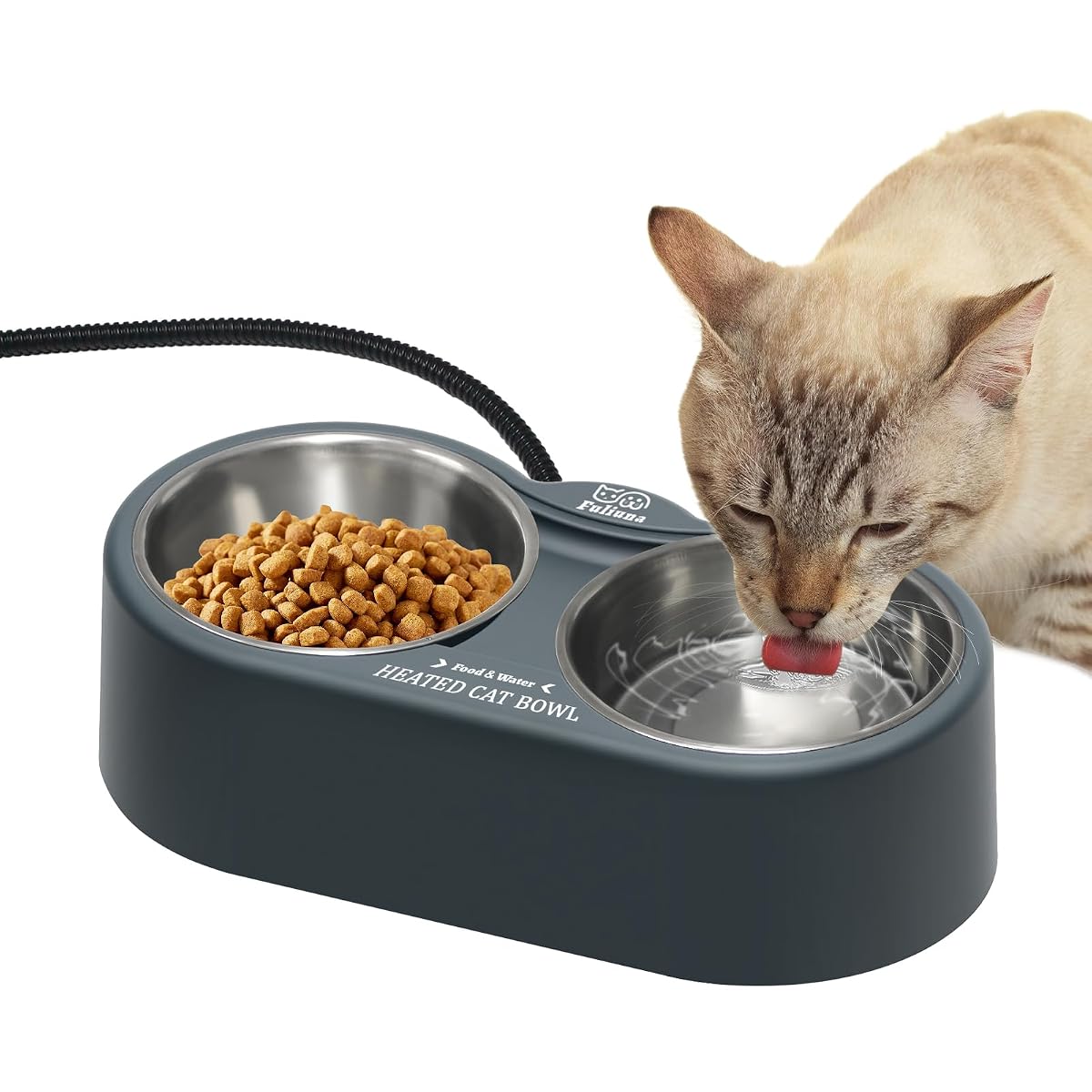


See the full range in bowls and feeders, including smaller bowls for one cat.
How often should I check an outdoor cat shelter in winter?
Look at it every week, and again after every heavy rain, snowstorm or freeze-thaw spell. The aim is simple: keep it dry, keep it clear and keep the bedding fluffy.
- Clear snow from the roof and from in front of the door so the opening never gets buried.
- Reach in and feel the straw. Swap any that is damp, matted or soiled; keep a spare bag of straw in a dry spot for this.
- Check the flap still swings freely and has not frozen shut.
- Inspect every cord and plug for chewing, cracks or moisture.
- Top up the straw so it stays loosely filled to about the halfway point.
- Do a full clean-out and fresh fill as the seasons change, in autumn before the cold arrives and again in spring.
Your winter shelter checklist
- A weatherproof house about 2 by 3 feet and 18 inches high, or smaller for one cat.
- Raised floor on legs, bricks or a pallet.
- A 6 to 8 inch doorway with a flap or L-shaped entry, and ideally an escape door.
- Loose straw packed a quarter to half full, with a nest pressed into the middle.
- Optional: a self-warming mat under the straw, or an outdoor-rated heated pad with a chew-resistant cord kept clear of loose straw.
- Door turned away from the prevailing wind, tucked against a wall or under an overhang.
- A heated water bowl a few feet away, never inside.
- A weekly check, plus a fresh fill each autumn and spring.
Walking a dog through the same cold snap? Our winter paw care routine for dogs covers the other half of the household.
Questions people ask
Is straw or hay better for an outdoor cat shelter?
Straw. It sheds moisture and lets a cat burrow into a warm nest. Hay is grown as feed, soaks up water, packs down and can turn moldy, so it leaves the shelter cold and damp.
Can I put a blanket in an outdoor cat house?
It is best not to. Blankets and towels hold moisture, pull warmth away from a lying cat and can freeze overnight. If you want something soft, use a self-warming mat under loose straw in a dry, raised house.
How much straw should go in a cat shelter?
Pack it loosely to about a quarter to half full, as Alley Cat Allies suggests. Leave enough room for a cat to step in, turn around and burrow.
Are heated pads safe in an outdoor cat house?
They can be, when the pad is made for outdoor or pet house use and the cord is steel-wrapped or chew-resistant. Plug it into a covered GFCI outlet, keep loose straw off the pad and check the cord every week.
Which way should a cat shelter door face?
Away from the prevailing wind, which in much of the US means facing south or east. Watch where snow drifts in your yard and turn the door away from it.
Should I put food and water inside the shelter?
No. Spilled water soaks the bedding, and food can draw other animals inside. Place a heated bowl and food a few feet from the door instead.
About the numbers
- Alley Cat Allies, Straw, not Hay, for Outdoor Cat Shelters, read 2026-11-01: Pack straw loosely to the quarter or halfway point; hay usually costs two to three times as much as straw.
- Alley Cat Allies, Providing Shelter, read 2026-11-01: Shelter about 2 feet by 3 feet and at least 18 inches high; doorway about 6 to 8 inches wide; raise it off the ground; face the entrance away from the wind.
- HumanePro (Humane Society of the United States), Fact sheet: Straw for outdoor paws, read 2026-11-01: Straw repels moisture and traps heat; hay and blankets are on the what-not-to-use list; shredded newspaper only in milder, dry climates.