How to Choose a Dog Bowl: Materials, Shapes and Sizes Compared
Choose a dog bowl by material first (stainless steel, ceramic, plastic or silicone), then shape, base and size for your dog's face, ears and appetite. Here is how each compares.
In short
- Stainless steel is the easiest everyday dog bowl to keep clean: it does not chip, survives the dishwasher and shrugs off chewing.
- Ceramic bowls are heavy and pretty, but retire any ceramic bowl the moment the glaze chips or cracks.
- Plastic bowls are light and cheap but scratch over time, and scratched plastic is harder to scrub clean, so replace them when they look worn.
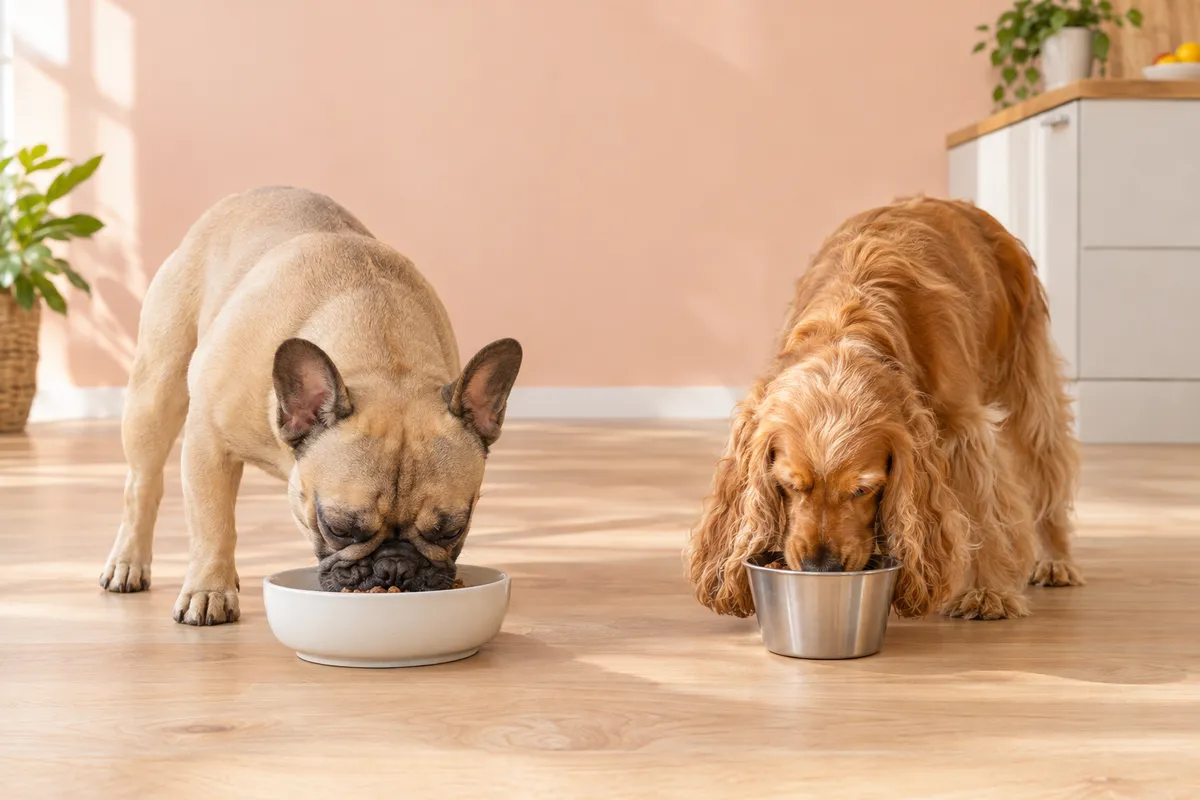
- Match the shape to the face: wide and shallow for flat-faced breeds, narrow and deep for long-eared dogs, and a floating-plate water bowl for sloppy drinkers.
- Elevated or floor bowls are both normal choices; if you are weighing a raised bowl for a health reason, ask your vet first.
Hello, lovely. Here is the short answer to how to choose a dog bowl: pick the material you can clean easily every day, then pick the shape that suits your dog's face, ears and eating style, then the size and base that stop it sliding across the kitchen. Everything else is style. Below, every common option side by side, with the trade-offs in plain words.
Dog bowl materials compared at a glance
Stainless steel is the dependable everyday choice, ceramic is the heavy and handsome one, plastic is the light budget option, and silicone is the travel specialist. The table sets out what changes between them.
| Material | Good at | Watch for | Cleaning | Best for |
|---|---|---|---|---|
| Stainless steel | Unbreakable, no glaze to chip, light to carry | Light bowls slide and clatter unless the base is rubberised | Dishwasher or hot soapy water; no special care | Most dogs, chewers, crates, busy homes |
| Ceramic | Heavy, stays put, lovely on a kitchen floor | Chips and cracks; can break if dropped | Usually dishwasher safe; check the glaze each wash | Small and medium dogs who eat calmly |
| Plastic | Light, cheap, many colours and shapes | Scratches over time; some dogs chew the rim | Hand wash gently; replace when scratched | Short-term use, puppies outgrowing sizes |
| Silicone (collapsible) | Folds flat, clips to a bag, soft if dropped | Can tip when empty; not for chewers | Rinse after each outing; most are dishwasher safe | Walks, hikes, car trips |
| Insulated or double-wall steel | Heavy-duty, quieter, keeps water cooler for longer | Bulkier and heavier to lift | Hand wash the seams carefully | Big drinkers, outdoor and patio bowls |
Stainless steel: the easy everyday choice
If you want one bowl that simply works, choose stainless steel. It has no coating to wear off, it does not chip, and a determined chewer cannot do much to it. The only real complaint is that a plain steel bowl is light, so an eager eater can push it around the floor. The fix is a rubber ring or a full rubber bottom, which turns a sliding bowl into one that stays put.
For dogs who sleep in a crate, a bowl that snaps onto the crate wall keeps water upright through the night. Heavy, wide-based steel bowls are the next step up for big dogs who nose their dinner across the room. You will find every style in our bowls and feeders.
Stainless steel bowls that stay put
Rubber bottoms, wide no-tip bases and a crate clip-on.


Ceramic and plastic: what chips and scratches mean
Ceramic is the bowl you leave out because it looks nice. Its weight is a real advantage: a small dog cannot shove it about, and many come with an anti-skid ring underneath. The rule is simple: run a finger around the rim and inside each time you wash it. If the glaze is chipped or there is a hairline crack, retire the bowl. A chip leaves rough edges and a crack can let water into the clay under the glaze.
Plastic is light, inexpensive and comes in clever shapes, including deep narrow bowls for long-eared dogs. Its weakness is the surface. Spoons, teeth and scrubbing leave fine scratches, and a scratched surface is harder to get properly clean. Treat plastic as a bowl with a lifespan: when it looks dull, scratched or chewed, replace it.
Ceramic bowls with weight and grip
Sized for small and medium dogs, several with anti-skid bases or a wooden stand.


Shapes for flat faces, long ears and sloppy drinkers
The shape of the bowl matters as much as the material, and it depends on your dog's face.
- Flat-faced breeds (Pugs, French Bulldogs, Shih Tzus, Boston Terriers): a wide, shallow bowl lets a short muzzle reach the bottom without pushing the face deep into the food. Look for low sides and a broad base.
- Long-eared dogs (Cocker Spaniels, Beagles, Basset Hounds): a narrow, deep bowl with a tapered top lets the nose in while the ears fall outside the rim, so ears stay out of dinner and out of the water.
- Sloppy drinkers and splashers: a spill-proof water bowl with a floating plate lets only a little water up at a time, so beards, jowls and floors stay drier.
- Fast eaters: a maze or ridged bowl, covered in our slow feeder myths and facts.
Wide, deep and drip-less shapes
Shallow dishes for short muzzles, ear-friendly bowls for spaniels, and no-splash water bowls.


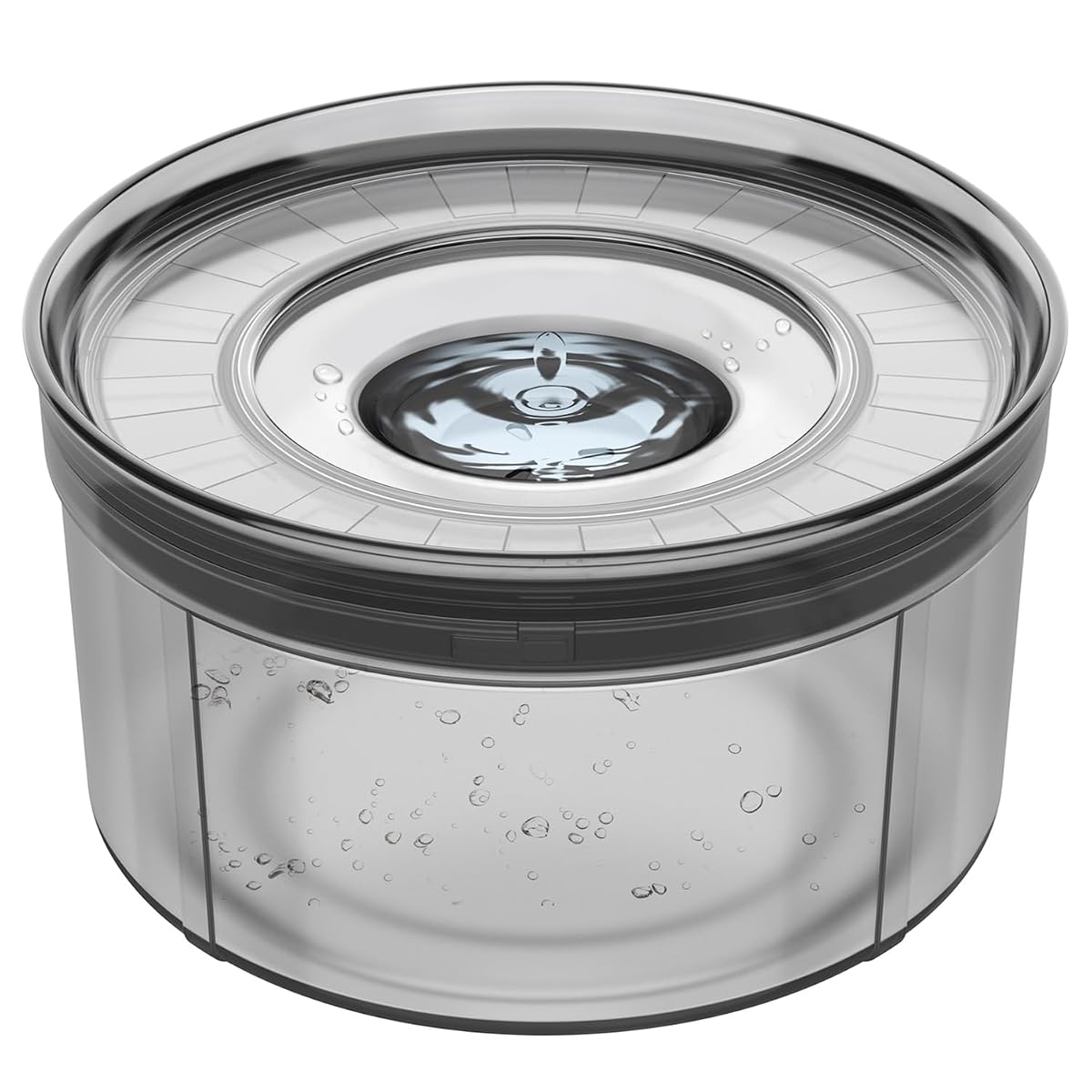

For the dog who leaves a puddle
A clear, gallon-size water bowl with a floating plate on top. Your dog drinks from the small open centre, and the plate keeps the rest of the water from sloshing out when the bowl is bumped.
- Large capacity for big drinkers or multi-dog homes
- Non-slip base
- Clear sides show the water level at a glance
Non-slip, weighted and collapsible bowls
A bowl that moves is a bowl that spills. There are three ways to stop it: a rubber base on the bowl itself, a weighted bowl (heavy ceramic or a steel bowl wrapped in a heavier shell), or a silicone mat underneath that grips the floor and catches drips. A mat also works with any bowl you already own.
For days out, collapsible silicone bowls fold flat into a pocket or clip to a backpack with a carabiner. Some come with lids for carrying a meal. For the car, a travel water bowl with an inward-curving top cuts down on splashing over bumps. Browse collapsible dog bowls for walks, or the car-friendly no-spill travel bowl.
Grip, weight and on-the-go bowls
A silicone mat for any bowl, plus folding bowls for walks and road trips.


Elevated or floor bowls: the options
Both are ordinary, everyday choices. Floor bowls are simple and stable. Raised bowls sit in a stand: fixed-height wooden stands, adjustable stands with two or three height settings, and single-bowl holders that widen sideways to fit the bowl you already have. Some owners of tall dogs simply prefer not to bend down to fill and lift bowls, and some like a stand that keeps bowls in one tidy place.
Whether a raised bowl is right for your own dog's body is a health question, so ask your vet before you switch for that reason. If your dog is older, our senior-friendly home guide looks at bowls alongside ramps and beds. When choosing a stand, check the maker's sizing: one stand here, for example, says it suits dogs 17 to 20 inches high at the shoulder.
Bowl stands and raised feeders
Adjustable heights, single holders and sets with bowls included.


Sizing a bowl for your dog
Size the bowl to the meal and the face, not just the dog. A food bowl should hold one full meal with room left so food does not tip over the rim; the bag or your vet tells you how much that meal is. A water bowl can be bigger, because more water between refills is always handy. Then check the opening: a large dog needs a mouth-wide rim, a toy breed needs low sides it can reach over.
- Measure one meal in cups and choose a bowl that holds a little more.
- Check the rim width against your dog's muzzle, and the depth against the shape of the face.
- Pick the base: rubber ring, weighted, mat or stand.
- Buy two: one to use while the other is being washed.
How to clean each type of bowl
Wash food bowls after every meal and refresh water daily. Each material needs a slightly different touch:
- Stainless steel: hot soapy water or the dishwasher. Dry well so water spots do not build up.
- Ceramic: dishwasher or hand wash, and do the fingertip test for chips and cracks each time.
- Plastic: gentle hand wash with a soft sponge; harsh scrubbers add scratches.
- Silicone: rinse right after a walk, then wash at home; open the folds fully so nothing hides in the creases.
- Spill-proof and floating-plate bowls: take them apart as the instructions show and wash every piece.
- Stands and mats: wipe down weekly; food and drips collect where the bowl sits.
Questions people ask
What is the best type of dog bowl to use?
For most dogs, a stainless steel bowl with a non-slip rubber base is the easiest to live with: it does not chip, it is simple to clean and it stays put. Ceramic is a lovely alternative if you check it for chips, and silicone is best kept for travel.
Should dog bowls be on the floor or elevated?
Both are normal choices, and many dogs eat happily either way. Raised stands suit owners who like tidy, easy-to-reach bowls. If you are thinking of a raised bowl for a health reason, ask your vet what is right for your dog.
How do I choose a dog bowl for a large dog?
Look for a heavy or rubber-based bowl with a wide rim that holds a full meal with room to spare, and a large water bowl so it lasts between refills. Steel is the sturdiest choice for big, enthusiastic eaters.
How do I choose a dog bowl for a small dog?
Choose low sides your dog can reach over easily and a size that fits one meal. Heavy ceramic or rubber-based steel stops a small dog pushing the bowl away, and flat-faced small breeds do well with wide, shallow shapes.
When should I replace a dog bowl?
Replace ceramic as soon as the glaze chips or cracks, and plastic once it looks scratched, dull or chewed. Stainless steel lasts for years; replace it if the rubber base perishes or the bowl dents badly.
What bowl is best for a dog with long ears?
A narrow, deep bowl with a tapered top lets your dog's nose in while the ears hang outside the rim. These are often called spaniel or long-ear bowls.
About the numbers
- Google search, United States, read 2026-10-28: People also ask: "What is the best type of dog bowl to use?" and "Should dog bowls be on the floor or elevated?"; related searches for choosing a dog bowl for large dogs and small dogs, and stainless steel dog bowls.