Is a Slow Feeder Good for Dogs? 7 Myths and Facts Checked
A slow feeder turns dinner into a small search game for many dogs, but the right one depends on pattern depth, bowl size, muzzle shape and material. Here are seven common beliefs, checked.
In short
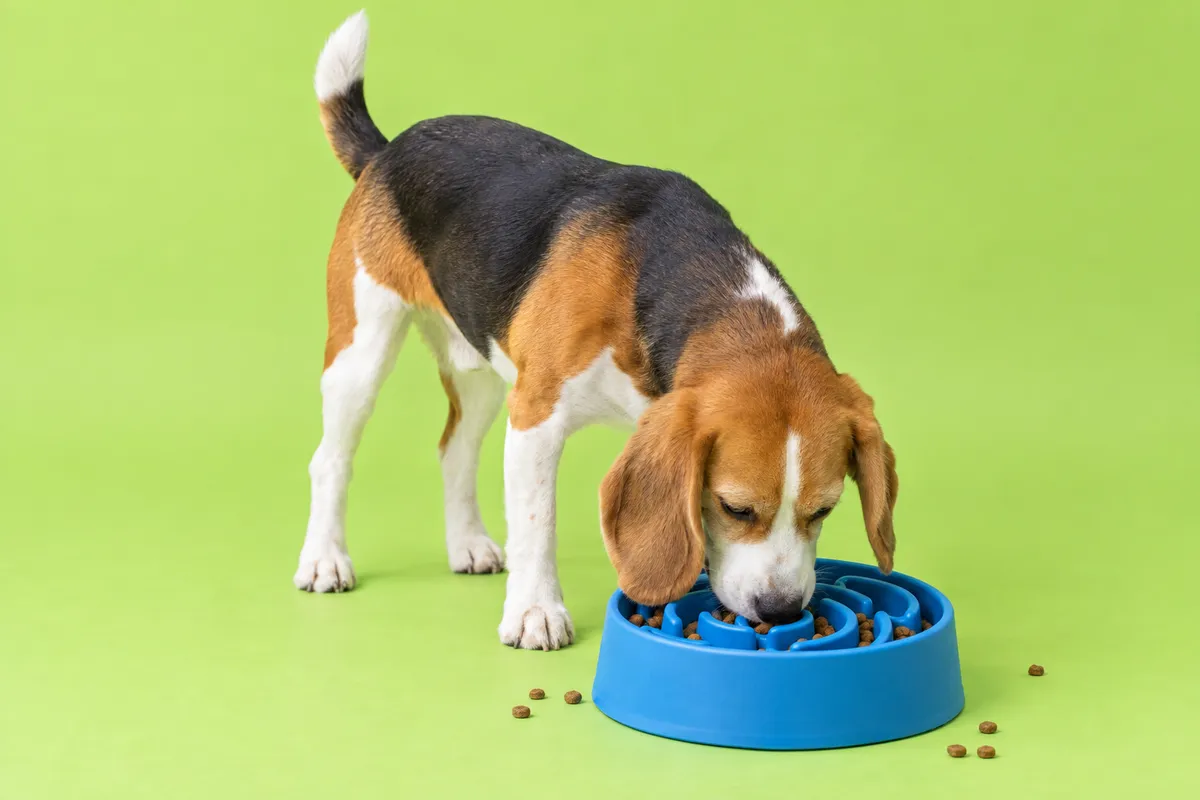
- A slow feeder is a bowl with ridges or a maze that makes a dog work around obstacles to reach each mouthful, so a meal becomes a small search game.
- Whether a slow feeder suits your dog's health, eating habits or diet is a question for your vet; the bowl itself is a feeding and enrichment tool, not a treatment.
- Match the pattern to the dog: shallow, open patterns for flat-faced breeds, puppies and beginners, deeper mazes only for confident dogs with longer muzzles.
- Choose a bowl that holds a full meal with room to spare, sits on a non-slip base and goes in the dishwasher if you want cleaning to stay easy.
- Introduce it gently with a few favorite bites in the easy channels, stay close for the first meals, and switch to an easier pattern if your dog gives up.
Hello, lovely. If you have searched is a slow feeder good for dogs, you have probably met two camps: people who swear by them and people who say their dog hates them. Both can be right. A slow feeder is simply a bowl with ridges, spirals or a maze inside, so your dog noses around obstacles to reach each mouthful instead of scooping it all at once. For many dogs that turns dinner into a tiny puzzle. Whether it suits your dog's health or eating habits is a question for your vet. What we can help with is choosing one that fits, introducing it kindly and keeping it clean.
Is a slow feeder good for dogs? The short answer
For most dogs a slow feeder is a fun, low-effort way to add a little thinking to the day. The bowl asks your dog to sniff, nudge and lick food out of channels, which is the same kind of work a beginner puzzle toy asks for. That is the whole job of the bowl: it changes how a meal is eaten, not what the meal does for the body.
If you are wondering about anything medical, such as how fast your dog eats, tummy troubles, weight or bloat, ask your vet first. They know your dog and can tell you whether a slow feeder, a different feeding routine or something else entirely makes sense.
Everyday slow feeders, from gentle to busy
Different maze shapes, sizes and materials for different dogs.


Myth vs fact: seven slow feeder beliefs, checked
| Myth | Fact |
|---|---|
| Slow feeders frustrate every dog | Most frustration comes from a pattern that is too hard, too deep or too narrow for that dog |
| Any maze bowl works for any dog | Muzzle shape, kibble size and confidence all change which pattern fits |
| Deeper ridges are always better | Deeper is harder, not better; many dogs do best with shallow, open channels |
| They are only for big dogs | Slow feeders come in sizes down to extra small, for toy breeds and puppies |
| A slow feeder replaces a puzzle toy | It adds a little challenge to meals; puzzles and sniff games still add variety |
| Plastic is fine forever | Plastic scratches with use; check it often and replace it when grooves are worn |
| They work for wet food too | Some do; shallow, wide patterns clean far more easily than tight mazes |
Myth 1: Slow feeders frustrate every dog
Fact: a bowl that is too hard frustrates a dog, and that is easy to fix. If your dog paws at the bowl, flips it or walks away, the pattern is probably too deep or too tight for now. Step down to a simpler, more open design and let your dog win easily. Many dogs who disliked a complex maze settle happily into a gentle spiral.
Myth 2: Any maze bowl works for any dog
Fact: the shape of your dog's face and the size of the food both matter. A long-nosed dog can reach into narrow channels; a short-nosed dog may not. Large kibble can jam in tight grooves, while tiny kibble can tuck into corners and stay there. Look at the gap between ridges and ask: can my dog's tongue and muzzle reach the bottom of every channel?
Myth 3: Deeper ridges are always better
Fact: deeper ridges make a bowl harder, which is a different thing from better. A shallow pattern still turns a meal into a search, without the struggle. Save the deep, tall mazes for confident dogs who already enjoy puzzle play, and keep a simple bowl in the cupboard for busy days.
Myth 4: Slow feeders are only for big dogs
Fact: you will find slow feeders sized for every dog, from extra small bowls for toy breeds and puppies to large bowls that hold several cups. Small dogs often do best with a compact bowl with low ridges, so they can reach everything without climbing in. For puppies, size the bowl for today and check with your vet about how and how often to feed.
Myth 5: A slow feeder replaces a puzzle toy
Fact: a slow feeder is one gentle kind of enrichment, used at mealtime. Puzzle toys, snuffle mats and lick mats each ask for different skills: lifting, sliding, sniffing through fabric or licking a spread. Rotating a few keeps things new. If your dog loves the bowl, our guide to dog puzzle toys by level is a lovely next step.
Myth 6: Plastic is fine forever
Fact: plastic and melamine bowls are light and cheerful, but teeth and scrubbing leave scratches over time, and scratches are hard to get truly clean. Check the grooves every week or two. When you see chew marks, cracks or a rough surface, it is time for a new bowl. Stainless steel and ceramic resist scratching better; ceramic can chip if dropped, so look it over too.
Myth 7: Slow feeders work for wet food too
Fact: some do, and some become a cleaning chore. Wet food and soaked kibble smear into tight corners. If you feed wet food, pick a shallow, wide pattern with rounded channels, or try a lick mat with a textured surface. Both rinse out far more easily than a deep maze.
How to choose a slow feeder bowl
Start with your dog, then the bowl. These six checks cover nearly every choice in our bowls and feeders range.
- Pattern difficulty. Open spirals and a few wide ridges for beginners, puppies and seniors; tighter mazes for confident puzzle fans.
- Bowl size vs kibble size. The bowl should hold a full meal with room to spare, and each channel should be wider than a piece of your dog's food.
- Flat-faced dogs. Pugs, French Bulldogs, Shih Tzus and other short-muzzled breeds do best with shallow, open patterns they can reach without pressing their face in.
- Non-slip base. A rubber ring, silicone base or suction cups keep the bowl from skating across the floor mid-meal.
- Material. Stainless steel for toughness, ceramic for weight and a glossy surface, plastic or melamine for light, colorful and easy to replace.
- Dishwasher. Check the product details; a dishwasher-safe bowl makes daily cleaning simple.
| Material | Feels like | Cleaning | Watch for |
|---|---|---|---|
| Stainless steel | Tough, light, simple dome or ridge shapes | Smooth surface, usually dishwasher safe | Lighter bowls need a rubber base to stay put |
| Ceramic | Heavy, stable, glossy | Glazed surface rinses clean | Can chip or crack if dropped |
| Plastic or melamine | Light, colorful, many maze styles | Check the label; scratches hold residue | Replace when grooves look worn or chewed |
| Silicone insert | Flexible, fits a bowl you already own | Lifts out to wash on its own | Suction cups need a smooth, clean bowl floor |

For a dog who likes to eat standing tall
A ceramic spiral bowl set in a wooden stand, so the pattern sits higher off the floor. Ask your vet whether a raised bowl suits your dog before switching.
- Glossy ceramic with an open spiral
- Stand with anti-slip feet
For toy breeds and small puppies
A compact bowl in extra small with a few rounded bumps rather than a deep maze, so little muzzles reach every bite.
- Simple, gentle pattern
- Rubber ring underneath
Inserts and raised feeders
Turn a bowl you already love into a slow feeder, or raise the meal off the floor.


How to introduce a slow feeder gently
Make the first meals feel like a win. Your dog should finish with a wagging tail, not a sigh.
- Put the empty bowl down and let your dog sniff it. Praise and drop a favorite bite into the easiest channel.
- For the first meal, add only part of the usual portion, scattered loosely so pieces sit on top of the ridges.
- Stay close and watch. If your dog paws hard, tips the bowl or walks off, finish the meal in the old bowl and try a simpler pattern next time.
- Over a few days, fill the bowl as usual. Keep the familiar bowl handy for busy mornings or a tired dog.
- Keep each dog's slow feeder in its own spot in a multi-dog home, so nobody gets crowded.
How to clean the grooves
Grooves are where crumbs and oils hide, so give them a little extra love. Rinse the bowl soon after each meal, before food dries. Wash with warm, soapy water and a bottle brush or an old toothbrush that reaches into the corners of each channel. Rinse well, let it dry fully, then check the base and suction cups too. If the label says dishwasher safe, the top rack is an easy daily option; inserts and mats often clean best on their own.
A washable mat under the bowl catches stray kibble and drips. Lick mats and snuffle mats need the same care: a rinse after use and a full wash before the next spread.
Lick mats and sniff mats for variety
Textured mats for spreads and wet food, and a soft mat for sniffing out kibble.


Want to browse more shapes and sizes? Try a search for slow feeders and filter by size and material.
Questions people ask
Do vets recommend slow feeders?
That depends on the dog, so ask your vet. They can tell you whether a slow feeder fits your dog's health, diet and eating habits, or whether something else would suit better.
Should dogs use slow feeders?
Many dogs enjoy them as a little mealtime game, and they are easy to try. Pick a pattern that matches your dog's muzzle and confidence, introduce it gently, and go back to a regular bowl if your dog seems unhappy. For anything about health or eating habits, ask your vet.
What are the downsides of slow feeder bowls for dogs?
A pattern that is too hard can frustrate a dog, flat-faced dogs may not reach deep channels, and tight grooves take more effort to clean. Plastic bowls also scratch over time and need replacing. Choosing a shallow, open pattern and a dishwasher-safe material solves most of these.
Are slow feeders good for puppies?
Many puppies take to a small bowl with low, rounded ridges. Size the bowl for your puppy now, keep the pattern easy, and stay close during meals. Ask your vet how much and how often a growing puppy should eat.
What is the best way to slow down my dog's eating?
If eating speed worries you, ask your vet first, since they can check whether anything else is going on. Beyond that, slow feeders, lick mats and snuffle mats are all ways to turn a meal into a calmer game.
About the numbers
- Google search, people also ask and related searches, United States, read 2026-10-07: Questions on vets and slow feeders, downsides, puppies, wet food and how to slow a dog's eating; related searches for ceramic, deep and puppy slow feeders