Heated Dog Beds: How to Choose One and Use It Safely
Choose a heated dog bed by type (plug-in, self-warming or microwavable), cord protection, auto-off and size, then always leave your dog an unheated spot to move to.
In short
- A heated dog bed comes in three kinds: plug-in electric pads, self-warming beds with a reflective layer that bounces back your dog's own heat, and microwavable discs that slip under a bed.
- For a plug-in pad, look for a steel-wrapped or chew-resistant cord, a thermostat or auto shut-off, and a removable, washable cover.
- Size the pad so your dog can lie fully on it, with room on the bed or floor beside it to move off the heat.
- Always leave an unheated spot within reach, so your dog can choose where to lie.
- Skip plug-in heat for puppies who chew cords and for dogs who cannot easily get up and move, and ask your vet about any health question.
Hello, lovely winter naps. A heated dog bed can turn a chilly floor into the favourite spot in the house, but the right one depends on your dog, your home and how you plan to use it. The short answer: pick the type first (plug-in, self-warming or microwavable), then check the cord, the controls, the size and the cover. And whatever you choose, give your dog a cool place to retreat to.
If you share your home with a cat too, our guide to heated vs self-warming cat beds covers the cat side. This one is all about dogs.
Plug-in, self-warming or microwavable: the three kinds
Each type warms in a different way, so start here. A plug-in pad makes its own heat from a wire inside. A self-warming bed makes none at all: a thin reflective or thermal layer under the fabric holds and bounces back the warmth your dog already gives off. A microwavable disc is heated in the microwave, slipped under a bed or cushion, and cools slowly over the following hours.
| Type | How it warms | Good for | Think twice if |
|---|---|---|---|
| Plug-in electric pad | A heating wire, usually with a controller | Garages, mudrooms, cold floors, steady warmth | Your dog chews cords or cannot move off it easily |
| Self-warming bed or mat | A reflective layer returns your dog's own body heat | Crates, travel, homes where cords are a worry | You need more warmth than a dog makes on its own |
| Microwavable disc | Stored heat that fades as it cools | Short naps, a cold car ride, no outlet nearby | Your dog chews hard plastic or you will not follow the heating chart |
Plenty of dogs only need the gentle option. A self-warming mat adds no heat of its own, so there is nothing to switch off and nothing to plug in. Start there if you are unsure, and move to a plug-in pad only if your dog still seems to be hunting for a warmer spot.
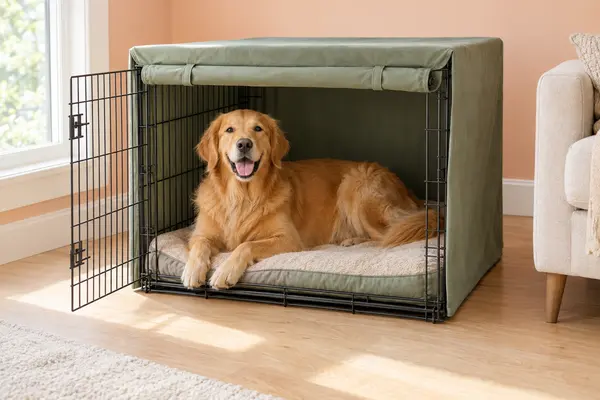
Self-warming beds and mats: no plug, no cord
A thermal layer reflects your dog's own warmth back to them.


What to check on a plug-in heated pad
A good plug-in pad protects the cord, controls the heat and comes apart for washing. Here is what each feature means in daily life.
- Chew-resistant cord. Look for a cord wrapped in steel coil or wire rope, the way several pads describe it. It slows down a curious chewer, though no cord is truly chew-proof.
- Thermostat or constant temperature. Some pads hold one steady setting on their own; others let you pick a level on a small controller. Either way, the pad should never feel hot to your hand.
- Auto shut-off or timer. A pad that switches itself off after a set time is easier to live with, especially overnight or when you leave the house.
- Waterproof inner pad. A sealed inner layer keeps drool, wet paws and little accidents away from the heating wire.
- Removable, washable cover. Fleece or plush covers that unzip and go in the washing machine keep the bed fresh through a whole winter.
Plug-in pads with protected cords and heat controls
Each lists a wrapped or chew-resistant cord, and most add a timer or auto-off.


For a big dog who likes to choose the warmth
A large pad with a small controller on the cord, so you can set the warmth and the timer from one place.
- Adjustable temperature levels and a built-in timer
- Large enough for a big dog to stretch out
- Soft cover over a waterproof pad
For a small dog or a crate corner
A compact pad with a steel-wrapped cord and a soft fleece cover that comes off for washing.
- Steel-wrapped cord
- Small footprint that fits under a crate pad
- Machine-washable fleece cover
Microwavable discs: warmth without an outlet
A microwavable heat disc is a sealed plastic pad filled with a gel that holds heat. You warm it in the microwave by the time printed on its own chart for your microwave's power, tuck it into its fleece cover, and slide it under a bed or blanket, never straight under your dog. It is handy where there is no outlet, like a car crate or a porch bed for a short sit.
- Follow the heating chart on the disc exactly and never add extra time.
- Let it cool completely before you heat it again, as its label says.
- Always use the cover, and handle it with a cloth if it feels hot.
- Skip it for a dog who chews hard plastic.
A microwavable heat disc
Warm it, cover it and tuck it under a bed.

Getting the size right
Measure your dog lying down, nose to the base of the tail, and pick a pad that fits that length so no paw ends up hanging over the edge. Then think about the space around it. A heated pad works best when it covers part of a bed or crate, not all of it, so your dog can shift half on, half off, or move away entirely.
A practical layout: put the heated pad at one end of a roomy dog bed or crate, and leave the other end plain. If your dog likes a supportive base, our guide to what makes a dog bed orthopedic explains foam types, and types of dog beds compared helps you pick the shape.
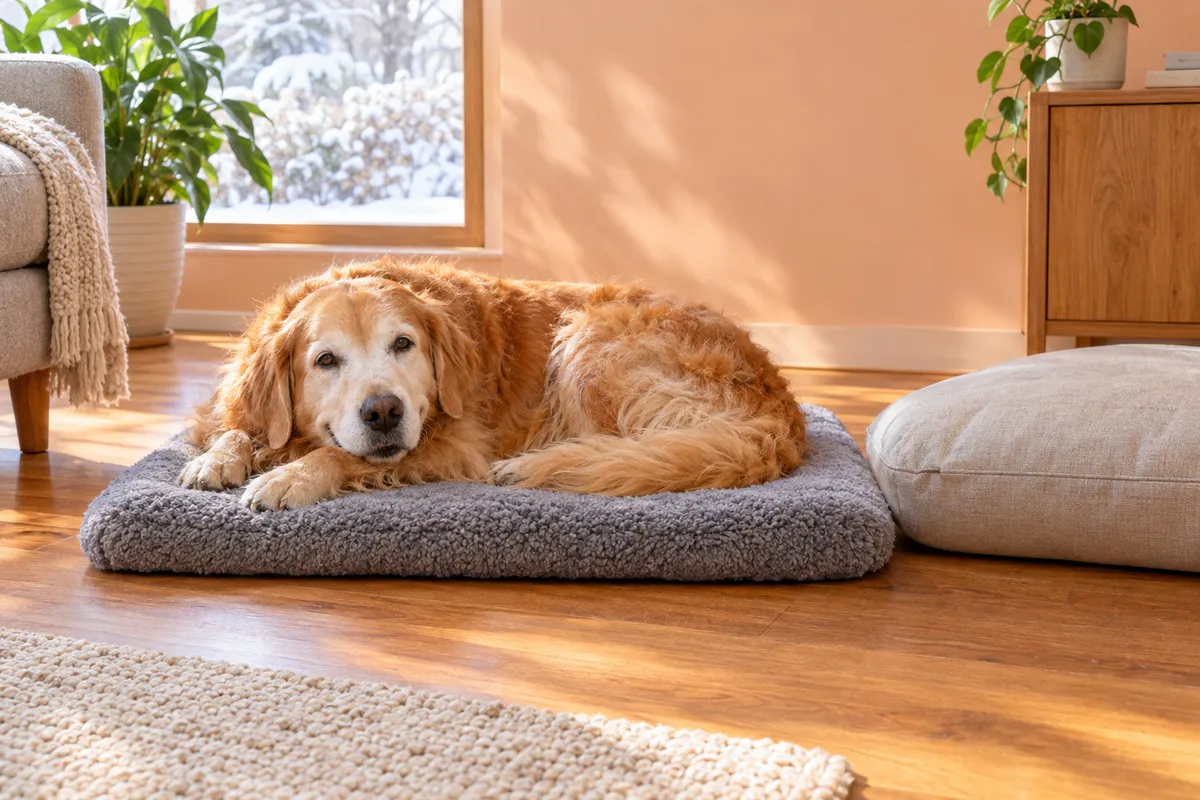
Unheated beds to sit beside the warm spot
A plain, comfortable place to move to when your dog has had enough warmth.


Where to put a heated dog bed
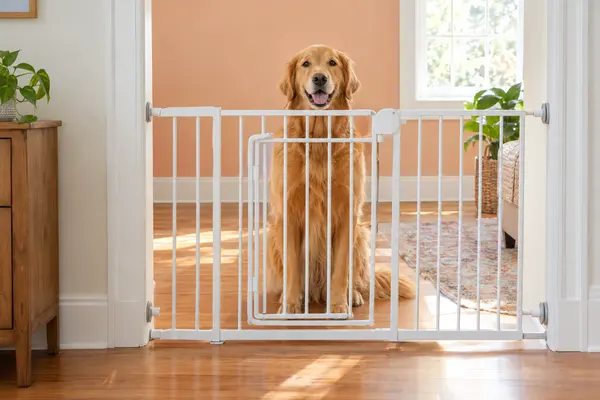
Place it on a dry, flat floor, out of the walkway, with the cord running straight to the outlet along a wall. Avoid tucking the cord under rugs or furniture where it can be pinched, and keep it out of reach of chewers with a cord cover or by routing it behind a heavy piece of furniture.
- Keep it away from radiators, fireplaces and space heaters, so the warmth does not stack up.
- Do not fold or bunch a plug-in pad, and do not pile thick blankets on top unless the instructions allow it.
- Use an indoor-rated pad indoors, and check the label before using any pad in a garage or outbuilding.
- Look over the cord and cover every week or so for chew marks, wear or damp.
When to skip a heated bed
Leave plug-in heat out for a puppy or any dog who chews cords, and go for a self-warming mat instead. The same goes for any dog who cannot easily stand up and step away by themselves: warmth should always be something your dog can walk away from. And if your dog has a health condition, is recovering from surgery, or you are thinking of heat for any reason other than comfort, ask your vet first.
For more cold-weather ideas, see do dogs need boots in winter, or browse every heated dog bed we carry.
Questions people ask
Is it safe to leave a heated dog bed on all day?
Follow the instructions for your pad. Many plug-in pads include a timer or auto shut-off for exactly this reason, and a self-warming bed needs no power at all. Whatever you use, keep an unheated spot within reach and check the cord regularly.
Do heated dog beds use a lot of electricity?
It depends on the pad, so check the wattage on its label or listing and compare it with other things you plug in at home. If you would rather use no electricity at all, a self-warming bed reflects your dog's own heat and never plugs in.
Is it okay for my dog to lie on a heated blanket?
A blanket or heating pad made for people is not designed for a dog's chewing, drool or long naps. Choose a pad made for pets, with a protected cord and a cover, and ask your vet if your dog has any health concerns.
What is the difference between a heated and a self-warming dog bed?
A heated bed plugs in or is warmed in a microwave, so it adds heat. A self-warming bed has a reflective or thermal layer inside that returns your dog's own body heat, so it never gets warmer than your dog makes it.
Can puppies use a heated dog bed?
Puppies love to chew, so a plug-in pad and its cord are a risk. A self-warming mat is the easier choice for a young dog. For very young puppies or any health question, ask your vet.
About the numbers
- Google search, United States, read 2026-10-28: People also ask for "is a heated pet bed safe": is it safe to leave a heated bed on all day, do heated dog beds use a lot of electricity, is it okay for my dog to lay on a heated blanket; related searches: are pet heating pads safe to leave on, self heating dog blanket, self warming dog bed.
- Product listings on this store, read 2026-10-28: Steel-wrapped and chew-resistant cords, timers, auto shut-off, waterproof inner pads and the microwavable disc's heating chart and cooling instruction come from the products' own descriptions and photos.