What Makes a Dog Bed Orthopedic? Foam Types Explained
A dog bed is orthopedic when a solid, dense foam base spreads your dog's weight so hips and shoulders never press through to the floor. Here is how memory, gel, egg crate and shredded foam differ.
In short
- Orthopedic is a description, not a certified standard: it means solid foam thick enough that your dog's heaviest points never reach the floor.
- Solid memory foam molds slowly and spreads weight evenly; egg crate foam is lighter, springier and airier; many good beds layer one over the other.
- Gel memory foam keeps the molding feel, with gel mixed through to keep the surface from feeling as warm: a sensible pick for big, thick-coated dogs.
- Judge the foam, not the bed's height: a bolster bed can stand 8 inches tall around a 3-inch mattress, so press a fist into the middle and feel for the floor.
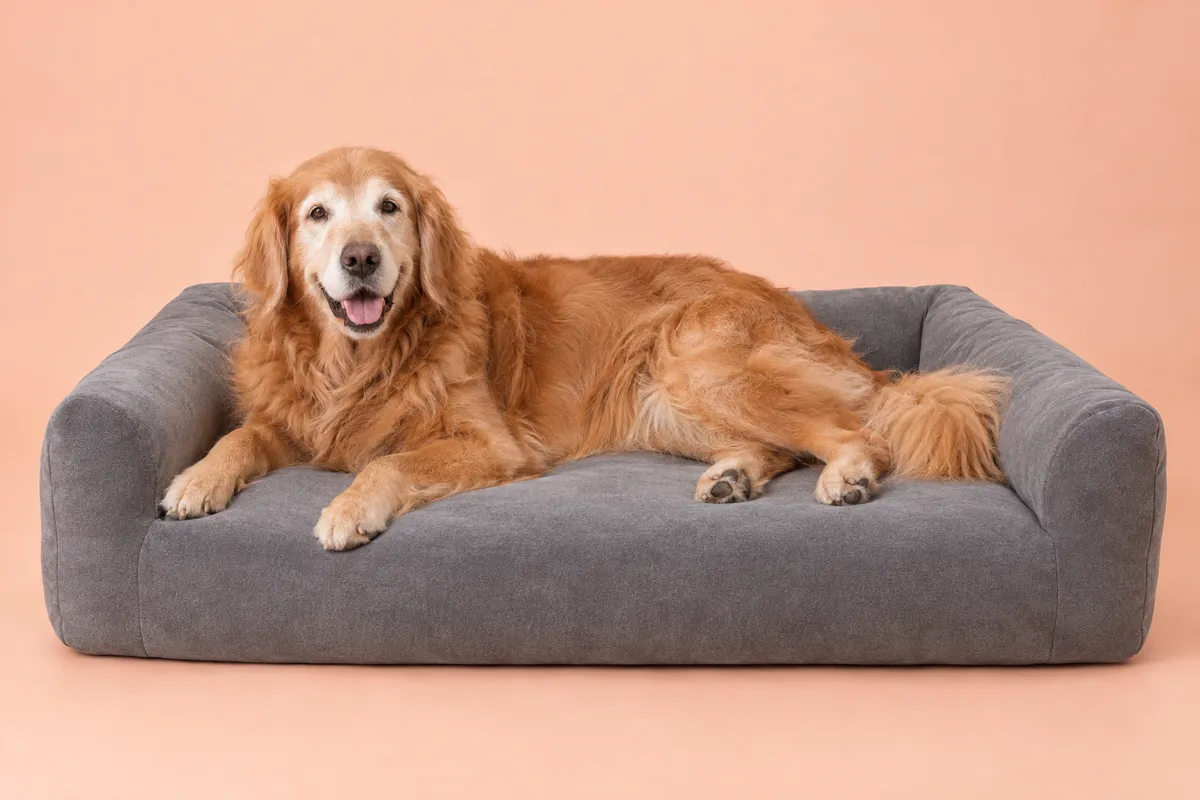
- For a senior dog, choose a firm, flat surface with a low entry side, a non-slip base and a waterproof liner, and ask your vet about stiffness.
Hello, lovely. If your dog now prefers the rug to the old pillow bed, you have probably met the word orthopedic. On a dog bed it means something simple: a base of solid, supportive foam deep enough that your dog rests on cushioning all the way down, never on the floor beneath. What changes from bed to bed is the type of foam, its thickness and how the layers are built.
What orthopedic actually means on a dog bed
No official test decides which beds may be called orthopedic, so the build tells you more than the label. A bed earns the word with a solid foam core rather than loose stuffing, enough depth that hips, shoulders and elbows stay cushioned, and a surface that stays level. Polyester fiberfill, the fluffy stuffing in many pillow and donut beds, packs down and drifts to the edges, which is why an old pillow bed so often has a dog-shaped hollow in the middle.
The foam types, one by one
Solid memory foam
Memory foam is viscoelastic polyurethane foam. It softens with warmth and pressure, sinks slowly around whatever lies on it and rises back slowly when the weight lifts, so a dog's weight spreads across the whole surface instead of resting on the bony points. Look for the word solid: one slab, often 4 inches deep in flat mattress styles, rather than a thin topper glued onto cheaper foam. A 4-inch solid memory foam mattress is the idea at its simplest. The trade-offs: weight, and a warmer surface.
Memory foam beds
Bolster and pillow styles add a chin rest.


Gel-infused memory foam
Gel memory foam is the same foam with cooling gel beads or swirls mixed through it, often seen as blue flecks under the cover. The gel is meant to carry warmth away from the surface, which suits large, double-coated breeds and warm homes. It is not a cooling mat, and in a chilly room some dogs prefer plain foam.
Gel memory foam for dogs who run warm


Egg crate foam
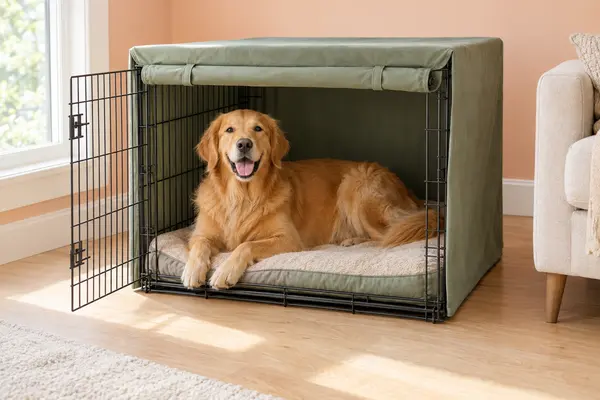
Egg crate foam, also called convoluted foam, is cut into rounded peaks and valleys like an egg carton. Each peak compresses on its own and the valleys leave channels for air, so it feels springier and cooler than memory foam. Being light, it is a common core for crate pads and washable mats, often about 3 inches deep. One thin layer is plenty for a small dog, but a heavy dog can press through it.
Egg crate beds and crate pads
Match the size to your crate floor or your dog's favorite corner.


Layered foam
Many thoughtful designs combine the two: a firmer base keeps the bed from bottoming out and a memory foam or gel layer on top gives the molding feel. The couch bed further down puts gel memory foam over egg crate foam in one mattress that turns over, so either side can face up. Layering buys depth without the weight of a solid slab.
Two-layer beds


Shredded memory foam
Shredded memory foam is chopped foam packed into an inner case. It plumps up like a big pillow and lets a curled-up dog sink in a little, but the pieces move, so it never gives the even surface of a slab. Shake and plump it often.
Shredded foam pillow beds


Foam types side by side
| Foam | Feel | Warmth | Holds its shape | Good fit for |
|---|---|---|---|---|
| Solid memory foam | Slow, molding | Warmest | Very well when dense | Medium to giant dogs, crate mattresses |
| Gel memory foam | Molding | Less warm on top | Very well when dense | Big, thick-coated dogs |
| Egg crate foam | Springy | Airy | Thin layers flatten under heavy dogs | Small dogs, crate pads, bases |
| Layered foam | Soft top, firm core | Depends on top layer | Very well | Large dogs and seniors |
| Shredded memory foam | Squishy | Moderate | Shifts, needs plumping | Dogs who sleep curled up |
| Polyester fiberfill | Pillowy | Warm | Packs down over time | Cozy naps, not orthopedic |
Reading the label: thickness, density and certifications
- Foam thickness, not bed height. One bolster bed in this guide stands 8 inches tall, yet its foam mattress measures 3 inches. Check the foam size in the photos or details.
- Density. Figures like 28D or 45D give density in kilograms per cubic meter. Denser foam packs more material into the same space and usually keeps its shape longer; one extra-large pillow bed above pairs 30D soft foam with 45D memory foam.
- Density is not firmness. A dense foam can still feel soft, so read words like medium firm alongside the figure.
- CertiPUR-US. A certification program for flexible polyurethane foam: certified foam meets its standards for content, emissions and durability, analyzed by independent, accredited laboratories. Some beds in this guide show the seal in their photos.
Bolsters, covers and the parts that are not foam
Bolsters are the raised rims around a bed: somewhere to rest a chin or press a back against. Removable bolsters detach, so each part is easier to wash. Under the cover, look for a waterproof inner liner wrapped around the foam, because foam cannot go in a washing machine. A zip-off washable outer cover and a non-slip base finish the job.
Bolster couches on a foam base
Open fronts for stepping in.


A couch bed for a big dog
A two-layer mattress, gel memory foam over egg crate foam, that turns over so either side can face up, with bolsters on three sides, an open front and a non-slip base. The same build comes in medium and extra large.
- Reversible two-layer mattress
- Waterproof lining under a washable cover

A sofa bed with removable bolsters
An egg crate foam base under a faux fur sleep surface, sized for dogs up to 55 pounds, with soft, fluffy-filled bolsters that come off.
- Sleeping surface 28 by 23 inches in the large size
- Washable cover
Choosing a bed for a senior dog
The kindest bed for an older dog is usually firm, flat and easy to get onto: a foam base that passes the fist test, a low or open side and a non-slip bottom so the bed never slides underfoot. Put it somewhere warm and draft-free, near where the family spends the evening. For a small dog who still loves the sofa, a gentle set of steps beats a jump. If your dog seems stiff, sore or reluctant to lie down, ask your vet first: a bed is comfort, not care.
Steps for the sofa and bed
Match the step height to the sofa or bed your dog uses most.


A solid slab for a crate
A single 4-inch memory foam insert in a waterproof inner case and denim cover, 41 by 27 inches to fit a 42 by 28 crate. Flat and even, with no rim to step over.
- Solid foam, not shredded
- A spare outer cover for wash days
Sizing: measure your dog, not the label
Size names vary between makers, so measure. While your dog is stretched out asleep, measure from nose to the base of the tail, then add a few inches so paws stay on the foam. Curlers can go a little smaller; sprawlers need the full length. For a crate, match the mattress to the inside floor. Browse large orthopedic beds or every dog bed by size, and introduce the new one gently: set it where the old bed lived, add a familiar blanket and praise every curious sniff.
Questions people ask
What type of bed is best for a senior dog?
A firm, flat foam bed that passes the fist test, with a low or open entry side and a non-slip base, suits most older dogs. Solid memory foam or a layered bed with a firm core keeps the surface level. If your dog is stiff or slow to get up, ask your vet.
What are the disadvantages of using an orthopedic bed?
Memory foam feels warmer than airy fills, solid foam beds are heavy, and the foam itself cannot be machine washed. Dogs who love to nest may prefer something squishier, and some beds use the word orthopedic on foam too thin to do the job.
Do orthopedic dog beds help older dogs?
A thick, even foam bed gives an older dog a comfortable surface that does not sink to the floor and stays level instead of flattening like loose fill. Whether it makes a difference to a particular stiffness or condition is a question for your vet, who knows your dog.
Is memory foam or egg crate foam better for a dog bed?
Memory foam molds slowly and spreads weight evenly, so it suits larger dogs. Egg crate foam is lighter, springier and airier, so it suits crate pads, small dogs and warm sleepers. A layered bed gives you some of both.
About the numbers
- CertiPUR-US, About CertiPUR-US: certified flexible polyurethane foam meets standards for content, emissions and durability, analyzed by independent, accredited laboratories