Aquarium Terms for Beginners: A Plain-Words Fishkeeping Glossary
Cycling, bioload, GPH, substrate, gravel vacuum: the words new fishkeepers meet first, explained in plain language, grouped by job, with the gear each one points to.
In short
- Cycling is the slow build-up of beneficial bacteria that turn fish waste into less harmful compounds, and it happens before a tank is ready for a full group of fish.
- Ammonia, nitrite and nitrate are the three readings that show how far a tank has cycled, and a test kit is the only way to see them.
- A water conditioner treats tap water before it goes into the tank, and a gravel vacuum is a siphon that cleans the substrate while it drains water for a water change.
- GPH means gallons per hour, the flow a filter or pump moves, and bioload is how much waste the tank's living things produce.
- Heater wattage is a product spec matched to tank size on the heater's own label, and fish health questions belong with an aquatic vet or a fish specialist.
Hello, lovely. Your first fish tank comes with its own little dictionary, and nobody hands it to you. This glossary groups the words you will hear most by the job they describe: water chemistry, water care, the tank floor, air and warmth, and the look of the tank. Each group links the gear it points to, so a new word turns straight into a clear next step. If you are still planning the whole setup, our aquarium starter checklist walks through it in order.
Water chemistry words: cycling, bacteria and the nitrogen trio
Cycling is the process that makes a new tank livable: colonies of beneficial bacteria grow in the filter and on every surface, and they break fish waste down step by step. A brand-new tank has almost none of them, which is why patience matters more than any purchase in the first weeks.
- Beneficial bacteria: the helpful microbes that live mostly in filter media and substrate. They are the workers of the cycle, so keep filter media in old tank water when you rinse it, never under the tap.
- Ammonia: the first thing fish waste and leftover food become. In a new tank its reading climbs first.
- Nitrite: what the first group of bacteria turn ammonia into. Its reading rises as ammonia falls.
- Nitrate: the end of the chain, made by a second group of bacteria. Plants use some of it, and water changes remove the rest.
- Cycled tank: a tank where ammonia and nitrite have fallen away and nitrate shows up. The test kit tells you when you are there.
- Bottled bacteria: liquid or sand products that add starter bacteria. They help a cycle along; testing still tells you where it stands.
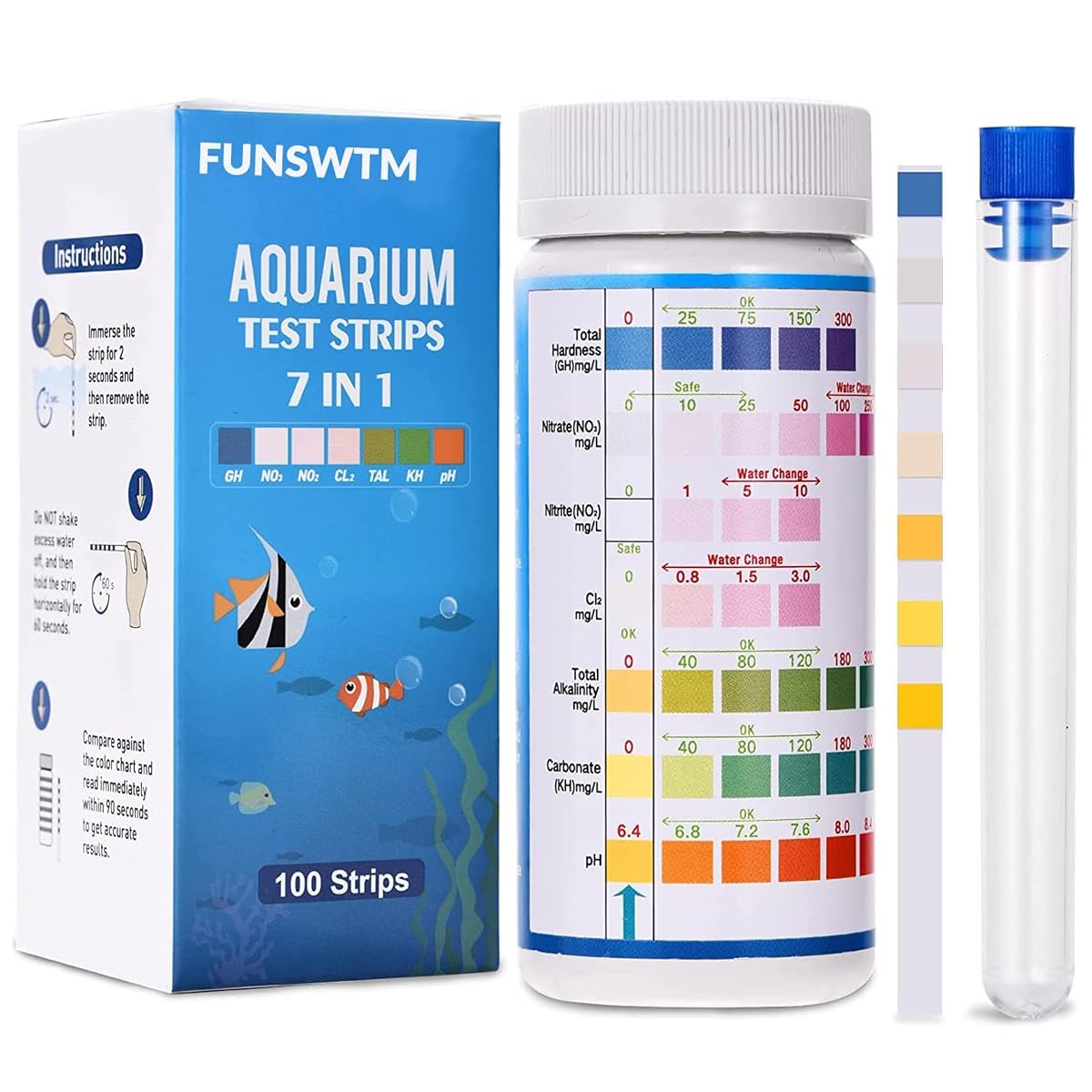
A test kit is how you see any of this. Strips are quick: dip, wait, match the colors to the chart on the bottle. Liquid kits use drops in a small tube and read one value at a time. Either way, check the label for which values it reads, because not every strip includes ammonia. We do not list target numbers here on purpose: the right range depends on your fish, and the chart on your kit plus an aquatic vet or a fish specialist are the people and tools to trust.
Test kits and cycling helpers
Check which values each kit reads before you choose.




Water care words: conditioner, water change, siphon and gravel vacuum
Water conditioner is the drops you add to tap water before it goes into the tank. Most treat chlorine and chloramine, which city water often carries; the label says what yours treats and how much to add for the gallons you are filling. Add it to every bucket of new water, not just the first fill.
- Water change: taking out part of the tank water and replacing it with fresh, conditioned water at a similar temperature. It is the main way nitrate leaves the tank.
- Siphon: a tube that drains water by gravity once the flow is started. A squeeze bulb or a quick shake starts most of them, so nobody has to start it by mouth.
- Gravel vacuum: a siphon with a wide clear tube on the tank end. Push it into the gravel and it lifts waste out while heavier stones fall back down.
- Water changer: a long hose that connects to a sink faucet, so you can drain and refill a big tank without carrying buckets.
For water day
Conditioners, siphons and hose kits for small and large tanks.


A friendly first gravel vacuum
A squeeze bulb starts the flow, the clear tube lets you see the waste you are lifting, and a small screen inside the tube helps keep gravel and tiny fish where they belong.
- Five feet of clear, flexible hose
- Bulb start, no mouth siphoning
- Works in gravel and sand
Tank floor words: substrate, bioload and quarantine
Substrate is whatever covers the bottom of the tank. Gravel is easy to vacuum; fine sand suits fish that like to sift; plant soils are made for rooted plants and often tint the water a little at first. Rinse plain gravel and sand before it goes in, and read the bag on plant soils, since some should not be rinsed.
| Substrate | What it is like | Good fit |
|---|---|---|
| Gravel | Small smooth stones, easy to vacuum | Most community tanks, beginners |
| Sand | Fine and soft, waste sits on top | Fish that dig or sift, a natural look |
| Plant soil | Light granules made for roots | Planted tanks and shrimp tanks |
| Bio-seeded sand | Sand packed with starter bacteria | A new tank that is just starting to cycle |
Gravel, sand and plant soil


- Bioload: the total waste made by everything living in the tank. More fish, bigger fish and more food all raise it, and your filter and water changes have to keep up.
- Stocking: how many fish, and which kinds, share a tank. Add them a few at a time so the bacteria can grow with the bioload.
- Quarantine tank: a small, separate tank with its own sponge filter and heater where new fish settle in before joining the main tank. If anything looks off during that time, ask an aquatic vet or a fish specialist.
- Breeder box: a clear box that hangs inside the main tank to keep one fish apart for a short while.
Quarantine basics
Air-driven sponge filters are gentle and easy to keep in a spare tank.


Air, flow and warmth words: GPH, airstone, bubbler and heater wattage
GPH stands for gallons per hour, the amount of water a filter or pump moves. Filters list it on the box so you can match flow to tank size; our filter types guide explains how each style moves water. Air pumps list their own GPH figure for the air they push, which is a different measure from water flow.
- Air pump: a small motor that sits outside the tank and pushes air down a thin tube.
- Airline tubing: the thin tube between pump and stone.
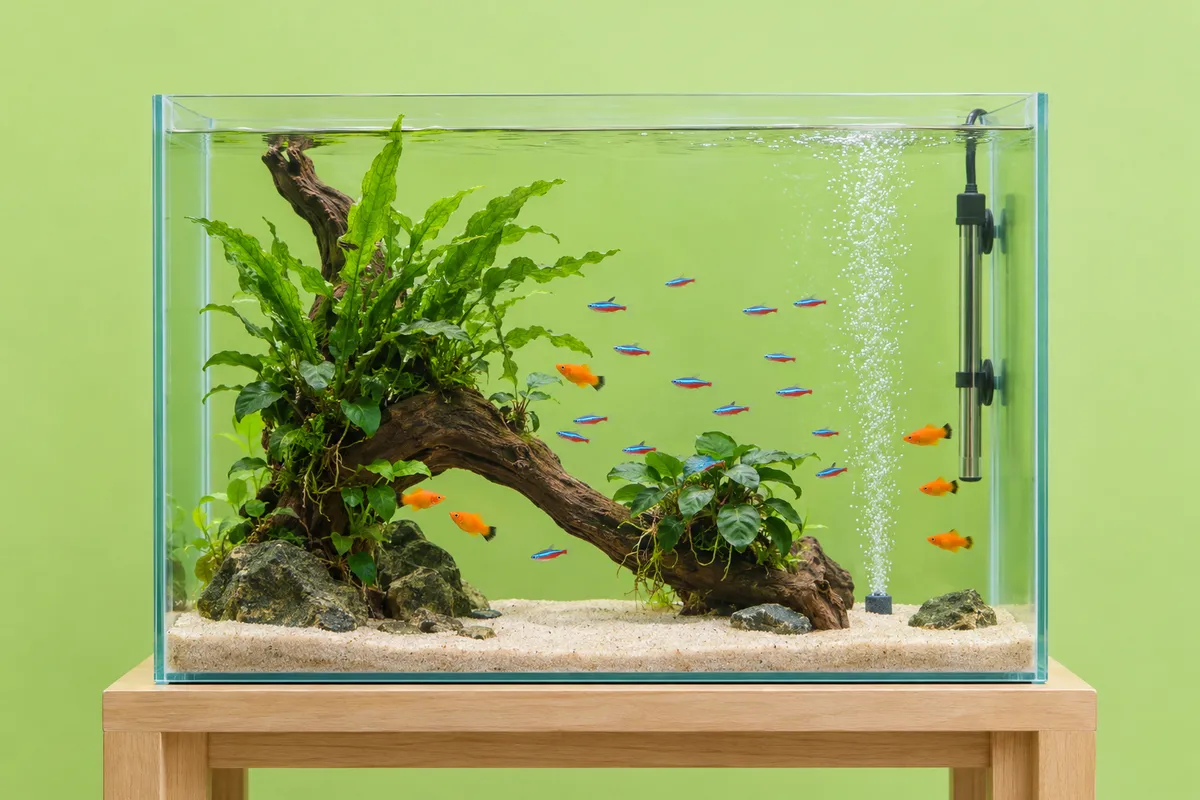
- Airstone: a porous stone on the end of the tubing that breaks air into fine bubbles. Smaller pores make smaller bubbles.
- Bubbler: the everyday name for a pump and airstone together. The rising bubbles stir the surface, which helps air mix into the water.
- Check valve: a one-way part on the tubing that stops water creeping back toward the pump if the power goes off.
- Heater wattage: the heater's power rating. Each heater's label pairs its wattage with a tank size, so start from your tank's gallons and read across. A thermometer on the glass shows what the heater is actually doing.
Air pumps, stones and heaters
Match the heater's listed tank size to your own tank.


Look and routine words: hardscape, live plants, lid and light cycle
Hardscape means the non-living layout: driftwood, rocks and stones placed before water and plants go in. Soak new driftwood first, since many pieces float at the start and some tint the water tea-brown for a while, which is harmless to the look most people want.
- Live plants: real aquatic plants. Easy starters such as java fern and anubias are tied or glued to wood or rock instead of buried, so the rhizome (the thick creeping stem) stays above the substrate.
- Aquascaping: arranging hardscape and plants with a design in mind.
- Lid: the cover on top of the tank. It slows evaporation and keeps jumpy fish inside; a mesh cover does the same job on tanks without one.
- Light cycle: the hours the tank light is on each day. A light with a built-in timer keeps the same rhythm daily, which helps plants and makes the schedule one less thing to remember.
Hardscape, plants, covers and lights
Low-light plants and timer lights are kind to beginners.


Keeping a betta? Our betta tank setup guide puts many of these words to work in one small tank. You can also browse all water care and decor and substrate in one place.
Questions people ask
What does cycling a fish tank mean?
Cycling means growing beneficial bacteria in the filter and substrate so they can turn fish waste into less harmful compounds. You track it with a test kit: ammonia rises first, then nitrite, then both fall away as nitrate appears. Ask a fish specialist if you are unsure how your readings look.
Do I need a water conditioner if I use tap water?
Most city tap water carries chlorine or chloramine, and a water conditioner is made to treat it before the water goes into the tank. Read the bottle for what it treats and the dose per gallon, and add it to every batch of new water.
What is the difference between a siphon and a gravel vacuum?
A siphon is any tube that drains water by gravity. A gravel vacuum is a siphon with a wide tube on the end that you push into the gravel, so it lifts waste while you drain water for a water change.
What does GPH mean on a filter or air pump?
GPH means gallons per hour. On a filter it is how much water the filter moves; on an air pump it describes the air output, so compare it only with other air pumps.
What is bioload in an aquarium?
Bioload is the total waste produced by everything living in the tank. More or bigger fish and more food raise it, so add fish gradually and keep up with water changes.
Is an airstone the same as a bubbler?
An airstone is the porous stone that makes fine bubbles. A bubbler usually means the whole setup: air pump, tubing and airstone working together.
About the numbers
- Hey Lovi product listings, read 2026-10-28: Test kit values read, heater wattage and tank-size pairings, hose lengths and substrate descriptions are taken from each product's own listing.