Should You Cover a Bird Cage at Night? 6 Myths vs Facts
Cover your bird's cage at night if the room stays bright or busy after bedtime. If the room is already dark and quiet, a cover is optional. Here is what a cover does and what it does not.
In short
- Cover your bird's cage at night when the room stays lit or lively after your bird's bedtime; in a dark, quiet room a cover is optional.
- The real goal is a long, dark, calm night, and a cover is only one way to get there.
- A cover blocks light and drafts a little, but it does not heat the cage or silence a noisy room.
- Pick a breathable fabric that fits the cage closely, with no loose threads, fringe or loops a bird could pull in.
- Some birds settle better with a sliver of dim light, so leave one side open or use a soft nightlight nearby if yours startles in the dark.
- If your bird's sleep or night behaviour worries you, ask an avian vet.
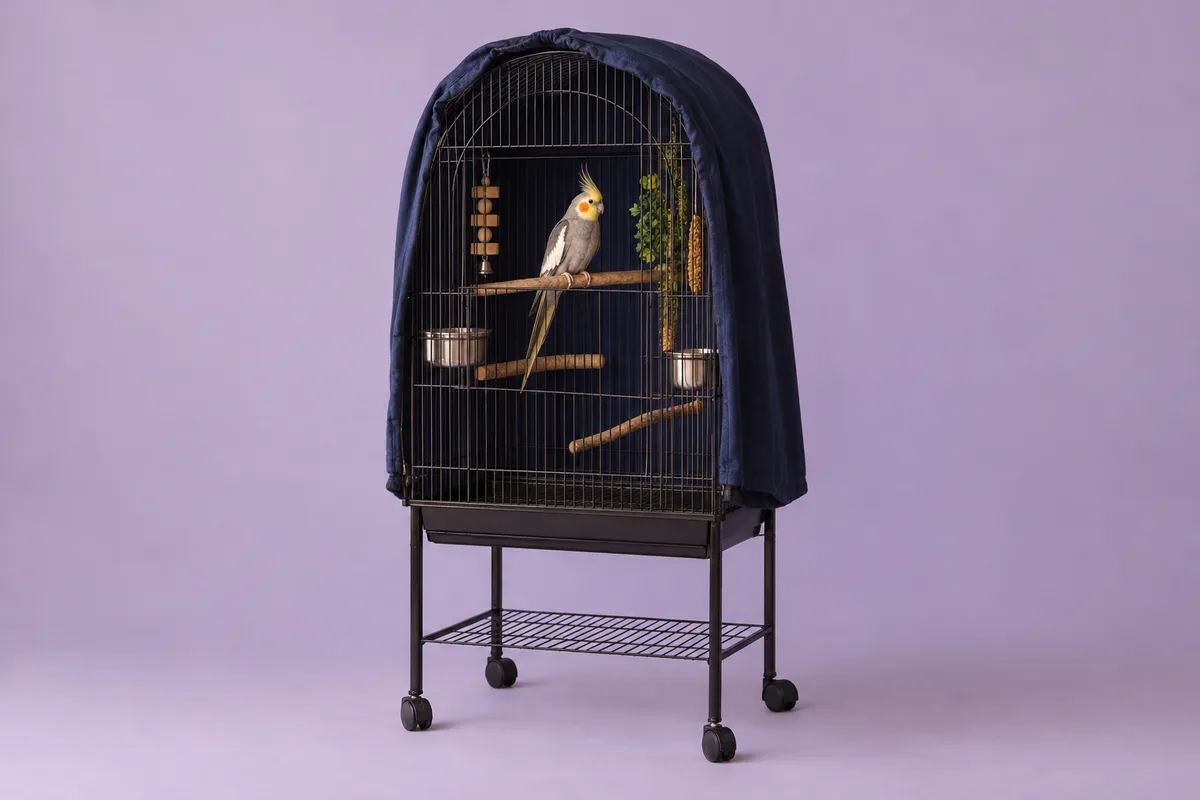
Should you cover your bird's cage at night? Cover it when the room stays bright or busy after your bird's bedtime, and skip it if the room is already dark and quiet. A bird cage cover is a fitted fabric hood that dims the cage and blocks drafts and movement. It helps a bird rest; it is not a rule every bird needs.
Why does night-time matter so much to a pet bird?
A pet bird needs a long stretch of calm, dark night to rest well. The Bird Owner's Manual from Best Friends Animal Society puts it at 10 to 12 hours of sleep a day, and points out that many homes make that hard: lamps stay on, the TV plays, people walk past the cage.
Myth 1: Does every bird need a cage cover?
Fact: no. A bird that sleeps in a room that goes dark and quiet at bedtime may never need one. A spare room, a bedroom with blackout curtains or a den nobody uses after dinner can do the same work as fabric.
Covers earn their keep in open-plan homes, where the cage sits near the kitchen or the living room and life goes on until late. Our guide on where to put a bird cage walks through quiet corners, drafts and windows, and a good spot often matters more than any cover.
Fitted night covers for standard cages
Breathable fabric, sized by cage, with an opening on the front.


Myth 2: Does a cover keep a bird warm at night?
Fact: only a little, and that is not its job. A cover cuts drafts from a vent or a door, which helps on a chilly evening. It does not add heat. A cage in a cold room under a cover is still in a cold room.
The opposite risk is real too. A heavy blanket wrapped tight around every side can trap warm, stale air, especially near a radiator or a sunny window. Keep the room at a steady, comfortable temperature, leave airflow on one side, and ask an avian vet what temperature suits your species.
Myth 3: Will any old blanket or towel work?
Fact: a towel works in a pinch, but not every fabric is safe night after night. Birds explore with their beaks and feet. Loose threads, fringe, tassels and loopy fleece can catch a toe or a band, and a corner pulled through the bars becomes a chew toy.
A made-for-the-job cover is cut to the cage's shape, so nothing drapes inside, and a zip or roll-up panel lets you open the front without lifting the whole thing. Check any cover weekly for frayed edges and wash it on a gentle, unscented cycle.
| Option | Good at | Watch for | Best for |
|---|---|---|---|
| Fitted night cover | Dims the cage, cuts drafts, stays put | Measure first; a loose fit lets corners hang into the cage | Most cages in busy rooms |
| Cover with roll-up front or windows | Lets you adjust light and airflow | Check the panel ties cannot be reached from inside | Birds that like a sliver of light |
| Play-top cover | Fits around a perch top so the cage still closes up | Buy for your exact cage style | Large cages with a play stand on top |
| Plain bath towel | Fine for one night or an emergency | Loops, slipping off, hanging inside the bars | Short-term use only |
| Mesh seed-catcher skirt | Keeps seed and feathers off the floor | Lets light straight through; not a night cover | Daytime mess, not sleep |

For a large cage with a play top
Most covers assume a flat roof. This one is cut to wrap the sides of a cage with a perch stand on top and attaches with magnets, so it goes on quickly at bedtime.
- Front opens at any angle to let in as much light as you like
- Sized for big parrot cages
For birds that like a window
Made from a breathable nylon twill with roll-up panels, so you can leave a mesh window open on one side for air and a little light.
- Comes with a storage bag for daytime
- Sized for a tall cage on a stand
Myth 4: Does covering the cage stop all the noise?
Fact: fabric dims light far better than it blocks sound. Your bird will still hear the dishwasher, the TV and the evening's chatter through a cover. It helps because a bird cannot see people moving past, and movement in the corner of the eye is often what keeps a bird alert.
If your evenings are loud, move the noise or move the bird: turn the TV down, close a door, or bring your bird to a quieter room for the night.
Myth 5: Do birds have to sleep in total darkness?
Fact: dark and calm, yes; pitch black, not always. Some birds startle in complete darkness, flutter off a perch and then cannot see where they are. Many cockatiel keepers notice this most. A small, dim nightlight across the room, or a cover that leaves one side open toward a faint glow, lets a startled bird get its bearings and settle again.
Watch your own bird. If mornings find it calm, with tidy feathers and a full appetite, your setup is working. If nights sound frantic or you find signs of a scramble, try a little light before anything else, and ask an avian vet if it keeps happening.
Myth 6: Is a seed-catcher skirt the same as a cage cover?
Fact: no, even though the names overlap. Those stretchy mesh skirts are often sold as cage covers, but they wrap only the lower part of the cage and let light pass right through. They are great at keeping seed husks and feathers off the floor. They do nothing for bedtime, so don't count on one to dim the cage.
Mesh skirts for daytime mess
Seed catchers that hug the base of the cage; not for sleep.


How do you choose a bird cage cover?
Choose a cover by fit first, fabric second and features third. A cover that fits stays outside the bars and keeps its shape all night, which is the safest and darkest setup.
- Measure the cage, not the box it came in. Note width, depth and height, and add the stand if the cover should reach the base. Most covers list their own size in inches, so compare the two.
- Pick breathable, tightly woven fabric. It should dim light without feeling plastic or airtight. A darker colour blocks more light.
- Check every edge. No fringe, tassels, dangling ties or loopy texture on the inside face.
- Look for an opening. A zip front, a roll-up panel or a side window lets you check on your bird and choose how much light gets in.
- Make sure it washes easily. You will want to launder it often, and two covers make rotation easy.
Shopping for a new cage at the same time? Our budgie cage guide covers width and bar spacing, and you can browse every cage and cage accessory in one place, or simply search bird cage covers.
Cages that come with their own cover
Tall rolling cages sold with a matching cover.


How do you get a bird used to a cage cover?
Introduce a cover slowly, in daylight, while you stay close. A sudden curtain at night can surprise even a relaxed bird, so let it learn the fabric first.
- Lay the folded cover near the cage for a day or two so it becomes part of the room.
- Drape it over the back of the cage for a few minutes in the daytime while you sit nearby and talk.
- Add the top, then one side, over several days, always leaving the front open.
- At bedtime, dim the room first, say the same goodnight words, then lower the front.
- In the morning, talk before you lift it, so the light does not arrive all at once.
What can you use instead of a cage cover?
You can skip the cover entirely if you give your bird a dark, quiet place to sleep another way. Here are the three that work best.
- A sleep cage. A small second cage in a quiet bedroom or spare room, used only overnight. The Bird Owner's Manual describes exactly this: daytime in the main cage or on a play gym in the family room, nights in a sleep cage in a dark, quiet room. Move your bird back to its big cage each morning.
- Room darkening. Blackout curtains, a door that closes and a lamp on a timer can turn the cage's room into the dark space itself.
- A better spot. Shifting the cage away from a hallway, a bright window or the TV often does more than any fabric.
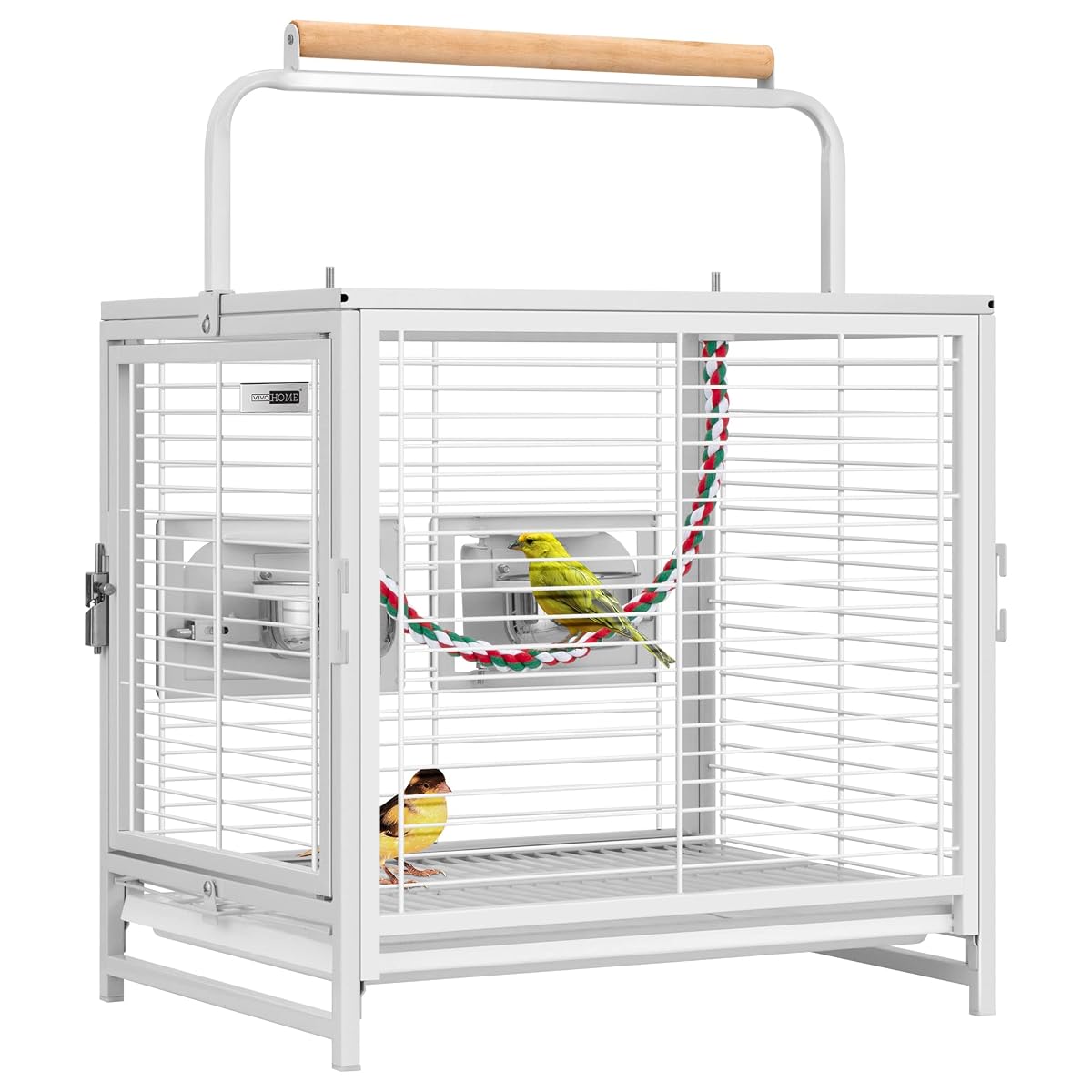
A sturdy travel cage doubles nicely as a sleep cage for a small bird. Browse bird carriers and travel cages, and add a perch or two from our perches compared guide so it feels like a proper bedroom.
Small cages and carriers that can work as a sleep cage
Compact, easy to move to a quiet room at night.


So, should you cover your bird's cage tonight?
If the room stays bright or busy after your bird's bedtime, yes: a breathable, well-fitted cover is a simple kindness. If the room already goes dark and quiet, you can leave it off. Either way, the goal is the same calm, dark night, a fabric that cannot snag, a little airflow, and a routine your bird can count on. Watch how your bird wakes up, adjust gently, and ask an avian vet about any sleep or behaviour worry.
Questions people ask
What time should I cover my bird's cage at night?
Cover it at roughly the same time each evening, when you want your bird's night to start, and uncover it at the same time each morning. Count back from wake-up so your bird gets a full, long night. Consistency matters more than the exact hour.
Should I cover all four sides of the cage?
Not usually. Covering the top, back and sides while leaving part of the front open keeps air moving and lets in a sliver of light. Close the front fully only if your room is bright and your bird is calm with it.
Can I use a blanket or towel to cover a bird cage?
For a night or two, a smooth, tightly woven towel is fine. For everyday use, choose a breathable cover without loops, fringe or loose threads, and keep corners from hanging inside the bars where they can be chewed.
Is it okay not to cover a bird cage at night?
Yes, as long as the room goes dark and quiet at bedtime. Many birds sleep well uncovered in a calm room or a separate sleep cage.
Why does my bird thrash around at night when covered?
Some birds startle in full darkness and flutter before they can see where they are. Try leaving one side open toward a dim nightlight. If it keeps happening, ask an avian vet.
Is a cage cover enough in a noisy house?
Partly. A cover dims light and hides movement, but sound still gets through. Lowering the noise or moving your bird to a quiet room for the night helps more.
About the numbers
- The Bird Owner's Manual, Best Friends Animal Society: States that birds need 10 to 12 hours of sleep a day and describes using a sleep-only cage in a dark, quiet room at night.