Where to Put a Bird Cage: A Cozy Room Guide for Fall and Winter
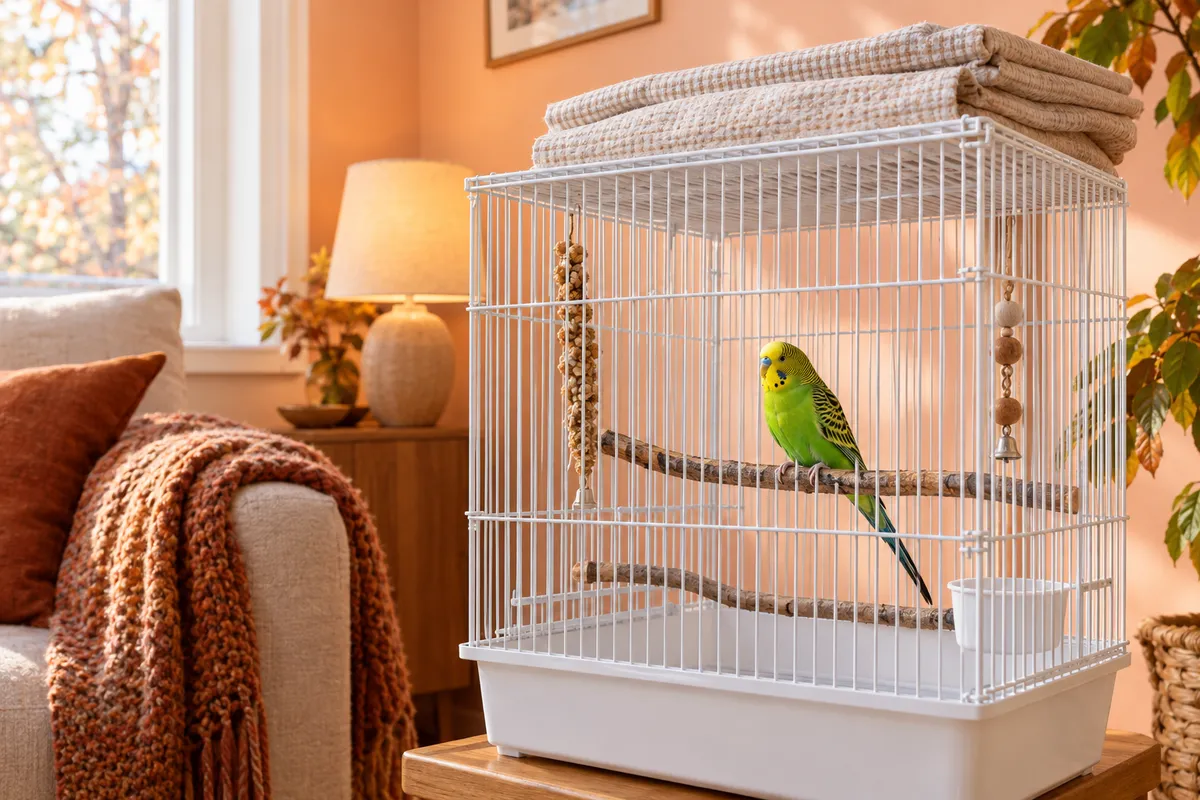
Put the cage in a room where the family spends time, with one side against an inside wall, near eye level, and away from drafts, vents, sunny glass and the kitchen.
In short
- The best spot for a bird cage is a room where the family spends time, like a living room or family room, so your bird feels included.
- Set at least one side of the cage against a solid inside wall, ideally in a corner, so your bird has a safe side to retreat to.
- Keep the top perches around your eye level or chest level, so people are not looming over your bird all day.
- Keep the cage away from outside doors, heating and cooling vents, fireplaces, sunny window glass and the kitchen.
- In fall and winter, a breathable cage cover at night, a mix of perches and a play stand for time outside the cage make the setup cozy; ask your avian vet about warmth and humidity.
Hello, lovely bird people. If you are wondering where to put a bird cage, here is the short answer: in a lived-in room, against a wall, near eye level, and well away from drafts, heat sources, sunny glass and the kitchen. Everything else in this guide is about making that spot calm, bright and cozy as the days get shorter and the house gets cooler.
Birds are social little souls. A spare room can feel lonely and a busy hallway can feel like a train station; the sweet spot sits in between.
Pick the room: where the family actually spends time
Choose the room where people gather in the evening, usually the living room or family room. Your bird gets company, gentle background noise and a view of the household routine, which is a big part of a pet bird's day.
Is a bedroom okay? It can be, if the room is used during the day and you can keep a steady bedtime for your bird. A home office where someone works all day can be a lovely choice too.
- Good: living room, family room, a home office that is used every day.
- Think twice: a bedroom with very late nights, a guest room nobody visits.
- Avoid: the kitchen, a laundry room, a garage, a bathroom, the path in front of an outside door.
Place the cage: one side against a wall, at eye level
Put at least one side of the cage against a solid inside wall, and a corner is even better. A wall at their back gives a bird a side where nothing can approach, so they can settle instead of watching every direction at once. Inside walls also tend to stay at a steadier temperature than outside walls in cold weather.
Height matters too. Aim for the top perches to sit around your eye level or chest level. When a cage sits on the floor, every person who walks by towers over the bird. A sturdy floor stand lifts a smaller cage to a friendly height, and many larger flight cages come on their own rolling stand, which also makes cleaning behind them much easier.
Cages on rolling stands
Lifted to a friendly height, and easy to roll out for cleaning day.


What to keep away from: drafts, vents, sunny glass and the kitchen
Keep the cage clear of outside doors, drafty windows, and the air coming out of heating and cooling vents. In fall and winter, also keep it away from fireplaces, wood stoves and space heaters, where the air can swing from warm to dry to chilly over a single afternoon.
A window view is nice, but direct sun through glass can turn a cage into a hothouse in a few hours, and a cold pane in winter does the opposite. If you love the light, place the cage near a window rather than right against it, with part of the cage always in shade. Ask your avian vet about light and temperature for your species.
Then there is the kitchen. Cooking smoke and fumes, and especially fumes from overheated nonstick (PTFE-coated) pans, are commonly warned about for pet birds. Keep the cage out of the kitchen and out of rooms that share its air, and ask your avian vet about cookware, candles, sprays and other fumes in your home.
| Spot | Why it is tricky | Try instead |
|---|---|---|
| Next to an outside door | Cold air every time the door opens | An inside wall in the same room |
| Over a heating or cooling vent | Blowing air and quick temperature swings | A spot a few steps from the vent |
| Against sunny window glass | Overheats in sun, chills at night | Near the window with shade on part of the cage |
| In or next to the kitchen | Cooking smoke and fumes | The living room or family room |
| Beside the fireplace or a heater | Hot, dry air that changes fast | The far side of the room |
A cozy fall and winter setup, layer by layer
Once the spot is right, a few small layers make the cage feel snug for the cooler months. None of them replace a steady room temperature, and if you are unsure how warm your bird's room should be, ask your avian vet.
A cage cover for a regular bedtime
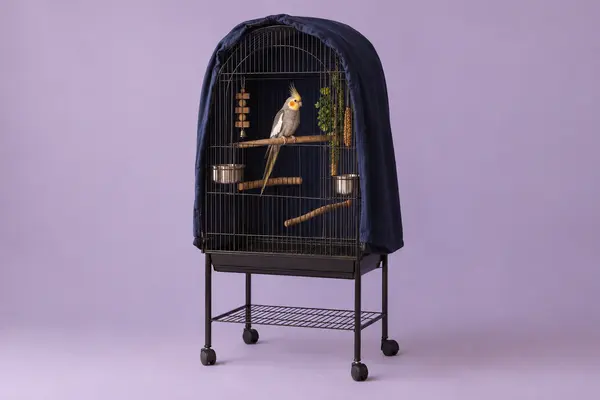
A cage cover helps you keep a regular sleep routine: cover at the same time each evening, uncover at the same time each morning. Look for a breathable fabric that dims the light without sealing the cage, and a cut that fits your cage shape. Some covers have a front zip so you can peek in or refill a cup without lifting the whole thing. For an open play-top cage, choose a cover made for that shape.
Good night covers
Breathable fabrics in sizes for small and large cages.


A mesh seed catcher skirt is a different thing: it wraps the lower part of the cage and keeps seed hulls and feathers off your rug, which matters more when the cage now lives in the living room.
Seed catcher skirts
Stretchy mesh that fits round and square cages.


Perches in different diameters and textures
Give your bird a mix of perches instead of a row of identical dowels. Different diameters and textures mean your bird's feet grip in slightly different ways through the day. A good mix: a natural branch with bumps and bends, a smooth hardwood perch, a soft rope perch, and a platform to stand flat on. Place them at different heights, and keep them away from spots right above food and water cups.
Wood, branch and platform perches
Natural shapes and smooth hardwood for a varied grip.


Rope perches
Bendable rope you can shape into curves and spirals.


For a deeper look at perches, swings and chew toys, our bird toy glossary explains each type in plain words.
A snuggle hut or heated perch, used as described
Plush snuggle huts hang inside the cage like a tiny fleece tent, and many small birds love a soft place to tuck into. Hang one high and away from food cups, check the fabric often for loose threads or chewed holes, and replace it when it wears. A snuggle hut is not right for every bird, so ask your avian vet whether one suits yours.
Snuggle huts
Soft fleece tents that hang from the cage top.


Heated perches warm one perch rather than the whole cage. If you choose one, use it exactly as its listing describes: the size, the placement, the cord kept outside the cage, and an unheated perch elsewhere so your bird can move away from the warmth. For questions about warming a bird, ask your avian vet. Winter heating can also make indoor air feel dry; whether a humidifier suits your bird is another good question for your avian vet.
A play stand for time outside the cage
Time outside the cage is a lovely part of the day, and a play stand gives it a home. Set the stand in the same room, close to where you sit, so your bird can hang out with you. A floor stand with a tray, cups and a ladder works for medium birds; a tabletop playground suits budgies and other small birds. Always stay close during play time and introduce new stands gently.

A floor play stand for medium birds
A rolling stand with a wide tray, two cups, ladders and a wooden top perch, so out-of-cage time can happen right beside the sofa.
- Wheels make it easy to move for cleaning
- Tray catches what falls
- Toy hook for a favorite toy
Tabletop playgrounds and stand perches
Small play gyms and perches for out-of-cage time.


Still choosing a home for a smaller bird? Our guide on how to choose a budgie cage covers size, bar spacing and shape. You can also browse every cage and accessory and all toys and perches.
Wondering about bedtime too? We checked the common beliefs in should you cover a bird cage at night.
Questions people ask
Should I put my bird cage near a window?
Near a window is fine, but not right against the glass. Direct sun through a window can overheat a cage, and a cold pane chills the air beside it in winter. Keep part of the cage in shade and away from any draft around the frame.
Is it okay to keep a bird in your bedroom?
It can work if the room is used during the day and you can keep a steady bedtime for your bird. Late screens, lights and noise make it harder. A living room or family room is usually the easier choice.
How often should birds be let out of a cage?
Most bird keepers plan supervised time outside the cage every day, on a play stand or in a safe room. How much suits your bird depends on the species and the bird, so ask your avian vet for advice.
How do I keep my bird warm in winter?
Start with the spot: an inside wall, away from drafts, doors and vents, in a room kept at a steady temperature. A breathable night cover, a mix of perches and, if you choose one, a heated perch used as its listing describes can add comfort. Ask your avian vet what temperature suits your species.
How can you tell if a bird is cold?
If you think your bird is cold or seems unwell, call your avian vet. They can tell you what to watch for in your species and what to do.
About the numbers
- Google search results, 'where to put a bird cage in the house' and 'how to keep a bird warm in winter', people also ask, read 2026-10-08: The questions answered in the FAQs.