Easy Aquarium Plants for Beginners: Live, Silk or Both?
Java fern, anubias, java moss, marimo balls and crypts are the easiest live aquarium plants. Tie the first two to wood, plant crypts in soil, or pick soft silk plants for zero upkeep.
In short
- The easiest live aquarium plants for beginners are java fern, anubias, java moss, marimo balls and cryptocoryne, because they grow slowly and cope with low light.
- Java fern and anubias grow from a rhizome that must never be buried: tie or glue them to driftwood or rock instead.
- Cryptocoryne and sword plants root in the gravel, so they like a plant substrate or a nutrient layer under it.
- Silk plants are the soft, no-care choice for long-finned fish like bettas, while hard plastic plants suit sturdier fish.
- Many beginners mix both: a few hardy live plants on wood plus silk plants to fill space while the live ones grow in.
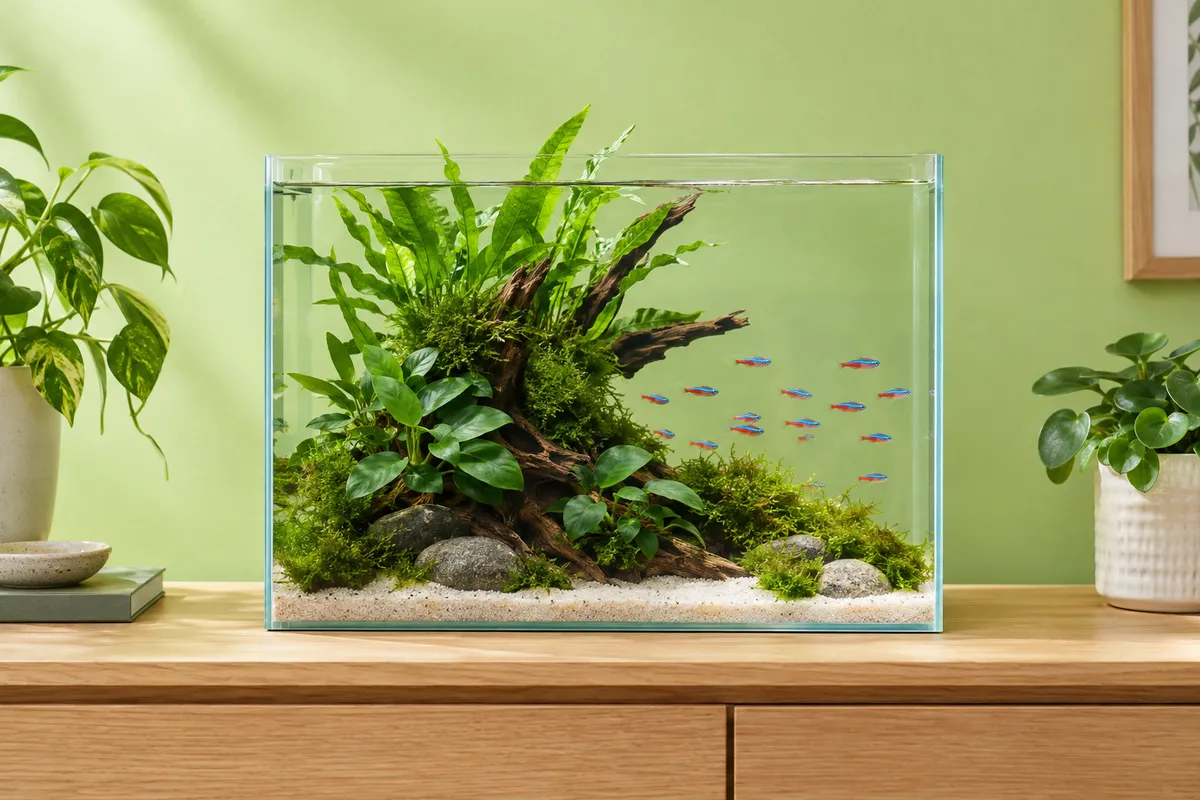
The easiest aquarium plants for beginners are java fern, anubias, java moss, marimo balls and cryptocoryne. They grow slowly, are happy under an ordinary tank light and need no special gear. Java fern and anubias attach to wood or rock, crypts root in the gravel, and silk plants are a no-care alternative.
Hello, lovely tank keeper. If you are just getting your first tank going, our aquarium starter checklist covers the filter, heater and cycling. This guide is all about the green part: which plants forgive mistakes, where each one goes, and when a soft artificial plant is the smarter pick.
What makes an aquarium plant easy?
An easy plant grows slowly, tolerates low light and does not need added CO2 or fertilizer to stay green. Slow growth sounds dull, but it means fewer trims, less rotting leaf to scoop out and more forgiveness when you forget a water change. Fast, light-hungry carpet plants look wonderful in photos and are the ones that frustrate beginners first.
Easy plants also share a sturdy build: thick, leathery leaves (anubias), tough fronds (java fern) or a simple ball or mat shape (marimo, java moss). Fish that like to nibble usually leave the leathery ones alone. If a word like rhizome or substrate is new to you, the aquarium terms for beginners glossary explains them in plain words.
Which easy plants attach to wood and which go in the gravel?
Java fern, anubias and java moss attach to driftwood or rock; cryptocoryne and sword plants go in the substrate; marimo balls simply sit on the bottom. Getting this one detail right solves most beginner plant problems, because a rhizome plant pushed into gravel slowly rots.
| Plant | Where it goes | Light | Growth | Good to know |
|---|---|---|---|---|
| Java fern | Tied or glued to wood or rock | Low | Slow | Keep the rhizome uncovered; baby plants sprout on old leaves |
| Anubias (nana and friends) | Tied or glued to wood or rock | Low | Very slow | Leathery leaves; shade it if spots of algae appear on leaves |
| Java moss | Tied to wood, rock or mesh | Low to medium | Medium | Trim like a hedge; can trap debris if left shaggy |
| Marimo ball | Rests on the bottom | Low | Very slow | Roll it gently now and then so it stays round |
| Cryptocoryne | Planted in the substrate | Low to medium | Slow | Often drops leaves after moving, then regrows |
| Sword plant | Planted in the substrate | Medium | Medium | Grows large; best for roomier tanks |
Easy live plants on our shelves
Java fern and anubias, potted or bare root, ready to tie onto wood.


The easiest first pair
One potted anubias nana and one potted java fern: the two plants nearly every beginner list starts with, in one box.
- Both are low light plants
- Grown in small net pots with rockwool you can remove before tying them to wood
- Two different leaf shapes, broad and fern-like, so the tank looks layered from day one
How do you attach java fern and anubias to driftwood?
Hold the rhizome (the thick horizontal stem) against the wood or rock and wrap it with cotton thread, fishing line or a dab of aquarium-safe gel glue. Wrap firmly but not tightly, so you do not crush it. Over the following weeks the plant sends out fine roots that grip on their own, and thread can then be snipped away.
- Rinse the plant and gently tease off any rockwool from the roots.
- Choose a spot on the wood where water can flow around the leaves.
- Dry the contact spot on the wood if you are gluing, add a small dot of gel glue and press the rhizome on.
- Or tie it: loop thread or clear line around the rhizome and wood a few times and knot it.
- Place the wood in the tank and leave the plant alone while it settles.
Wood, rock and glue for rhizome plants
Natural hardscape gives java fern and anubias somewhere to cling.


Do easy aquarium plants need special substrate and lighting?
Plants that attach to wood need no special substrate at all, and every easy plant here grows under a standard full-spectrum LED. Root feeders such as crypts and sword plants do better in a plant substrate, a soft clay or volcanic soil their roots can push through, or in plain gravel with root fertilizer tabs pushed in beside them.
For light, choose an LED sized to your tank's length and run it on a timer so the day is the same every day. A steady, moderate day keeps plants happy and gives algae less of a chance; more light without more plants usually means more algae. Browse tank lights and tanks or the full decor and substrate shelf.
Plant substrates and planted-tank lights
Soft soils for rooted plants and full-spectrum LEDs with built-in timers.


Live or artificial aquarium plants: which should you choose?
Choose live plants if you enjoy watching something grow and do not mind a little trimming; choose artificial plants if you want a tank that looks the same every day with no care at all. Live plants use some of the nutrients in the water and give shrimp and small fish leaves to graze and hide in. Artificial plants never melt, never need light or fertilizer and can be lifted out and rinsed.
| Live plants | Silk plants | Hard plastic plants | |
|---|---|---|---|
| Care | Light, occasional trims | Rinse now and then | Rinse now and then |
| Feel for fins | Soft | Soft and flowing | Can have stiff edges |
| Best for | Shrimp, community tanks, curious keepers | Bettas and long-finned fish | Goldfish, cichlids, busy diggers |
| Changes over time | Grows, spreads, can melt back | Stays the same | Stays the same |
| Brings in hitchhikers | Possible, rinse and check | No | No |
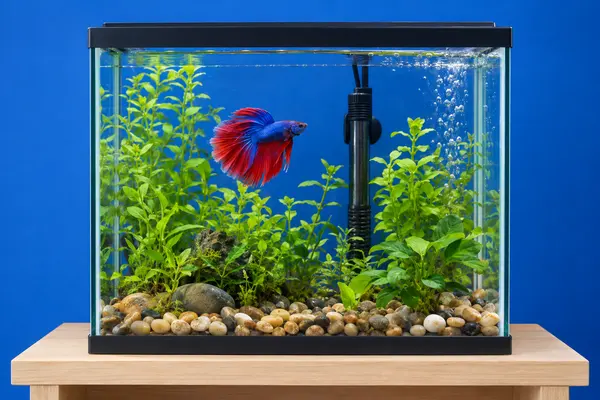
A good test for long-finned fish such as bettas: run the plant across a pair of tights. If it snags the fabric, it can snag fins, so pick silk instead. Our guide to setting up a betta fish tank has more on soft hides and leaf hammocks.
Soft silk plants for delicate fins
Fabric leaves that sway in the current and stay green with no light.


Sturdy plastic plants for active fish
Weighted bases that stay put in gravel.


How do you plant an aquarium step by step?
Build the hardscape first, then add rooted plants, then attached plants, then fill. Working in that order keeps the substrate from clouding the water and puts every plant where it can be seen.
- Rinse gravel or sand (most plant soils go in unrinsed; check the bag).
- Slope the substrate a little higher at the back so taller plants sit behind shorter ones.
- Place driftwood and rocks, with your java fern and anubias already tied on.
- Fill the tank about a third of the way, pouring onto a plate or bag so nothing gets dug up.
- Push crypts and swords in with long tweezers, crown just above the substrate.
- Add silk or plastic plants to fill gaps, then top up the water and switch on the filter and light.
Long tools for planting and trimming
Tweezers and curved scissors reach the back of the tank without wet sleeves.


How do you trim and care for easy aquarium plants?
Trim only what looks tired: cut old or damaged java fern and anubias leaves off at the base, and snip java moss back like a hedge. Lift trimmings out with tweezers or a net so they do not decay in the tank.
- Java fern: little plantlets often form on older leaves. Once they have a few roots, pull them off and tie them to new wood.
- Anubias: wipe leaves gently if a film settles on them, and move the plant to a shadier spot if spots keep appearing.
- Java moss: trim the outer layer every few weeks so the inside stays loose and fresh.
- Marimo balls: roll them gently in your fingers during water changes and turn them so every side sees light.
- Crypts: if leaves melt after planting, leave the roots in place; new leaves usually follow.
- Silk and plastic plants: lift out during a water change and rinse in tank water or plain tap water, no soap.
Want to keep browsing? Search aquarium plants to see every live and artificial option together.
Questions people ask
What is the easiest aquarium plant for a total beginner?
Anubias and java fern are the usual first choice. Both grow slowly, take low light and attach to wood, so you never have to worry about planting depth. Marimo balls are even simpler: they just sit on the bottom.
Can java fern or anubias be planted in gravel?
Their roots can go into gravel, but the rhizome must stay above it. A buried rhizome tends to rot. Tie or glue the plant to wood or rock, or wedge it gently between stones.
Are artificial aquarium plants bad for fish?
Not as a rule. Soft silk plants are gentle on fins, and hard plastic plants suit sturdier fish. Run any plant across a pair of tights first: if it snags, choose silk for long-finned fish such as bettas.
Do I need special substrate for live aquarium plants?
Only for plants that feed through their roots, such as crypts and sword plants. Plants tied to wood need none. A clay or volcanic plant soil, or gravel with root tabs, keeps root feeders green.
Why are my cryptocoryne leaves melting?
Crypts often drop their leaves after being moved to a new tank. Leave the roots in place, keep conditions steady and new leaves usually grow back.
Can I mix live and artificial plants in one tank?
Yes, and many beginners do. A few hardy live plants on wood plus silk plants to fill the gaps gives a full look while the live plants slowly grow in.