Setting Up a Betta Fish Tank: Heater, Filter, Plants, Hides
A betta needs a covered tank with room to swim, a small heater and thermometer, a gentle filter, water conditioner, soft plants and a smooth hide. Set it up and let it run before your fish comes home.
In short
- A betta needs a covered tank with room to swim, a small heater, a thermometer, a gentle filter, water conditioner, test strips, soft plants and a smooth hide.
- Bettas are tropical fish: many small betta heaters hold the water near 78°F, and a separate thermometer confirms it.
- A sponge filter on a small air pump keeps the water moving without pushing long fins around.
- Anubias and java fern grow in low light and tie onto driftwood, which makes them easy first live plants for a betta.
- Run the tank until test strips show no ammonia and no nitrite, then change part of the water every week.
A betta drifts through the water like a silk ribbon, and setting up its home can be just as relaxed. What you need for a betta fish tank is a short list: a tank with a lid and room to swim, a small heater and a thermometer, a gentle filter, tap water conditioner and test strips, soft plants and a hide or two. Put it together and let it run before your fish comes home.
The betta tank checklist at a glance
Each piece has a job, and the heater and lid matter most. Browse the tanks in aquariums and kits, or everything under betta.
| What you need | What to look for |
|---|---|
| Tank with a lid | Room to swim, ideally five gallons or more, and a cover |
| Heater | A small submersible heater sized to your gallons |
| Thermometer | A digital probe or a floating glass stick |
| Filter | A sponge filter, or a power filter you can turn down |
| Water conditioner | Neutralizes chlorine and chloramine in tap water |
| Test strips | Strips that read ammonia, nitrite and nitrate |
| Plants | Low-light live plants or soft silk ones |
| Hides and a resting leaf | Smooth caves or logs, plus a leaf pad near the surface |
| Siphon and net | A short siphon and a fine, soft net |
Choose the tank first: swimming room and a lid
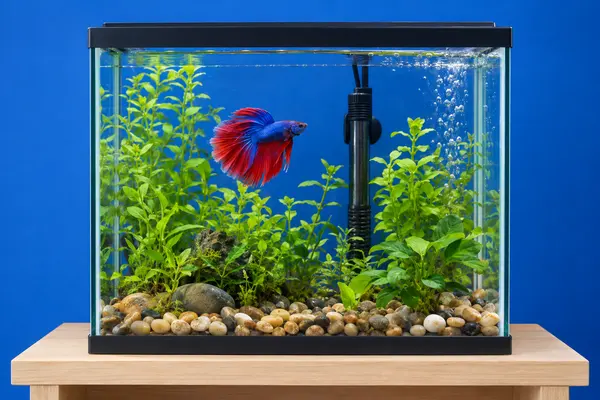
A larger body of water holds its temperature and quality more steadily than a tiny one, so there are fewer swings for your fish. A vet's care sheet calls 5 to 10 gallons ideal, and every kit here is five gallons or more. Bettas also gulp air at the surface, so give them room to cruise rather than a tall, narrow vase.
Bettas can jump, so a lid is part of the setup, not an extra. With an open-top style, keep the water line a little below the rim.
| Kit style | Good at | Keep in mind |
|---|---|---|
| Bent-glass desktop tank, hang-on filter, glass lid | Most of the basics in one box | Soften the outflow if your betta gets pushed around |
| Glass with a filter chamber at one end | A clean planted look, pump tucked at one end | No lid listed, so mind the water line |
| Acrylic bow front with a hood | Light, covered, desk-friendly | Clean only with acrylic-safe pads |
| Curved glass, eight gallons | The most room here | No lid listed either, so keep the water a little low |
Tank kits with room for a betta
Each one is five gallons or more, with a filter in the box.


A first tank with most of the kit in the box
A frameless tank of bent glass, with two curved front corners for a clear view from every angle. It comes with a glass lid, a small hang-on filter, a digital thermometer and a net, so you mainly add a heater, water care and decor.
- Glass lid for a fish that can jump
- Thermometer and net included
Heater and thermometer: steady, warm water
Bettas are tropical fish, so most homes need a heater. Small betta heaters are often 25 watts and list the tank sizes they suit on the box. Many hold the water near 78°F, inside the 76 to 81°F that a vet's care sheet suggests.
A preset heater has no dial and clicks on and off around one temperature: set it once and leave it be. An adjustable heater lets you pick the number, and some show the set and actual temperature on a small display. Either way, put a thermometer on the far side from the heater.
Small heaters and thermometers
Preset or adjustable heaters made for small tanks, plus thermometers to check them.


A heater that shows its work
A short 25-watt heater with a digital display showing the temperature you set and the one the water really is. It remembers its setting after a power cut and switches itself off if the water level falls too low or the water gets too hot.
- Set and current readouts
- Made for 3 to 5 gallon tanks
A gentle filter for long fins
A filter catches floating bits, and its foam gives helpful bacteria a home where they break down fish waste. For a betta, the current matters as much: long fins act like sails, so a strong outflow pushes a betta from one end of the tank to the other.
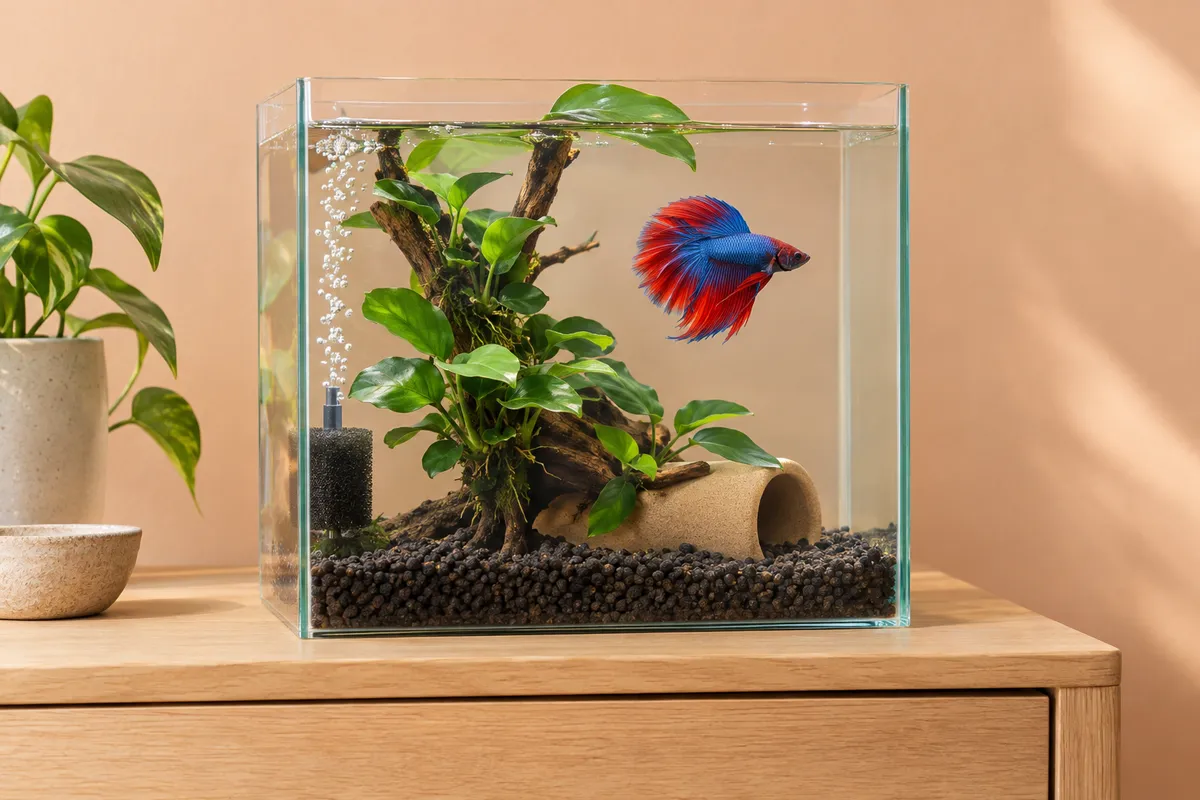
That is why a sponge filter is such a sweet match. A small air pump sends air down airline tubing, and the rising bubbles draw water through foam that traps debris and holds the bacteria. The flow is soft and the foam squeezes clean. With a power filter, use its lowest setting and aim the outflow at the glass. More pumps and foams are on the filters and media shelf.
Sponge filters and the air to run them
A sponge filter needs an air pump and airline tubing to work.


A small sponge filter with a spare
One foam sponge on a lift tube, two suction cups to hold it to the glass and a second sponge in the pack. Every part comes apart for a quick squeeze in old tank water.
- Made for 5 to 15 gallon tanks
- Spare sponge included
Plants: easy live ones or soft silk
Plants give a betta shade, cover and leaves to rest against. Two of the easiest live choices are anubias and java fern: both grow slowly in low light, need no special soil and do best tied to driftwood or wedged between stones. Keep the thick stem they grow from, the rhizome, above the gravel, never buried.
Wrap a few loops of fine clear nylon line around the roots and the wood; in time the roots grip on their own. For artificial plants, choose silk over hard plastic, which can hide sharp seams. You will find both in aquarium decor and substrate.
Live plants, silk plants and tying line
The live ones grow in low light and attach to wood or stone.


A potted anubias to start with
A single anubias nana in a small pot, about four to five inches tall, with broad, sturdy leaves. Ease the roots free and tie it to a branch, or tuck the whole pot behind a stone for an instant green corner.
- Happy in low light
- Ties onto driftwood or rock
Driftwood and hides: shade, cover and a resting spot
Natural driftwood often floats at first, so soak it in a bucket until it sinks. It may tint the water a light tea color; that is tannin from the wood, and water changes fade it. Fine spider wood suits a small tank, while hollow cholla wood makes a tunnel a betta can drift through.
Add at least one hide with smooth edges and wide openings, such as a ceramic log or a rock-style cave, plus a leaf pad just below the surface. Bettas love to lounge near the top, and a leaf there makes a little hammock.
Wood, caves and resting leaves
Natural wood, smooth caves and a leaf to rest on, chosen with fins in mind.


A leaf to lounge on
Two leaf pads, each with a large and a small leaf, that hold to the glass with suction cups. Lower the water a little, press the cup to dry glass, then refill so the leaf sits about two inches below the surface, away from the filter's current.
- Easy to move
- Comes as a pair
Substrate: bare, gravel or plant soil
Anubias and java fern grow on wood rather than in the gravel, so choose the bottom by looks and how easy it is to clean.
| Bottom | Upside | Keep in mind |
|---|---|---|
| Bare glass | Fastest to clean | Plants go on wood or in pots |
| Fine inert gravel | Natural look, easy to siphon | Rinse well first |
| Plant soil | Room for rooted plants | Light grains: pour gently, fill slowly |
Substrate for a small tank
Dark grains set off a betta's colors.


How to set up a betta tank, step by step
- Set the tank on a sturdy, level surface near an outlet, away from sunny windows and heat vents.
- Rinse gravel until the water runs clear and spread it out; for plant soil, follow the bag.
- Place the wood, caves and plants, and tie anubias and java fern to the wood.
- Fill with conditioned tap water, pouring onto a saucer so the gravel stays put.
- Fit the filter and heater, and let the heater sit in the water as long as its maker suggests before plugging it in.
- Run everything while the helpful bacteria settle in, which often takes four to six weeks; add a bottled bacteria culture if you like and test every few days.
- When the strips show no ammonia and no nitrite, float your betta's sealed cup so the temperatures match, then let it swim out gently.
For set-up day
Conditioner for every refill, strips that read ammonia, and a bacteria culture for the filter.


Keeping it clean: a simple weekly routine
Once a week, siphon out 15 to 25 percent of the water, vacuuming the gravel as you go, and refill with conditioned tap water at a similar temperature. Siphons, test strips and other cleaning tools are in water care.
When the flow slows, squeeze the sponge in the water you just removed, never under the tap, so the helpful bacteria stay put. Wipe algae, trim tired leaves and glance at the thermometer as you pass. If your betta seems unwell or stops eating, ask an aquatic vet.
Cleaning tools
A siphon with a short nozzle and a squeeze bulb, a fine net, and tools to trim plants and scrape algae.


Setting up a home for a furrier friend too? Our guinea pig cage guide walks through space, hideouts and hay the same way.
Not sure which wattage fits your tank? Our guide to what size aquarium heater you need has a gallon-by-gallon table and placement tips.
Questions people ask
How often do you clean a betta tank?
Change 15 to 25 percent of the water every week, siphoning the gravel as you go, and refill with conditioned tap water at a similar temperature. Squeeze the filter sponge in removed tank water when the flow slows.
How do you set up a betta tank for beginners?
Place a covered tank on a level surface, add gravel, wood, plants and a hide, then fill with conditioned tap water. Fit a gentle filter and a small heater and run the tank, often four to six weeks, until the helpful bacteria settle in. When strips show no ammonia and no nitrite, float your betta's cup to match temperatures and let it swim out.
What do you need for a betta fish tank for beginners?
A covered tank with room to swim (every kit in this guide is five gallons or more), a small heater, a thermometer, a sponge filter with an air pump, water conditioner and test strips. Add soft plants, a smooth hide, a leaf pad near the surface and a short siphon.
Does a betta tank need a heater?
In most homes, yes. Bettas are tropical fish and room temperature drifts with the seasons, so a small heater sized to your tank keeps the water warm and even. A vet's care sheet suggests 76 to 81°F; check it with a thermometer.
About the numbers
- Betta Fish Care Sheet, PetMD (Maria Zayas, DVM): Water at 76 to 81°F with a heater and thermometer, a lid because bettas can jump, low-flow or sponge filters, cycling over four to six weeks, weekly changes of 15 to 25 percent of the water, 5 to 10 gallons as the ideal tank size, and bettas breathing air at the surface.