Bird Perches Compared: Wood, Rope, Sand, Platforms and Swings
Give your bird a mix: natural wood branches of different widths, a soft rope perch, one flat platform and a swing, sized to its feet and kept away from food and water bowls.
In short
- The best perch setup is a mix of types, not one perfect perch: natural wood, rope, a flat platform and a swing each give the feet something different.
- Natural wood branches with an uneven width are the everyday base, because the bird's grip changes along the length.
- Size the perch to the bird: makers list small perch covers for budgies, finches and canaries, medium ones for cockatiels and conures, and wide ones for macaws.
- Place perches at different heights and never directly above food or water bowls, so droppings stay out of the dishes.
- Clean perches on a set rhythm and replace rope that frays or wood that splinters; for any worry about feet, ask an avian vet.
Hello, lovely bird people. Your bird spends nearly every waking and sleeping hour standing, so bird perches are the most-used thing in the cage. The short answer: give a mix. A couple of natural wood branches, one soft rope perch, a flat platform to rest on and a swing for fun cover what most cage birds need, as long as each one fits your bird's feet.
Below we compare each type side by side, then walk through sizing, placement and cleaning. If you are still choosing the cage itself, start with how to choose a budgie cage and come back here.
Bird perch types at a glance
Each type earns its place for a different reason. Read across a row to see what it does well and where it falls short.
| Perch type | What it feels like | Good for | Watch for |
|---|---|---|---|
| Natural wood branch | Bark, knots and a width that changes along its length | The everyday base perch in every cage | Wood that splinters or gets soaked |
| Rope (cotton, bendable) | Soft and slightly springy; bends into curves | A cozy resting spot and a way to link perches | Loose threads and fraying; replace when worn |
| Sand, concrete or mineral | Gritty, firm texture | One textured option among several | Not as the only perch or the sleeping perch |
| Flat platform | A wide shelf the whole foot can rest on | Lounging and older or heavier birds | Droppings collect on the flat top |
| Heated perch | A perch with a gentle warm surface, plugged in | A cozy extra spot in cooler rooms in winter | The cord must stay outside the cage, away from beaks |
| Swing | Moves with the bird | Play and balance fun | Head room so the swing never hits the cage top |
Natural wood perches: the everyday base
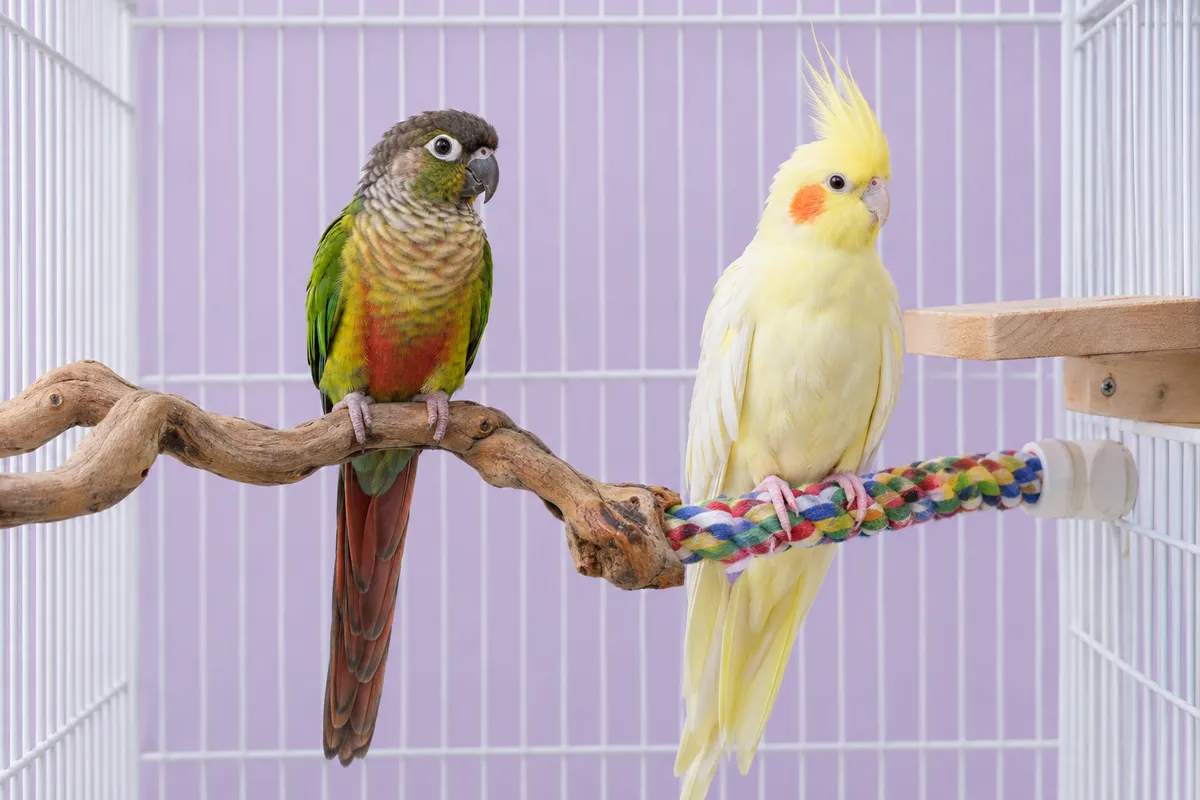
Natural wood is the perch to start with. A real branch twists, narrows and widens, so your bird's toes wrap a little differently at every step. Grapevine, java wood and manzanita are common choices, and many come with a wing nut and washer that bolt through the cage bars. Smooth, same-width dowels that come with many cages are fine as a backup, but swap at least one or two for branches.
Wood is also chewable, which most hookbills enjoy. Expect to replace a well-loved branch now and then, and treat that as a good sign. Find more in toys and perches.
Natural wood branches and stands
Twisting branches and fork stands that bolt to the bars.


Rope, sand and mineral perches: soft and textured
A rope perch is the soft option. Cotton rope wound over a wire core can be bent into curves, loops and bridges, so it can link two areas of the cage or make a cozy corner for naps. Spiral rope bungees add a gentle bounce. Check rope often: once threads loosen or fray, swap it out so toes and nails cannot catch.
Rope perches and bungees
Bendable rope in a few lengths for small to medium birds.


Sand, concrete and mineral perches add grit. They come as solid perches, U shapes and slip-on covers that fit over an existing dowel. Treat one as a single textured option in a mixed setup rather than the main standing spot, and do not put it where your bird sleeps. If you notice anything unusual about your bird's feet or nails, ask an avian vet before adding or removing textured perches.
Textured perches and covers
Sand, pumice and quartz finishes in small to large sizes.


Platform perches, heated perches and swings
Platform perches are the lounge chair. A flat wooden shelf lets the whole foot rest open instead of gripping, which many birds enjoy for a midday doze. Older or heavier birds often like one too. Because the top is flat, droppings land and stay, so a platform needs more frequent wiping than a branch.

A simple wooden platform
A slab of natural wood with bark along one edge that bolts to horizontal bars with a wing nut.
- Wide, flat resting surface
- Natural bark edge for a little texture
- Removes easily for scrubbing
Heated perches are a winter comfort item. They look like a regular perch with a warm surface and a cord that plugs in outside the cage. Think of one as an extra cozy spot in a cooler room, not a replacement for a warm, draft-free placement; our guide on where to put a bird cage covers that. Keep the cord fully out of beak reach. Whether a heated perch suits your bird is a good question for your avian vet.
Swings are for play. They move, so your bird adjusts its balance on every landing. Choose one sized for your bird and hang it where it can sway without hitting the cage roof, a dish or another perch. Browse more bird swings.
Swings and play perches
Wood, rope and textured swings plus a play stand.


How to size a perch to your bird
Your bird's toes should wrap part of the way around the perch, not meet or overlap. Too thin and the toes curl all the way round; too thick and the bird has trouble gripping. Rather than guess, use the size ranges makers print on their packaging. Here is what the perches in this guide list, by bird size.
| Bird size group | Examples named by makers | What the listings show |
|---|---|---|
| Small | Budgies, finches, canaries, lovebirds, parrotlets | Small sand covers made to fit over 3/8 inch perches; the smallest pumice perch is 6 inches long |
| Medium | Cockatiels, conures, ringnecks, quakers | Large sand covers sized 0.75 by 9.5 inches |
| Large | African greys, small cockatoos | The same 0.75 inch covers list African greys; long bendable rope bungees list small cockatoos |
| Extra large | Macaws, large cockatoos | A large sand perch about 11 inches long and 2 inches across |
How many perches, and where they go
Aim for a few perches at different heights, with open flying or hopping space between them. A small cage might hold three; a roomy one more. The goal is variety without clutter, so your bird can still stretch its wings.
- Put the highest perch near the top but leave room so the head and crest never brush the roof.
- Keep perches out from directly over food and water bowls, so droppings stay out of the dishes.
- Keep tails clear of the cage floor and the bars; a perch set too close to a wall bends tail feathers.
- Place the sleeping perch high, in a quiet corner, and make it wood or rope.
- Set a swing or rope bridge where landing and taking off do not knock other perches.
For the toys that go between perches, see our bird toy glossary, and find mounting hardware and spare parts in cages and accessories.
Cleaning and replacing perches
Wipe perches whenever you see droppings, and give them a full scrub on a regular rhythm. One platform perch listing on Hey Lovi suggests cleaning about every 2 to 3 weeks: take the perch out, spray it, scrub with a small brush, rinse and let it dry fully before it goes back in.
- Take the perch out of the cage.
- Scrape off dried droppings, then scrub with warm water and a small brush.
- Rinse well so no soap is left behind.
- Let wood and rope dry completely; damp wood can grow mold.
- Check before refitting: replace rope that frays, wood that splinters and any perch worn smooth or cracked.
Questions people ask
What is the best type of perch for a bird?
There is no single best perch. A mix works well: natural wood branches as the base, one rope perch, a flat platform and a swing. Variety in width and texture gives the feet different ways to grip.
What size perch does a budgie need?
Budgies sit in the small size group. Makers list small sand covers made to fit over 3/8 inch perches for budgies, finches and canaries. Your budgie's toes should wrap part of the way around, not meet.
Are sand perches safe for birds?
Sand, concrete and mineral perches are sold as one textured option in a mixed cage. Use one alongside wood and rope rather than as the only or sleeping perch. For any question about your bird's feet or nails, ask an avian vet.
Do birds need a heated perch in winter?
A heated perch is an extra cozy spot, not a must. A warm, draft-free spot for the cage matters first. Keep the cord outside the cage, and ask your avian vet whether one suits your bird.
How often should I replace bird perches?
Replace a perch when rope frays, wood splinters or cracks, or a surface wears smooth. Chewed wood perches get replaced more often, which is normal for birds that love to chew.
Where should perches go in a bird cage?
At different heights, with space between them, and never directly over food or water bowls. Keep tails clear of the floor and bars, and put the sleeping perch high in a quiet corner.
About the numbers
- Product listings on Hey Lovi (small and large sanded perch covers, large sand perch, pumice perch, rope bungee), read 2026-10-28: Size ranges by bird: covers for 3/8 inch perches for budgies, finches and canaries; 0.75 by 9.5 inch covers for cockatiels, conures, ringnecks, quakers and African greys; a sand perch about 11 inches long and 2 inches across for macaws and large cockatoos; pumice perches from 6 inches for finches.
- Wooden platform perch listing on Hey Lovi, read 2026-10-28: Suggests cleaning perches about every 2 to 3 weeks with a spray bottle and small brush.