Aquarium Filter Types Compared: Sponge, HOB, Canister and More
Sponge filters suit bettas, shrimp and fry; hang-on-back filters suit most small and mid tanks; canisters suit big tanks. Here is how each type works, sounds and gets cleaned.
In short
- A sponge filter is the gentlest choice and suits bettas, shrimp, fry and small tanks, because an air pump pushes bubbles up a tube and pulls water slowly through foam.
- A hang-on-back filter is the easiest all-rounder for most small and mid-size tanks: it clips on the rim, holds several kinds of media and comes apart without reaching into the water.
- A canister filter sits under the stand and holds the most media, which makes it the usual pick for large tanks and heavy feeders.
- Every filter does up to three jobs: mechanical (catching bits), biological (a home for helpful bacteria) and chemical (carbon and similar media).
- Rinse biological media in old tank water and never replace all of it at once.
Hello, lovely fishkeeper. The best aquarium filter type is the one that matches your tank size and the fish in it. Sponge filters for bettas, shrimp and baby fish; a hang-on-back filter for most small and mid-size tanks; a canister for big tanks. Here is how each works, how loud it is, and how to clean it.
Setting up from scratch? Start with our aquarium starter checklist.
The three jobs every filter does
Every filter does some mix of three jobs. Knowing them makes every listing easier to read.
- Mechanical filtration catches floating bits: leftover food, plant pieces and fish waste. Foam, sponge and filter floss do this job. Coarse foam catches big pieces; fine floss polishes the water clear.
- Biological filtration gives helpful bacteria a place to live. These bacteria break down ammonia into nitrite and then nitrate, the process called the nitrogen cycle. Porous sponge, ceramic rings and bio balls give them lots of surface.
- Chemical filtration uses media such as activated carbon or zeolite to pull dissolved things out of the water, like odors and discoloration. It is optional for many tanks, and carbon is usually taken out while a tank is being treated, so check the label and ask your vet or aquarium specialist.
Aquarium filter types side by side
Here is the quick comparison, with each type explained below.
| Filter type | How it moves water | Flow and noise | Media room | Best for |
|---|---|---|---|---|
| Sponge filter | Air pump pushes bubbles up a tube, pulling water through foam | Very gentle; the hum comes from the air pump outside the tank | Small, sponge only (some add a ceramic chamber) | Bettas, shrimp, fry, small and quarantine tanks |
| Hang-on-back (HOB) | Motor with an impeller pulls water up an intake tube | Moderate, often adjustable; a soft trickle from the waterfall | Medium, often room for foam, carbon and ceramic | Most 5 to 75 gallon community tanks |
| Internal filter | Submerged motor inside the tank | Moderate; quiet because it runs underwater | Small to medium | Small tanks, turtle tanks, shallow tanks with no rim space |
| Canister filter | External sealed pump under the stand, with hoses | Strong; very quiet when set up well | Large, several stacked trays | Big tanks, heavy feeders, tidy-looking setups |
| Undergravel filter | Plates under the gravel, water pulled down through it by air or a powerhead | Gentle; air pump hum | The gravel itself | Simple, older-style setups with plain gravel |
Sponge filters: gentle and simple
A sponge filter is the gentlest filter you can buy. An air pump outside the tank sends air down a thin tube; bubbles rise up the lift tube and pull water through the foam. The foam catches debris and, over a few weeks, fills with helpful bacteria.
Nothing spins inside the tank and the intake is soft foam, so tiny fish and shrimp cannot be pulled in. That is why keepers choose it for a betta's long fins, a shrimp colony or baby fish. Our betta tank setup guide has more on keeping the current calm.
It does need an air pump with airline tubing, and a check valve on the line so water cannot siphon back into the pump if the power goes out.
Sponge filters for small and gentle tanks
Single and double foam towers in several sizes; read each listing for its tank size.


Air pumps, tubing and check valves to run them
A small pump runs one or two sponge filters; a valve lets you turn the bubbles down.


Hang-on-back filters: the everyday all-rounder
A hang-on-back filter, or HOB, is the most popular choice for small and mid-size tanks. It hooks over the back rim, pulls water up an intake tube, through the media box and back over a lip like a little waterfall.
You can change or rinse media from above without wet arms, and many models take your own foam and ceramic rings in place of a cartridge. Keep the water level close to the lip so the trickle stays quiet, and slip a pre-filter sponge over the intake if you keep shrimp or fry.
Hang-on-back filters and the inserts they use
Open media baskets take foam, carbon and ceramic; check the rated gallons on each listing.


Internal filters: compact and out of the way
An internal filter is a small motor and media box that sits fully underwater, usually held to the glass with suction cups. It suits tanks with a tight lid or no room on the rim, low-water setups such as turtle tanks, and small tanks where you want something quiet and hidden behind plants.
Many add air to the outflow for extra surface movement. Media space is modest, and cleaning means reaching into the tank.
Internal filters for small tanks and turtle tanks
From nano tanks to larger setups; several add aeration.


Canister filters: the most media for big tanks
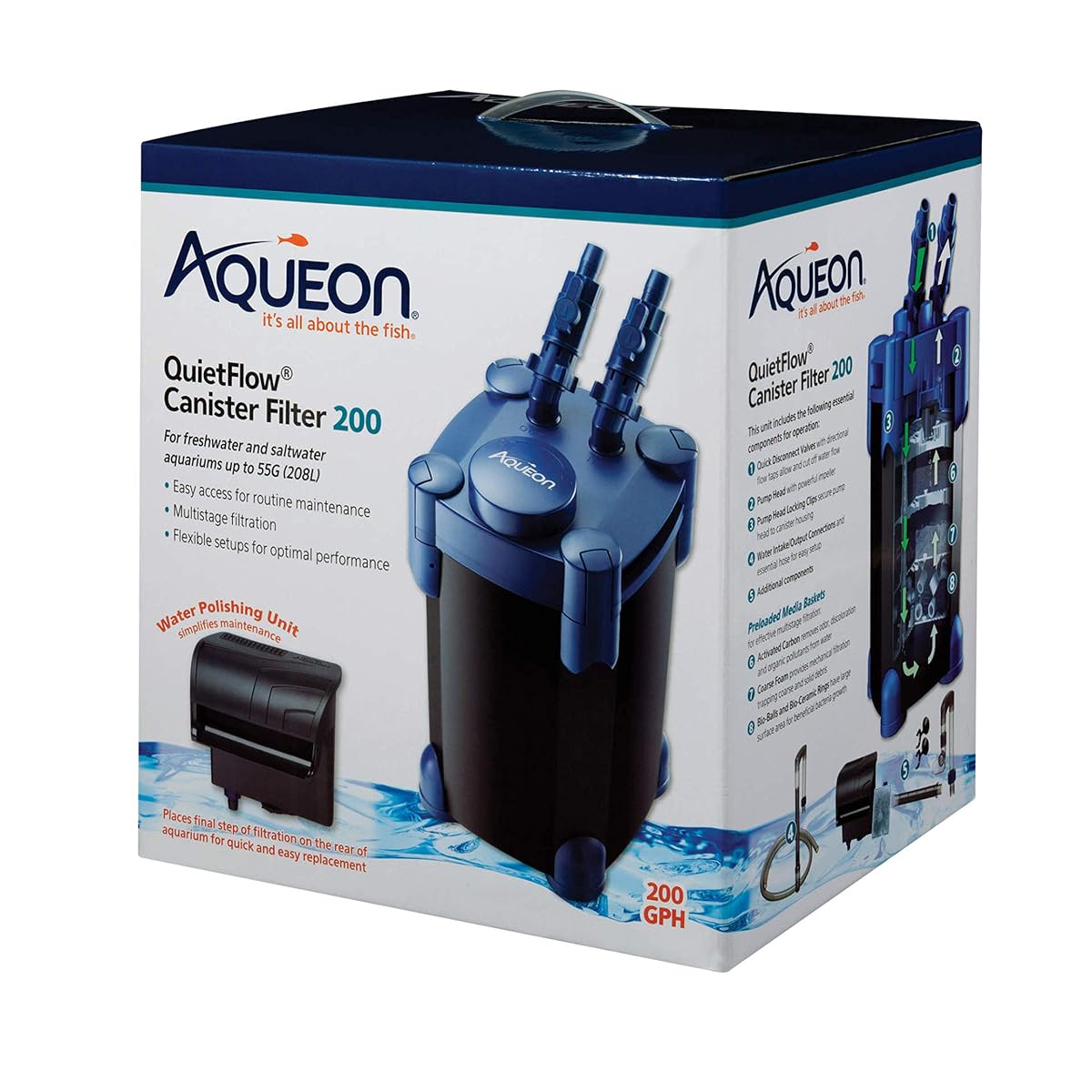
A canister filter is a sealed pump and media container that sits under the tank, joined by intake and return hoses. Water runs through stacked trays: coarse foam, ceramic rings, then fine floss or carbon.
Keepers reach for one on bigger tanks and with messy eaters such as goldfish, because there is more room for media, and they run quietly once the air is bled from the hoses. The trade-off is effort: cleaning means closing the valves, carrying the canister to a bucket and priming it again, usually every month or two.
Canister filters by tank size
Each listing names the largest tank it is rated for.


Undergravel filters: the classic setup
An undergravel filter is one of the oldest designs. Slotted plates lie on the tank floor, gravel goes on top, and lift tubes in the corners pull water down through the gravel, usually with an air pump. The gravel itself becomes the biological filter.
It is quiet and hidden, but it works best with plain, even gravel: fine sand clogs the slots and rooted plants may not enjoy the flow. Many keepers now pair it with a sponge or HOB filter.
Undergravel plates
Sized by tank; each set includes lift tubes.


Flow rate and turnover: how strong should it be?
Start with the tank size printed on the listing, then think about your fish. Filters are rated in gallons per hour (GPH). A guideline you will often see for a freshwater community tank is that the filter should move the tank's volume about 4 to 6 times an hour, so a 10 gallon tank would want roughly 40 to 60 GPH. Heavy waste producers often get more, and planted tanks and long-finned fish often get less.
Treat that as a starting point. Rated GPH is measured with clean media, and flow drops as the filter fills. If fish are being blown around, turn the flow down or aim the outlet at the glass. For a particular species, ask your vet or a local aquarium specialist.
Filter media in plain words
Here is what each common filter media does.
- Coarse foam or sponge: catches big bits and hosts bacteria. Rinse it, do not bin it.
- Filter floss: polishes the water clear. Replace it when brown and mushy.
- Ceramic rings and bio balls: surface for bacteria. Rarely needs replacing.
- Carbon and zeolite: chemical media for odors and discoloration. Follow the label.
- Cartridges: floss plus carbon in one frame. Swapping the whole thing also throws out bacteria, so add a sponge or ceramic pocket that stays put.
Media to fill or upgrade a filter
Cut-to-fit foam, ceramic rings, carbon and mesh bags to keep it all tidy.


Cleaning without losing your good bacteria
Rinse biological media in old tank water, and never replace all your media at once. Treated tap water can harm the bacteria in your sponge, and changing everything removes their home in one go.
- During a water change, siphon some tank water into a bucket kept only for the aquarium.
- Unplug the filter and lift out the sponge or ceramic media.
- Squeeze the sponge in the bucket until it is tinted, not spotless. Swish ceramic gently.
- Replace worn floss or carbon, but keep the sponge and ceramic.
- Put everything back, plug in and check that the flow restarts.
A gentle starter for a betta or shrimp tank
A double sponge filter with two foam towers gives more surface for bacteria than a single tower, and the soft intake is safe for tiny shrimp and fins.
A simple HOB for a small community tank
A compact power filter rated for tanks up to 10 gallons, a common size for a first community tank.
A canister for a larger tank
Rated for aquariums up to 45 gallons, with stacked media trays you can fill your own way.
Questions people ask
What are the three types of aquarium filtration?
Mechanical, biological and chemical. Mechanical media such as foam and floss catches floating bits, biological media such as sponge and ceramic rings gives helpful bacteria a home, and chemical media such as activated carbon pulls dissolved odors and discoloration from the water.
Which filter is best for a small fish tank?
For small tanks, most keepers choose a sponge filter or a small hang-on-back filter. A sponge filter is gentlest and suits bettas, shrimp and fry. A small HOB holds more media and is easy to service from above. Match the rated tank size on the listing to your tank.
What type of aquarium filter is most effective?
It depends on the tank. Canister filters hold the most media, so they are often chosen for large or heavily stocked tanks. For a small, lightly stocked tank, a sponge or HOB filter does the job with less work. The right size and regular gentle cleaning matter more than the type.
How often should I clean my aquarium filter?
Many keepers rinse sponge and HOB media every few weeks during a water change, and service canisters every month or two. Clean when flow slows down. Always rinse in old tank water and never replace all the media at once.
About the numbers
- Google search AI overview for "aquarium filter turnover rate times per hour gallons", read 2026-10-08: commonly cited guideline: a freshwater community tank's filter turns over the tank volume about 4 to 6 times per hour
- Wikipedia, "Aquarium filter", read 2026-10-08: describes undergravel filters as one of the oldest filter types, sponge filters as useful for rearing fry, and mechanical, biological and chemical filtration
- Google search, people also ask for "types of aquarium filters" and "which aquarium filter is best for a small tank", read 2026-10-08: source of the questions answered in the FAQ