Dog Car Seats Compared: Boosters, Hammocks, Crates, Harnesses
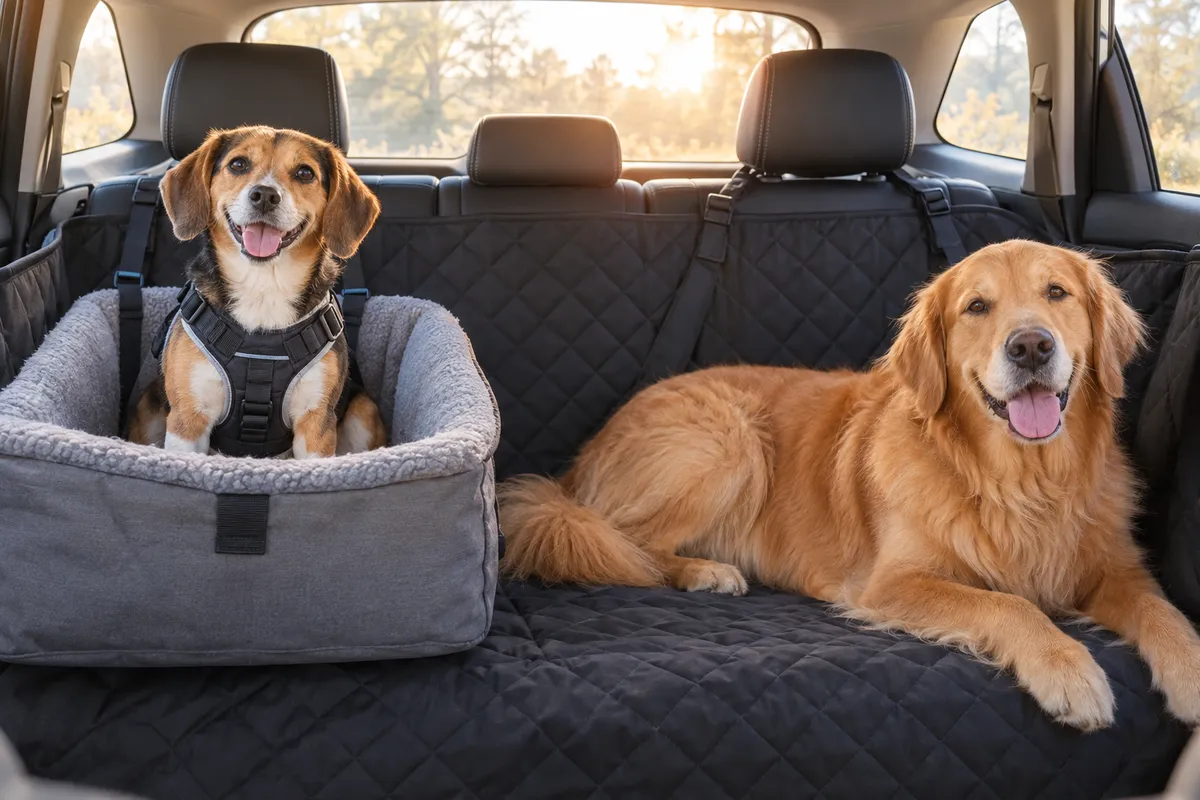
Small dogs ride well in a booster with a harness, big dogs on a hammock or extender with a harness, and anxious travelers in a crate. Keep every dog in the back seat.
In short
- The back seat is the place for every dog: front seats put a dog in the path of an airbag.
- A booster seat gives a small dog a view out, but it keeps a dog safe only when it is clipped to a harness, never a collar.
- Hammocks, seat covers and bench extenders protect the car and give big dogs room; they do not hold a dog in place on their own.
- "Crash-tested" is a claim, not a standard: look for which test, which weight and whether an independent group such as the Center for Pet Safety certified it.
- Choose by your dog's weight first, then by the space in your car, then by how easy the cover is to wash.
Hello, lovely. Short answer: the best dog car seat matches your dog's size and keeps them in the back seat, clipped to a harness. A little dog gets a raised booster with a view, a big dog gets a hammock or bench extender plus a car harness, and a dog who settles in a den rides in a crate. Here is how the types compare, what "crash-tested" means, and how to fit and clean each one.
Searches for "crash tested dog car seat" have climbed sharply in the US this season: people want to know what holds up, not just what looks cozy.
The five types side by side
Some types keep the car clean, some give a dog a cozy spot, and only a few are built to restrain a dog in a sudden stop.
| Type | Best for | What it does well | What it does not do | Pair it with |
|---|---|---|---|---|
| Elevated booster seat | Small dogs who like to look out | Raises the dog to window height, contains fur, feels like a bed | Most are not built to stop a dog in a crash | A car harness clipped to the seat belt or a short fixed strap |
| Back-seat hammock or cover | Any size, muddy or shedding dogs | Protects the seat and floor, blocks the gap to the front | Does not hold the dog in place | A car harness |
| Bench extender (hard bottom) | Medium and large dogs, pickup trucks and SUVs | Turns the back seat and footwell into one flat platform | Does not hold the dog in place; covers the rear floor | A car harness |
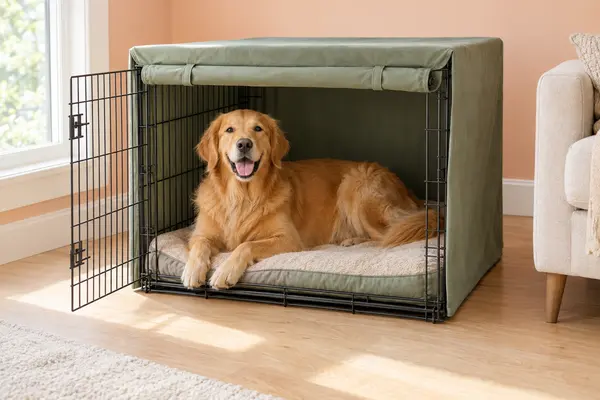
| Crate or travel kennel | Dogs who feel safe in a den, cats and small dogs in carriers | Contains the dog fully, limits wandering | Only as safe as its strapping and build | Straps or cargo tie-downs, plus a pad inside |
| Car harness with seat-belt attachment | Any dog that rides loose | Spreads force across the chest, keeps the dog seated | Long tethers allow too much movement | A booster, hammock or extender for comfort |
What "crash-tested" really means
"Crash-tested" is a marketing word unless it names a test. Any maker can sled-test a product once and print the phrase. The question to ask is: tested by whom, to what standard, at what weight, and did it pass?
The best-known independent reference in the US is the Center for Pet Safety (CPS), a 501(c)(3) nonprofit research group. In 2013 it crash-tested car harnesses using the crash conditions of Federal Motor Vehicle Safety Standard 213, the standard used for child car seats, and in 2014 it published a harness test protocol and rating guide. Products that meet its requirements can join the CPS Certified program, and the full certified list lives on the CPS website.
In 2015 CPS ran a pilot study of pet travel seats, including boosters, console seats and seats sold as crash-tested, and describes anchor straps and connectors that failed on impact. A cozy booster and a crash restraint are different things. CPS also advises against extension tethers, the long straps from a headrest or buckle to the dog, because they let a dog move too far when the car stops.
Listings that state crash testing
Each of these says on its own listing that it was crash-tested; read which test and which weight before you choose.


A harness with an independent certification
This car harness's own listing says it is certified by the Center for Pet Safety for dogs from 18 to 90 pounds. It uses the car's own seat belt threaded through a padded back panel, so the force of a stop lands on the chest rather than the neck.
- Wide padded vest that spreads load across the chest
- Works with the car's three-point belt
- Doubles as a walking harness when you arrive
Elevated booster seats: small dogs and a view out
A booster seat suits a small dog who wants to see out and settle down. It is a padded, raised box that buckles around the seat back or headrest, so a little dog sits at window height instead of sliding into the footwell. Many have a removable cushion, storage pockets and a short clip-on leash inside.
Check the listing's weight range, and make sure your dog can curl up without hanging over the edge. A firm base and a seat-back strap stop it tipping on corners.
Clip the inside leash to a harness, never a collar: CPS's travel-seat study notes that collars are not made for crash protection. Keep it short, so your dog can sit and lie down but not jump out. Our guide to front clip and back clip harnesses helps you pick one.
Booster seats for small dogs
Raised, padded and washable; check each listing's weight range.


A plush booster for a little lap dog
A deep, fleece-lined box that buckles to the seat, with a zip-off cover for the washer and side pockets for treats and poop bags. Its listing names dogs under 25 pounds, so it suits toy and small breeds.
- Removable, washable cover
- Seat-back strap keeps it upright
- Clip-on leash inside for a harness
Back-seat hammocks, covers and bench extenders: big dogs and messy days
A hammock or cover is for the car; a harness is for the dog. A hammock hooks to the front and rear headrests and makes a soft sling across the back seat, closing the gap to the front so your dog cannot slip into the footwell or climb forward. A flat bench cover protects the seat but leaves the footwell open, which suits a calm dog who likes to stretch out.
Look for waterproof layers, a non-slip backing, seat anchors, belt-buckle openings for a harness clip, and a mesh window so your dog can see you.
Hammocks and seat covers
Waterproof, quilted and machine washable; most have belt openings.


A bench extender has a hard, flat bottom that bridges the back seat and footwell, giving a large dog one wide, stable platform. It is the easy answer to "elevated dog car seat for large dogs" in a pickup or SUV, and it folds away when people need the seat.
Hard-bottom bench extenders
A flat platform for medium and large dogs; measure your back seat first.


A flat platform for a big dog
A hard-bottom extender with zippered side flaps, a mesh window and quilted, waterproof fabric that covers the seat and doors. Your dog gets a level floor to lie on, and you get a back seat that stays free of fur.
- Hard base stays flat under a heavy dog
- Side flaps unzip for easy hopping in and out
- Folds down when you need the seat
Crates and travel kennels: for dogs who settle in a den
A crate is a good choice for a dog who already loves their crate at home. It keeps your dog contained, cuts down on wandering, and travels well into a hotel room. Soft-sided carriers suit cats and small dogs on the seat; a sturdy crate belongs in the cargo area of an SUV, strapped down so it cannot slide.
Size it so your dog can stand, turn and lie down; our guide to what size dog crate you need walks through measuring. Strap it through the car's anchor points, and check the CPS certified list if crash protection matters to you.
Carriers and travel crates
Soft-sided carriers for small pets and a folding crate for the cargo area.


Front seat or back seat?
Back seat, every time. Front airbags open with great force, and CPS's travel-seat study points out that the front seat exposes a pet to airbag deployment and to the front of the car crumpling inward in a head-on crash. A dog up front also distracts the driver.
In a single-row vehicle, check your manual for switching off the passenger airbag. For any worries about how your dog copes with car rides, ask your vet.
Sizing by weight, and fitting it right
Start with your dog's weight, then measure the car. Crash-test claims only hold inside the named weight range, so choose a size in the middle of the range, not at the very top.
- Weigh your dog and note chest girth for a harness.
- Measure the back seat width, and the depth from seat to front seat backs for an extender.
- Fit the harness snugly: two fingers under the straps, no sliding over the shoulders.
- Set the attachment short: your dog can sit and lie down, but cannot reach the front or the window.
- Take a short practice drive and check that nothing shifts on corners.
Introduce the seat gently at home first with a treat and a few minutes in the harness, then a short trip around the block. See more dog car harnesses or the full carriers and travel range.
Cleaning: keep it fresh between trips
Pick covers that come off and go in the washer. Shake out fur after each trip, wipe waterproof hammocks with a damp cloth and air dry washed cushions so the backing lasts. Frayed webbing, chew marks or a bent buckle mean it is time to replace a harness.
For the fur that escapes
A detailing brush set for car carpet and seats.

Questions people ask
What kind of car seats are best for dogs?
It depends on size. A small dog does well in a raised booster seat clipped to a harness, while a medium or large dog rides best on a hammock or hard-bottom bench extender with a car harness. A dog who loves a den can ride in a well-secured crate.
Are dog car seats a good idea?
Yes, for comfort and calm: a booster or hammock keeps your dog in one spot and your car clean. Remember that most seats are not crash restraints on their own, so clip your dog to a harness, and look for an independent certification if crash protection is your goal.
Should dogs sit in the front or back of a car?
The back. Front airbags deploy with great force, and the Center for Pet Safety notes that the front seat exposes pets to airbag deployment. The back seat also keeps your dog from distracting the driver.
What is the most safe dog car seat?
No single product suits every dog. The Center for Pet Safety, an independent nonprofit, keeps a list of certified harnesses, carriers and crates that passed its crash tests. Check that list and your dog's weight against the product's tested range.
Can I clip a dog car seat leash to a collar?
No. Clip it to a harness. A collar puts all the force of a sudden stop on the neck, and CPS's travel-seat study notes that collars are not designed for crash protection.
About the numbers
- Google Trends, United States, past 90 days, read 2026-10-06: searches for "dog car seat" down 16% over four weeks, while "crash tested dog car seat" rose 350%
- Google search, people also ask, read 2026-10-07: What kind of car seats are best for dogs? Are dog car seats a good idea? Should dogs sit in the front or back of a car? What is the most safe dog car seat?
- Center for Pet Safety, 2013 Harness Study Results and harness study summary, read 2026-10-07: CPS is a 501(c)(3) nonprofit; 2013 harness tests used FMVSS 213 crash conditions; harness test protocol published 2014; CPS Certified program
- Center for Pet Safety, Pet Travel Seat Pilot Study (2015), read 2026-10-07: booster, console and seats sold as crash-tested; anchor strap and connector failures; front seat exposes pets to airbag deployment; collars not designed for crash protection
- Center for Pet Safety, Extension Tether Safety Advisory, read 2026-10-07: advises against extension tethers; recommends certified harnesses or crates and the back seat