Cat Collar Myths vs Facts: Breakaway Buckles, Bells, ID and Fit
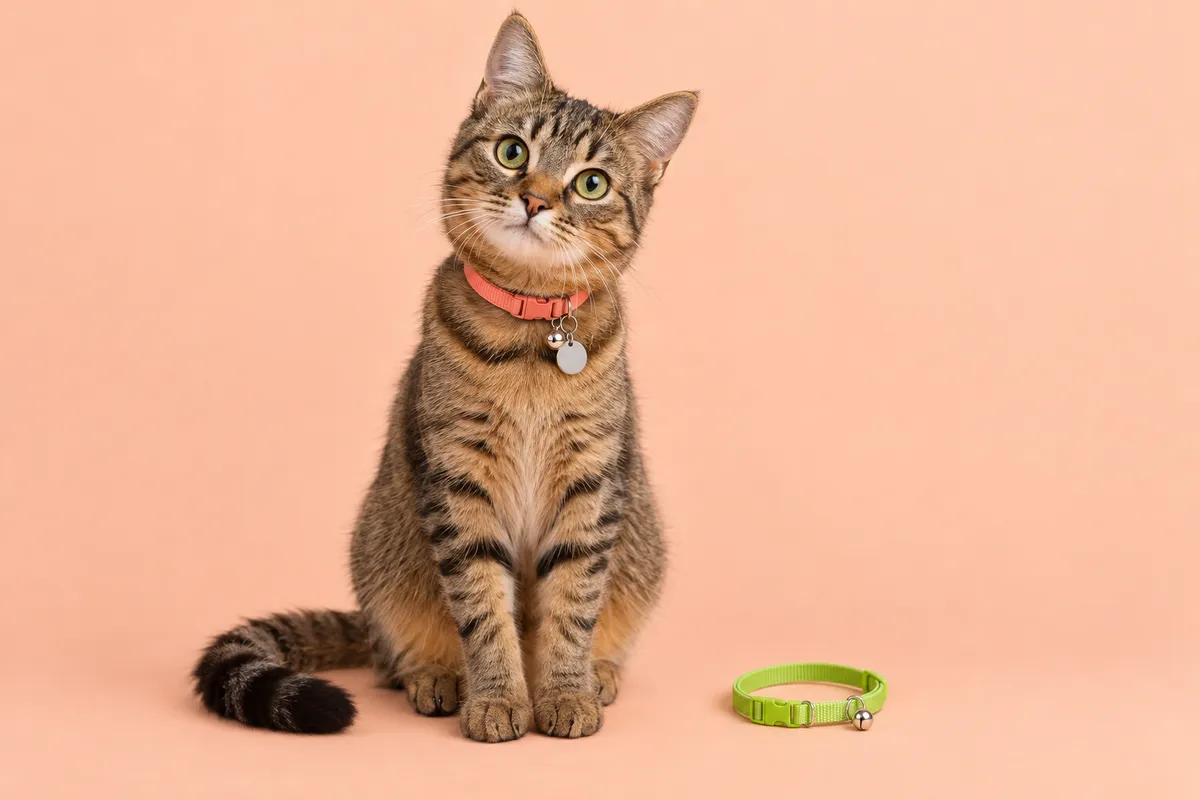
Most cats, indoor ones included, do best in a light breakaway collar with an ID tag, fitted so two fingers slide underneath. Here are eight collar myths and what is actually true.
In short
- Indoor cats benefit from a collar and ID tag because accidental escapes happen, and a tag lets a finder call you right away.
- A breakaway buckle is designed to open when a collar snags, which is exactly why cats should wear one instead of a fixed buckle.
- A cat collar fits when two fingers slide flat between the collar and the neck.
- A microchip and a tag work together: the chip is permanent, the tag is instant.
- A harness is for supervised outings and leash walks; the everyday collar is what carries the ID.
Cat collars come with a lot of folklore. Some of it is sensible, some is outdated, and some keeps lovely cats from wearing the one thing that could bring them home. Here is the short version: a breakaway cat collar with a readable ID tag suits most cats, indoor ones included, as long as it fits well and is introduced gently. Below, eight common myths, what is actually true, and a product tip for each.
Myth 1: Indoor cats do not need a collar or ID
Fact: indoor cats slip out more often than anyone plans. A delivery at the door, a window screen that pops, a houseguest who does not know the rules, a carrier that opens in a parking lot. A cat who has never been outside can also be the most confused once there, and a quiet, frightened cat often hides close by.
A microchip is a wonderful permanent backup, but it needs a scanner, which means someone has to catch your cat and bring it to a clinic or shelter. A collar with a tag tells any neighbor, right away, that this cat has a home and a phone number. The two work best together: chip for permanence, tag for speed. Keep your chip registration details current too.
Engraved tags for a phone number at a glance
Slide-on tags sit flat on the collar and stay quiet; round tags hang from the ring.


Myth 2: Breakaway buckles open too easily, so they are pointless
Fact: opening under pressure is the whole job. Cats climb, squeeze behind furniture and leap through narrow gaps, and a collar can catch on a branch, a cabinet handle or the cat's own jaw while grooming. A breakaway (or safety release) buckle is designed to pop apart when the collar is pulled hard, so the cat can wriggle free. A standard dog-style buckle that never lets go is a poor match for a cat.
Yes, a breakaway collar will occasionally come off in the yard or under the sofa. That is a fair trade. If one keeps disappearing, check the fit first: a collar that is too loose catches more and releases more. Buying a multi-pack means a spare is ready while you hunt for the missing one.

A breakaway everyday pair
Two soft nylon collars with a safety buckle, a reflective stripe and a small bell, so a lost one never leaves your cat bare.
- Safety buckle that releases under a strong pull
- Reflective stitching for low light
- Bell can be removed if you prefer quiet
More breakaway collars in different styles
Patterned, glow-in-the-dark, bow ties and soft silicone.


Myth 3: A bell protects birds, or a bell annoys every cat
Fact: neither extreme holds up as a promise. A bell does one thing reliably: it tells you where your cat is in the house. Whether it changes anything for wildlife depends on the cat and the garden, so treat any bell as a sound, not a guarantee. Many cats ignore a small bell within a day or two; others flick their ears at it. Watch your own cat.
Choose a small, well-attached bell and make sure it can come off. If your cat seems unsettled by the sound, take it off and try a quieter collar. For questions about stress or behavior, ask your vet.
Myth 4: The two-finger rule is only for dogs
Fact: the same quick check works for cats. With the collar on, you should be able to slide two fingers flat between the collar and your cat's neck. Snugger than that rubs; looser than that lets a paw or lower jaw slip through, which is the most common collar mishap. Kittens grow fast, so recheck the fit every week or two while they are young, and recheck any cat after a change in weight.
| Fit check | What you notice | What to do |
|---|---|---|
| Too tight | No room for two fingers, fur flattened or rubbed | Let it out one notch |
| Just right | Two fingers slide in flat, collar stays put when your cat shakes | Recheck now and then |
| Too loose | Collar slides over the ears, or a paw fits under it | Tighten until two fingers fit |
If you came here from our dog collar glossary, note one difference: cats should not wear martingale, choke or prong styles at all. A light, flat, breakaway collar is the cat standard.
Myth 5: A cat will never accept a collar
Fact: most cats get used to a collar when it arrives gently. Go slowly and keep it pleasant:
- Let your cat sniff the collar, then leave it near a favorite sleeping spot for a day.
- Put it on loosely just before a meal or a play session, for a few minutes, and stay close.
- Take it off before your cat starts fussing, and repeat over several days, a little longer each time.
- Once your cat ignores it, adjust to the two-finger fit and check it again the next day.
Scratching at it for the first few minutes is normal. Choose the lightest, softest collar you can find for the first try: thin nylon, cotton or smooth silicone. If your cat keeps fighting it after a patient week, or the skin underneath looks irritated, take it off and ask your vet.
Myth 6: Any tracker fits any cat collar
Fact: size and weight matter a lot on a small neck. Coin-style Bluetooth trackers need a holder that matches both the tracker and the collar's width, and a holder made for a wide dog collar will slide around or dangle on a thin cat collar. Look for a holder that wraps the tracker fully, threads onto a narrow band and sits flat. A collar built around its own holder is usually the neatest choice.
Two more things to keep in mind. A Bluetooth tracker finds a cat through nearby phones, so it works best in busy neighborhoods and is not the same as a GPS tracker with its own service plan. And any tracker on a cat belongs on a breakaway collar, never a fixed one.
Breakaway collars and holders made for small trackers
Built-in pockets or slim holders that thread onto a narrow cat collar.


Myth 7: Reflective collars are only for outdoor cats
Fact: reflective trim is for the moment an indoor cat is outside without a plan. An escape usually happens at dusk or after dark, and a reflective strip catches a flashlight or porch light when you are searching under cars and hedges. It also helps on supervised harness walks in the evening. Reflective stitching adds almost no weight, so there is little reason to skip it.
Reflective and glow collars
Small details that shine back when a light hits them.


Myth 8: A harness replaces a collar
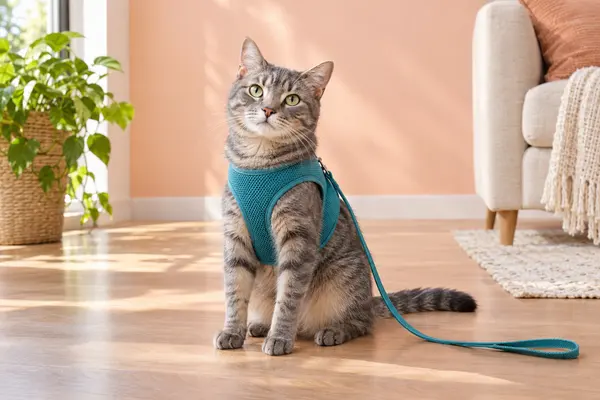
Fact: they do different jobs. A harness is for supervised outings: leash walks, a visit to the vet in the carrier, or time on a balcony. It spreads pressure across the chest, which is why you clip a leash to a harness, never to a cat's collar. But a harness is not meant to be worn all day, and when your cat is not on a walk, the collar and tag are what carry the ID.
So the usual setup is both: a breakaway collar with a tag every day, plus a well-fitted harness for outings. Planning a trip? Our cat carrier guide and holiday travel checklist cover the rest.
Cat harnesses for supervised outings
Vest and strap styles; measure neck and chest before choosing a size.


A quick cat collar checklist
- Breakaway or safety release buckle, every time.
- Two fingers fit flat under the collar.
- An ID tag with your phone number, plus a registered microchip.
- Reflective trim if you can find it in a style you like.
- Bell optional and removable.
- Any tracker in a snug holder sized for a narrow collar.
- A harness for walks, never a leash on the collar.
Browse every option in collars and leashes, collars and harnesses, or search breakaway cat collars directly.
Questions people ask
Should indoor cats wear collars?
Usually yes. Indoor cats can slip out through an open door or window, and a collar with an ID tag tells anyone who finds your cat that it has a home and how to reach you. Pair it with a registered microchip.
Do breakaway collars work for cats?
They are designed to open when the collar is pulled hard, for example if it catches on a branch or furniture, so the cat can get free. That also means one may come off now and then, so keep a spare and check the fit.
How tight should a cat collar be?
You should be able to slide two fingers flat under the collar. Tighter can rub; looser lets a paw or jaw slip through. Recheck often on growing kittens.
Should cats wear collars with bells?
A bell is optional. It helps you hear where your cat is, but it is not a guarantee of anything else. If your cat seems bothered by it, remove it.
Can I put a tracker on a breakaway cat collar?
Yes, and a tracker should only ever go on a breakaway collar. Use a holder sized for a narrow collar so the tracker sits flat and does not swing.
Do vets recommend collars for cats?
Every cat is different, so ask your vet about your own cat, especially if your cat has sensitive skin or a medical condition.
About the numbers
- Google search results and people also ask, United States, read 2026-10-08: questions searched alongside breakaway cat collar: whether indoor cats should wear collars, whether breakaway collars work, collars with bells and with trackers, and how tight a collar should be